Art Nouveau vs Art Deco vs Liberty: how to tell them apart
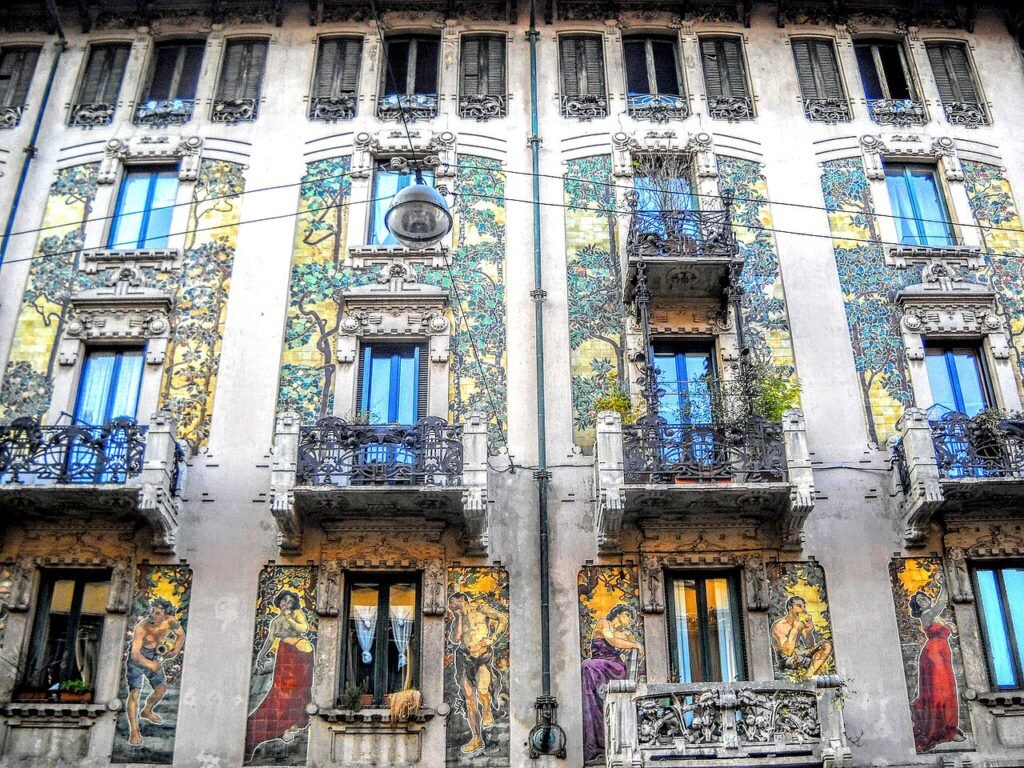
Art Nouveau and Liberty are the same curving, floral movement (1890-1915); Art Deco is the geometric style of the 1920s-30s. How to tell them apart at a glance.
Italian Liberty is Italy’s name for Art Nouveau (c.1890–1915): floral ornament, polychrome ceramic, wrought iron and sculpted stone. A short, sourced answer.
The five architects who shaped Italian Liberty: Sommaruga, Basile, Fenoglio, D’Aronco and Coppede. Who they were, their key buildings, and where to see them.
Milan holds the densest concentration of Italian Liberty (Art Nouveau) architecture in the country, clustered in the Porta Venezia quarter. A building-by-building walking guide.
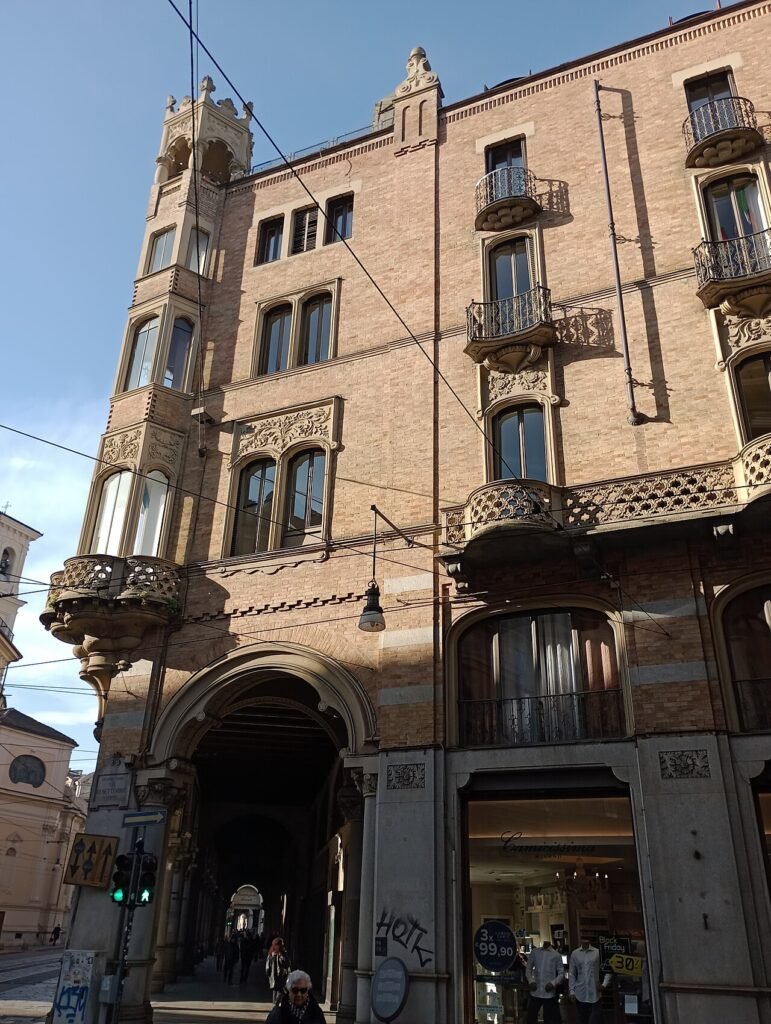
Turin hosted the 1902 exhibition that defined Liberty as Italy’s Art Nouveau, and its streets still hold the country’s most intact Liberty fabric. A guide to the city and its master architect.
Palermo did not borrow Italian Liberty — it built its own. A guide to Ernesto Basile’s masterworks and the Florio dynasty that funded Sicily’s Belle Époque.
Italian Liberty is Italy’s Art Nouveau: floral ornament, polychrome ceramic, wrought iron, 1890-1915. The architects, the cities, and where to see it.
Colonia Le Navi, Cattolica — Clemente Busiri Vici, 1932–1934. Photo Luca Lorenzi, Wikimedia Commons, CC BY-SA 3.0. Along the Adriatic
Piazza Italia, Tresigallo — Rationalist new town, 1933–1939. Photo Threecharlie, Wikimedia Commons, CC BY-SA 4.0. Emilia-Romagna holds the strangest chapter