

What is Italian Liberty Style? Architecture and Forms
Italian Liberty is Italy’s name for Art Nouveau (c.1890–1915): floral ornament, polychrome ceramic, wrought iron and sculpted stone. A short, sourced answer.
Italian Liberty is Italy’s name for Art Nouveau (c.1890–1915): floral ornament, polychrome ceramic, wrought iron and sculpted stone. A short, sourced answer.
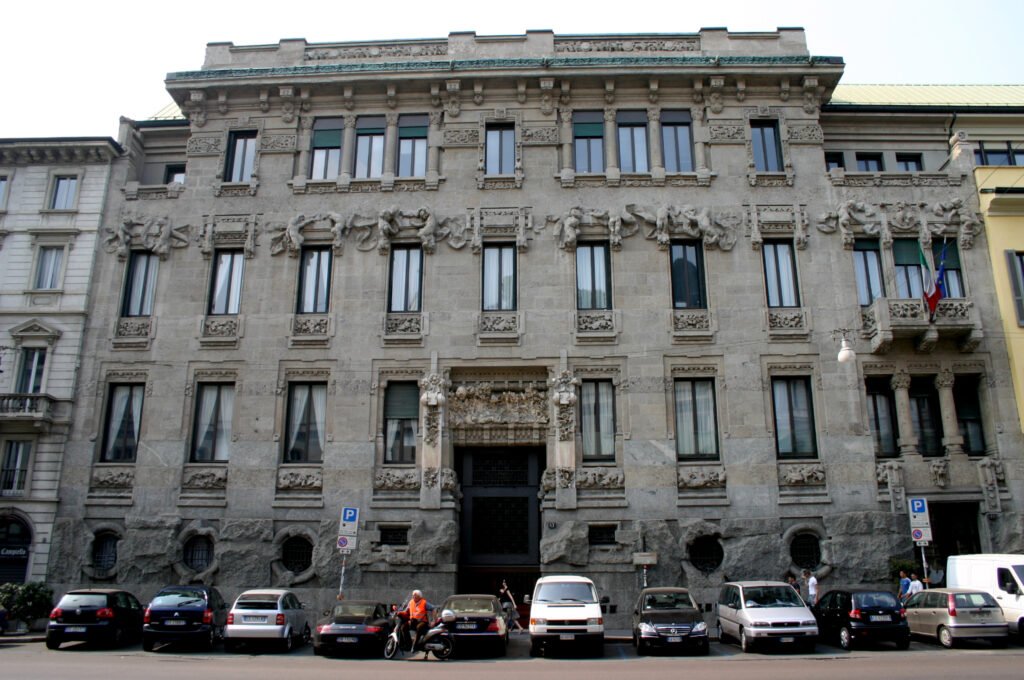
The five architects who shaped Italian Liberty: Sommaruga, Basile, Fenoglio, D’Aronco and Coppede. Who they were, their key buildings, and where to see them.
Milan holds the densest concentration of Italian Liberty (Art Nouveau) architecture in the country, clustered in the Porta Venezia quarter. A building-by-building walking guide.
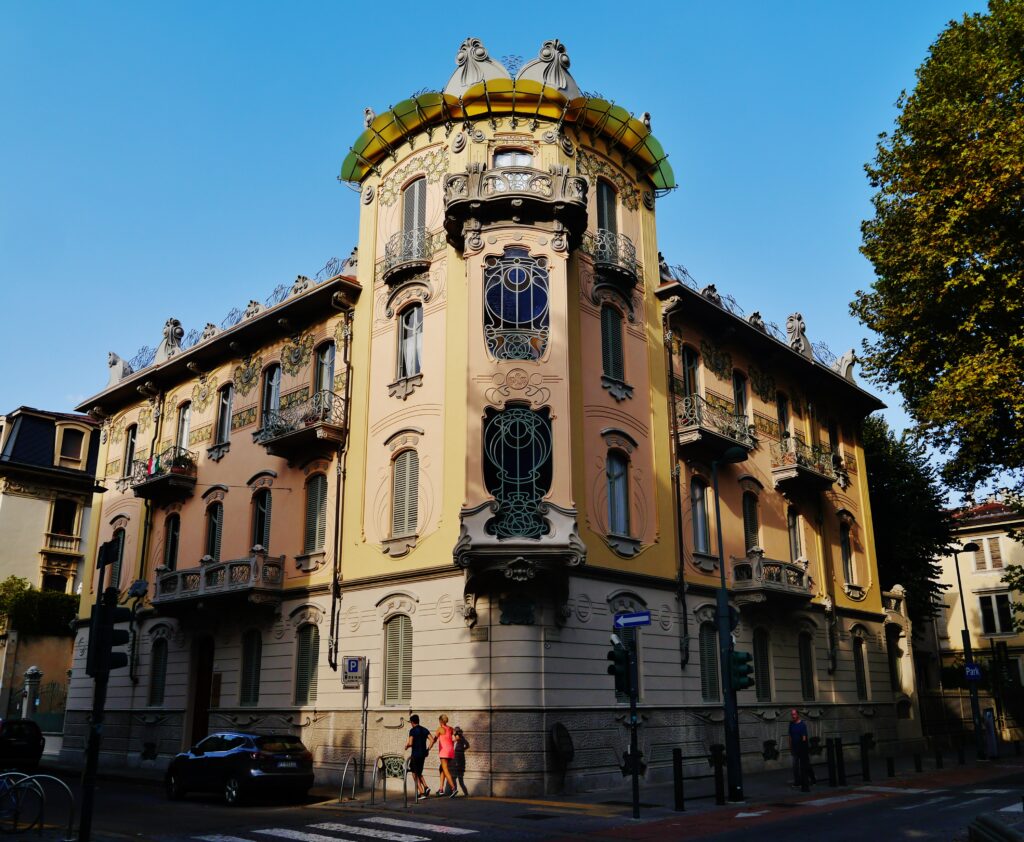
Turin hosted the 1902 exhibition that defined Liberty as Italy’s Art Nouveau, and its streets still hold the country’s most intact Liberty fabric. A guide to the city and its master architect.

Palermo did not borrow Italian Liberty — it built its own. A guide to Ernesto Basile’s masterworks and the Florio dynasty that funded Sicily’s Belle Époque.
Italian Liberty is Italy’s Art Nouveau: floral ornament, polychrome ceramic, wrought iron, 1890-1915. The architects, the cities, and where to see it.

Along the Adriatic south of Rimini stands one of the most peculiar building types Italian Rationalism ever produced: the colonia marina, the monumental…

Emilia-Romagna holds the strangest chapter of the Rationalist story. This was Mussolini’s home ground — he was born here, in a hillside village above Forlì…

Milan is where Italian Rationalism met the real economy. Como gave the movement its purest manifestos, but Milan — industrial, ambitious, building fast…