

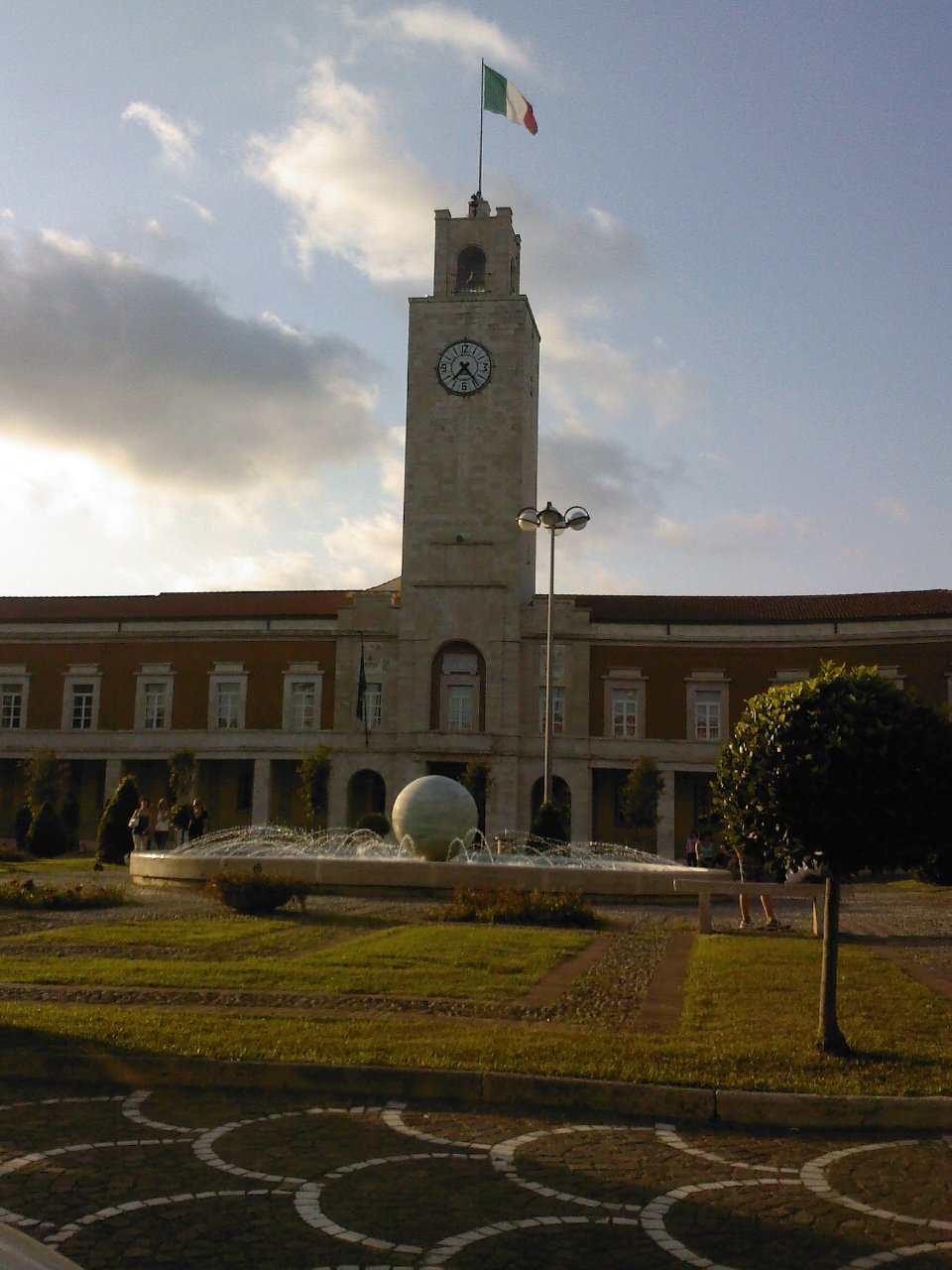
Latina was founded as Littoria on 18 December 1932 on land reclaimed from the Pontine Marshes, only 171 days after the first stone was laid. The master plan was drawn by the architect Oriolo Frezzotti, with the approval of Marcello Piacentini, around an octagonal street pattern that radiates from two civic squares: Piazza del Popolo and Piazza della Liberta. Renamed Latina in 1946, the city is one of the most coherent surviving urban experiments of Italian Rationalism.
- Address
- Piazza del Popolo, 04100 Latina LT
- Foundation
- First stone 30 June 1932; inaugurated as Littoria on 18 December 1932; promoted by commissario Valentino Orsolini Cencelli
- Master plan
- Oriolo Frezzotti, with the approval of Marcello Piacentini — octagonal layout around Piazza del Popolo and Piazza della Liberta
- Other architects
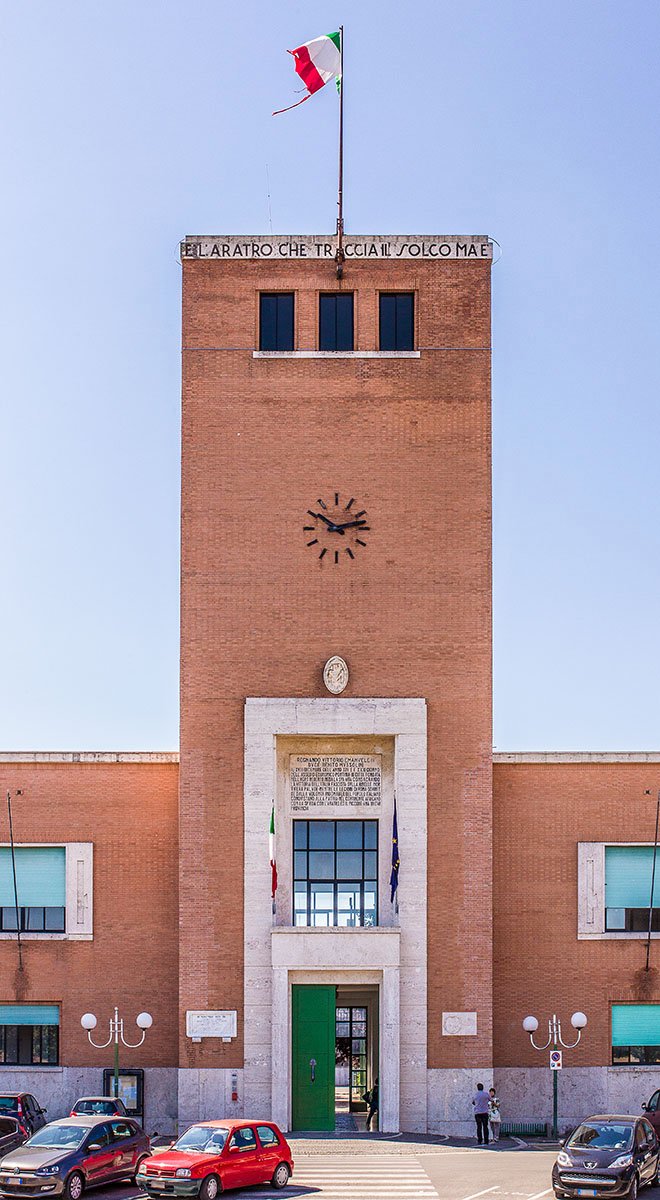
- Angiolo Mazzoni (Palazzo delle Poste and railway station); Duilio Cambellotti (decorative cycles and civic museum collection)
- Status
- Provincial capital from 18 December 1934; renamed Latina in 1946
- Population
- 127,861 residents at the 2021 census
- Coordinates
- 41.4675° N, 12.9038° E
- Notes
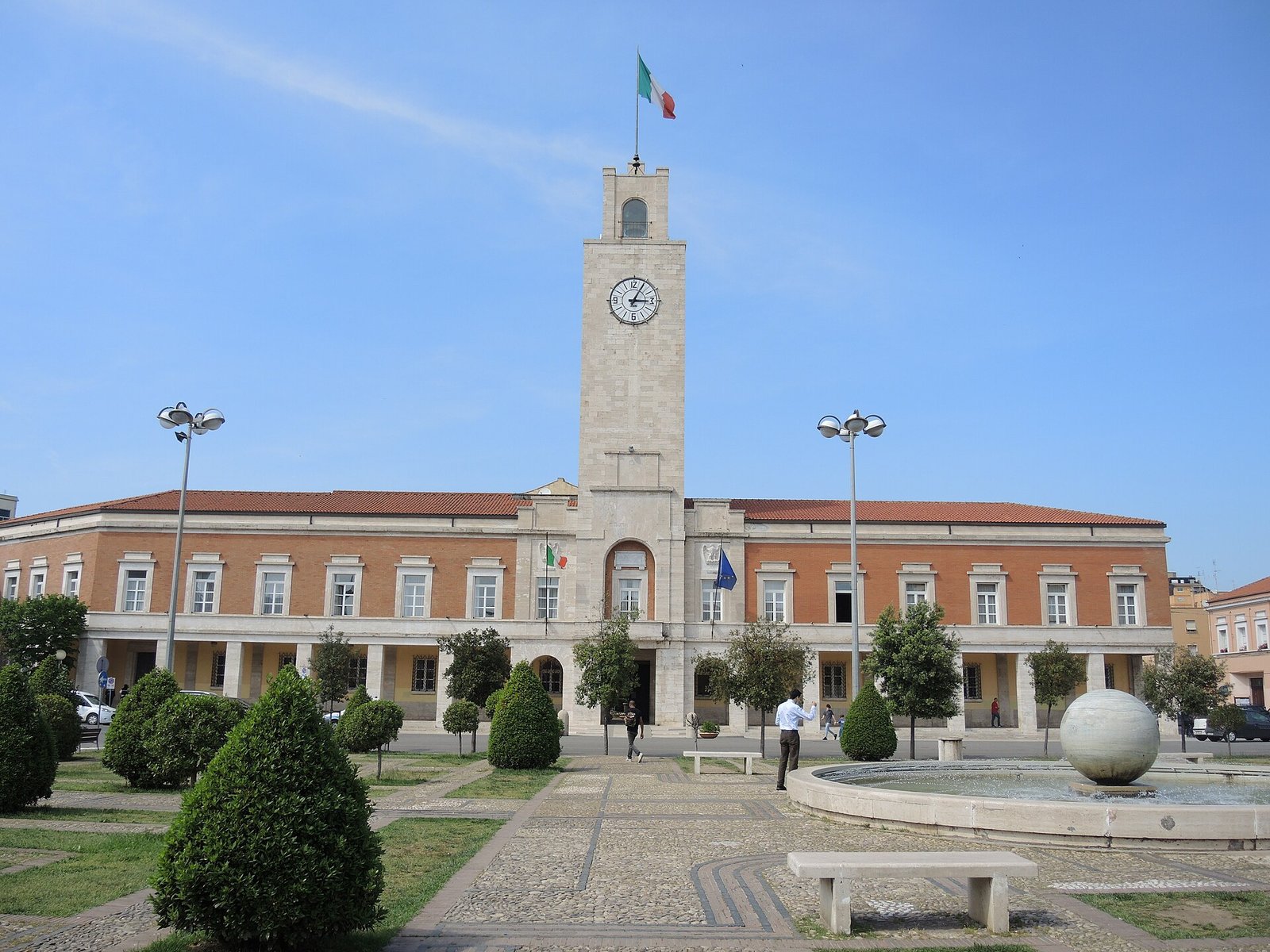
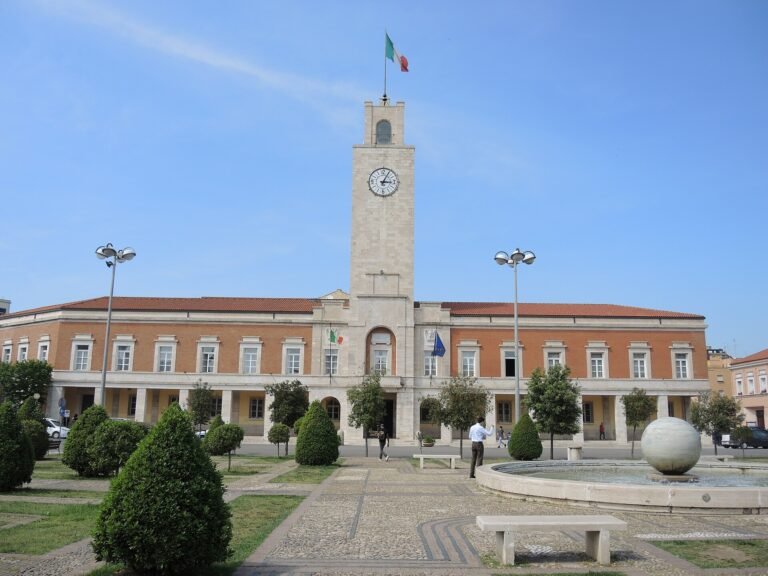
- Torre Civica of the Palazzo Comunale: 32 metres, with clock; appears stylised on the city coat of arms
Visit on the map
Piazza del Popolo, Latina · 41.4675° N, 12.9038° E
Download for your navigator
A single waypoint for the centre of the founded city, ready for GPS apps and contacts.
The story of Latina begins with the ground itself. For most of recorded history the Pontine plain, stretching south of Rome between the Lepini hills and the Tyrrhenian coast, was a malarial swamp that had defeated successive Roman, papal and Bourbon attempts at drainage. The integral reclamation of the Agro Pontino, launched by the fascist regime in the late 1920s, redrew the hydrology of the plain through canals, pumping stations and rectilinear field divisions. Once the land could carry buildings, the regime decided it also needed new towns to administer the resettlement, despite Mussolini’s initial reluctance to create entirely new cities. The decisive push came from the local commissioner Valentino Orsolini Cencelli, who turned the experiment into a political showcase.
The first stone of Littoria was laid on 30 June 1932 at the Cancello del Quadrato, north of where the historic centre now stands. Only 171 days later, on 18 December 1932, the new town was officially inaugurated. The speed was the point: a complete administrative centre with houses, schools, a post office, a town hall and a railway link, built in less than half a year, served the regime as a propaganda image of efficiency and as a working model for the four other founded cities that followed in the Pontine plain (Sabaudia, Pontinia, Aprilia, Pomezia). On 18 December 1934 Littoria was promoted to provincial capital. After the bombings of 1943-44, the liberation by Allied troops on 25 May 1944 and the end of the war, the city was renamed Latina in 1946.
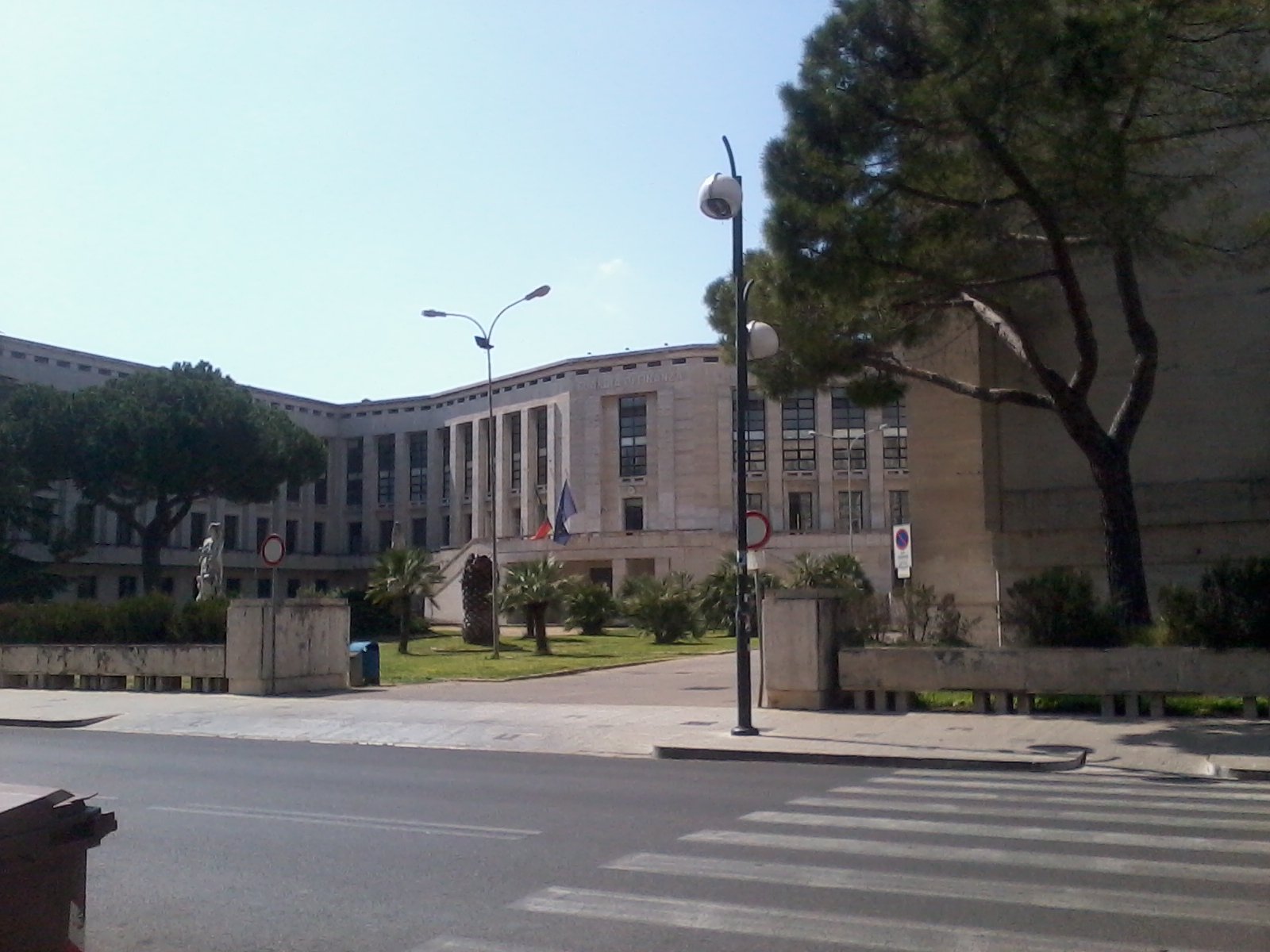
The master plan was the work of the architect Oriolo Frezzotti, approved by Marcello Piacentini. Its geometry is octagonal, with avenues converging on two civic squares set a short walk apart: Piazza del Popolo, originally Piazza del Littorio, where the Palazzo Comunale and its 32-metre Torre Civica stand, and Piazza della Liberta, originally Piazza XXIII Marzo, with the Palazzo del Governo and the Cambellotti civic museum building. The 32-metre clock tower on Piazza del Popolo became so identified with the founded city that it appears, stylised in silver on a blue field, at the centre of Latina’s coat of arms. Beyond Frezzotti’s plan, two other names shape the early city: Angiolo Mazzoni, who designed the Palazzo delle Poste on the present Piazzale dei Bonificatori and the railway station in his recognisable blend of Rationalist volumes and Futurist accents, and the artist Duilio Cambellotti, whose decorative cycles tied the iconography of land reclamation and rural labour to the new public architecture. Post-war expansion through the 1960s and 1970s pushed the city outward in every direction, towards the Appia, towards the coast and along the Pontina, and the original Rationalist grid now sits inside a much larger and looser urban fabric — but, looking down from the Torre Civica or walking the perimeter of Piazza del Popolo, the founded city is still legible exactly as Frezzotti drew it in 1932.
Image gallery
Resources & References
Editorial picks across Wikipedia, photo archives, and the municipal portal.
Hero photograph by Daniele Amato via Wikimedia Commons, licensed CC BY 3.0. Editorial text © Cultural Heritage Online, OASIS Tech LLC USA, 2026.
See the place
Find it on the map
See this place and what’s around it →Record researched and written by Stefano Vigolo for Cultural Heritage Online, 2026.
Historical events at this place (4)
📷 Become a Cultural Heritage Online photographer
Share your photos of places: they stay published under your name as the author. The more they're seen, the more you get noticed — and soon a contest will reward the most appreciated photos.
Log in or sign up free to add a photo