The Italian Belle Époque is not Paris with mandolins. It is Milan, Turin, Rome, Palermo, and the Venetian Lido between roughly 1880 and 1914 — a country reinventing itself in real time, between unification in 1861 and the trench shock of the First World War. New money, new electricity, new stations, new boulevards, and new architecture: a generation of architects who believed Italian Liberty could become a national modern style. They were wrong about the duration, right about the buildings. The map is still readable today.
The decade that built modern Italy
The pivot decade is 1898 to 1908. In 1898 Ernesto Basile began the Villino Florio for the Florio family in Palermo (completed 1902). In 1900 Giuseppe Sommaruga began Palazzo Castiglioni in Milan (completed 1903). In 1900 the Grand Hotel des Bains opened on the Lido. In 1902 the Prima Esposizione Internazionale d’Arte Decorativa Moderna opened in Turin at the Castello del Valentino on 10 May; pavilions from Britain, Germany, France, Belgium, Austria, Hungary, Denmark, Sweden, the United States, and Japan stood in the park, with Raimondo D’Aronco as chief architect. The Turin Esposizione is the Italian Belle Époque’s clearest single event: a national declaration that Italy intended to compete with Paris and Vienna in modern decorative arts.
Behind the architecture stood new infrastructure. Italy’s electrical grid expanded rapidly between the 1890s and 1910s. The trains ran further. A new bourgeoisie — bankers, industrialists, hoteliers, the Florio dynasty in Sicily, the Castiglioni in Milan — could afford private commissions of European scale. The Belle Époque in Italy was financed by industry and decorated by Liberty.
Five buildings that hold the era
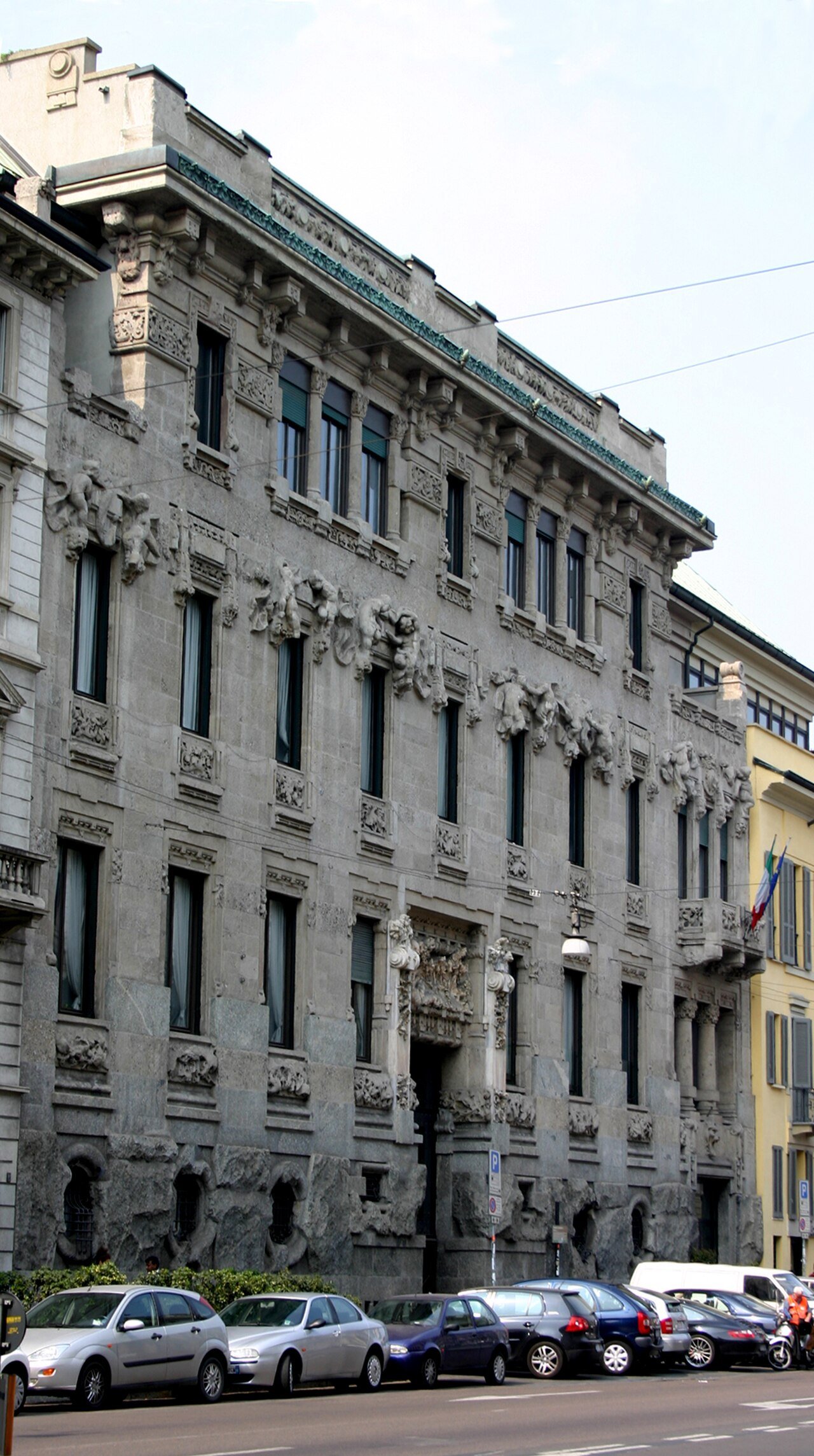
I. Palazzo Castiglioni · Milan
Giuseppe Sommaruga (1867–1917), trained at Brera under Camillo Boito, designed the building for entrepreneur Ermenegildo Castiglioni between 1901 and 1903. It is Liberty’s monumental Milanese moment: rusticated stone, sculptural caryatids, and a heavy cornice that anchors the facade against ornament. The female nude reliefs by Ernesto Bazzaro originally on the facade scandalised 1903 Milan; they were moved to Villa Romeo-Faccanoni before the inauguration.
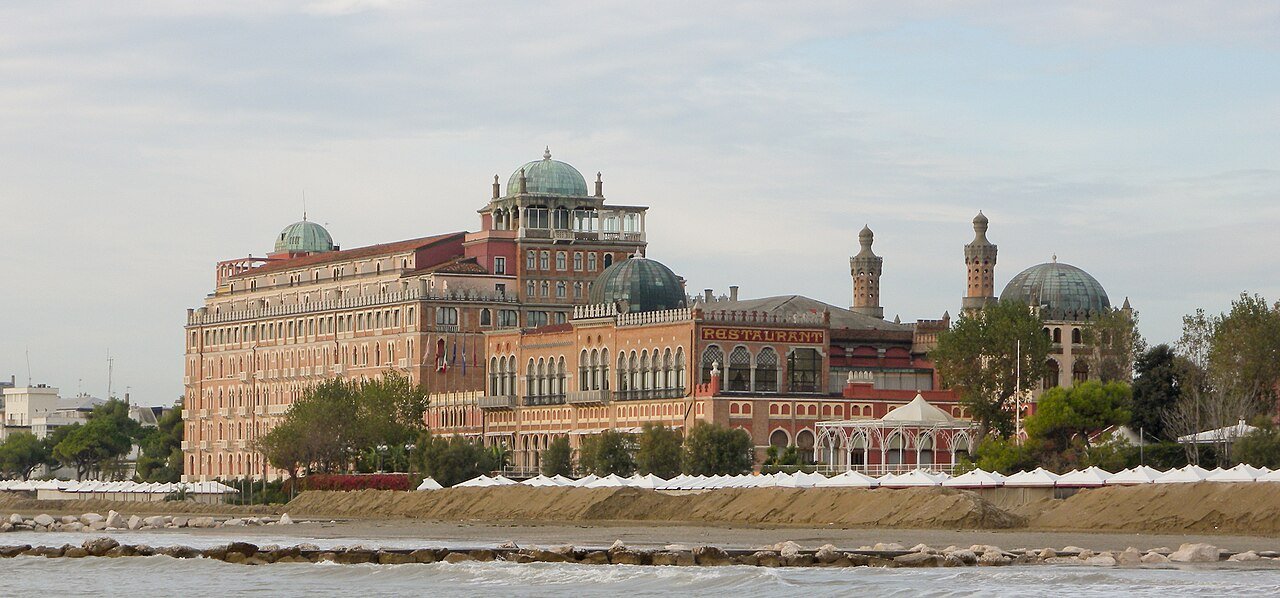
II. Hotel Excelsior · Lido di Venezia
Giovanni Sardi (1863–1913) built the hotel for the Compagnia Italiana Grandi Alberghi in seventeen months. It opened on 21 July 1908 with three thousand international guests. Eclectic Liberty with explicit Moorish quotations on the east elevation. The Mostra del Cinema chose the Lido in the 1930s because of this building — the Excelsior was the Italian Belle Époque’s declaration that international leisure had arrived on the lagoon.
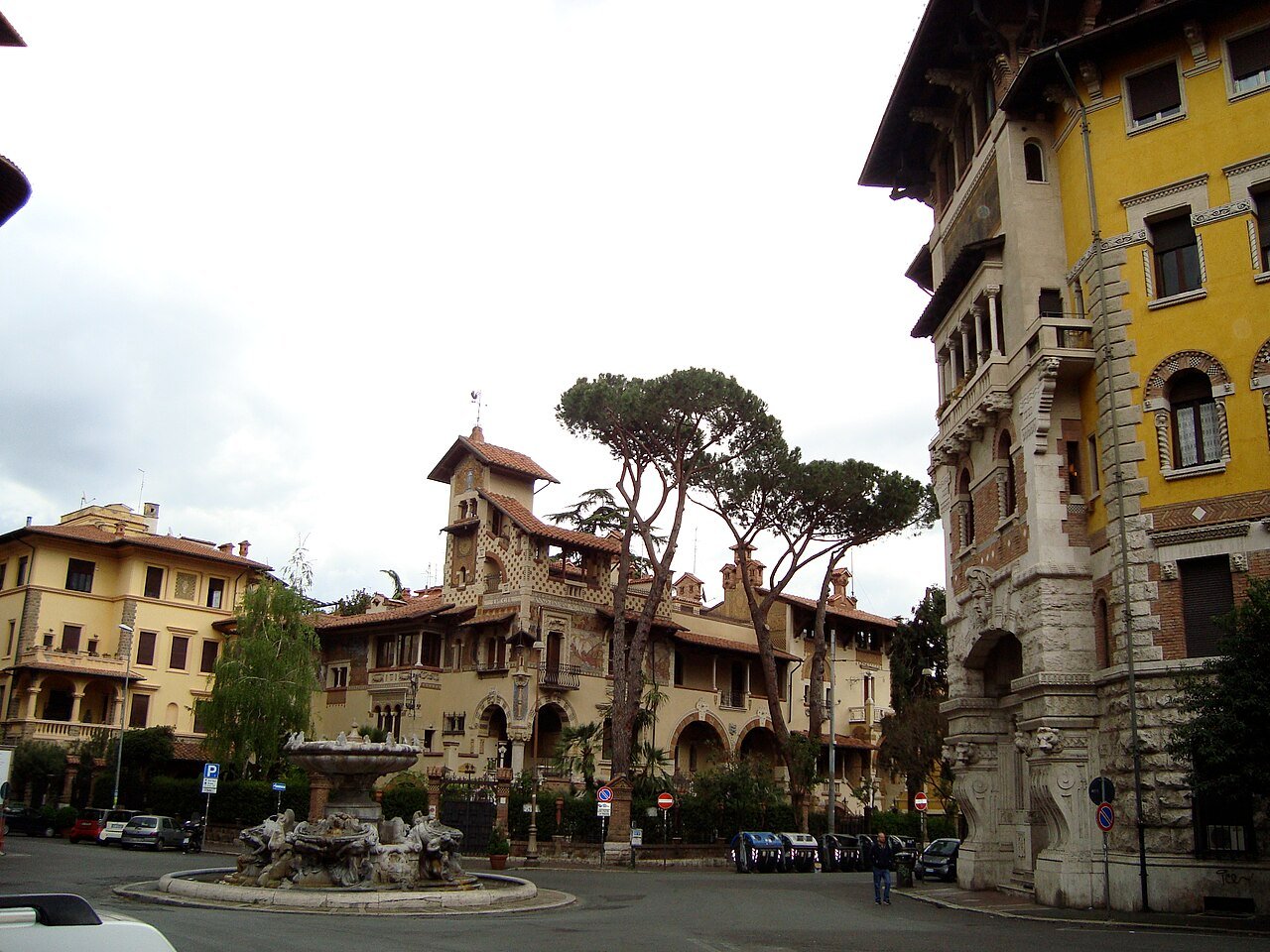
III. Quartiere Coppedè · Rome
Gino Coppedè (1866–1927) designed the quarter as roughly two dozen palaces and as many villini around Piazza Mincio (the original plan listed eighteen palaces and twenty-seven smaller buildings; the realised count differs), with the Fontana delle Rane (1924) at the centre. Florentine eclecticism colliding with Roman classical detail and Liberty floral grammar — Italian Liberty’s most theatrical urban set piece, finished by Paolo Emilio André after Coppedè’s death in 1927.
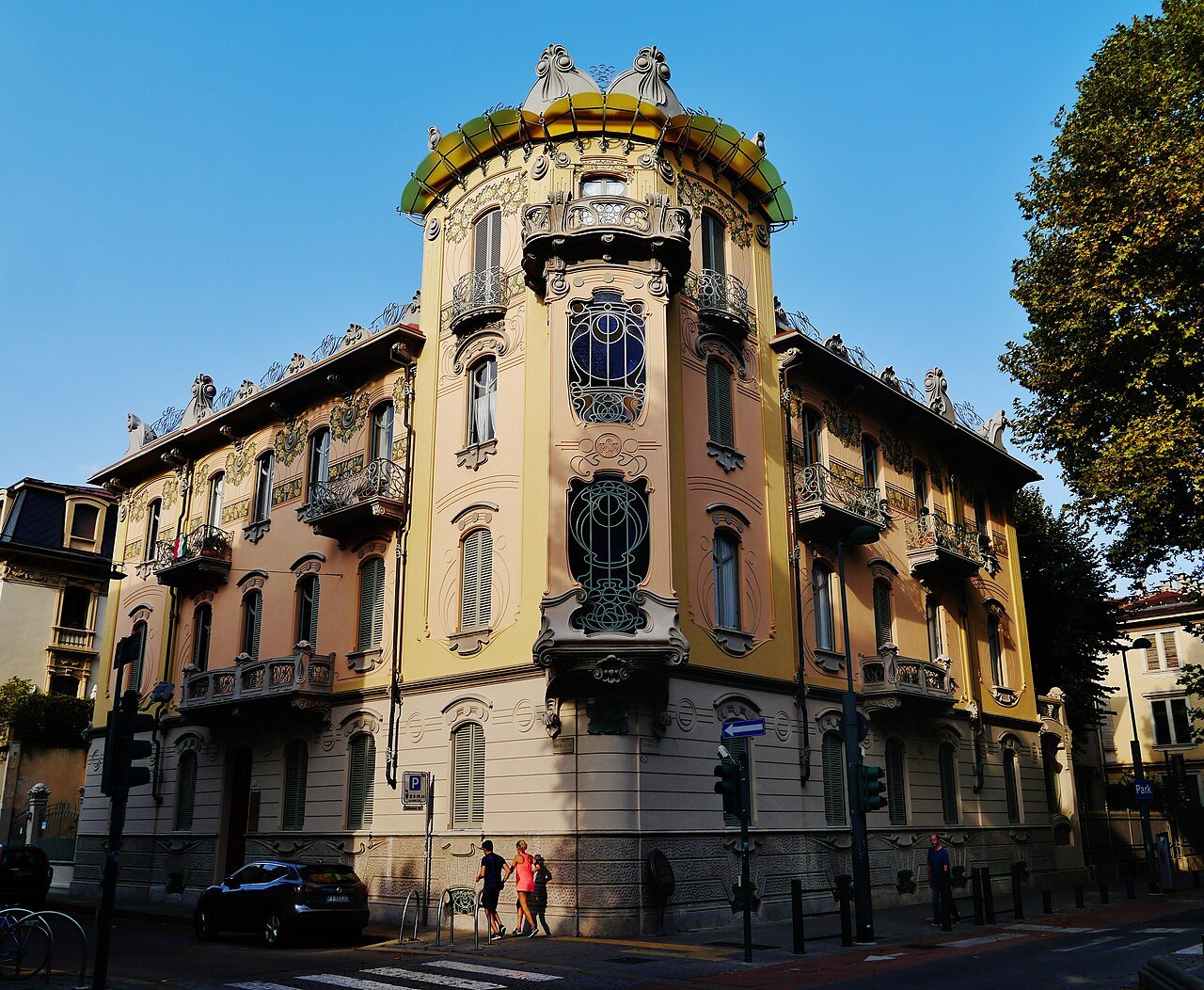
IV. Casa Fenoglio-Lafleur · Turin
Pietro Fenoglio (1865–1927) built it as his own home and studio at Via Principi d’Acaja 11, on the corner of Corso Francia, in 1902. Pastel pigment, stained glass, and wrought iron at three storeys. A defining example of Turin Liberty and the spatial argument behind Fenoglio’s three hundred Turin commissions — the largest single Liberty corpus in any Italian city.
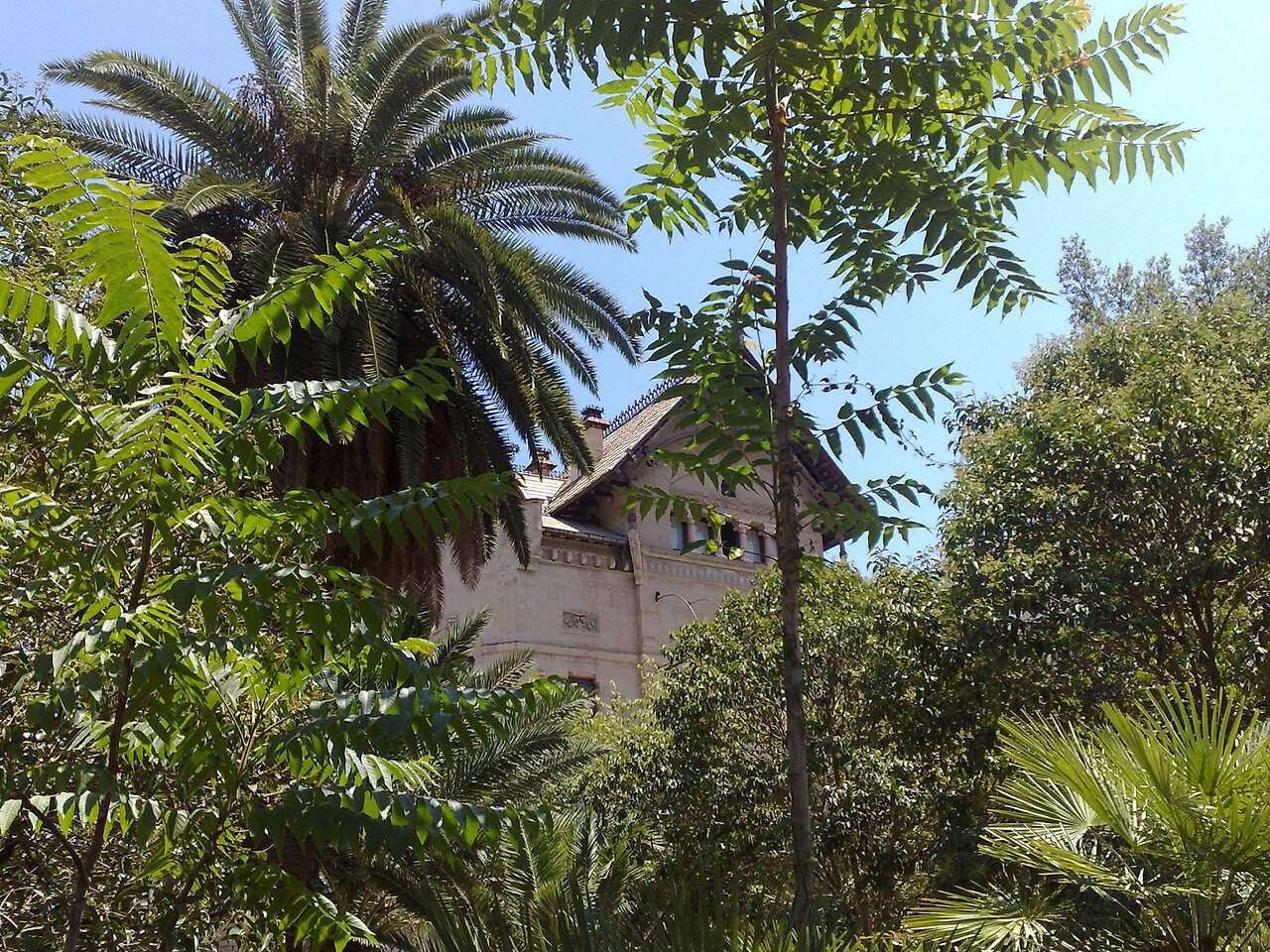
V. Villino Florio · Palermo
Ernesto Basile (1857–1932) designed it for the Florio family, on the Olivuzza estate, between 1899 and 1902. Roman, Norman, and Arab quotations folded into Liberty floral surface — Sicily’s signature contribution to the national Liberty grammar, by one of Italy’s most influential Liberty architects of the era. A 1962 fire gutted the interior; restoration finished only in 2003.
What ended it
The Italian Belle Époque ended with the First World War. Italy entered the conflict in May 1915 and emerged in 1918 economically depleted, politically destabilised, and culturally exhausted. Liberty’s commissioning class — the haute bourgeoisie that had paid for Casa Fenoglio-Lafleur, Palazzo Castiglioni, the Lido villas, and the Villino Florio — had spent the decade between 1914 and 1924 either fighting, recovering, or losing capital.
The aesthetic shift was equally decisive. The 1925 Exposition Internationale des Arts Décoratifs et Industriels Modernes in Paris launched Art Déco as the new international style, and Liberty’s curving floral grammar suddenly read as obsolete. In Italy, Coppedè’s Roman quarter, finished as late as 1927, was already an exception by the time it was completed. Mussolini’s regime, consolidated by 1925, preferred a stripped Roman classicism over the floral exuberance of Liberty — a tendency that culminated, a decade later, in the EUR district planned for 1942 and built 1937–1942. By the 1930s the Italian Liberty era was over, and the buildings began their long unfashionable middle decades. They were not rediscovered seriously until municipal heritage listings began in the 1980s, and recognition has accelerated only in the last fifteen years.
Where to start
The Italian Belle Époque map is compact. Five buildings give you the era: Milan for Sommaruga, the Lido for Sardi, Rome for Coppedè, Turin for Fenoglio, Palermo for Basile. The Italian Liberty Grand Tour adds Trieste (Casa Bartoli by Max Fabiani) and Genova’s harbour-Liberty axis along Via XX Settembre and the Palazzo della Borsa, completing the seven-city circuit that maps the country’s pre-war modern moment. Each city is a half-day to a full day on foot. Together they describe the Italy that the Grand Tour generation never saw, and that the Déco generation did its best to forget.
Sources
- S1 — Bossaglia, Rossana. Il Liberty in Italia. Charta, 1997. ISBN 978-88-8158-144-3.
- S2 — Bairati, Eleonora, and Daniele Riva. Guide all'architettura in Italia: Il Liberty in Italia. Laterza, 1985. ISBN 978-88-420-2541-2.
Spotted an error? Write to editorial@culturalheritageonline.com and we correct it the same day.