Rome receives more than thirty million visitors a year. Most of them walk the same nine kilometres: Vatican, Castel Sant’Angelo, Piazza Navona, Pantheon, Trevi, Spanish Steps, Colosseum, Forum, Palatine. The postcard list is short and the queues are long. The rest of Rome — the Rome that does not appear on the standard one-day route — is denser, quieter, and frequently older. Ten sites the postcards skip follow. Each requires only a short detour from the postcard route. None requires a bus tour.
Ten sites the postcards skip
I. Tomb of Cecilia Metella, Via Appia Antica
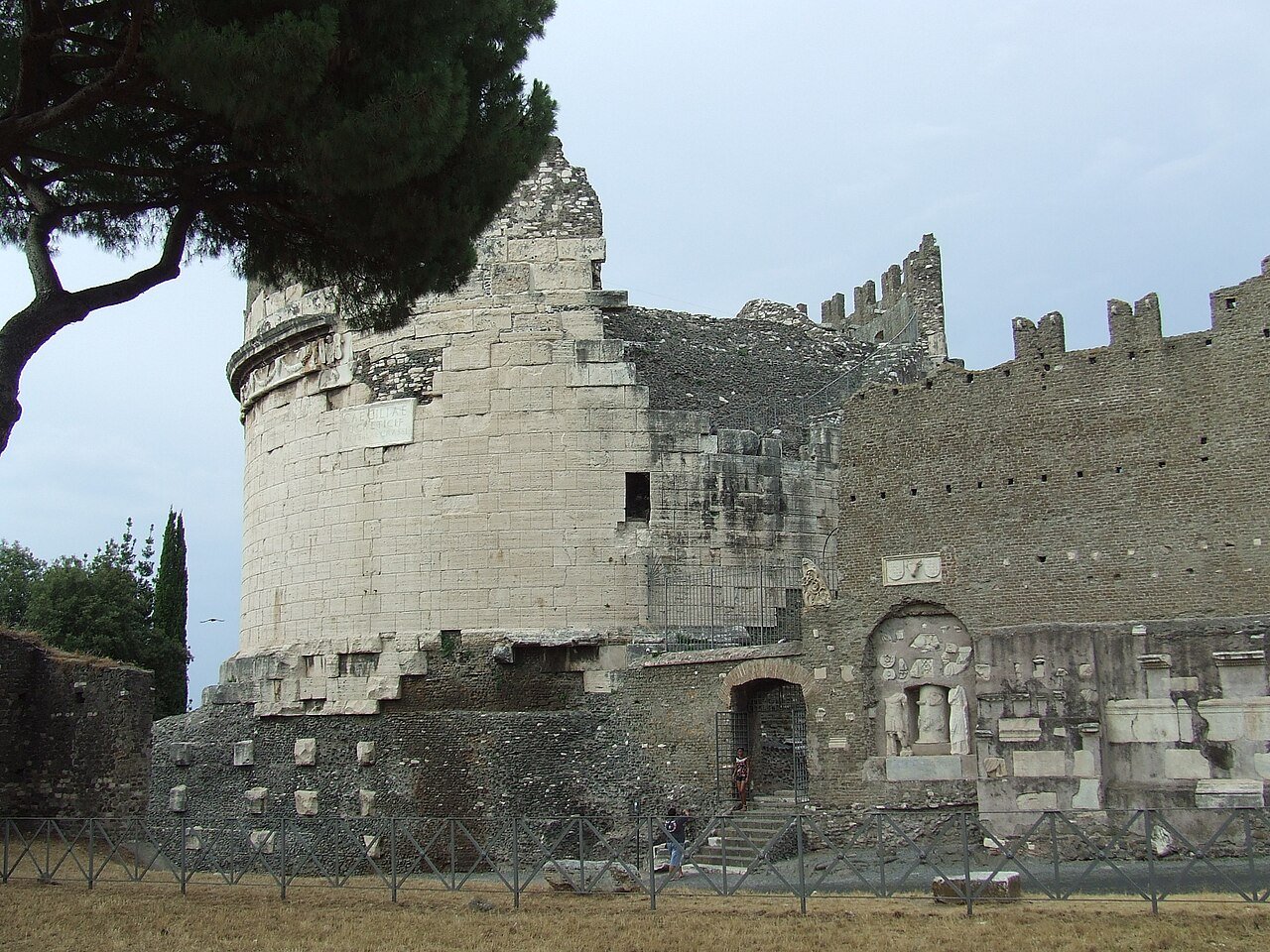
Built around 30–10 BC for Cecilia Metella, probably the daughter-in-law of the triumvir Marcus Licinius Crassus, the cylindrical mausoleum sits at the third milestone of the Via Appia. The Caetani family converted it into a fortified castle in 1302–1303, adding the medieval battlements still visible today. It is one of the best-preserved monuments on the Appian Way, accessible on foot or by bicycle as part of the Parco Archeologico dell’Appia Antica. Walk the Appia south from Porta San Sebastiano; the tomb anchors the open countryside section the Grand Tour generation actually drew.
II. Crypta Balbi, Museo Nazionale Romano
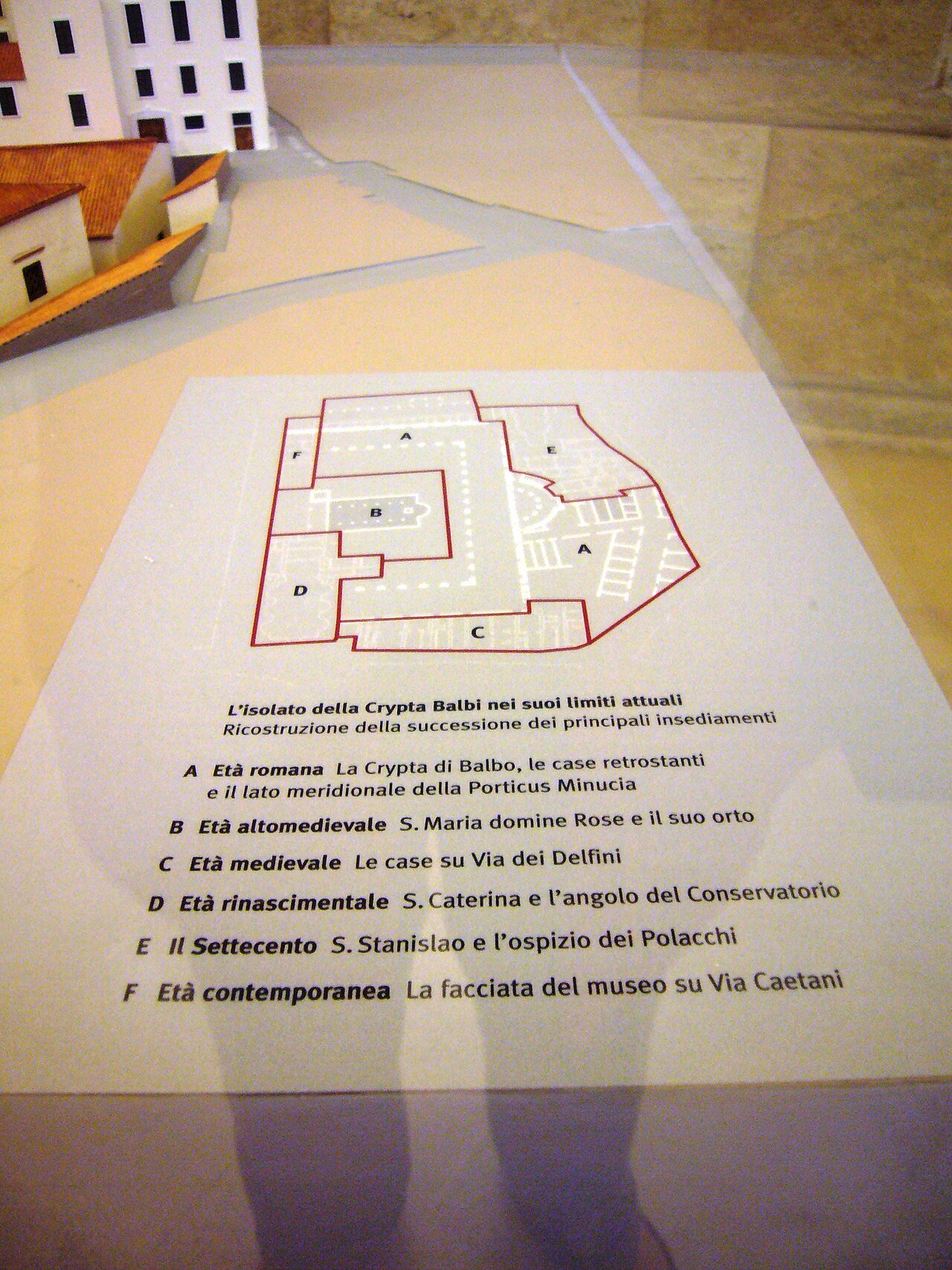
A branch of the Museo Nazionale Romano inaugurated in 2001, Crypta Balbi sits over the colonnaded quadriporticus of the Theatre of Lucius Cornelius Balbus, discovered during 1981 excavations in Campus Martius. Three floors trace Roman urban history, medieval Rome between the fifth and tenth centuries, and the strata below your feet. It is the museum that explains how Rome built itself on top of Rome, and the only one in the city that lets you read the layering directly.
III. Tomb of Priscilla, Via Appia Antica
A first-century monumental tomb opposite the Church of Domine Quo Vadis, on the Via Appia Antica. Priscilla was the wife of Titus Flavius Abascanto, a freedman of the emperor Domitian; the funerary cell, covered by a barrel vault, is enterable through a corridor below an adjacent house. A medieval tower (Torre Petro) sits on top of the original cylinder, marking the moment in the eleventh century when the tomb became a fortification. Travertine outside, masonry layered inside, two thousand years of overwriting in one stop.
IV. House of Augustus, Palatine Hill
The painted rooms of Augustus’s residence on the Palatine reopened to the public in 2008 after restoration. The Room of the Masks, a Second-Style Roman wall painting in original pigment, is the centrepiece, with theatrical masks set into perspective architectural frescoes dating to around 30 BC. Augustus bought the original property around 41–40 BC and reconfigured the complex after the Temple of Apollo Palatinus was completed in 28 BC. Most visitors to the Palatine never enter. Book the timed access.
V. Aqua Virgo, underground sections
Marcus Agrippa completed the Aqua Virgo in 19 BC to supply the Baths of Agrippa in Campus Martius. The aqueduct ran underground for nearly all of its twenty-kilometre route. It is the only ancient Roman aqueduct still functioning today: it feeds the Trevi Fountain and the fountains of Piazza Navona. Selected underground sections (under Renaissance Rome, around Villa Medici, beneath Via di Pietralata) are accessible through specialist tours run by archaeological associations. The water you watch fall at Trevi has not stopped flowing since Augustus.
VI. Mithraeum of San Clemente
Beneath the twelfth-century basilica of San Clemente, two earlier layers descend toward the second century AD. The Mithraeum sits at the deepest layer, inside the courtyard of an insula dating to around 200 AD. The cult room measures roughly 9.6 by 6 metres, with an altar in the form of a sarcophagus carved with the tauroctony — Mithras slaying the bull. A bust of Sol and a figure of Mithras petra genetrix remain in place. Discovered in 1867, fully accessible only after 1914, it is the most legible Mithraic site in central Rome.
VII. Vatican Necropolis
Below Saint Peter’s Basilica, between five and twelve metres down, lies the Vatican Necropolis: an open-air Roman cemetery of mausoleums dating from the first to the fourth century AD. Excavated between 1940 and 1949 under Pius XII, it contains the Tomb of the Julii and Field P, the area Pope Paul VI identified as Saint Peter’s burial site in 1968. Access is by booked tour through the Excavations Office, with strict visitor caps. Plan months ahead.
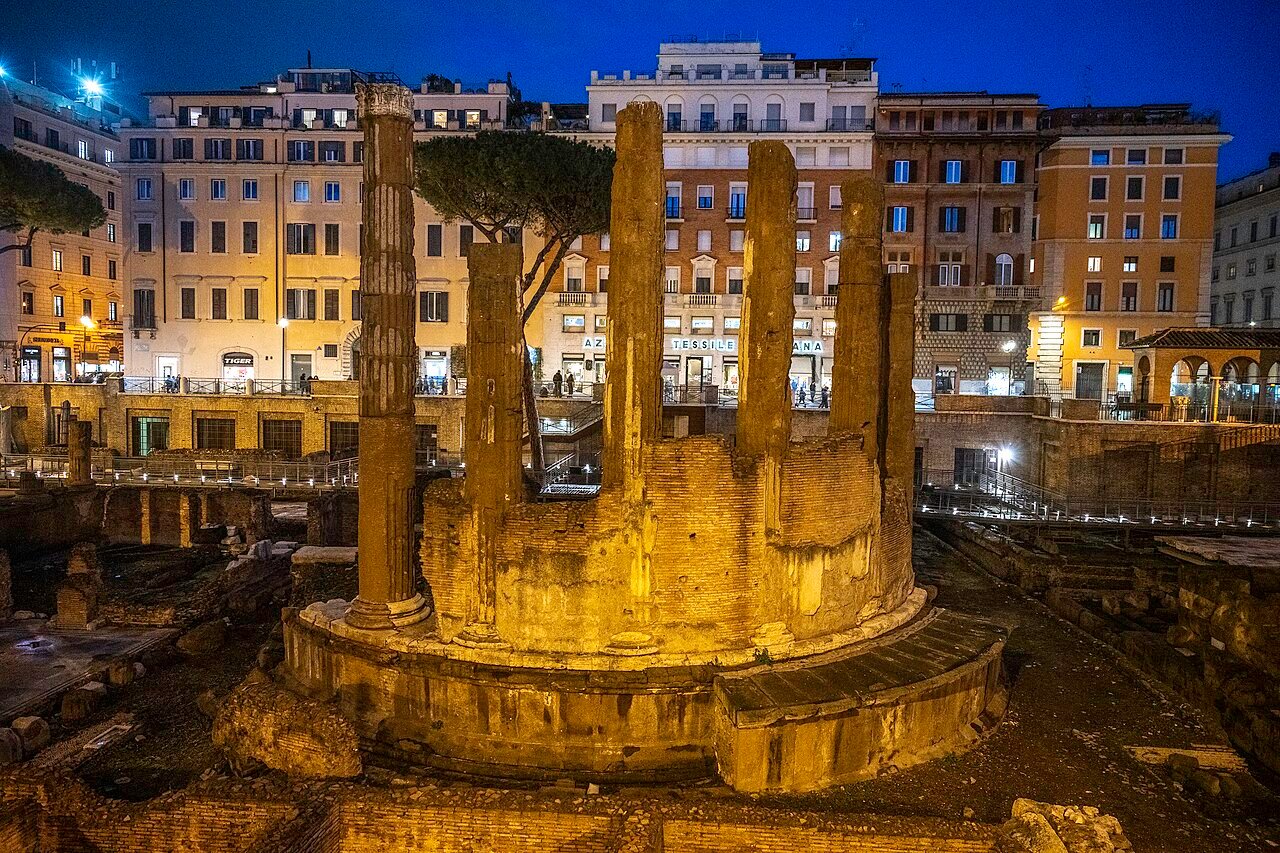
VIII. Largo di Torre Argentina
Four Republican-era temples, three of them third-century BC or older, sit four metres below Rome’s modern street level in the Campus Martius. Temple A from the third century BC, Temple B from 101 BC with its colossal acrolithic statue of Fortuna, Temple C from the 290s–280s BC, Temple D from the second century BC: this is one of the oldest exposed stratigraphies in the city, and the place where Caesar was assassinated in 44 BC. The Torre Argentina Cat Sanctuary, founded inside Temple D in 1993, gives the site its second life.
IX. Domus Aurea — Nero’s Golden House
Begun after the Great Fire of 64 AD, Nero’s enormous palace covered roughly 2.6 square kilometres across the Palatine, Oppian, and Caelian hills. Nearly complete by Nero’s death in 68 AD, it was systematically buried by his successors. The site reopened to the public in 2014 after restoration. More than 150 rooms have been mapped; about a third are open. Hard hats are recommended. Booking is required. The frescoed ceilings here are what Renaissance painters climbed in to study; the word “grotesque” comes from the grotte, the underground rooms they explored.
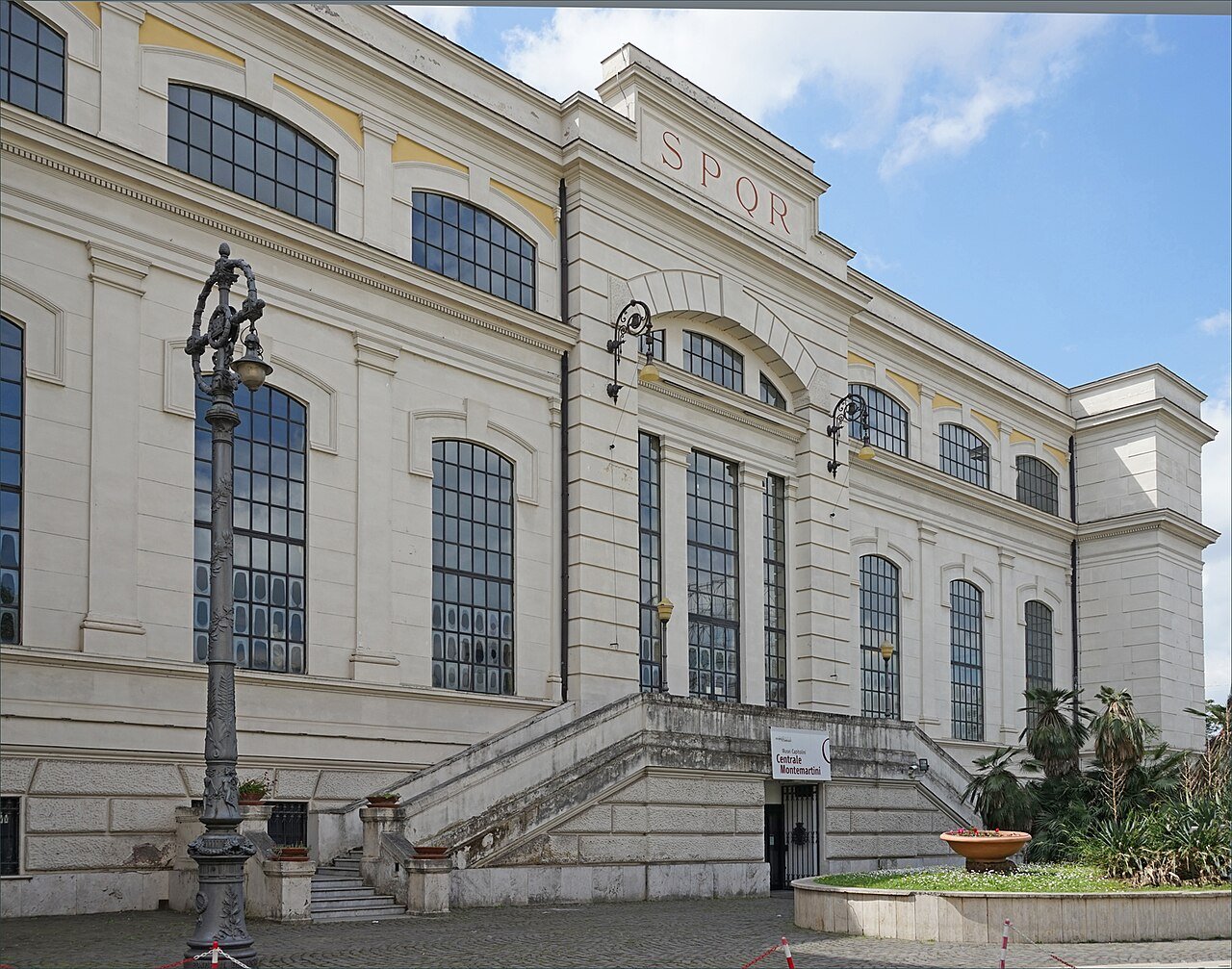
X. Centrale Montemartini
Rome’s first thermoelectric power station, active from 1912 to 1963, became a museum in 1997 — initially as a temporary home for Capitoline Museum sculptures during renovation, then permanently. Roughly four hundred ancient statues, busts, mosaics, and tomb reliefs sit against the original turbines, boilers, and steel-gridded interior of the power plant. It is the most coherent industrial-archaeological dialogue in the city, and one of the few Rome museums where you are routinely the only person in the room.
Where to read more
Rome is more than the Forum and the Vatican, more than the Colosseum walk and the Trevi photograph. The ten sites above sit a short metro ride or a fifteen-minute walk from the standard route, and most cost less than a third of the headline-monument ticket. Read the magazine for further itineraries across the Italian heritage map. And if you want to see Rome’s early-twentieth-century chapter, the Liberty Rome of Gino Coppedè (almost as overlooked as the Mithraeum), the Grand Tour for Liberty Lovers walks you through Quartiere Coppedè in its larger Italian context.
Sources
- Tomb of Caecilia Metella — Wikipedia — built c. 30–10 BC, Caetani fortification 1302–1303.
- Crypta Balbi — Wikipedia — 2001 inauguration, Theatre of Balbus, 1981 excavations.
- Tomb of Priscilla — Wikipedia — first-century, Torre Petro medieval addition.
- House of Augustus — Wikipedia — 41–40 BC purchase, Room of the Masks, 2008 reopening.
- Aqua Virgo — Wikipedia — Marcus Agrippa, 19 BC, still functional today.
- Basilica of San Clemente — Wikipedia — Mithraeum c. 200 AD.
- Vatican Necropolis — Wikipedia — first–fourth century AD, 1940–1949 excavation.
- Largo di Torre Argentina — Wikipedia — four Republican temples.
- Domus Aurea — Wikipedia — post-64 AD, 2.6 km², reopened 2014.
- Centrale Montemartini — Wikipedia — power station 1912–1963; museum from 1997.