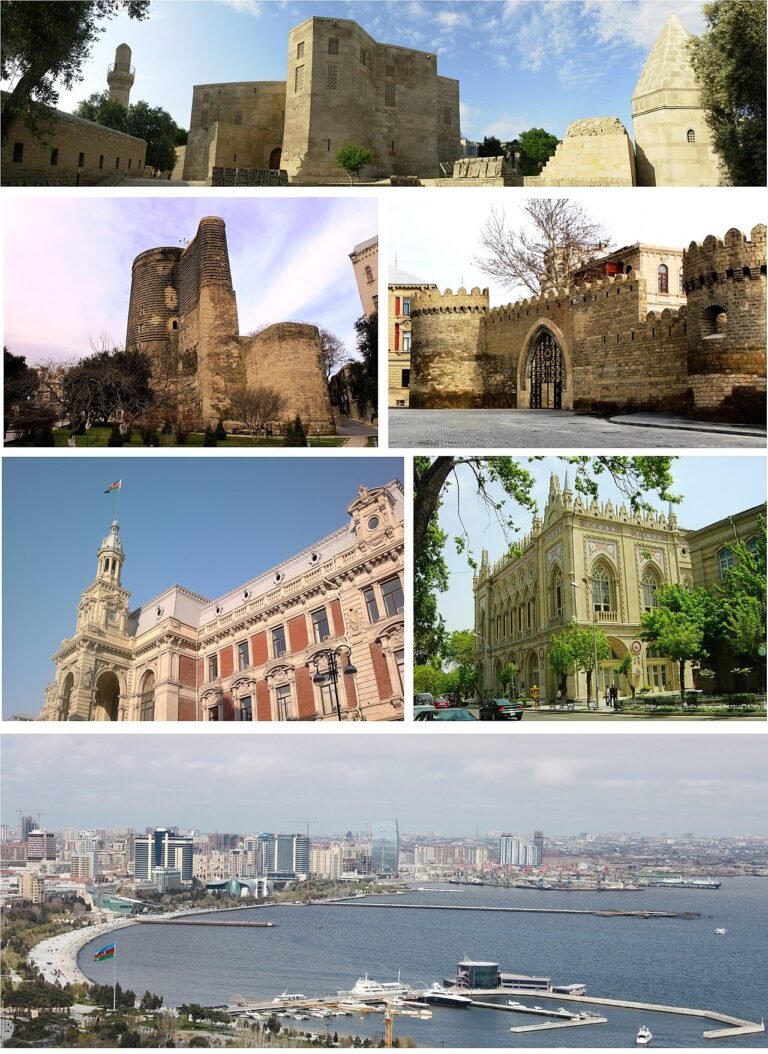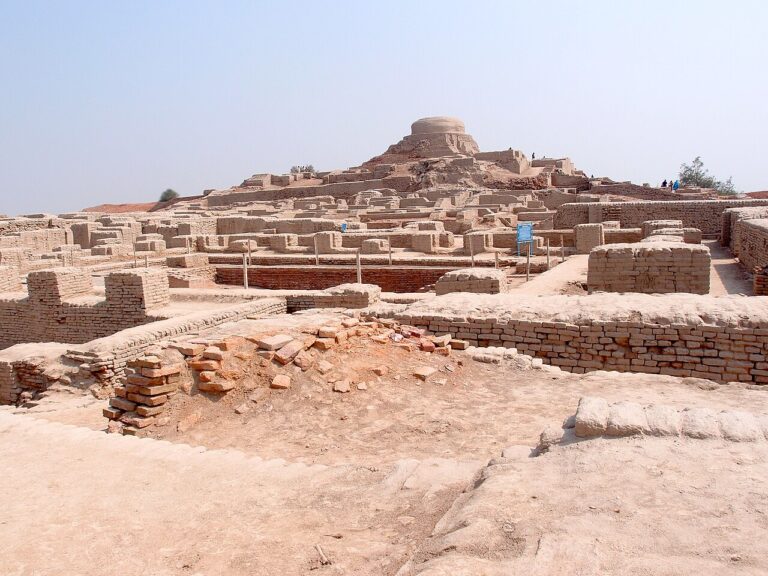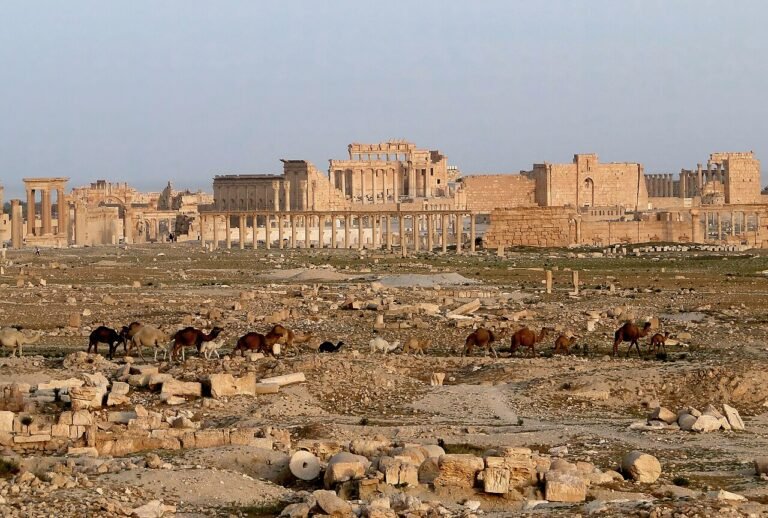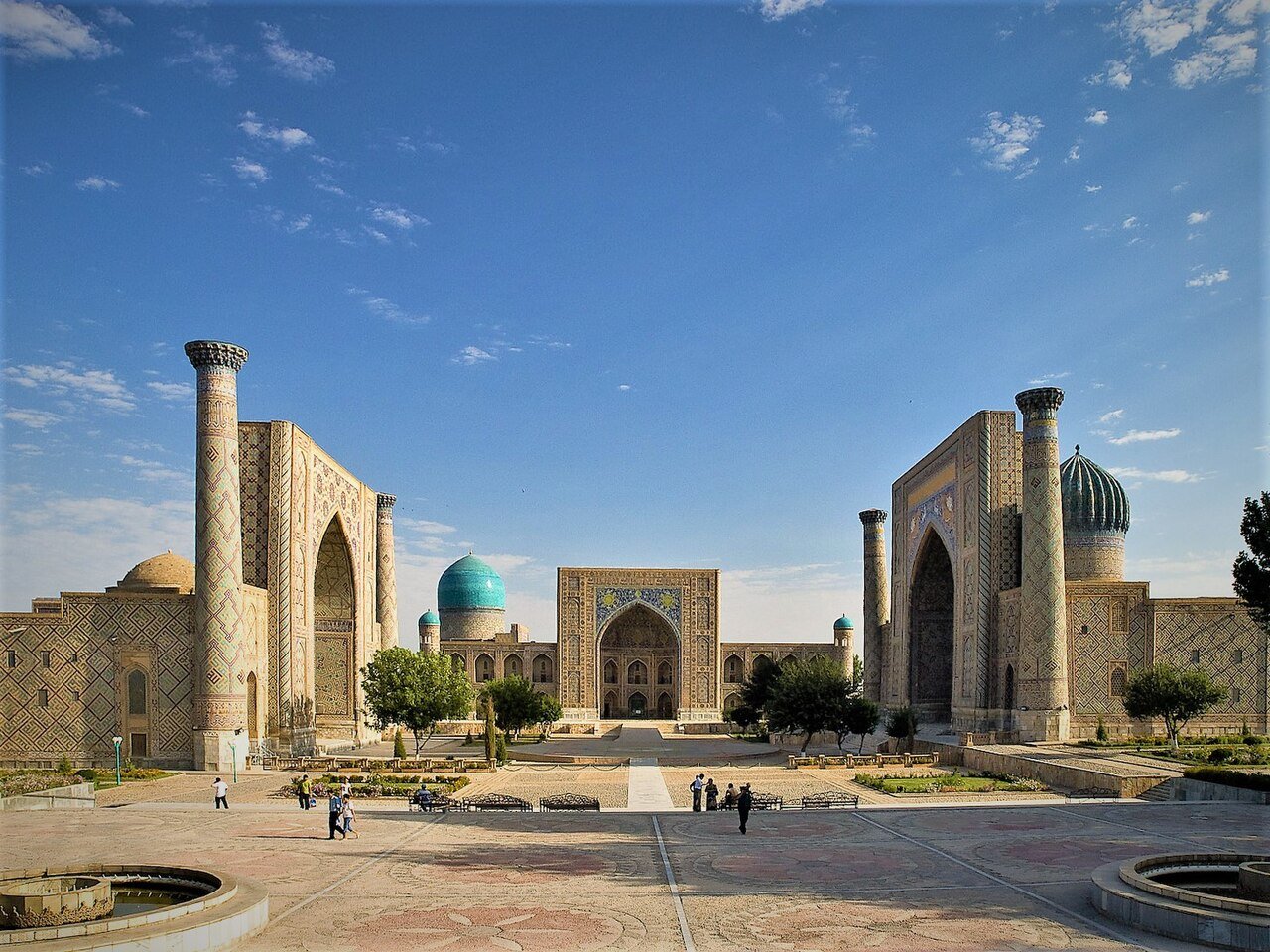
Central Asia is home to 29 UNESCO World Heritage Sites across six countries, ranging from the Silk Road cities of the Uzbek steppe to the bronze-age rock carvings of the Mongolian Altai and the ancient fortresses that once guarded the Caspian shore. The region holds some of the longest continuously occupied urban centres on earth, yet much of its inscribed landscape remains far less visited than comparable heritage in Europe or East Asia. From Cultural Heritage Online.
The shape of Central Asia’s World Heritage list
UNESCO inscriptions in the region divide broadly between cultural sites tied to Silk Road trade, nomadic civilisation, and early Islamic architecture, and natural sites protecting the steppes, high-mountain corridors, and desert ecosystems that give the landscape its physical character. Cultural properties account for the majority of inscriptions, reflecting Central Asia’s outsized role in pre-modern global exchange. The oldest inscription in the region is Itchan Kala in Uzbekistan, entered on the World Heritage List in 1990; the most recent additions came in 2023 and 2025, with new Tajik entries and the Deer Stone Monuments of Mongolia, confirming that the list is still actively growing.
Several inscriptions cover phenomena at a continental scale. The Cold Winter Deserts of Turan, inscribed in 2023, protect a vast arid corridor shared by Kazakhstan and Uzbekistan — an ecosystem almost without parallel in the temperate world. The Western Tien-Shan, a natural serial site shared by Kazakhstan, Kyrgyzstan, and Uzbekistan since 2016, extends across national boundaries in a way that reflects how mountain biodiversity operates, indifferent to political borders. Taken together, the list maps a zone of human and natural significance that stretches from the Caspian to the Pacific edge of the Mongolian plateau.
Countries with the most inscriptions
Uzbekistan leads the region with seven inscribed sites, a figure that reflects both the density of Silk Road urbanism in the Zarafshan Valley and the country’s long engagement with UNESCO processes. Itchan Kala (1990), the Historic Centre of Bukhara (1993), Shakhrisyabz (2000), and Samarkand (2001) form a core of medieval Islamic architecture that is without equal in Central Asia. The 2023 inscription of the Silk Roads: Zarafshan-Karakum Corridor added a serial cultural site linking Uzbekistan with Tajikistan along one of the best-documented segments of the ancient trade network.
Kazakhstan and Mongolia each hold six inscribed sites, making them the second most represented countries. Kazakhstan’s list spans the Mausoleum of Khoja Ahmed Yasawi in Turkestan — one of the finest examples of Timurid funerary architecture — through the petroglyphs of Tamgaly to the immense steppe wetlands of Saryarka. Mongolia’s six sites move between nomadic sacred landscapes, Bronze Age deer stone monuments, and shared transboundary natural zones. Azerbaijan, Kyrgyzstan, and Tajikistan each hold between three and five inscriptions, with profiles weighted toward cultural heritage and, in Tajikistan’s case, spectacular high-altitude natural terrain.
Cross-border and serial sites
The Silk Roads: the Routes Network of Chang’an-Tianshan Corridor, inscribed in 2014, is the region’s most prominent transboundary cultural site: it links China, Kazakhstan, and Kyrgyzstan across 5,000 kilometres of documented caravan routes, oasis towns, and mountain passes. The parallel Zarafshan-Karakum Corridor inscription of 2023 extends Silk Road recognition further west through Uzbekistan and Tajikistan. Together, these two serial inscriptions mean that Central Asia now holds two distinct segments of a heritage corridor that once connected Rome to Chang’an.
On the natural side, the Uvs Nuur Basin, shared between Mongolia and Russia since 2003, protects one of the best-preserved steppe lake systems in Asia, while the Landscapes of Dauria — also a Mongolia-Russia joint inscription — safeguards the periodically flooded grassland systems east of the Mongolian plateau. The Western Tien-Shan transnational natural site brings Kazakhstan, Kyrgyzstan, and Uzbekistan together around a mountain arc that sustains a disproportionate share of temperate-zone plant diversity. Serial and transboundary properties now account for a significant fraction of Central Asia’s total inscriptions, a structural feature that distinguishes the region’s World Heritage profile from that of many others.
Natural and mixed-criteria sites
Natural inscriptions in the region are concentrated in Kazakhstan, Mongolia, and Tajikistan. Saryarka (2008) in northern Kazakhstan covers 450,000 hectares of steppe and lake, a critical staging point for waterbirds on the Central Asian flyway. The Tajik National Park (Mountains of the Pamirs), inscribed in 2013, encompasses roughly 2.4 million hectares of high-altitude terrain — one of the largest terrestrial protected areas in the world — and protects habitat for the snow leopard, Marco Polo sheep, and Siberian ibex. The Tugay forests of Tigrovaya Balka Nature Reserve, added to the Tajik list in 2023, protect a rare riverine forest type that once lined the floodplains of Central Asian rivers before intensive irrigation changed the hydrological regime.
Mongolia’s natural inscriptions include the Great Burkhan Khaldun Mountain (2015), a sacred landscape associated with Chinggis Khan that straddles the cultural-natural boundary. No site in the region currently holds mixed criteria status, though several properties recognised for natural values carry deep layers of intangible cultural significance for the communities living around them. The absence of formal mixed inscriptions partly reflects how UNESCO nominations in the region have historically been organised: cultural ministries and environmental agencies have tended to submit nominations separately rather than constructing joint dossiers.
Explore Central Asia’s UNESCO heritage
CHO publishes country-by-country editorial guides to every UNESCO inscription in the region. Each guide covers site history, access, and the criteria under which UNESCO granted recognition.
- Uzbekistan (7 sites)
- Kazakhstan (6 sites)
- Kyrgyzstan (3 sites)
- Tajikistan (3 sites)
- Azerbaijan (4 sites)
- Mongolia (6 sites)
Every site in this list is pinpointed on CHO’s interactive heritage map, with GPS coordinates and sourced editorial history. See our guide to UNESCO World Heritage criteria, and our piece on cultural travel beyond mass tourism.
Frequently Asked Questions
How many UNESCO World Heritage Sites does Central Asia have?
Across the six countries covered in this guide — Uzbekistan, Kazakhstan, Kyrgyzstan, Tajikistan, Azerbaijan, and Mongolia — there are 29 UNESCO World Heritage Sites. The list spans cultural properties associated with Silk Road urbanism and nomadic heritage as well as natural sites protecting the region’s steppe, mountain, and desert ecosystems.
Which country in Central Asia has the most UNESCO World Heritage Sites?
Uzbekistan holds the most inscriptions in the region, with seven UNESCO World Heritage Sites. These include four medieval Islamic urban centres — Itchan Kala, Bukhara, Shakhrisyabz, and Samarkand — inscribed between 1990 and 2001, alongside natural and serial Silk Road properties added more recently.
What is the oldest UNESCO World Heritage Site in Central Asia?
Itchan Kala, the walled inner city of Khiva in Uzbekistan, was inscribed in 1990 and is the oldest UNESCO World Heritage Site in the Central Asian region. It preserves one of the best-surviving examples of a pre-industrial Silk Road city, with earthen ramparts, more than fifty monuments, and a street plan unchanged since the eighteenth century.
Are there UNESCO World Heritage Sites that cross multiple Central Asian countries?
Yes — several of the region’s most significant inscriptions are transboundary or serial sites. The Silk Roads: Chang’an-Tianshan Corridor (2014) links China, Kazakhstan, and Kyrgyzstan; the Zarafshan-Karakum Corridor (2023) connects Uzbekistan and Tajikistan; and the Western Tien-Shan natural site (2016) spans Kazakhstan, Kyrgyzstan, and Uzbekistan. These multi-country inscriptions reflect the physical and historical reality of a region where ancient routes and mountain systems operate across modern borders.
Sources used in this article
- UNESCO — List of World Heritage Sites in Central Asia.
- CHO magazine — What is a World Heritage Site?
- CHO — Interactive map of heritage sites.