Poland’s UNESCO World Heritage List is among the densest in Central Europe, and Warsaw sits at its geographic centre. Five inscribed sites are reachable from Warsaw Centralna station — some in under two and a half hours, one best treated as an overnight. Each rewards the journey with an unmistakeable sense of what survives and what has been painstakingly brought back. From Cultural Heritage Online.
Historic Centre of Warsaw City centre — walkable
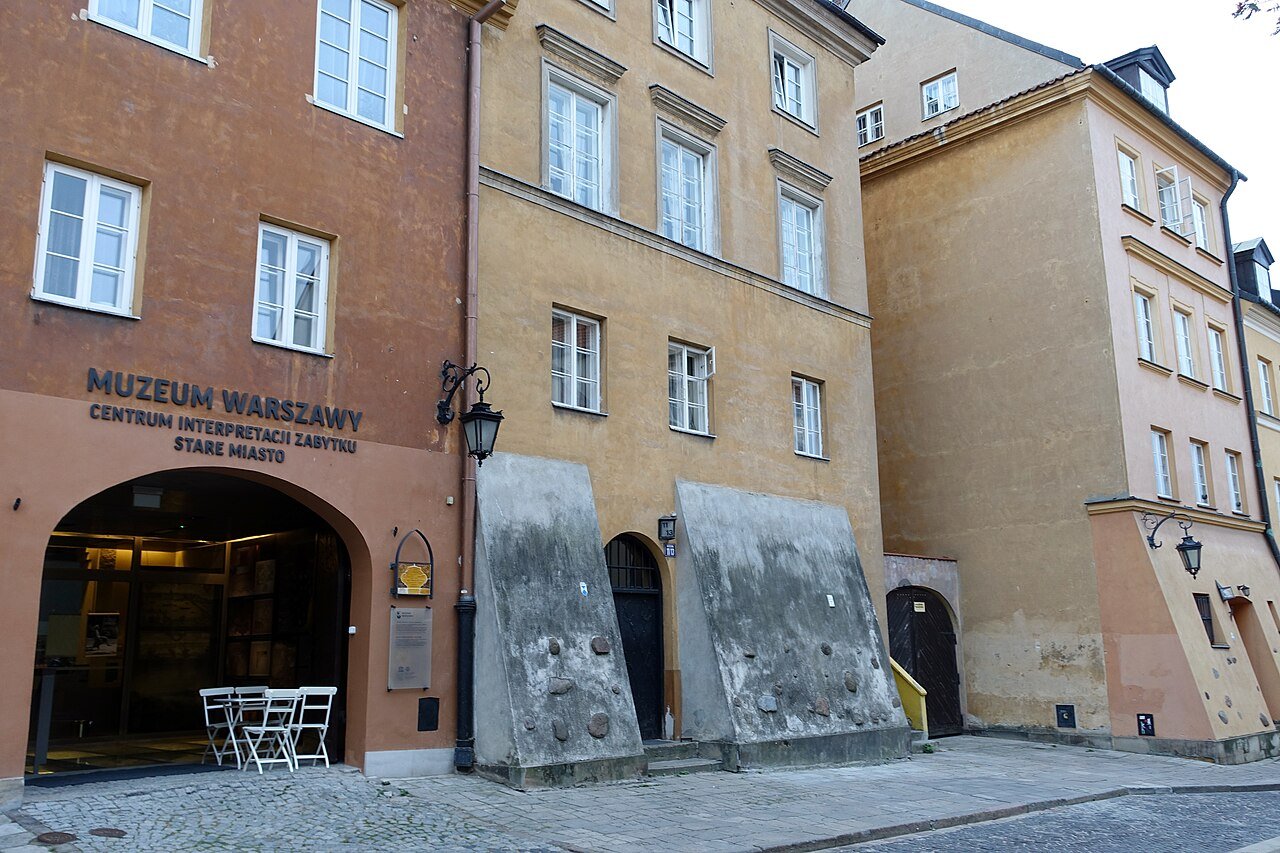
The Historic Centre of Warsaw carries a distinction that no other World Heritage Site can claim: it was almost completely destroyed. German forces systematically demolished roughly 85 percent of the Old Town after the 1944 Warsaw Uprising, leaving a wasteland of rubble. What you walk through today is the result of meticulous postwar reconstruction, completed by the early 1950s, which UNESCO recognised in 1980 as the world’s first successful attempt to resurrect an entire historic city core. The Royal Castle, St John’s Cathedral, the Barbican, and the coloured burgher houses framing the Old Town Market Square were rebuilt from 18th-century vedute paintings by Canaletto the Younger and from surviving architectural drawings. The reconstruction project archive was added to UNESCO’s Memory of the World register in 2011. At street level, the cobblestones absorb sound and the painted facades face a square where the settlement received town privileges around 1300.
Getting there: The Old Town is a 20-minute walk or short tram ride from Warsaw Centralna. No separate journey required. Allow: 3–4 hours. Best for: Anyone arriving in Warsaw — the historic centre is the city’s starting point, not an excursion.
Medieval Town of Toruń 2 hrs 15 min by Intercity
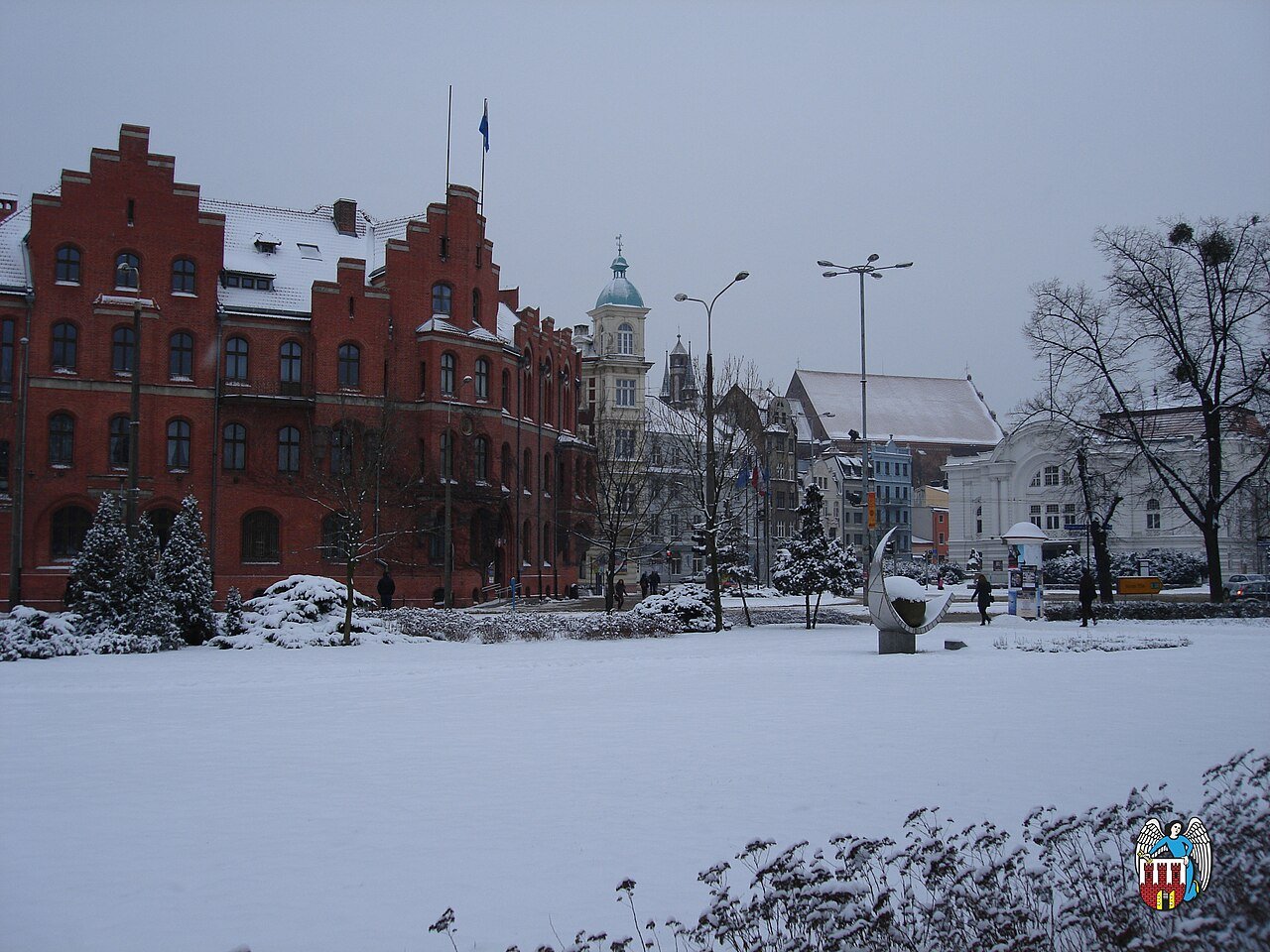
Toruń received city rights from the Teutonic Knights in 1233 and grew into one of the most prosperous trading towns on the Vistula. The medieval urban fabric — Old Town, New Town, and the ruins of the Teutonic fortress — was inscribed by UNESCO in 1997 under criteria ii and iv. The Gothic brick Town Hall in the Old Town Market Square, built in the 14th century, remains one of the best-preserved civic buildings in northern Europe. Toruń is also the birthplace of Nicolaus Copernicus, born here in 1473; a bronze monument to him stands in the square bearing his name a short walk from the Town Hall. The city holds a distinct smell: gingerbread has been baked here since the medieval period, and a handful of bakeries still use recipes traceable to the 15th century. The Leaning Tower of Toruń, a remnant of the 14th-century city wall, tilts visibly and can be entered.
Getting there: PKP Intercity from Warsaw Centralna, approximately 2 hours 15 minutes. Trains run several times daily. Allow: 3–4 hours. Best for: A comfortable day trip combining Gothic architecture with the Copernicus birthplace museum.
Castle of the Teutonic Order in Malbork 3 hrs by Intercity
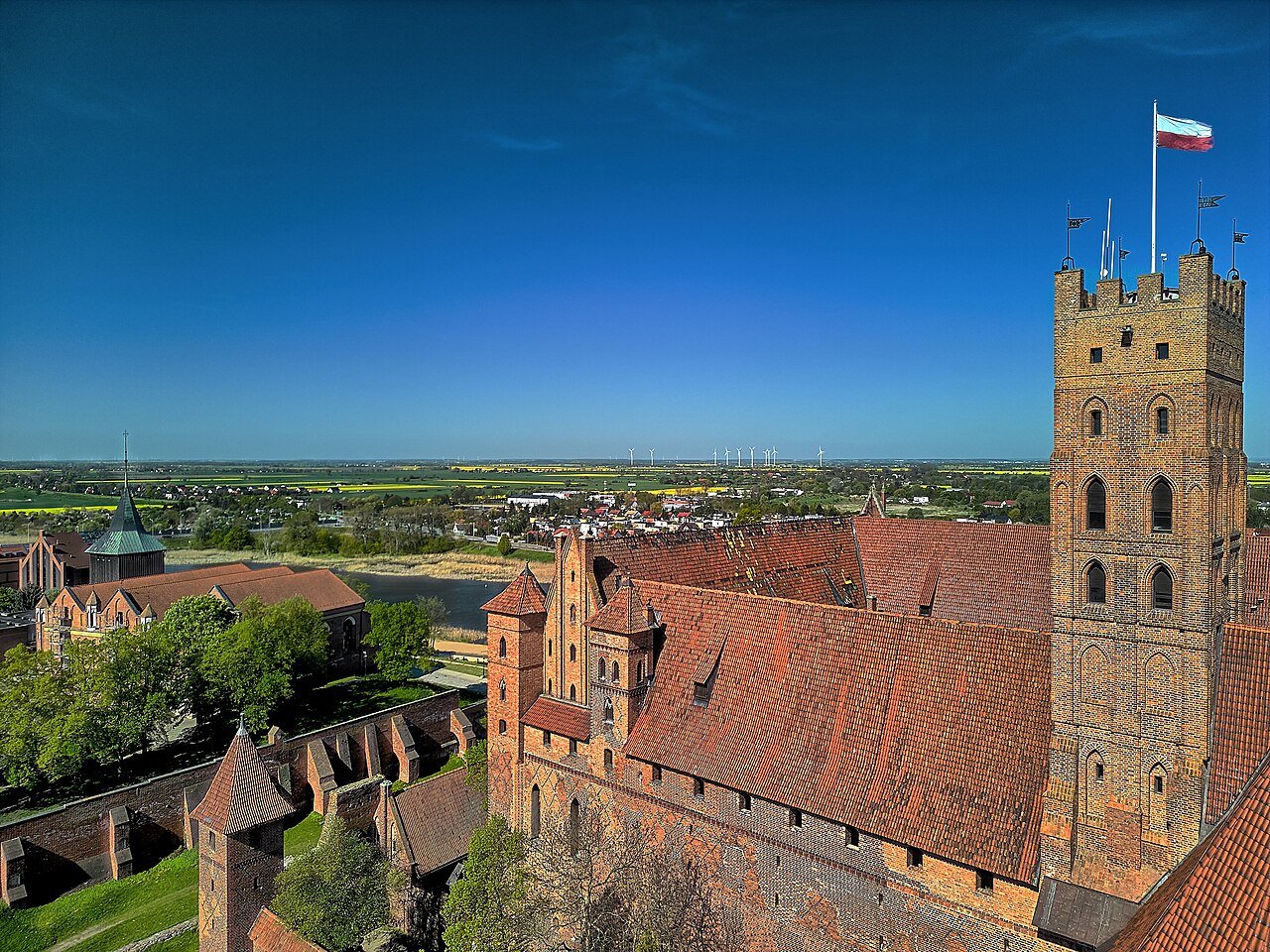
Malbork Castle is the largest castle on Earth measured by land area. Construction began around 1274 at the behest of the Teutonic Order, who named their fortress Marienburg. By 1406, when the complex reached its full extent after a campaign of expansion under Grand Master Konrad von Jungingen, it had become the world’s largest brick building. Three interconnected fortresses — the High Castle, Middle Castle, and Lower Castle — rise above the Nogat River in a mass of dark red Gothic brick that turns amber at dusk. UNESCO inscribed the site in 1997. After the Thirteen Years’ War, Polish King Casimir IV Jagiellon purchased the castle in 1457, and it served as a royal residence for two centuries. The museum inside holds one of Europe’s largest collections of amber and a significant armoury. The viewing walk along the river bank opposite the walls gives the best sense of scale.
Getting there: PKP Intercity from Warsaw Centralna, approximately 3 hours, direct or with a change at Gdańsk Główny. Check timetables in advance as direct services are limited. Allow: 3–4 hours for the castle and museum. Best for: Architecture and military history; the site justifies an early departure from Warsaw and a return by evening.
Historic Centre of Kraków 2 hrs 30 min by EIP Pendolino
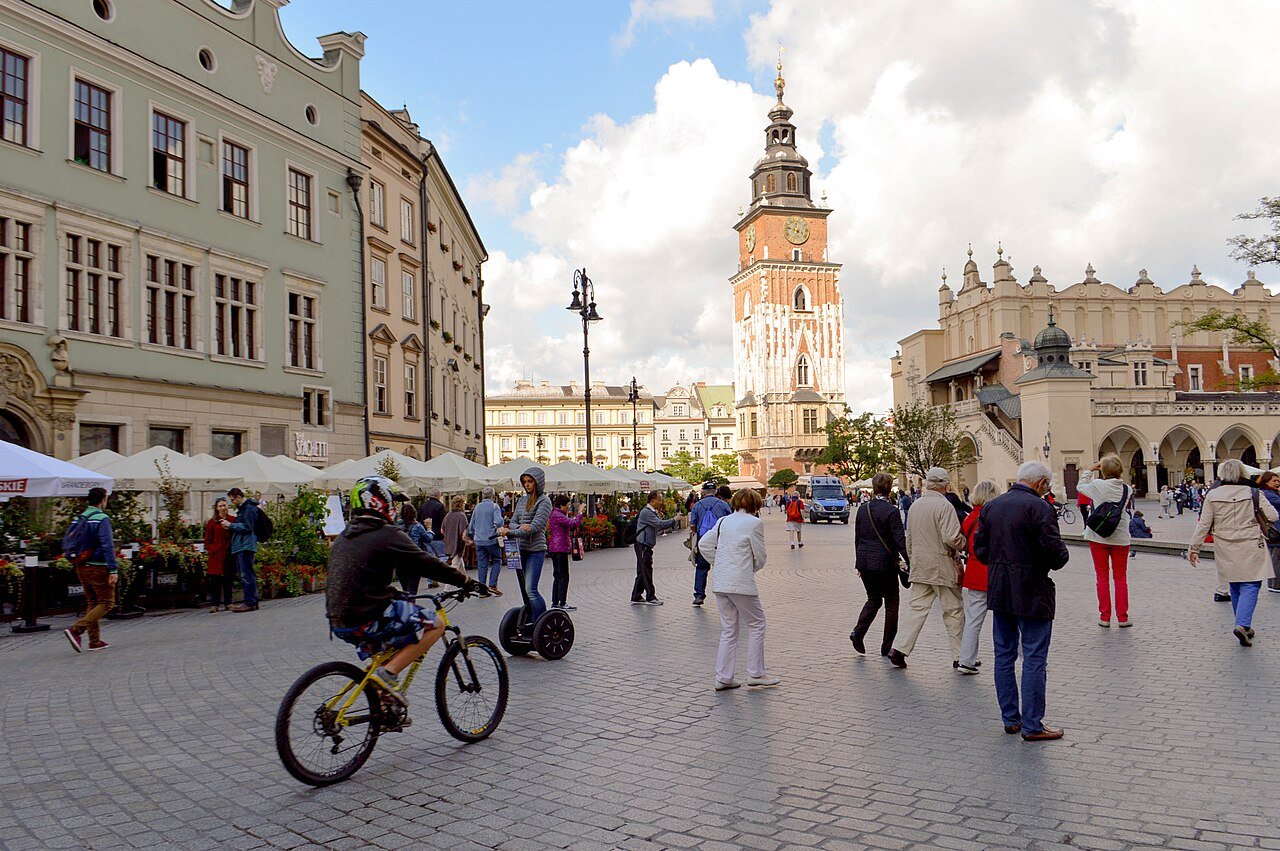
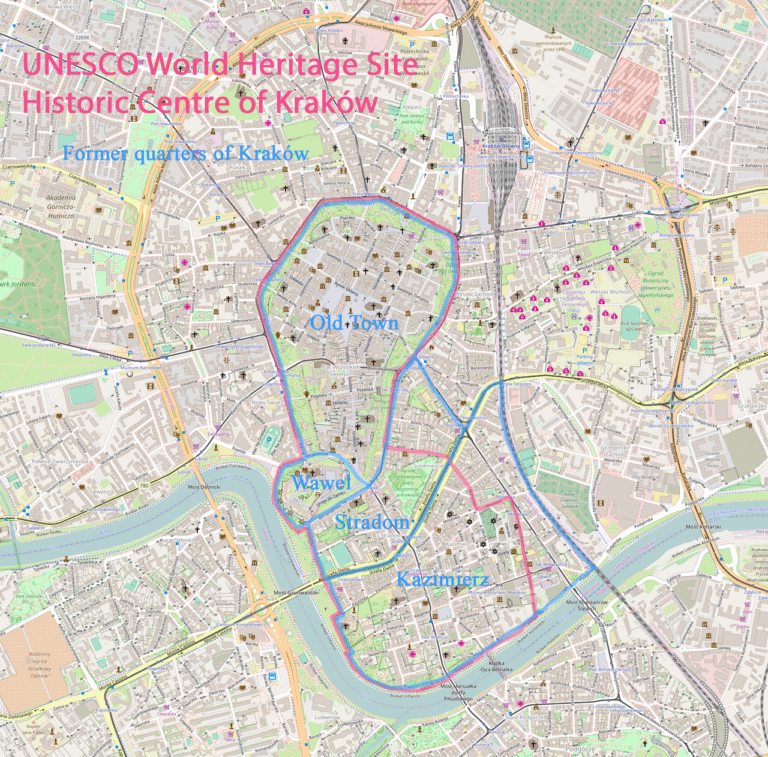
Kraków’s Old Town was among the first twelve sites placed on the UNESCO World Heritage List in 1978, making it one of the earliest recognised anywhere in the world. The city served as Poland’s capital until 1596, and the historic centre reflects that centuries-long accumulation of royal and ecclesiastical ambition. Wawel Castle, rebuilt in Renaissance style under Sigismund I between 1502 and 1536, crowns a limestone outcrop above the Vistula. Below it, the Main Market Square — Rynek Główny — measures 200 metres to a side, the largest medieval market square in Europe. St Mary’s Basilica, begun in the 14th century, towers over the northeast corner; a trumpeter still plays the Hejnał Mariacki from its taller spire every hour. The cloth hall in the square’s centre, the Sukiennice, dates in its current form to the 16th century. Kraków survived the Second World War without the devastation that levelled Warsaw, and its streetscape reads as a continuous record from Gothic to Baroque.
Getting there: PKP EIP Pendolino from Warsaw Centralna, approximately 2 hours 30 minutes. Multiple departures daily. Allow: 4–5 hours minimum; an overnight stay is strongly recommended to cover Wawel, the Old Town, and the Kazimierz district without rushing. Best for: Visitors with more than one day — Kraków rewards a longer stay more than any other site on this list.
Wieliczka and Bochnia Royal Salt Mines 3 hrs total — combine with Kraków
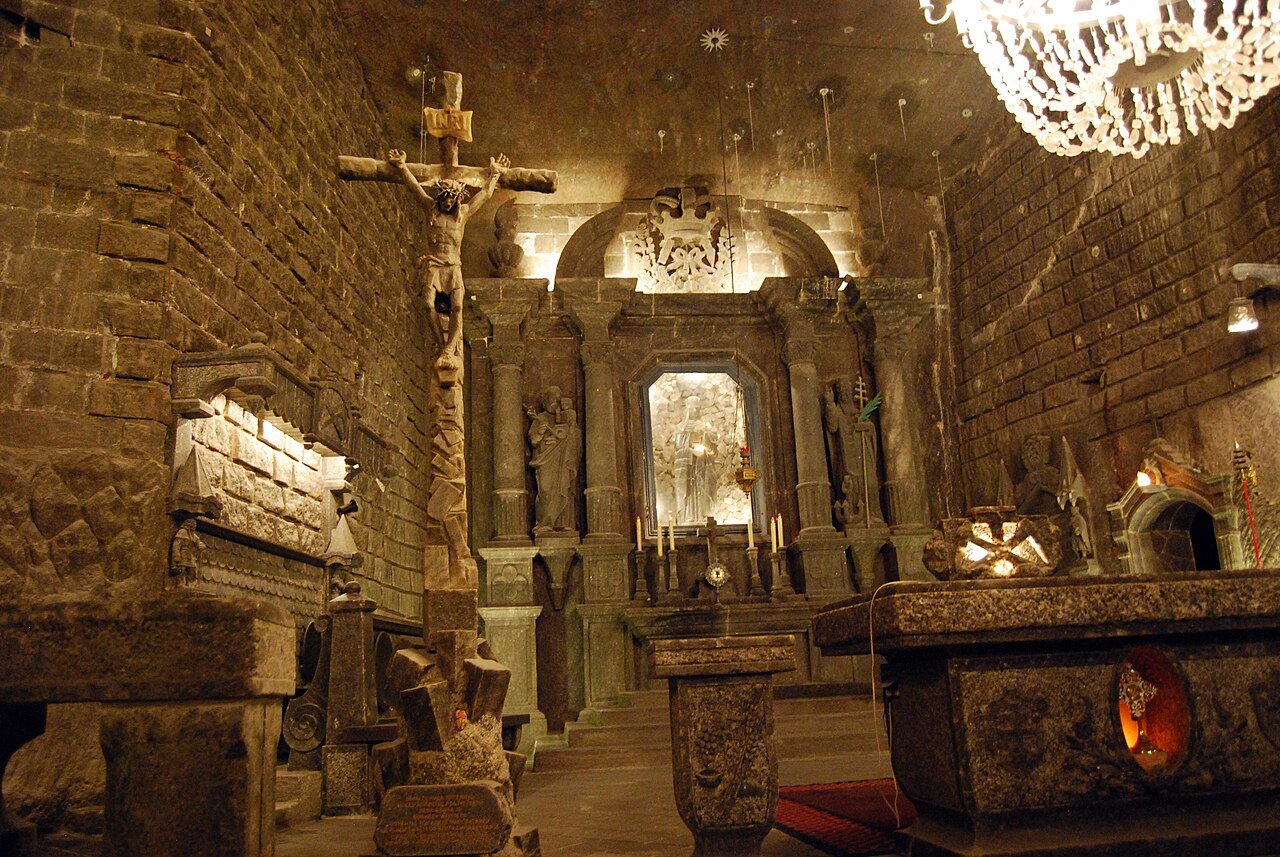
The Wieliczka Salt Mine was one of the original twelve UNESCO World Heritage Sites, inscribed in 1978 — the same year as Kraków’s historic centre. Salt extraction here dates to the 13th century, and the mine operated without interruption until 1996. What lies below the small town of Wieliczka, 14 kilometres southeast of Kraków, is a subterranean city: over 287 kilometres of corridors and galleries reaching a depth of 327 metres. The visitor route covers 3.5 kilometres, less than two percent of the total passages. Miners carved chapels, sculptures, and chandeliers entirely from salt; the Chapel of St Kinga, created between 1895 and 1963, is the largest underground chapel in the world, its walls, floor, and relief carvings all cut from the grey-green halite rock. The air underground holds at a constant 14°C year-round. Bochnia, 40 kilometres further east, was added to the inscription in 2013.
Getting there: Travel to Kraków by Pendolino (2 hrs 30 min), then take a local bus or minibus from Kraków Główny to Wieliczka (approximately 30 minutes). This site should be combined with a Kraków visit, not attempted as a stand-alone day trip from Warsaw. Allow: 3 hours underground. Best for: The second day of a Kraków trip; underground temperatures stay at 14°C regardless of season, so a layer is recommended.
Frequently Asked Questions
How many UNESCO World Heritage Sites are near Warsaw?
Five UNESCO World Heritage Sites are reachable from Warsaw by train: the Historic Centre of Warsaw itself, the Medieval Town of Toruń (2 hrs 15 min), Malbork Castle (3 hrs), the Historic Centre of Kraków (2 hrs 30 min), and the Wieliczka and Bochnia Royal Salt Mines (accessible via Kraków). Poland has 17 UNESCO inscriptions in total.
What is the closest UNESCO World Heritage Site to Warsaw?
The closest is the Historic Centre of Warsaw itself, which sits within the city and is walkable from Warsaw Centralna station in about 20 minutes. Beyond Warsaw, the Medieval Town of Toruń is the nearest by rail, at approximately 2 hours 15 minutes on an Intercity service.
Can you visit Malbork Castle as a day trip from Warsaw?
Yes, but it requires an early start. The journey takes around 3 hours each way, so plan to leave Warsaw by 7–8 am and return in the evening. Direct PKP Intercity services exist on some days; on others a change at Gdańsk is required. Check timetables on the PKP Intercity website before booking.
Do I need to book tickets for the Wieliczka Salt Mine in advance?
Advance booking is strongly recommended, particularly from April through October when visitor numbers are high. Timed-entry tickets can be purchased on the official salt mine website. The standard tourist route through the mine takes approximately 2.5 to 3 hours and covers 3.5 kilometres underground.
Sources used in this article
- UNESCO World Heritage Centre — World Heritage List.
- Wikipedia — Old Town, Warsaw.
- Wikipedia — Malbork Castle.
- Wikipedia — Wieliczka Salt Mine.
- CHO — Interactive heritage map.
Sources
- S1 — Zamoyski, Adam. The Polish Way: A Thousand-Year History of the Poles and Their Culture. John Murray, 1987. ISBN 978-0-7195-4674-7.
- S2 — Ciechanowski, Jan M. The Warsaw Rising of 1944. Cambridge University Press, 1974. ISBN 978-0-521-20203-9.
Spotted an error? Write to editorial@culturalheritageonline.com and we correct it the same day.