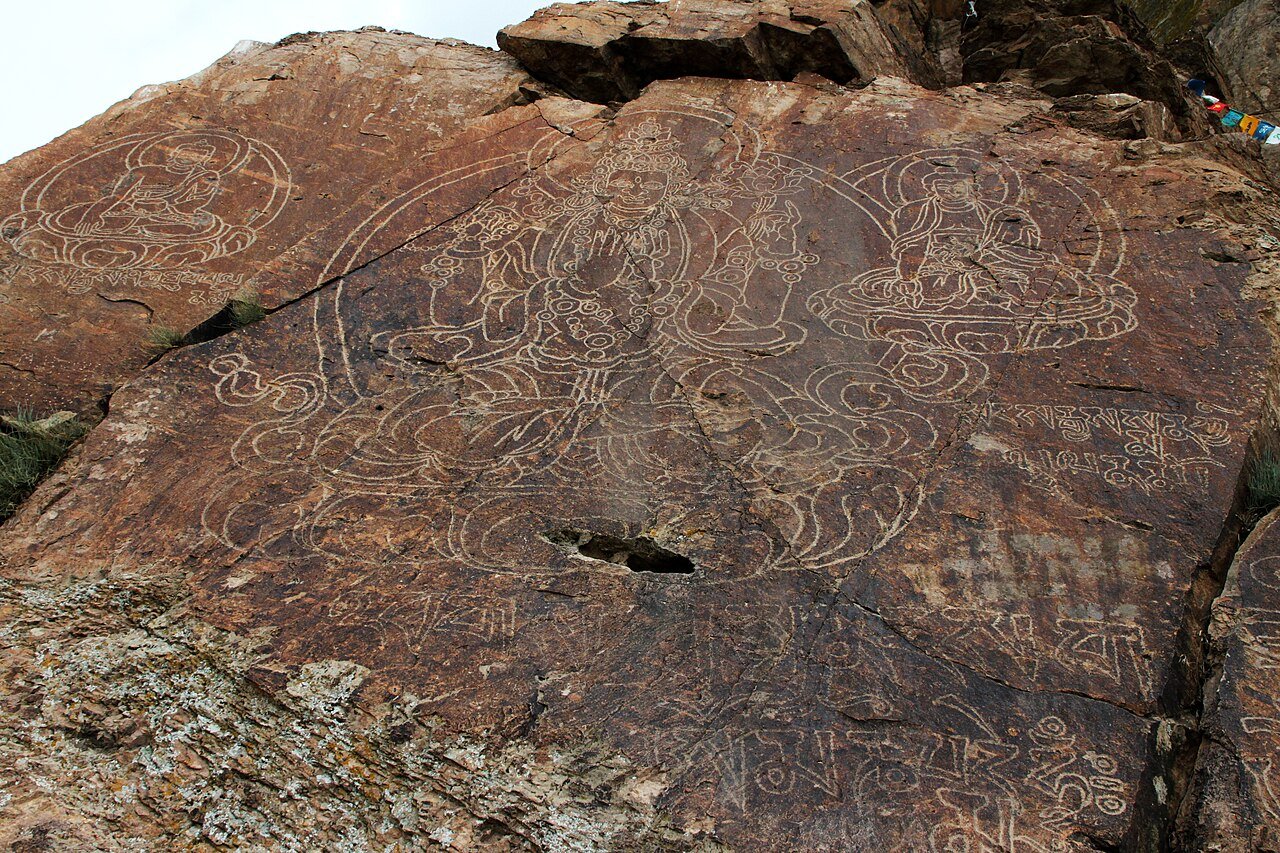
Kazakhstan has six UNESCO World Heritage Sites, a compact list that spans Bronze Age rock art, medieval Islamic architecture, Central Asian steppe wetlands, and the far reaches of ancient trade corridors. The country’s landscapes range from the world’s largest dry steppe to the glaciated ridges of the Tien-Shan — a scale that shapes both what survives and what has been recognised. From Cultural Heritage Online.
Why Kazakhstan’s list looks the way it does
Kazakhstan ratified the UNESCO World Heritage Convention in 1994, but its first inscription did not follow until 2003. The nine-year gap reflects the administrative complexity of a newly independent state building the legislative and technical capacity that nominations require. The country has since added five further sites, including three that are shared with Central Asian neighbours — a pattern that signals both the cross-border nature of the region’s ecosystems and its ancient connectivity.
Of the six inscribed sites, three are classified as cultural and three as natural. That balance is unusual for a landlocked country whose territory is dominated by steppe and semi-desert, and it reflects deliberate choices about which landscapes and which histories are worth nominating. The 15 sites currently on Kazakhstan’s tentative list suggest the pace of inscription is likely to accelerate through the late 2020s.
The first inscriptions
Kazakhstan’s first UNESCO listing came in 2003, when two sites were inscribed at the same session of the World Heritage Committee in Paris:
- Mausoleum of Khoja Ahmed Yasawi (2003) — a 14th-century Timurid funerary complex in Turkestan, considered one of the finest surviving examples of Timurid architecture outside Samarkand.
- Petroglyphs within the Archaeological Landscape of Tamgaly (2004) — rock engravings in a gorge of the Chu-Ili mountains, dated from the second millennium BCE to the twentieth century and documenting the pastoral communities that moved through the region over three millennia.
Tamgaly’s inscription followed in 2004, just one year later. Together, these two sites established Kazakhstan’s dual identity on the World Heritage map: as a place where nomadic culture left its mark in stone, and where the sedentary civilisations of the Silk Roads built for permanence.
The most visited — and the alternatives
The Mausoleum of Khoja Ahmed Yasawi in Turkestan draws the largest share of heritage visitors. Construction began under Timur in 1389 and was never fully completed, leaving the interior in a state that makes its spatial ambition unusually legible. The adjacent city of Turkestan has been developed as a cultural destination by the Kazakhstani government, adding museums and a reconstructed medieval caravanserai around the site.
For travellers willing to move beyond the most publicised listing, the remaining four sites offer considerable range:
- Petroglyphs of Tamgaly — over 5,000 rock engravings concentrated in a single canyon, including the distinctive “solar deities” images that appear in no other Central Asian rock art complex.
- Silk Roads: Chang’an-Tianshan Corridor (2014, shared with China and Kyrgyzstan) — eleven Kazakhstani components along the ancient routes connecting Chang’an to the Mediterranean, including caravanserais, fortifications, and urban remains.
- Saryarka — Steppe and Lakes of Northern Kazakhstan (2008) — two protected areas covering 450,000 hectares of wetland and steppe that serve as critical stopover habitat for migratory waterbirds, including the globally threatened Siberian white crane.
Natural and shared sites
All three of Kazakhstan’s natural World Heritage Sites involve international partners. Saryarka (2008) is a Kazakhstani-only nomination, but Western Tien-Shan (2016) is shared with Kyrgyzstan and Uzbekistan, and Cold Winter Deserts of Turan (2023) — the most recently inscribed site — is shared with Uzbekistan and Turkmenistan. The Turan inscription covers 14 component sites across the three countries, representing Central Asian deserts shaped by a harsh continental climate and home to species adapted to temperature extremes that can exceed 70°C between seasons.
Western Tien-Shan protects a mountain system that stretches across three countries and supports exceptional plant biodiversity, including wild ancestors of cultivated apples and other fruit trees. The transnational structure of these nominations reflects a broader Central Asian approach to conservation that UNESCO has actively encouraged since the early 2000s.
How to find them
Kazakhstan’s six World Heritage Sites are spread across a country larger than Western Europe, and practical distances between them are substantial. Turkestan and the Tamgaly petroglyphs are both reachable from Almaty — Turkestan by train or air, Tamgaly by a half-day drive. The steppe and mountain sites require more dedicated planning, with some components accessible only with local guides and specialist permits.
Kazakhstan’s World Heritage sites sit alongside thousands of other places on CHO’s interactive map, with GPS and sourced editorial history for each. See also our guides to Italy’s and France’s UNESCO sites, and our piece on cultural travel beyond mass tourism.
Frequently Asked Questions
How many UNESCO World Heritage Sites does Kazakhstan have?
Kazakhstan has six inscribed UNESCO World Heritage Sites as of 2023. The list comprises three cultural sites and three natural sites, with a further 15 properties on the country’s tentative list awaiting possible future nomination.
What was Kazakhstan’s first UNESCO World Heritage Site?
Kazakhstan’s first UNESCO inscription was the Mausoleum of Khoja Ahmed Yasawi, recognised in 2003 at the 27th session of the World Heritage Committee. The 14th-century Timurid funerary complex in Turkestan was inscribed for its outstanding architecture and its association with the Sufi scholar who gave it his name.
How many of Kazakhstan’s World Heritage Sites are shared with other countries?
Three of Kazakhstan’s six World Heritage Sites are transnational. The Silk Roads: Chang’an-Tianshan Corridor is shared with China and Kyrgyzstan; Western Tien-Shan with Kyrgyzstan and Uzbekistan; and Cold Winter Deserts of Turan with Uzbekistan and Turkmenistan.
What is the most recently inscribed World Heritage Site in Kazakhstan?
Cold Winter Deserts of Turan was inscribed in 2023, making it Kazakhstan’s most recent UNESCO listing. The transnational site, shared with Uzbekistan and Turkmenistan, protects 14 desert components across Central Asia and the species that survive its extreme seasonal temperature swings.
Sources used in this article
- UNESCO — State Party Kazakhstan — World Heritage list.
- UNESCO — Kazakhstan: World Heritage Sites.
- CHO magazine — What is a World Heritage Site?
- CHO — Interactive map of heritage sites.
Sources
- S1 — Golden, Peter B. An Introduction to the History of the Turkic Peoples. Otto Harrassowitz, 1992. ISBN 978-3-447-03274-2.
- S2 — Baumer, Christoph. The History of Central Asia: The Age of the Steppe Warriors. I.B. Tauris, 2012. ISBN 978-1-78076-060-5.
Spotted an error? Write to editorial@culturalheritageonline.com and we correct it the same day.