Tajikistan has 5 UNESCO World Heritage Sites, a compact list shaped by the extremes of Central Asian geography — Silk Road river valleys, Pamir peaks, and some of the continent’s oldest urban archaeology. Each inscription reaches across millennia and borders, connecting this landlocked republic to trade networks, empires, and ecosystems that once spanned the known world. From Cultural Heritage Online.
Why Tajikistan’s list looks the way it does
Tajikistan’s heritage landscape is defined by two forces: the Silk Roads and the Pamirs. The country sits at the junction where Central Asian steppe culture, Persian artistic tradition, and mountain ecology converge, and its World Heritage inscriptions reflect exactly that layering. Three sites are classified as cultural, two as natural, and none as mixed — a ratio that signals how recent international attention to the country’s wilderness areas has been.
The pace of inscription has accelerated markedly in the 2020s. A decade after the list opened with a single site in 2010, two more followed in 2023 and a further site was added in 2025, bringing the total to five. That trajectory points to growing government engagement with the UNESCO process and a wider international recognition that Central Asian heritage — long overshadowed by the Silk Road sites of neighbouring Uzbekistan — deserves its own documentation.
The first inscriptions
Tajikistan entered the World Heritage list in 2010 with a single cultural site. It remains one of the most scientifically significant archaeological discoveries in Central Asia, establishing that urban-scale settlement in the region predates many long-held assumptions.
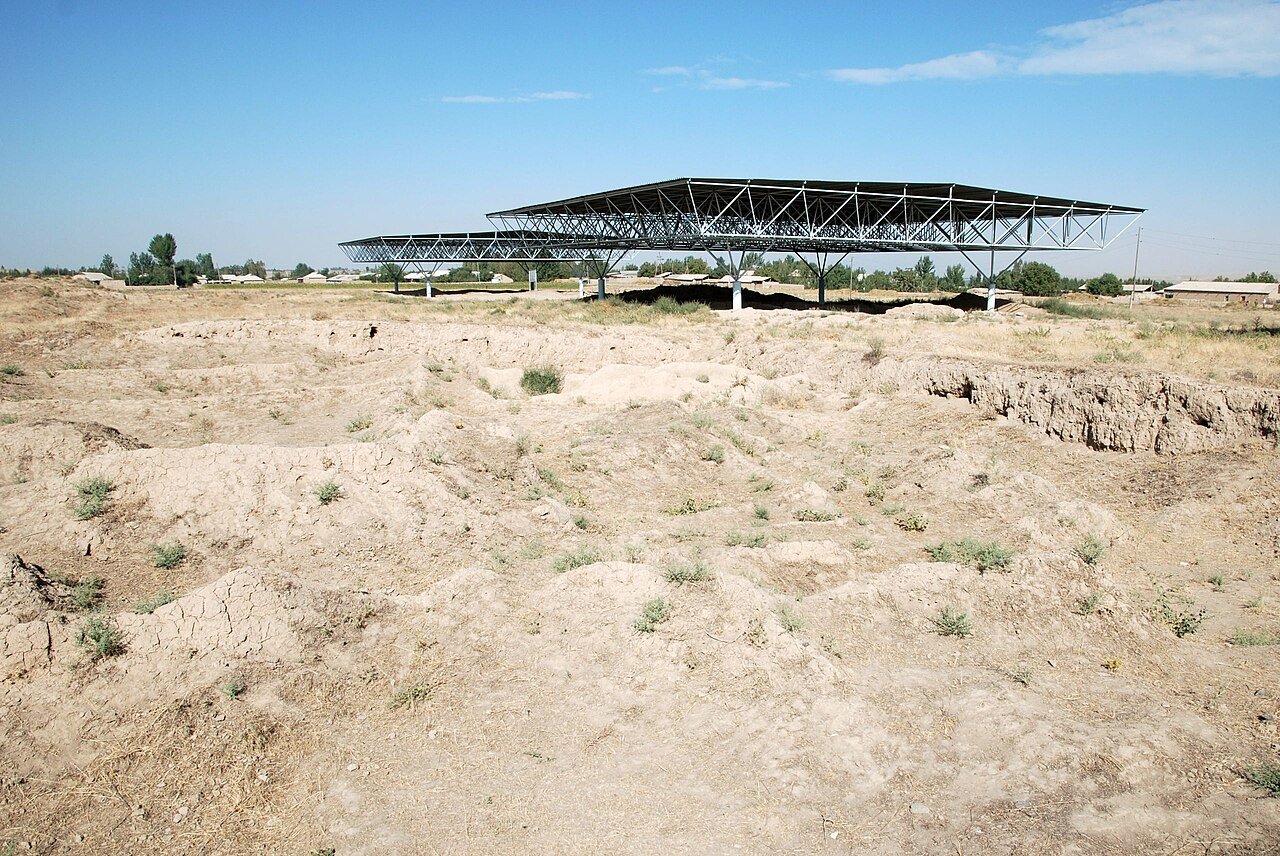
- Proto-urban Site of Sarazm (2010) — An archaeological settlement in the Zerafshan valley occupied from roughly the fourth to third millennium BCE, Sarazm is the earliest known example of proto-urbanisation in Central Asia. Excavations have revealed evidence of metallurgy, agriculture, and long-distance trade links reaching as far as the Iranian plateau and the Indian subcontinent.
Three years later, in 2013, Tajikistan’s largest protected area joined the list on the natural side. The Tajik National Park (Mountains of the Pamirs) covers more than 2.5 million hectares of high-altitude terrain, making it one of the largest World Heritage natural sites in Asia by area. Its inscription recognised the outstanding universal value of Pamir mountain ecosystems, glaciology, and the park’s role as a refuge for species under pressure across the region.
The most visited — and the alternatives
Sarazm draws the most scholarly attention of any site on the list, and the Tajik National Park attracts trekkers and mountaineers prepared for serious expedition conditions. Both are well documented. The more recently inscribed sites offer a different kind of encounter — medieval architecture, floodplain forest, and transnational trade archaeology — that remains far less visited.
- Silk Roads: Zarafshan-Karakum Corridor (2023) — A transnational serial inscription shared with Uzbekistan and Turkmenistan, this 866-kilometre route traces ancient trade pathways connecting oasis cities. The Tajik component contributes Zerafshan valley segments that were commercial arteries between the Mediterranean world and Tang-dynasty China.
- Tugay Forests of the Tigrovaya Balka Nature Reserve (2023) — One of Central Asia’s last surviving tugay — dense, flood-pulse riverine forest — this reserve protects a rare ecosystem along the Vakhsh and Panj rivers. Its name references the Caspian tiger, long extinct in the region, which once ranged through exactly this kind of lowland gallery forest.
- Cultural Heritage Sites of Ancient Khuttal (2025) — Comprising ten archaeological components, this serial cultural site documents the medieval kingdom of Khuttal, which served as a node in Silk Roads commerce from the seventh to the sixteenth century. Its inscription brought international attention to a region of southern Tajikistan that had received comparatively little archaeological publication outside specialist circles.
Natural and shared sites
Tajikistan’s two natural inscriptions occupy opposite ecological poles. The Tajik National Park is a high-altitude world of glaciers, river headwaters, and Marco Polo sheep; Tigrovaya Balka sits near sea level on the Afghan border, where the last remnants of Central Asian riverine forest filter the Amu Darya tributaries. Together they represent nearly the full vertical range of Tajik terrain — from the roof of the world to its subtropical fringes.
The Zarafshan-Karakum Corridor inscription adds a third dimension: shared stewardship across three nations for a cultural landscape that no single border can contain. Serial transnational sites of this kind are increasingly common on the World Heritage list, and Tajikistan’s participation signals that its archaeological services now have the institutional capacity to coordinate nominations at an international level — a meaningful development for a country that held no inscriptions at all until 2010.
How to find them
Reaching Tajikistan’s World Heritage Sites requires preparation. Sarazm lies near Penjikent in the Sughd region, accessible from Dushanbe via road or domestic flight to Khujand. The Tajik National Park is entered through Murghab or Khorog in the Gorno-Badakhshan Autonomous Region, and most visitors travel the Pamir Highway — one of the world’s highest motorable roads. The Tigrovaya Balka Reserve requires coordination with Tajik nature protection authorities, and visits to Khuttal sites are best arranged through specialist tour operators familiar with southern Tajikistan’s permit landscape.
Tajikistan’s World Heritage sites sit alongside thousands of other places on CHO’s interactive map, with GPS and sourced editorial history for each. See also our guides to Italy’s and France’s UNESCO sites, and our piece on cultural travel beyond mass tourism.
Frequently Asked Questions
How many UNESCO World Heritage Sites does Tajikistan have?
As of 2025, Tajikistan has 5 UNESCO World Heritage Sites: three cultural and two natural. The list opened in 2010 with the Proto-urban Site of Sarazm and has grown steadily, with the most recent addition — the Cultural Heritage Sites of Ancient Khuttal — inscribed in 2025.
What was Tajikistan’s first UNESCO World Heritage Site?
Tajikistan’s first UNESCO inscription was the Proto-urban Site of Sarazm, added to the World Heritage List in 2010. Located in the Zerafshan valley near Penjikent, Sarazm is an archaeological settlement dating to the fourth and third millennia BCE and is considered the earliest known proto-urban site in Central Asia.
Does Tajikistan have any natural UNESCO World Heritage Sites?
Tajikistan has two natural World Heritage Sites. The Tajik National Park (Mountains of the Pamirs), inscribed in 2013, protects over 2.5 million hectares of high-altitude Pamir terrain. The Tugay Forests of the Tigrovaya Balka Nature Reserve, inscribed in 2023, preserves one of Central Asia’s last surviving riverine forest ecosystems along the Vakhsh and Panj rivers.
Is Tajikistan part of any transnational UNESCO inscription?
Yes. Tajikistan joined Uzbekistan and Turkmenistan in the Silk Roads: Zarafshan-Karakum Corridor inscription, added to the World Heritage List in 2023. This serial transnational site traces approximately 866 kilometres of ancient trade routes through Central Asia and includes Zerafshan valley segments on the Tajik side.
Sources used in this article
- UNESCO — State Party Tajikistan — World Heritage list.
- UNESCO — Tajikistan: World Heritage Sites.
- CHO magazine — What is a World Heritage Site?
- CHO — Interactive map of heritage sites.
Sources
- S1 — Frye, Richard N. The Heritage of Central Asia: From Antiquity to the Turkish Expansion. Markus Wiener Publishers, 1996. ISBN 978-1-55876-111-7.
- S2 — Baumer, Christoph. The History of Central Asia: The Age of the Silk Roads. I.B. Tauris, 2014. ISBN 978-1-78076-832-8.
Spotted an error? Write to editorial@culturalheritageonline.com and we correct it the same day.