Jordan is a compact country, and that compactness is one of its great advantages for the heritage traveller. Four UNESCO World Heritage Sites lie within striking distance of Amman — the closest under 90 minutes by car, the farthest roughly four hours south. Two can be visited as separate day trips. Two others combine most naturally into a single overnight journey to the south, particularly when the destination is Petra. None of these sites requires specialist equipment or unusual physical preparation, though Petra rewards an early start and comfortable footwear. From Cultural Heritage Online.
Quseir Amra (Qusayr ‘Amra) 1 hr 30 min from Amman
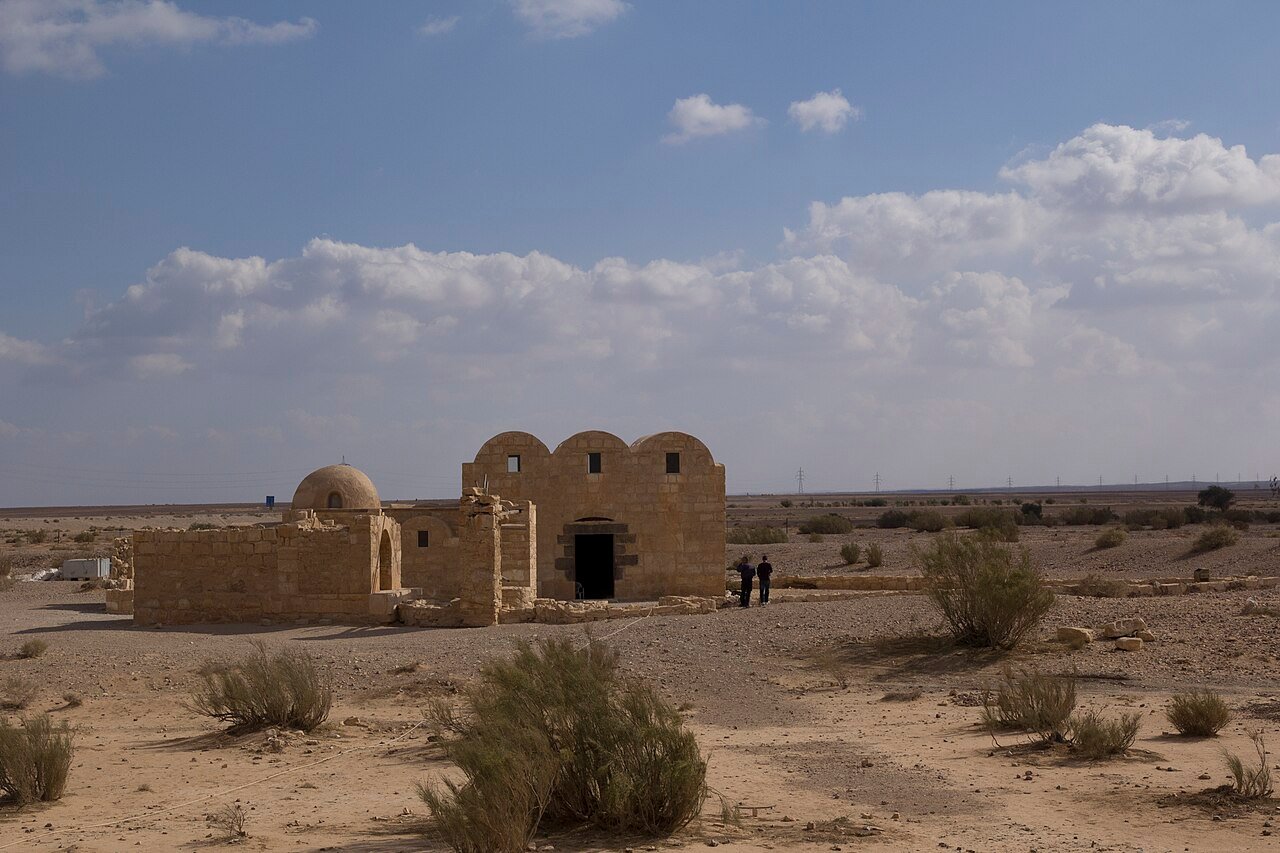
Quseir Amra — also written Qusayr ‘Amra or Qasr Amra — was built between approximately 723 and 743 CE by Walid ibn Yazid, the future Umayyad caliph Walid II. It was inscribed as a UNESCO World Heritage Site in 1985. The structure served as a hunting lodge and bathhouse complex in the eastern Jordanian steppe, and its interior retains the most significant surviving programme of early Islamic secular fresco painting anywhere in the world. The paintings cover the vaulted ceilings of the audience hall and the caldarium dome, depicting musicians, hunting scenes, the zodiac, and a remarkable frieze of six kings — believed to represent rulers from the Byzantine, Sasanid, Visigoth, Ethiopian, Chinese, and Indian realms — arranged as if submitting before the caliph. The ochre, red, and olive pigments have survived remarkably well in the desert air. The ensemble is compact, occupying a single low building, but its iconographic density is extraordinary. Visitors in the early morning, before coach tours arrive, find the frescoed vault nearly to themselves.
Getting there: 1 hr 30 min by car east of Amman via the Desert Highway (Highway 40); organised day tours from Amman typically combine this site with other desert castles such as Qasr Kharana. Allow: 1–2 hours on site. Best for: Travellers with a strong interest in early Islamic art who can arrange morning transport east.
Um er-Rasas (Kastrom Mefa’a) 1 hr 30 min from Amman
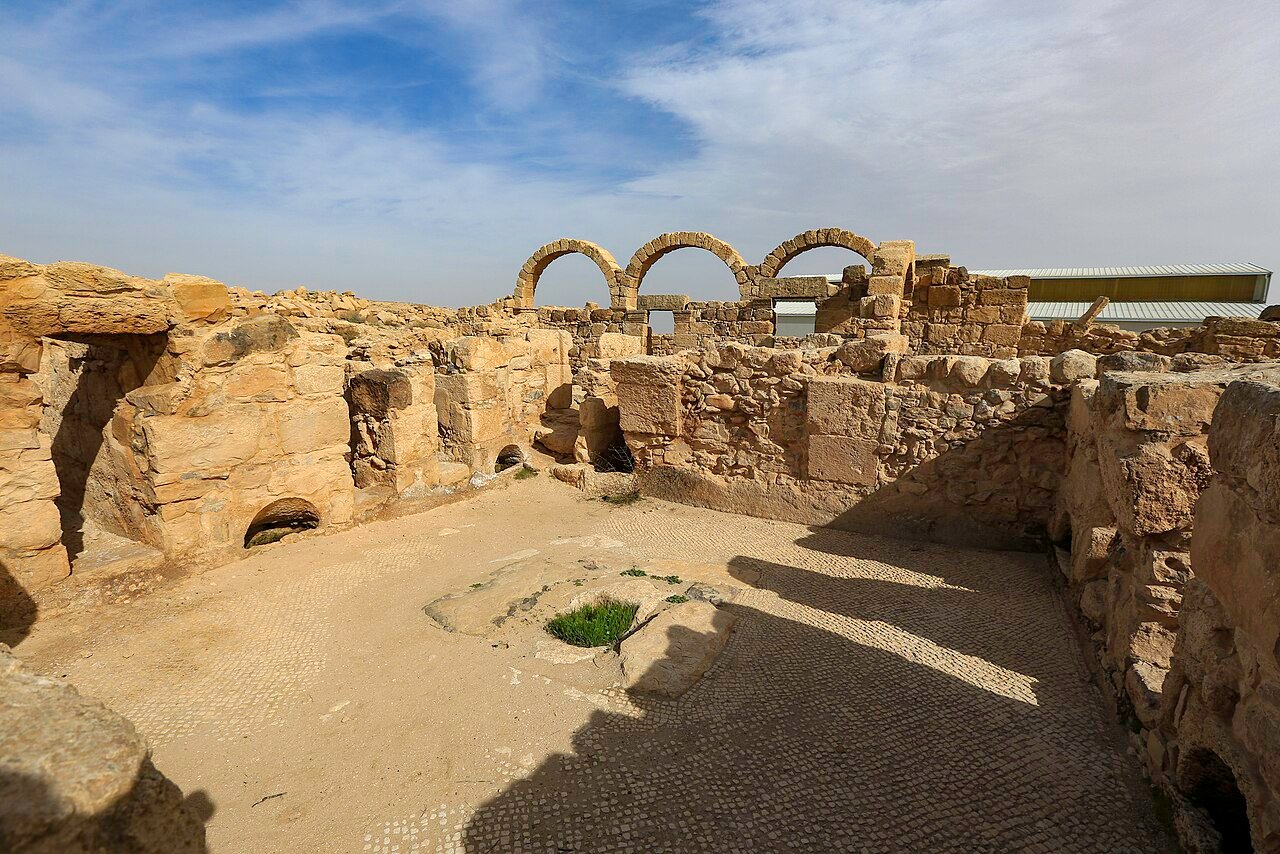
Um er-Rasas, known in antiquity as Kastrom Mefa’a (also Mephaat), lies roughly 30 km southeast of Madaba in central Jordan. The site was inscribed as a UNESCO World Heritage Site in 2004. It began as a Roman military garrison — the name Kastrom reflects that origin — and was subsequently occupied continuously through the Byzantine and early Islamic periods, leaving stratified ruins that span roughly a thousand years of occupation. The highlight for most visitors is the Church of Saint Stephen, which contains one of the most elaborate surviving Byzantine mosaic floors in Jordan: a carpet of geometric panels and figurative scenes including detailed townscape medallions of Palestinian and Egyptian cities. The mosaics were completed in 785 CE, decades into the Islamic period, demonstrating the cultural continuity of Byzantine craft traditions well after the seventh-century Arab conquest. A solitary stylite tower rises above the surrounding plain — its ascetic stone column still standing, though the monk who inhabited its summit left no written record. Much of the site remains unexcavated, and the silence above the buried ruins carries a particular weight.
Getting there: 1 hr 30 min by car from Amman via the King’s Highway south; the site is typically combined with a visit to Madaba (famous for its own Byzantine mosaic map of the Holy Land) to make the most of the journey. Allow: 1–2 hours on site. Best for: Visitors interested in late Roman and Byzantine mosaic traditions who are travelling the King’s Highway toward Petra.
Petra — the Rose-Red City 3 hrs from Amman
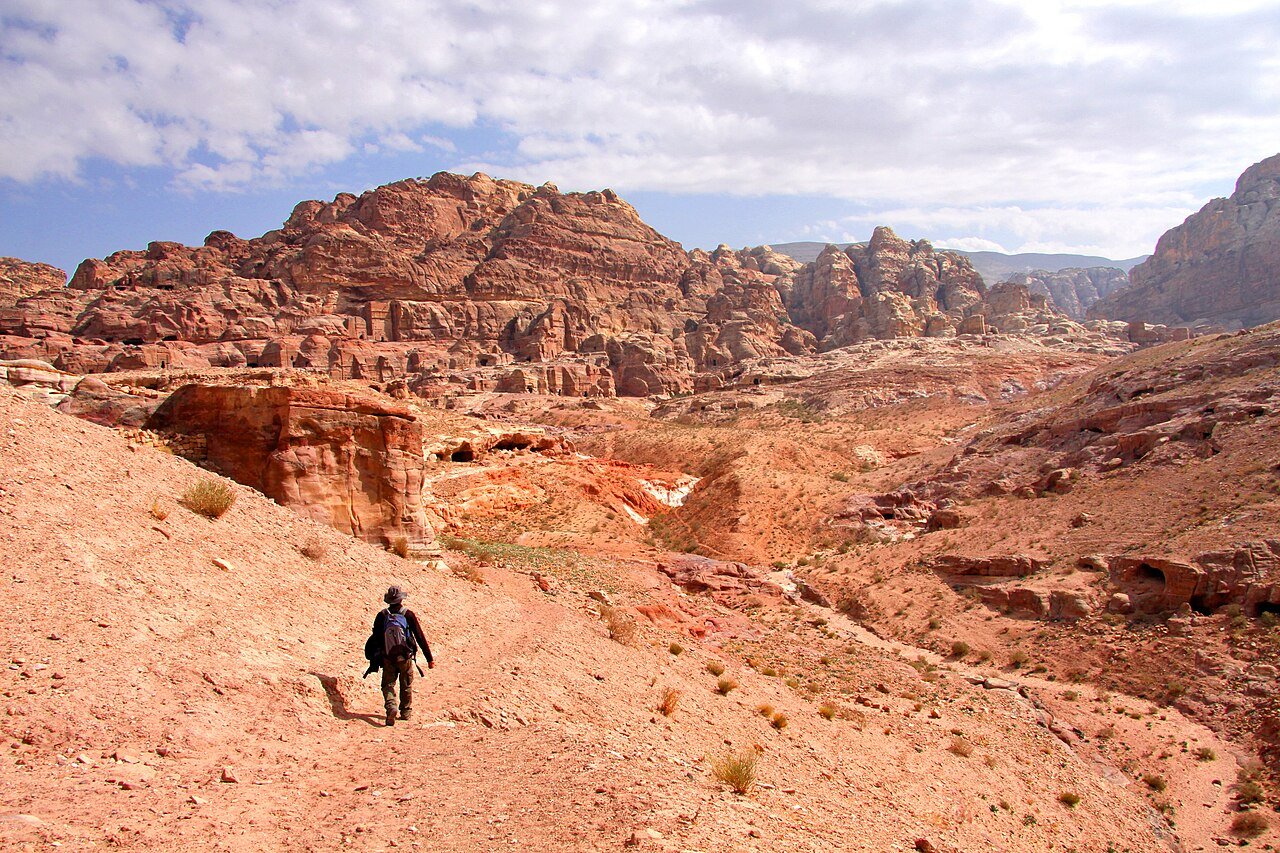
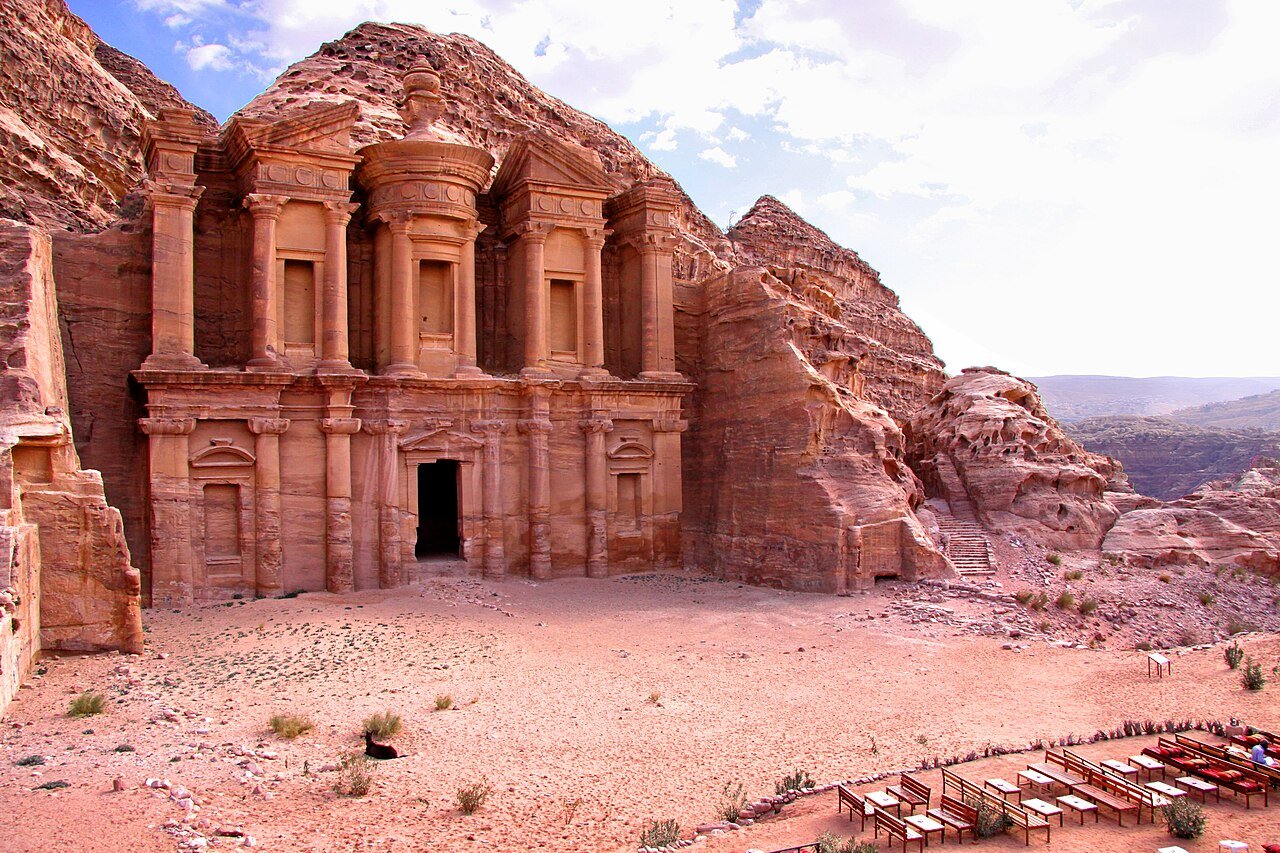
Petra was inscribed as a UNESCO World Heritage Site in 1985 and later recognised as one of the New Seven Wonders of the World. Originally called Raqmu by its inhabitants, the city became the capital of the Nabataean Kingdom in the second century BCE and flourished as a trading hub on the incense routes linking Arabia, the Levant, and the Mediterranean. The Nabataeans carved their monuments directly from the rose-coloured sandstone cliffs: Al-Khazneh (the Treasury), possibly the mausoleum of King Aretas IV, dates to the first century CE and stands roughly 40 metres high and 25 metres wide. The Siq — a narrow gorge one kilometre long that serves as the main entrance — amplifies the silence and then releases visitors suddenly into the facade’s full view. Petra’s population peaked at an estimated 20,000 people before a Roman annexation in 106 CE and a major earthquake in 363 CE accelerated its decline. The archaeological zone covers around 264 km², and the trail system extends well beyond the Treasury to the Monastery (Ad Deir), the Royal Tombs, the Colonnaded Street, and the Great Temple. A single day is the minimum; two days allows the major sites to be seen without rushing. This is not a half-day excursion from Amman — the return drive alone takes six hours, and the site demands serious walking time.
Getting there: 3 hours by car from Amman via the Desert Highway (faster) or the King’s Highway (more scenic); the JETT public bus departs from the 7th Circle terminal at 06:30 daily and returns in the afternoon. Allow: A full day minimum; an overnight stay in the town of Wadi Musa is strongly recommended. Best for: Anyone visiting Jordan — Petra is the country’s defining archaeological site and not to be abbreviated.
Wadi Rum Protected Area 4 hrs from Amman
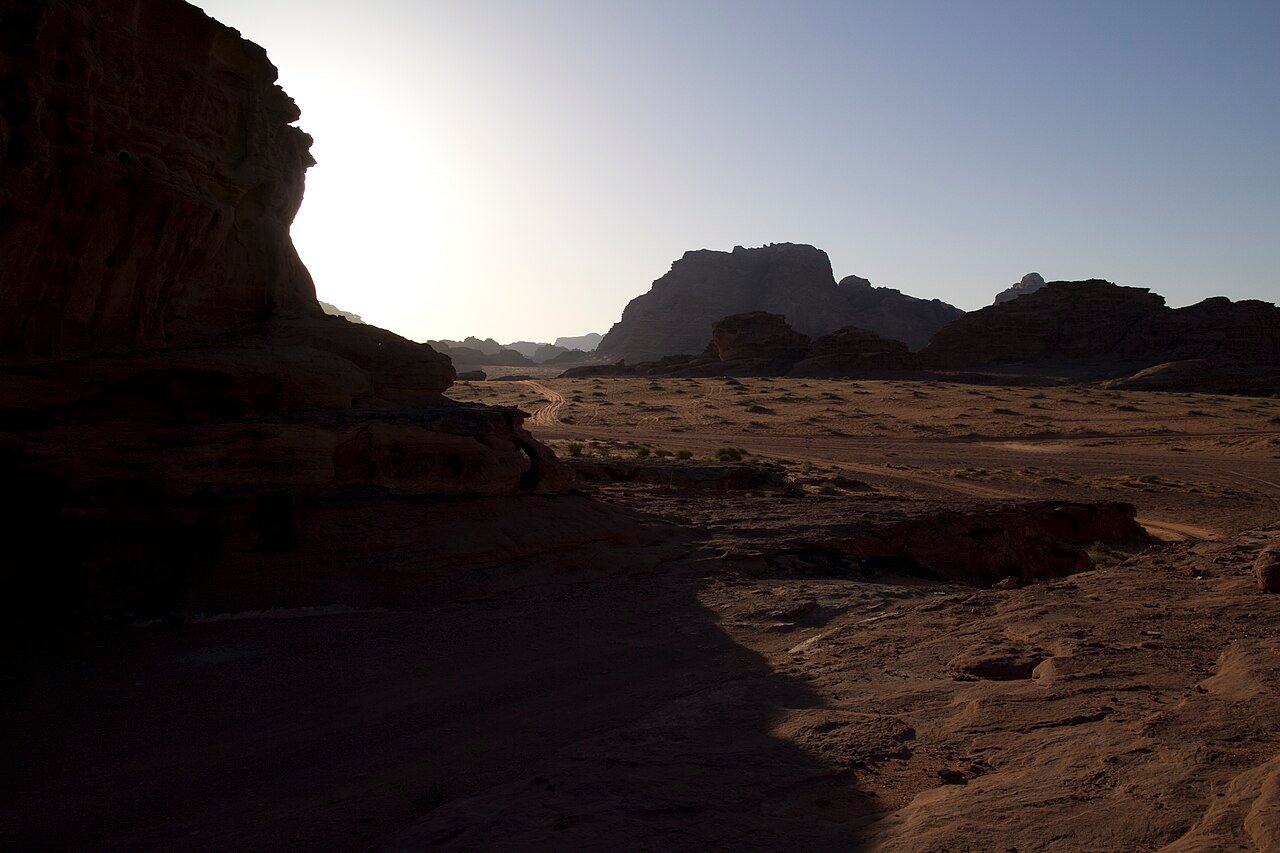
Wadi Rum, known also as the Valley of the Moon, was inscribed as a UNESCO World Heritage Site in 2011. The protected area covers 720 km² of southern Jordan, where sandstone and granite massifs rise up to 1,750 metres above a desert floor of red sand. The landscape has attracted human presence across millennia: Nabataean rock inscriptions, Thamudic petroglyphs, and evidence of Neolithic settlement all survive on the cliff faces and in the sheltered canyons. In the twentieth century, T.E. Lawrence camped in the area during the Arab Revolt of 1917–1918 and later described it in his memoir Seven Pillars of Wisdom. Today, the Rum Protected Area is managed jointly with the local Zalabia Bedouin community, who operate the jeep tours and camel excursions that provide the primary means of experiencing the interior. The light changes dramatically through the day: the red and ochre rock faces burn most intensely at dusk. Most visitors arriving from Petra cover the 110 km in about an hour and a half. Coming directly from Amman, the drive takes approximately four hours. An overnight stay in a Bedouin camp is the most common and most rewarding arrangement, allowing visitors to see the desert at night and at dawn.
Getting there: 4 hours by car from Amman; 1 hr 30 min from Petra, making it a natural two-day itinerary combined with Petra and an overnight in the desert. Allow: Half a day for a jeep tour; a full night for the overnight camp experience. Best for: Travellers who want to combine landscape, Bedouin culture, and astronomical night skies in a single stop.
Frequently Asked Questions
How many UNESCO World Heritage Sites are near Amman?
Jordan has six UNESCO World Heritage Sites in total, and four of them are accessible from Amman within a single journey: Quseir Amra and Um er-Rasas lie roughly 90 minutes away by car, Petra is three hours south, and Wadi Rum is four hours south. The two southern sites are most efficiently visited together as a two-day trip.
What is the closest UNESCO World Heritage Site to Amman?
Quseir Amra and Um er-Rasas are both approximately 90 minutes from central Amman by car — Quseir Amra via the Desert Highway east, Um er-Rasas via the King’s Highway south toward Madaba. Either can be visited as a comfortable day trip, though organised transport or a hire car is needed as public bus connections are limited.
What is the best season to visit Petra and Wadi Rum from Amman?
Spring (March to May) and autumn (September to November) offer the most comfortable temperatures for walking Petra’s stone paths and desert floor, with daytime highs typically between 18°C and 28°C. Summer can reach 35°C or above in the desert south; winter visits are possible and considerably less crowded, though Petra can be cold and occasionally wet in January and February.
Do visitors to Jordan need a visa, and how straightforward is travel between these sites?
Citizens of most Western countries, including the United States, European Union member states, the United Kingdom, Canada, and Australia, can obtain a visa on arrival at Queen Alia International Airport in Amman. The Jordan Pass, available online before travel, bundles the entry visa fee with admission to Petra and over 40 other sites, and represents a significant saving for visitors planning to see multiple UNESCO sites. A hire car gives the most flexibility for combining the desert castles with the south Jordan itinerary; JETT buses serve Petra daily from Amman’s 7th Circle terminal.
Sources
- S1 — Taylor, Jane. Petra and the Lost Kingdom of the Nabataeans. Harvard University Press, 2002. ISBN 978-0-674-00849-6.
- S2 — Salibi, Kamal. The Modern History of Jordan. I.B. Tauris, 1998. ISBN 978-1-86064-331-6.
Spotted an error? Write to editorial@culturalheritageonline.com and we correct it the same day.