
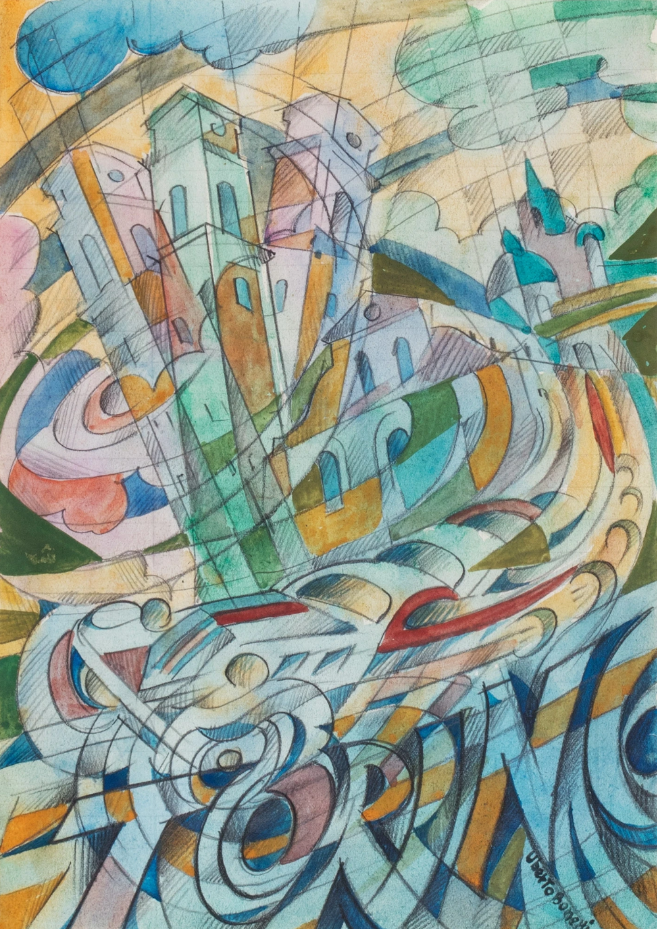
Auto in corsa by Uberto Bonetti, 1930
A 1930 painting by Italian artist Uberto Bonetti depicting a racing car. Created in Turin, the work exemplifies the dynamic visual language of early twentieth-century Italian modernism.

Stefano Vigolo photographs and documents Italian architecture of the interwar decades — the years known in Italy as the Ventennio — from Rationalism and Art Déco to the buildings that fall between the guidebooks. He is a researcher of the period.
Contributions: 516 articles · 106 heritage places · 7 events · 12 itineraries · 89 photographs
Published on beniculturalionline.it, the Italian archive of this publication, online since 1998. They are being brought into Cultural Heritage Online.
A 1930 painting by Italian artist Uberto Bonetti depicting a racing car. Created in Turin, the work exemplifies the dynamic visual language of early twentieth-century Italian modernism.

An advertising poster designed by Italian commercial artist Plinio Codognato in 1934. Codognato was a prominent cartoonist and illustrator who created approximately one thousand posters across his career.
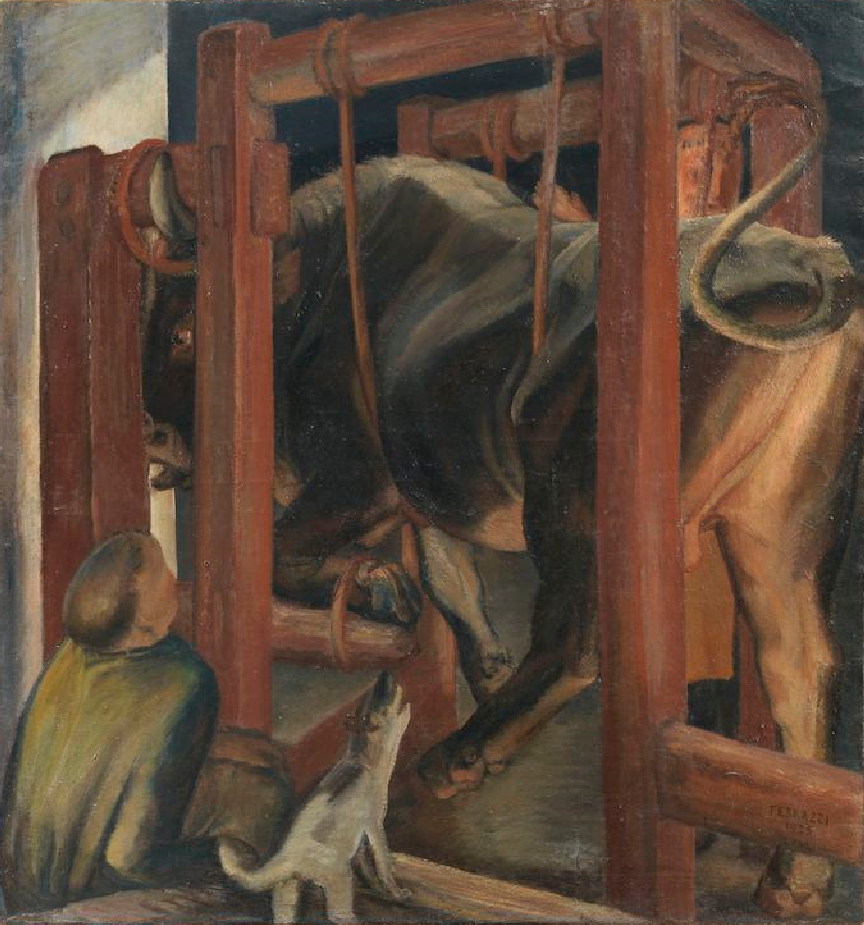
A work by Italian painter and sculptor Ferruccio Ferrazzi created in 1925, depicting an ox being shod.
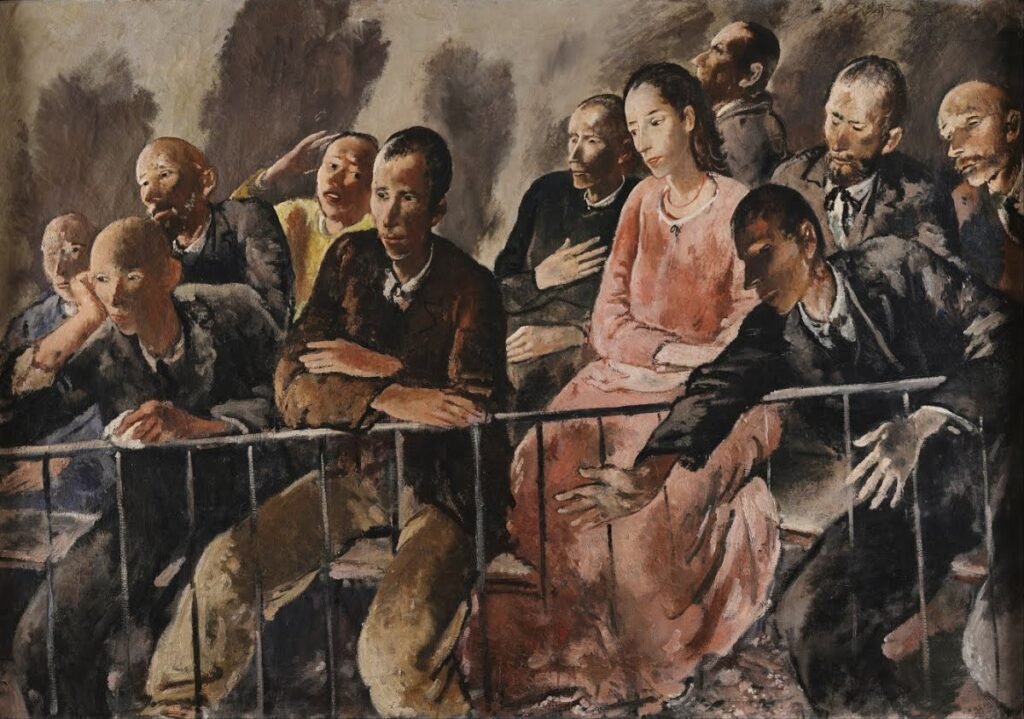
A painting by Italian artist Felice Carena from 1933 depicting a popular theatre. Carena was a Turin-trained painter influenced by Cézanne and Matisse who taught at major academies.
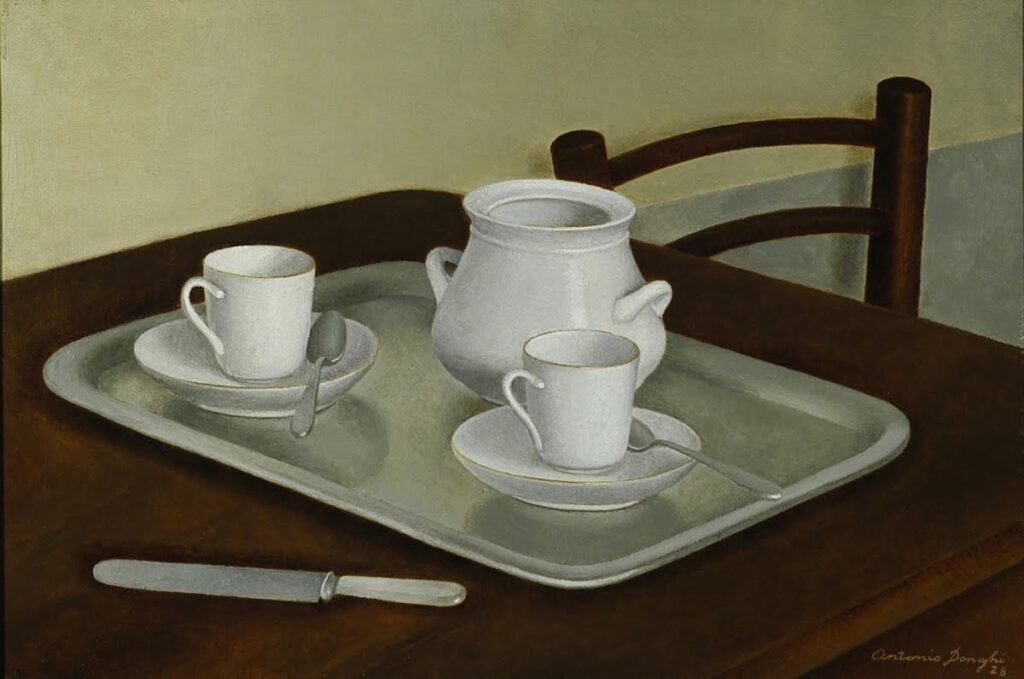
A still life painting by Italian artist Antonio Donghi, completed in 1928 during his most prominent period as a leading figure in neoclassical and magic realist movements.
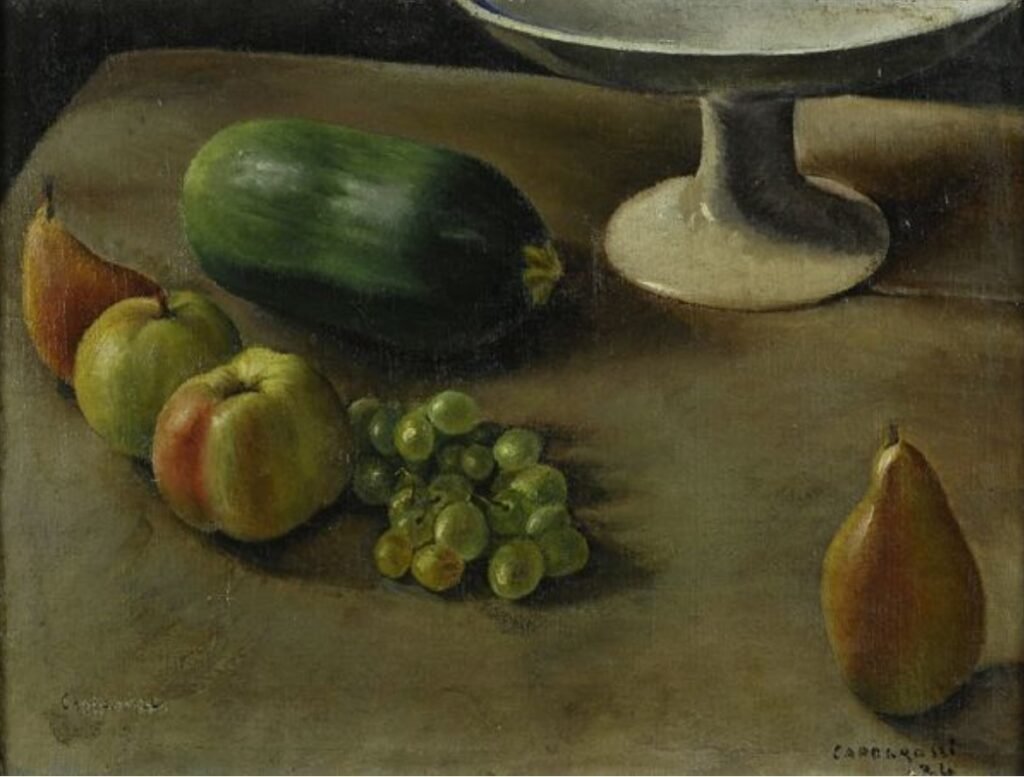
A still life painted by Giuseppe Capogrossi in 1924, during the artist’s early years after completing his law degree and beginning formal study at the Accademia di Belle Arti di Roma.
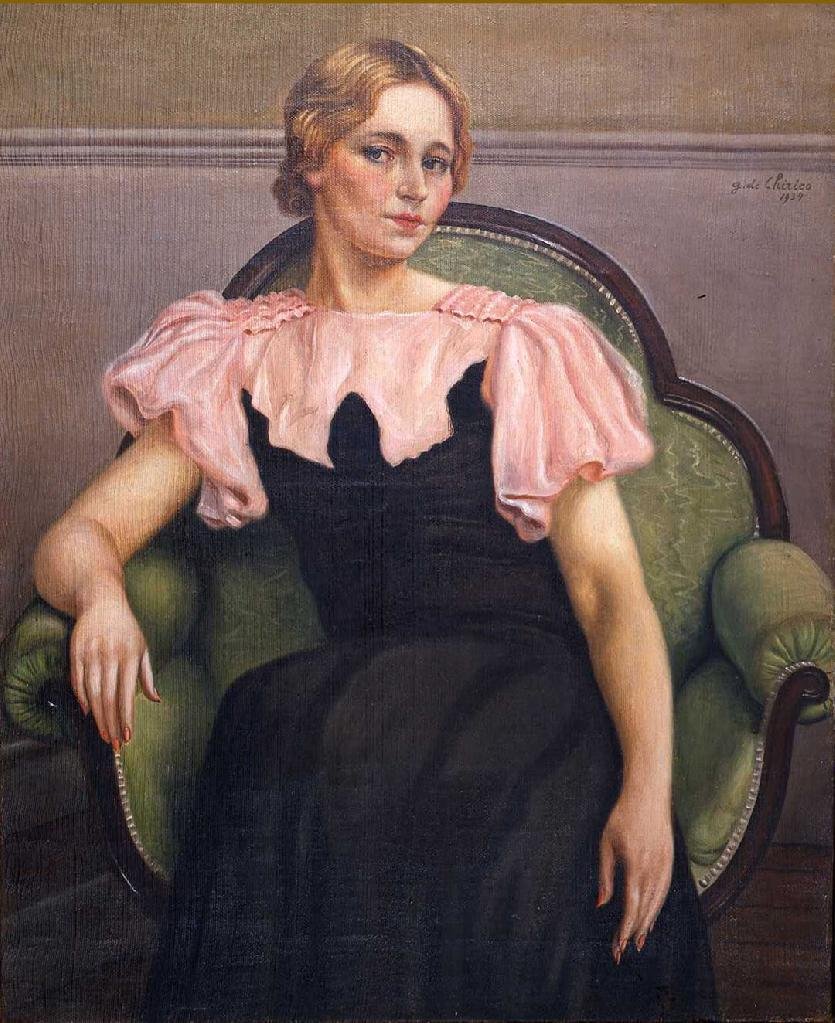
A 1939 portrait by Giorgio de Chirico, founder of the Metaphysical Art movement. The painting presents a figure in contrasting pink and black garments.
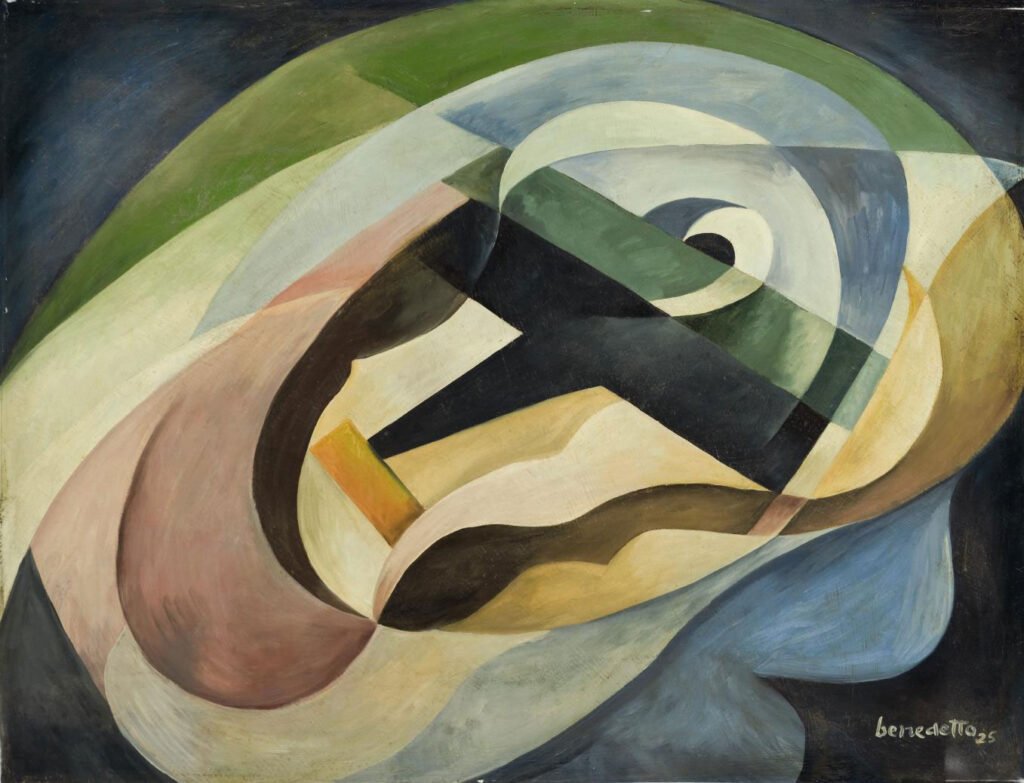
An untitled work by Italian painter and writer Enzo Benedetto, created in 1925 during his early engagement with Futurism. The piece exemplifies Benedetto’s experimental practice of synthesizing color and word.
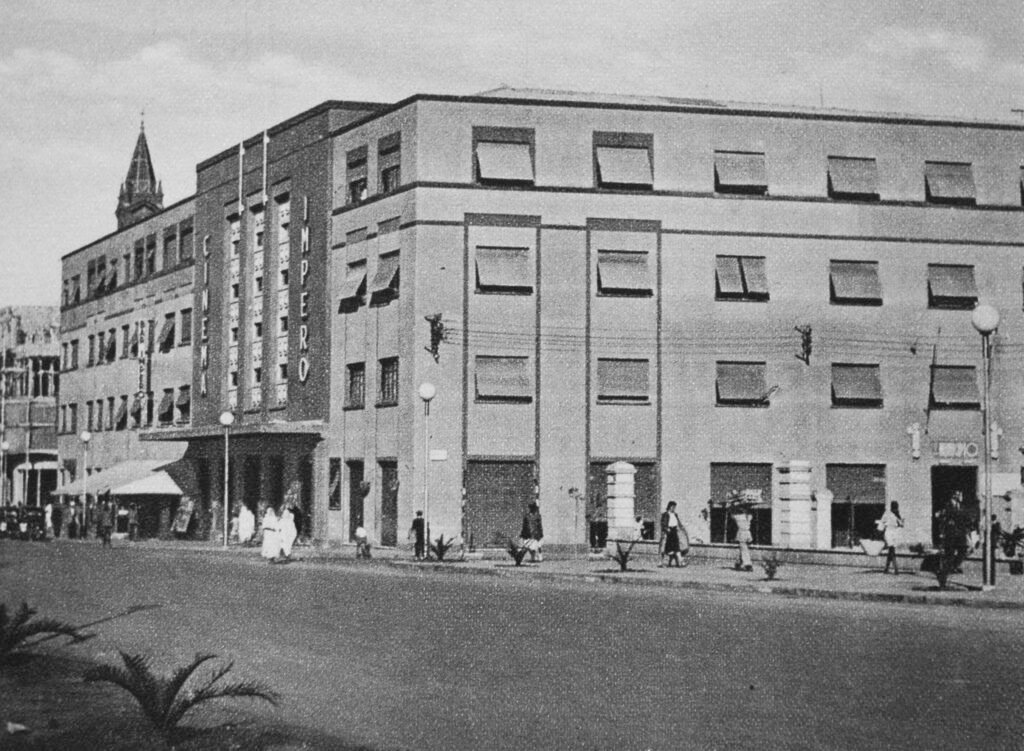
Cinema Impero is an Art Deco cinema built in 1937 in Asmara, Eritrea, during the Italian colonial period. Designed by architect Mario Messina, it remains one of the world’s finest examples of Art Deco architecture.
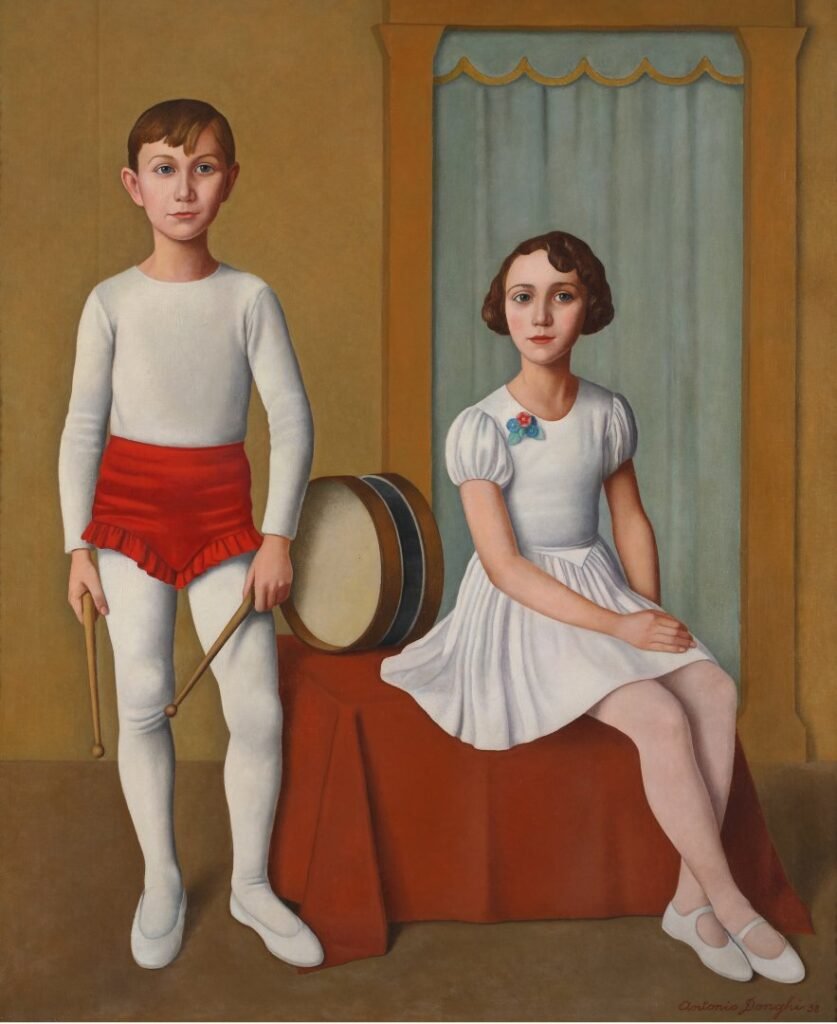
A painting of young acrobats by Italian artist Antonio Donghi, created in 1938. The work exemplifies Donghi’s refined technique and interest in scenes of popular life.