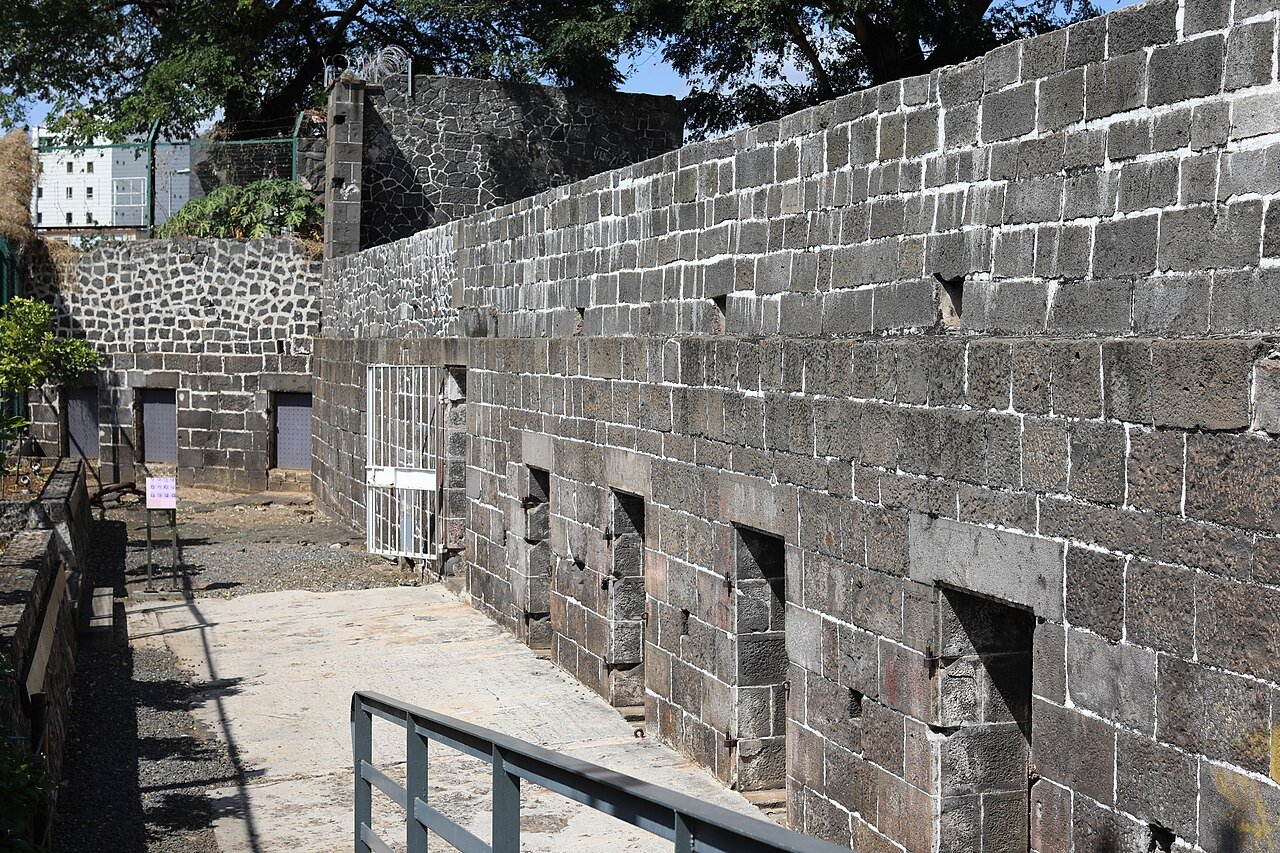
Mauritius has 2 UNESCO World Heritage Sites, both cultural, both rooted in histories of coerced migration and resistance that shaped the modern Indian Ocean world. One is a small complex of stone buildings at the edge of Port Louis harbour; the other is a dramatic basalt mountain rising above the island’s southwest coast. Neither fits neatly into the category of monument or ruin — they are landscapes of memory, inscribed for what they witnessed and what they represent. From Cultural Heritage Online.
Why Mauritius’s list looks the way it does
Mauritius came under sustained European settlement relatively late — the Dutch arrived in 1638, the French in 1715, the British in 1810 — which means its built heritage is largely of the colonial era. The island has no pre-colonial monumental architecture, no ancient urban centres. What it does have is an exceptionally well-documented record of two defining forces in modern world history: the mass movement of indentured labour from Asia and Africa, and the organised resistance of enslaved people to plantation society. UNESCO’s committee recognised both as carrying outstanding universal value, which explains why Mauritius’s World Heritage list is short, entirely cultural, and concerned not with grandeur but with human experience under duress.
The island also holds one site on UNESCO’s Tentative List: Black River Gorges National Park, which shelters 163 of Mauritius’s 311 endemic plant species and 28 endemic bird species. It has been on the tentative list since 2006 but has not yet been nominated for inscription. Should it eventually succeed, it would be the country’s first natural site — a meaningful addition given the ecological rarity of what survives in the gorges.
The first inscriptions
Mauritius received its first UNESCO inscription in 2006, followed by a second two years later. Both recognise places whose significance is inseparable from the suffering and agency of people who left few formal records.
- Aapravasi Ghat (2006) — the immigration depot in Port Louis through which almost half a million indentured labourers passed between 1834 and 1920, bound for sugar estates across Mauritius and, from there, to other colonies.
- Le Morne Cultural Landscape (2008, with minor boundary modifications in 2011) — a rugged peninsula dominated by a 556-metre basalt mountain that served as a refuge for runaway enslaved people, known as maroons, through the eighteenth and early nineteenth centuries.
Both sites were recognised for representing early and formative chapters in a global story: the replacement of enslaved labour with indentured labour after 1834, and the long tradition of slave resistance that preceded abolition. They are among the relatively few World Heritage Sites inscribed primarily for what they tell us about unfree labour, rather than for the power of those who built them.
The most visited — and the alternatives
Aapravasi Ghat draws the larger share of visitors, partly because of its central location in the capital and partly because of its direct connection to the Indian diaspora, which counts millions of descendants of the labourers who passed through its gates. The surviving stone structures — a jetty, warehouses, hospital wards, and an immigration hall — occupy less than 1.7 hectares, making it one of the smallest World Heritage Sites in the world. Its scale is deceptive: the paperwork generated here documented individual arrivals in a level of detail that was, at the time, unprecedented in colonial administration, and those records survive.
Le Morne is less immediately legible to the casual visitor, and that difficulty is part of its meaning. The mountain is steep enough that the maroon communities who sheltered on its slopes were effectively invisible to plantation authorities for years. Local oral tradition holds that when abolition was finally proclaimed in 1835, a group of maroons, unaware of the news, threw themselves from the cliffs rather than be recaptured — a story that, whether literally true or not, has made the site a symbol of resistance across the African diaspora. The surrounding lagoon, a popular beach destination, exists in an unusual relationship with a landscape whose history is anything but leisurely.
Natural and shared sites
As of 2024, Mauritius has no inscribed natural or mixed World Heritage Sites. This is notable given the island’s ecological profile: the mascarene archipelago is one of the world’s biodiversity hotspots, and Mauritius has invested substantially in conservation programmes for endemic species including the Mauritius kestrel and the echo parakeet, both brought back from the edge of extinction. Black River Gorges National Park remains the most credible candidate for a future natural inscription, covering around 6,500 hectares of upland forest, wetland, and gorge habitat.
Neither of the two inscribed sites is part of a transnational or serial nomination. Both are standalone properties located on the main island. The outer islands of Mauritius — Rodrigues, Agaléga, and the Cargados Carajos Shoals — have no sites on the World Heritage List or the Tentative List.
How to find them
Aapravasi Ghat is open to visitors in central Port Louis and is managed by the Aapravasi Ghat Trust Fund; interpretive materials on site cover the broader history of indenture across the Indian Ocean. Le Morne Cultural Landscape lies roughly 50 kilometres southwest of the capital and can be reached independently, though local guides add significant context to a site where the terrain itself carries the historical meaning. Both properties are compact enough to visit in a single day trip from most points on the island.
Mauritius’s World Heritage sites sit alongside thousands of other places on CHO’s interactive map, with GPS and sourced editorial history for each. See also our guides to Italy’s and France’s UNESCO sites, and our piece on cultural travel beyond mass tourism.
Frequently Asked Questions
How many UNESCO World Heritage Sites does Mauritius have?
Mauritius has 2 UNESCO World Heritage Sites as of 2024, both classified as cultural. They are Aapravasi Ghat, inscribed in 2006, and Le Morne Cultural Landscape, inscribed in 2008. The country also holds one site on UNESCO’s Tentative List: Black River Gorges National Park.
What was Mauritius’s first UNESCO World Heritage Site?
Aapravasi Ghat, the immigration depot in Port Louis, was Mauritius’s first UNESCO inscription, recognised in 2006. The site preserves the stone buildings through which nearly half a million indentured labourers entered the island between 1834 and 1920. It is widely considered one of the most significant material records of the global indenture system.
Does Mauritius have any natural UNESCO World Heritage Sites?
No. Both of Mauritius’s inscribed World Heritage Sites are cultural. Black River Gorges National Park, which contains a high concentration of the island’s endemic plant and bird species, has been on the UNESCO Tentative List since 2006 but has not yet been formally nominated for natural inscription.
What does Le Morne Cultural Landscape represent?
Le Morne Cultural Landscape was inscribed in 2008 as a symbol of enslaved people’s resistance to oppression. The mountain and surrounding peninsula served as a refuge for maroons — runaway enslaved people — during the eighteenth and early nineteenth centuries. UNESCO recognised the site for its outstanding universal value in representing the struggle for freedom and human dignity.
Sources used in this article
- UNESCO — State Party Mauritius — World Heritage list.
- UNESCO — Mauritius: World Heritage Sites.
- CHO magazine — What is a World Heritage Site?
- CHO — Interactive map of heritage sites.
Sources
- S1 — Allen, Richard B. Slaves, Freedmen and Indentured Laborers in Colonial Mauritius. Cambridge University Press, 1999. ISBN 978-0-521-64125-8.
- S2 — Carter, Marina. Voices from Indenture: Experiences of Indian Migrants in the British Empire. Leicester University Press, 1996. ISBN 978-0-7185-0031-3.
Spotted an error? Write to editorial@culturalheritageonline.com and we correct it the same day.