France has 54 UNESCO World Heritage Sites — Gothic cathedrals, Roman engineering, painted caves older than farming, royal palaces, industrial saltworks and volcanic landscapes. This is a guide to what they are, how the list took shape, and how to reach the ones the coaches skip. From Cultural Heritage Online.
Why France’s list is so varied
France’s 54 inscriptions (45 cultural, 7 natural and 2 mixed) read like a cross-section of European history. The country gave the world the Gothic cathedral, and Chartres, Amiens, Reims and Bourges are all inscribed. It kept Roman France almost intact, from the Pont du Gard aqueduct to the arena and temple of Nîmes. It preserved the deep prehistory of the Vézère valley, where the painted caves run back more than thirty thousand years. Palaces, fortified towns, vineyards, canals and a lighthouse complete the range. Few countries cover so many chapters of the human record in one territory.
The first inscriptions: 1979
France entered the World Heritage List in 1979 with five sites, chosen to show that range from the start:
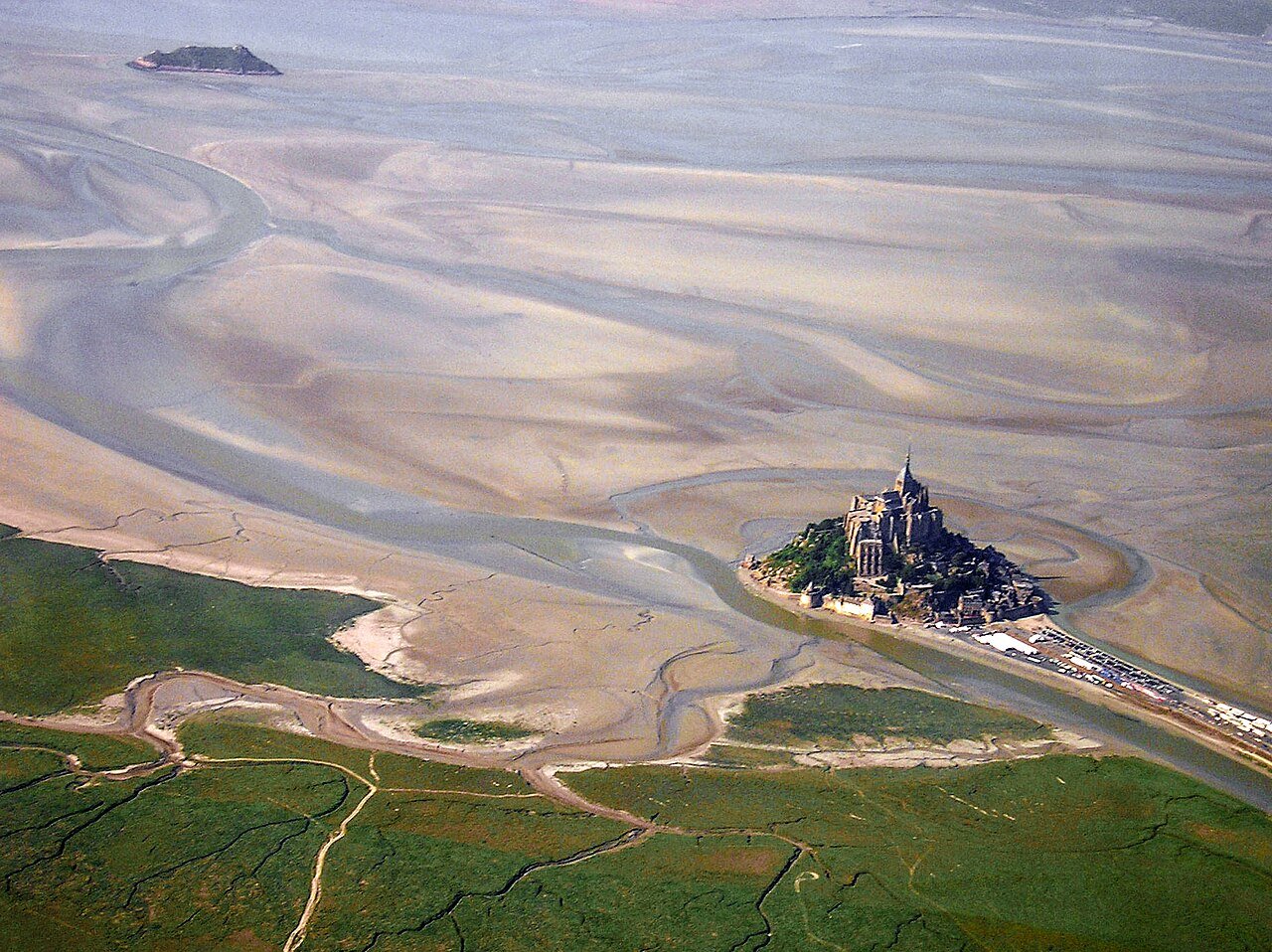
- Mont-Saint-Michel and its Bay (the abbey on its tidal island).
- Chartres Cathedral (the benchmark of French Gothic and its blue glass).
- Palace and Park of Versailles (the model of European court architecture).
- Vézelay, Church and Hill (a Romanesque pilgrimage basilica).
- Decorated Caves of the Vézère Valley (Palaeolithic art, including Lascaux).
The most visited — and the alternatives
A handful of sites carry most of the crowds: Mont-Saint-Michel, Versailles, the Banks of the Seine in Paris, the fortified city of Carcassonne and the Pont du Gard each draw millions every year. Step sideways and the same heritage value waits with a fraction of the visitors. The Royal Saltworks at Arc-et-Senans is one of Europe’s boldest works of industrial Enlightenment architecture. The Abbey Church of Saint-Savin-sur-Gartempe holds the richest cycle of Romanesque wall paintings in France. The Cordouan Lighthouse rises from the sea at the mouth of the Gironde, a Renaissance tower you reach only at low tide. None of them queues like Versailles.
Caves you can and cannot enter
France’s painted caves raise a practical question. The original Lascaux closed to the public in 1963 to halt fungal damage, and visitors now see Lascaux IV, a complete facsimile beside the hill. The Chauvet Cave, with the oldest known figurative art in the world, has never been open at all; its replica, the Caverne du Pont-d’Arc, opened in 2015. The lesson is the same across heritage travel: the inscribed thing and the visitable thing are not always the same place, and that is usually what is keeping the original alive.
Natural and shared sites
France’s seven natural sites lie mostly at its edges and overseas: the Gulf of Porto in Corsica, the lagoons of New Caledonia, the volcanic Pitons and cirques of Réunion, the Chaîne des Puys volcanic chain in the Auvergne, the French Austral Lands and Seas, and a share in the Ancient Beech Forests of Europe. France also takes part in some of the list’s great transnational inscriptions: the architecture of Le Corbusier, the Routes of Santiago de Compostela, the Belfries of Belgium and France, the Great Spa Towns of Europe, and the mixed Pyrénées – Mont Perdu shared with Spain. The most recent addition, in 2025, is the Megaliths of Carnac and the shores of Morbihan.
How to find them
French World Heritage sites sit alongside thousands of other places on CHO’s interactive map, with GPS and sourced editorial history for each. For the wider picture, see our companion guide to Italy’s UNESCO World Heritage Sites, and for visiting these places responsibly, our piece on cultural travel beyond mass tourism.
Frequently Asked Questions
How many UNESCO World Heritage Sites does France have?
France has 54 UNESCO World Heritage Sites, of which 45 are cultural, 7 are natural and 2 are mixed. The most recently inscribed is the Megaliths of Carnac and the shores of Morbihan, added in 2025.
What were France’s first UNESCO World Heritage Sites?
Five sites were inscribed together in 1979: Mont-Saint-Michel and its Bay, Chartres Cathedral, the Palace and Park of Versailles, the church and hill of Vézelay, and the Decorated Caves of the Vézère Valley.
Can you visit the Chauvet and Lascaux caves?
Not the originals. Lascaux closed to the public in 1963 and is now seen through the full-scale facsimile Lascaux IV; the Chauvet Cave has never opened, and visitors tour its replica, the Caverne du Pont-d’Arc, opened in 2015. Both replicas reproduce the paintings in their original setting and scale.
Which French UNESCO site has the fewest visitors?
Several inscribed sites stay quiet despite their value, including the Royal Saltworks at Arc-et-Senans, the Romanesque frescoes of Saint-Savin-sur-Gartempe, and the Cordouan Lighthouse, which can only be reached by boat at low tide. They receive a small fraction of the traffic at Versailles or Mont-Saint-Michel.
Sources used in this article
- UNESCO — State Party France — World Heritage list.
- UNESCO — France: World Heritage Sites.
- CHO magazine — What is a World Heritage Site?
- CHO — Interactive map of heritage sites.