The Gambia has two UNESCO World Heritage Sites — both cultural, both carrying histories that reach far beyond West Africa’s smallest mainland country. Together they trace the arc of Atlantic slavery, ancient ceremonial practice, and the long encounter between African communities and the wider world. From Cultural Heritage Online.
Why the Gambia’s list looks the way it does
The Gambia occupies a narrow strip of land on either side of the River Gambia, and its World Heritage geography reflects that geography directly. Both inscribed properties are defined by the river: one sits on an island within it, the other runs along a band of upland beside it. The country has no inscribed natural sites, though its wetlands and bird habitats are internationally recognised through other frameworks.
With just two entries on the UNESCO list, the Gambia’s portfolio is among the smallest in sub-Saharan Africa by number. What it lacks in quantity it compensates in thematic weight. Few countries of comparable size carry two sites of such distinct historical registers — one rooted in prehistory, one in the modern Atlantic world — inscribed within three years of each other.
The first inscriptions
The Gambia’s engagement with the World Heritage Convention produced its first inscription in 2003, followed by a second in 2006. Both remain the country’s only entries as of 2023.
- Kunta Kinteh Island and Related Sites (2003) — inscribed for its exceptional documentation of the encounter between Africa and Europe, with particular focus on the transatlantic slave trade and its eventual abolition.
- Stone Circles of Senegambia (2006) — a transnational inscription shared with Senegal, covering four groups of laterite stone circles containing more than 1,000 monuments distributed across a roughly 100-kilometre band along the Gambia River.
The two inscriptions arrived at a moment when the Gambia was actively building its cultural diplomacy profile. The gap between them — just three years — is unusually short for a country nominating its first and second properties in sequence, and reflects the preparatory work that had been ongoing with UNESCO and Senegal on the transnational Stone Circles dossier.
The most visited — and the alternatives
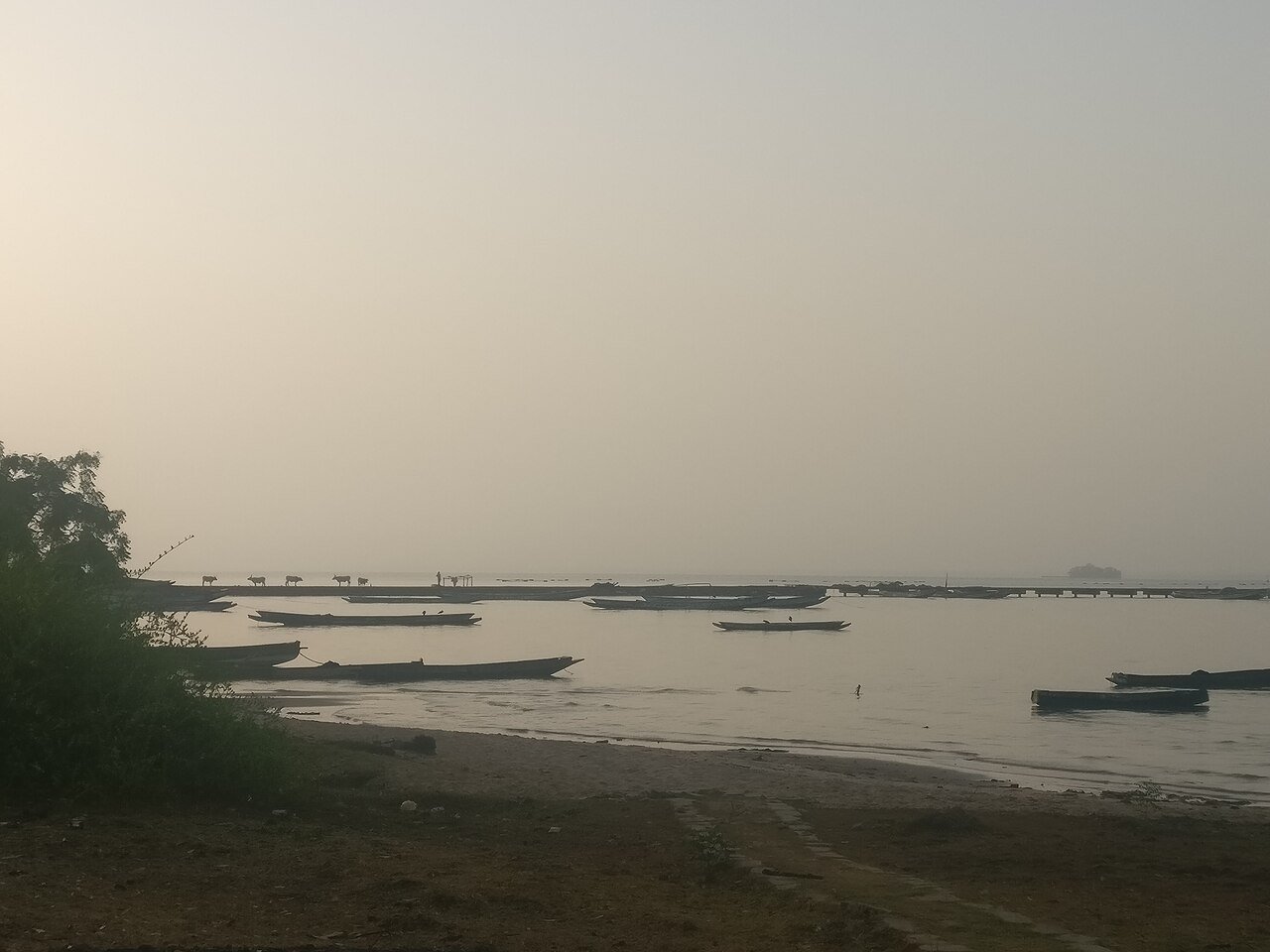
Kunta Kinteh Island, historically known as James Island, draws visitors for a reason that goes beyond architecture. The ruined James Fort, built by British merchants in the seventeenth century and repeatedly contested by European powers, became one of the primary holding points for enslaved people before their departure across the Atlantic. The site entered global consciousness partly through Alex Haley’s 1976 book Roots, and the island’s name was officially changed to Kunta Kinteh Island in 2011 in honour of the ancestor traced in that narrative.
The Stone Circles of Senegambia receive fewer international visitors despite covering a landscape of genuine scale. The four main groups — Wassu and Kerbatch on the Gambian side, Sine Ngayene and Wanar in Senegal — date from approximately the third century BC to the sixteenth century AD. Wassu is the most accessible cluster within the Gambia, reachable from the town of Janjanbureh (formerly Georgetown). The circles are believed to mark burial sites, though the full ritual context of their construction remains a subject of ongoing research. The Wassu Stone Circles Quarry Site, where the laterite was cut, sits on the country’s tentative list and offers an additional layer of context for visitors already at the main groups.
Natural and shared sites
The Gambia currently has no UNESCO-inscribed natural sites. Its most celebrated ecological assets — the wetlands of the lower river, the Abuko Nature Reserve, and the internationally important bird populations that attract ornithologists from Europe — fall outside the World Heritage framework, protected instead through Ramsar designations and national legislation.
The Stone Circles of Senegambia represents the Gambia’s only transnational World Heritage property, jointly managed with Senegal under a shared buffer zone arrangement. Serial and transnational inscriptions of this kind are increasingly common in West Africa, where pre-colonial cultural landscapes frequently cross the borders drawn during the nineteenth century. The Gambia’s tentative list also includes Historic Georgetown (Janjanbureh), a colonial-era river town that could eventually form the basis of a further nomination, though no active dossier had been submitted as of 2025.
How to find them
Kunta Kinteh Island is reached by pirogue from Juffureh or Albreda on the North Bank of the River Gambia, roughly two hours’ drive from Banjul. The crossing takes minutes but depends on tidal conditions; most visits combine the island with the nearby Juffureh village and the UNCHR museum at Albreda. The Stone Circles at Wassu are best visited as part of an upcountry journey, typically from Janjanbureh, which also serves as a base for river birdwatching.
the Gambia’s World Heritage sites sit alongside thousands of other places on CHO’s interactive map, with GPS and sourced editorial history for each. See also our guides to Italy’s and France’s UNESCO sites, and our piece on cultural travel beyond mass tourism.
Frequently Asked Questions
How many UNESCO World Heritage Sites does the Gambia have?
The Gambia has two UNESCO World Heritage Sites as of 2023: Kunta Kinteh Island and Related Sites, inscribed in 2003, and the Stone Circles of Senegambia, inscribed in 2006. Both are classified as cultural sites; the country has no inscribed natural World Heritage properties.
What was the Gambia’s first UNESCO World Heritage Site?
Kunta Kinteh Island and Related Sites, inscribed in 2003, was the Gambia’s first UNESCO World Heritage Site. The property encompasses James Island in the River Gambia and several related sites on the adjacent riverbanks, recognised for its exceptional testimony to the history of the transatlantic slave trade.
Is the Stone Circles of Senegambia shared with another country?
Yes. The Stone Circles of Senegambia is a transnational inscription shared between the Gambia and Senegal, inscribed jointly in 2006. The site covers four groups of laterite stone circles — two in the Gambia (Wassu and Kerbatch) and two in Senegal (Sine Ngayene and Wanar) — spanning a landscape of more than 100 kilometres.
Does the Gambia have any natural UNESCO World Heritage Sites?
No. Both of the Gambia’s World Heritage inscriptions are cultural properties. The country’s significant natural assets, including internationally recognised wetlands and biodiversity, are protected through other frameworks such as Ramsar Convention designations rather than UNESCO World Heritage status.
Sources used in this article
- UNESCO — State Party the Gambia — World Heritage list.
- UNESCO — the Gambia: World Heritage Sites.
- CHO magazine — What is a World Heritage Site?
- CHO — Interactive map of heritage sites.