Uganda holds three UNESCO World Heritage Sites, and all three are accessible from Kampala — one sits within the city limits, while the other two anchor wilderness areas of rare ecological significance in the country’s west. From royal burial grounds to equatorial glaciers to the dense forest home of mountain gorillas, this is a trio of destinations worth planning carefully. From Cultural Heritage Online.
Tombs of Buganda Kings at Kasubi 8 km from Kampala city centre — 20 min by taxi
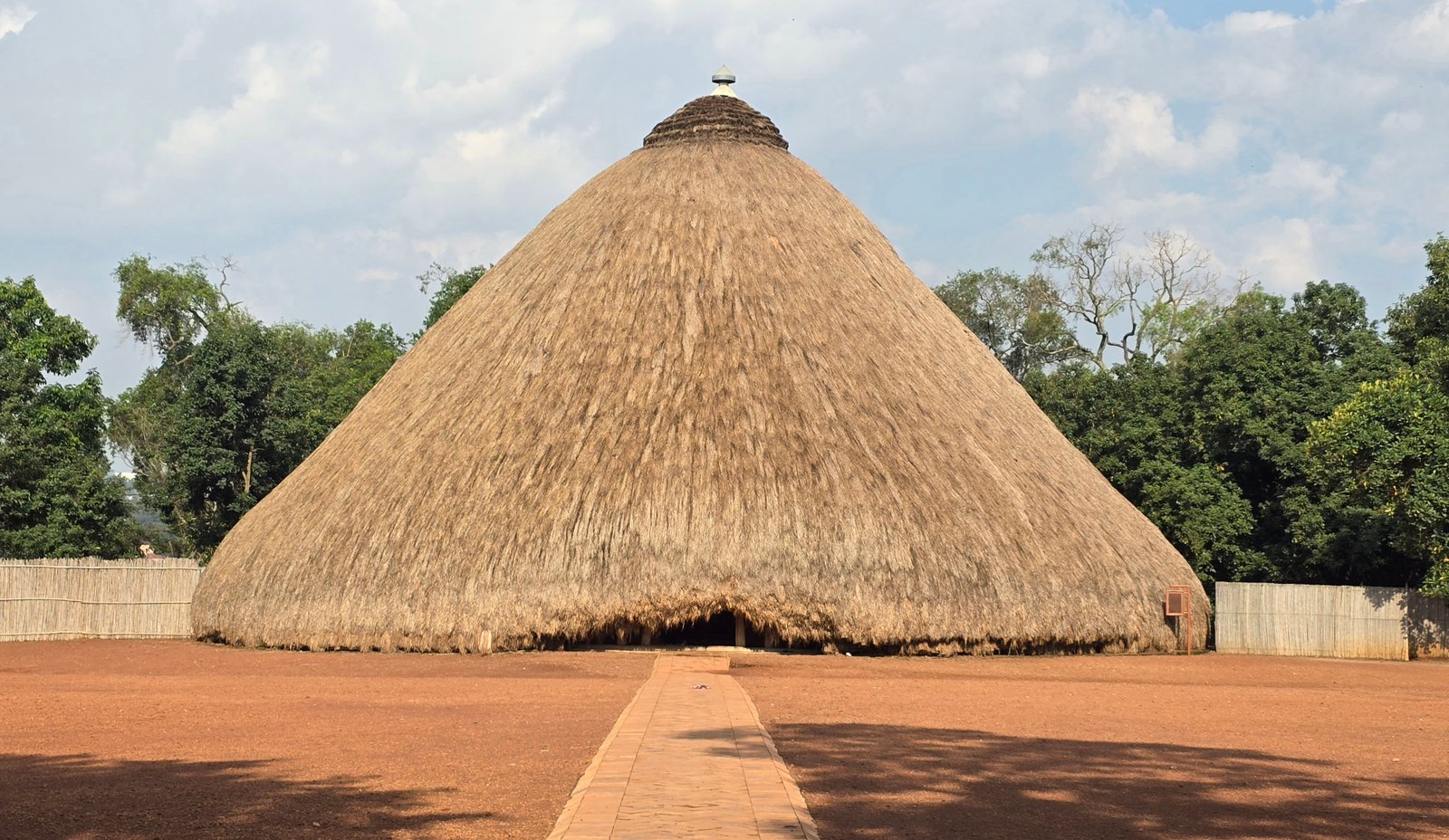
The Kasubi Tombs occupy a hillside in Kampala’s Kasubi suburb and serve as the principal burial place of the Kabakas — the kings of the Buganda Kingdom. Four royal tombs stand here, the most significant being the Muzibu-Azaala-Mpanga, a large circular building constructed from organic materials: wood poles, wattle, bark cloth, and deep layers of thatched reeds. UNESCO inscribed the site in 2001, recognising it as an outstanding example of Ganda architectural tradition and an active centre of Buganda spiritual life.
In March 2010, a fire destroyed the Muzibu-Azaala-Mpanga. The cause was never conclusively established. For the Buganda Kingdom and the broader Ugandan public, the loss was immense — the building had stood as a living monument to royal continuity and cultural identity. Reconstruction work began shortly after, drawing on traditional craft knowledge, and by the early 2020s the rebuilt structure had begun to take shape using authentic materials and techniques. The site remains open for visitors and continues to function as a place of pilgrimage and ceremony for Buganda’s adherents.
Walking the compound, you pass through a series of enclosures guarded by the Bambi — hereditary custodians of the tombs, drawn from specific clans. Bark cloth hangings, royal drums, and the woven grass of the outer walls create a sensory texture that no photograph fully conveys. Guides from the Buganda Kingdom tourism office explain the clan system and the protocol around each tomb.
Getting there: Boda-boda (motorcycle taxi) or special hire taxi from central Kampala; 20–30 minutes depending on traffic. Allow: 1.5–2 hours including a guided tour. Best for: Travellers with an interest in African royal history, living cultural heritage, and vernacular architecture.
Bwindi Impenetrable National Park 320 km southwest — 1 hr by domestic flight or 8–9 hr by road
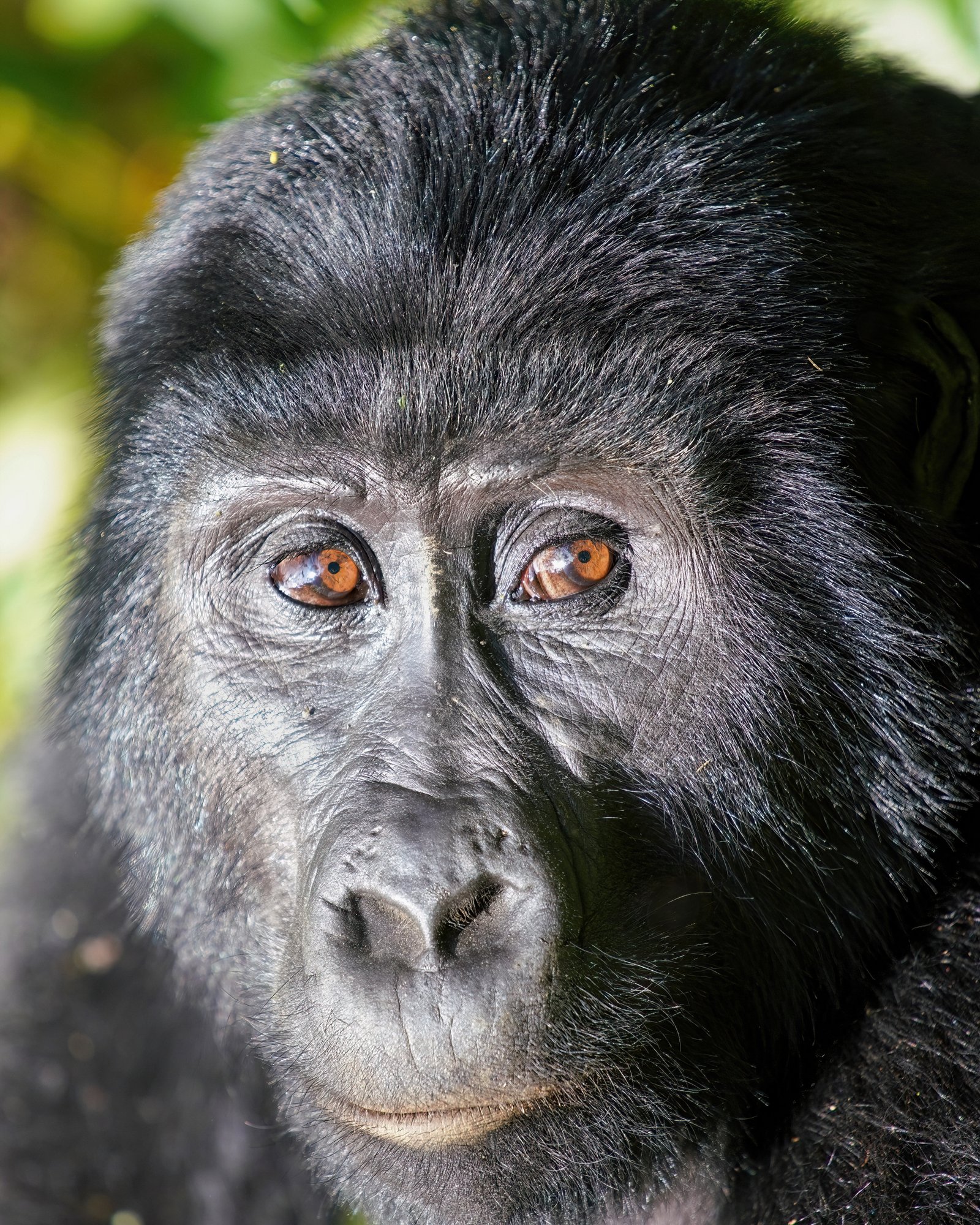
Bwindi Impenetrable National Park covers 321 square kilometres of ancient montane forest near the town of Kabale in south-western Uganda, close to the borders with Rwanda and the Democratic Republic of Congo. UNESCO inscribed it in 1994, and the reasons are straightforward: the park shelters close to half the world’s remaining mountain gorillas. A 2018 census recorded approximately 459 individuals across multiple habituated family groups, a number that represents both a conservation success story and a measure of how precarious the species remains.
The forest itself is remarkable independently of the gorillas. More than 350 bird species have been recorded here, including 23 endemic to the Albertine Rift — a concentration of avian biodiversity that draws serious birders from around the world. The terrain is steep and tangled, the canopy dense; “impenetrable” is not hyperbole. Walking trails cut through the undergrowth, and during gorilla tracking sessions visitors move with rangers along routes mapped fresh each morning as groups shift through the forest.
Permits for gorilla tracking are issued by the Uganda Wildlife Authority and must be booked well in advance, particularly for high season. The hour spent with a habituated group — a stipulated maximum to limit disturbance — is quiet and intensely close. A silverback at eight metres holds attention differently than any zoo or screen.
Getting there: Daily flights from Entebbe to Kihihi or Kisoro airstrips (approx. 1 hour); road journey via Kabale takes 8–9 hours on tarmac and dirt road. Allow: Minimum 2 nights; most visitors spend 3–4 nights to combine gorilla tracking with forest walks or chimpanzee trekking. Best for: Wildlife travellers, conservation-minded visitors, serious birders.
Rwenzori Mountains National Park 350 km west — 1 hr by domestic flight or 6 hr by road
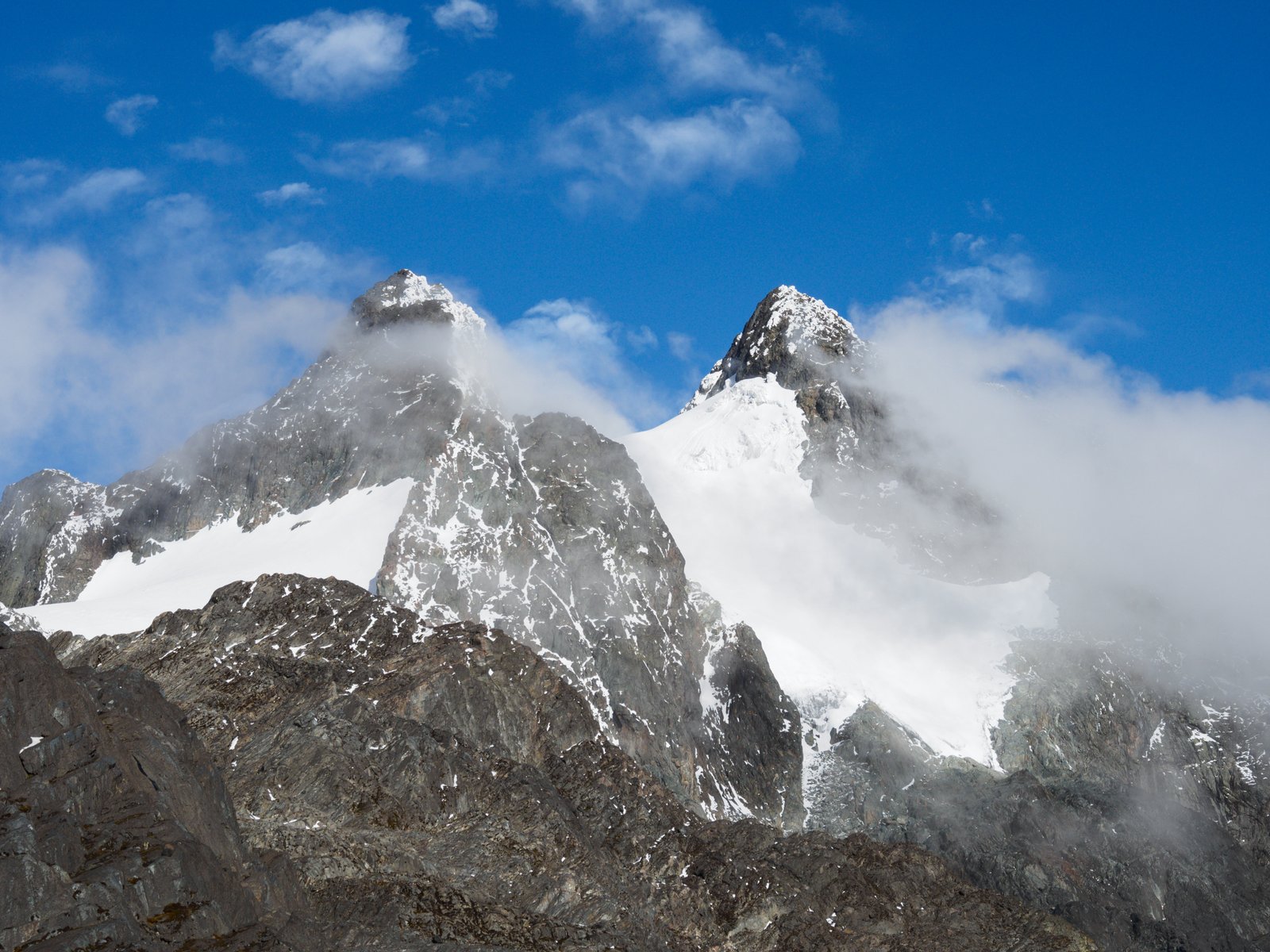
Ptolemy called them the Mountains of the Moon. The Rwenzori range rises from the floor of the western Albertine Rift near the town of Kasese, its highest summits — Margherita Peak at 5,109 metres, Alexandra at 5,091 — perpetually capped in snow and ice despite sitting almost exactly on the equator. UNESCO inscribed the national park in 1994, citing the exceptional diversity of its ecology: the range transitions from lowland tropical rainforest through bamboo zones, heath moorland covered in giant lobelias and groundsels, and finally to glacier and bare rock at the summit plateau.
The glaciers are in retreat. Satellite imagery and field surveys document significant ice loss over the past century, a process accelerating with climate change. What was once a substantial ice cap is now a series of diminishing remnants. Trekkers who reach the high camps today see a landscape in visible flux — the moraines of former glacier extents visible where bare rock has recently been exposed.
The standard circuit — the Central Circuit — takes seven to ten days and requires reasonable fitness and proper cold-weather and waterproof equipment. The mountain is wet: rainfall can occur at any elevation on any day of the year. Guides and porters are mandatory, organised through the Uganda Wildlife Authority base at Nyakalengija. Shorter day-hike options exist for visitors who want the lower forest zones without committing to a full traverse.
Getting there: Flights from Entebbe to Kasese (approximately 1 hour); road journey from Kampala to Kasese is 5–6 hours. The park trailhead at Nyakalengija is 24 km from Kasese town. Allow: 7–10 days for the full Central Circuit; 1–2 days for lower valley day hikes. Best for: Experienced trekkers, high-altitude enthusiasts, travellers interested in equatorial glaciology.
Frequently Asked Questions
How many UNESCO World Heritage Sites are near Kampala?
Uganda has three UNESCO World Heritage Sites, all reachable from Kampala: the Tombs of Buganda Kings at Kasubi (inscribed 2001), located within the city itself; Bwindi Impenetrable National Park (1994), approximately 320 km to the southwest; and Rwenzori Mountains National Park (1994), approximately 350 km to the west.
How do I visit the Kasubi Tombs from Kampala?
The Kasubi Tombs are in the Kasubi suburb, roughly 8 km from Kampala’s city centre. A boda-boda (motorcycle taxi) or special hire taxi reaches the site in 20–30 minutes. The site is managed by the Buganda Kingdom Tourism Office and guided tours are available on-site. Budget 1.5 to 2 hours for a thorough visit including the reconstructed Muzibu-Azaala-Mpanga building and surrounding enclosures.
Can I combine Bwindi and the Rwenzori in one trip from Kampala?
Yes, and the combination is popular. Both parks lie in western Uganda: Bwindi near Kabale in the south-west, Rwenzori near Kasese further north along the Rift. A logical route drives west from Kampala to Kasese (5–6 hours), spends time trekking in the Rwenzori, then continues south on the scenic road through Fort Portal and Bwindi. Allow at least 10–14 days to do both properly — the Rwenzori Central Circuit alone takes 7–10 days. The drier seasons from June to August and December to February offer the most stable trekking conditions, though neither park is fully dry year-round.
What is the significance of the Kasubi Tombs for the Buganda Kingdom?
The Kasubi Tombs serve as the burial place of the four most recent Kabakas (kings) of the Buganda Kingdom — Muteesa I, Mwanga II, Daudi Chwa II, and Muteesa II — and function as an active spiritual and ceremonial centre for the Buganda people, who number several million in central Uganda. The site encapsulates Buganda’s architectural tradition of building in organic materials: bark cloth, wattle, split cane, and reed thatch. When the main tomb building burned in 2010, reconstruction was treated as a matter of cultural continuity rather than mere restoration, with craftspeople applying traditional techniques under the supervision of clan elders.
Sources
- S1 — Reid, Richard J. Political Power in Pre-Colonial Buganda. James Currey, 2002. ISBN 978-0-85255-788-4.
- S2 — Hamilton, Alan C. Deforestation in Uganda. Oxford University Press, 1984. ISBN 978-0-19-572547-6.
Spotted an error? Write to editorial@culturalheritageonline.com and we correct it the same day.