Malawi has 3 UNESCO World Heritage Sites — one protecting a lake of extraordinary ecological depth, one safeguarding millennia of rock art in the central highlands, and one recognizing a mountain landscape shaped as much by human culture as by geology. Together they trace the arc of a country where the natural and the cultural have been intertwined for thousands of years. From Cultural Heritage Online.
Why Malawi’s list looks the way it does
Malawi’s three inscribed sites reflect a heritage portfolio that punches well above its weight for a small landlocked country. The list contains one natural site and two cultural sites, a balance that speaks to both the ecological singularity of the Great Rift Valley lakes and the deep human occupation of the region’s highlands and plateaus. The country’s inscription history spans more than four decades, from its first recognized site in 1984 to its most recent addition in 2025.
Beyond the three inscribed properties, Malawi holds seven sites on the UNESCO Tentative List, including grassland ecosystems in the north and a paleontological landscape around Karonga that contains dinosaur fossils dating to the Cretaceous. Whether any of these advance toward nomination depends on resources and political will, but their presence signals that the country’s heritage authority sees significant unrecognized potential.
The first inscriptions
Malawi’s entry onto the World Heritage map came early, with a single site recognized in the programme’s first decade:
- Lake Malawi National Park (1984) — the country’s first and only natural World Heritage Site, inscribed under criteria vii, ix, and x.
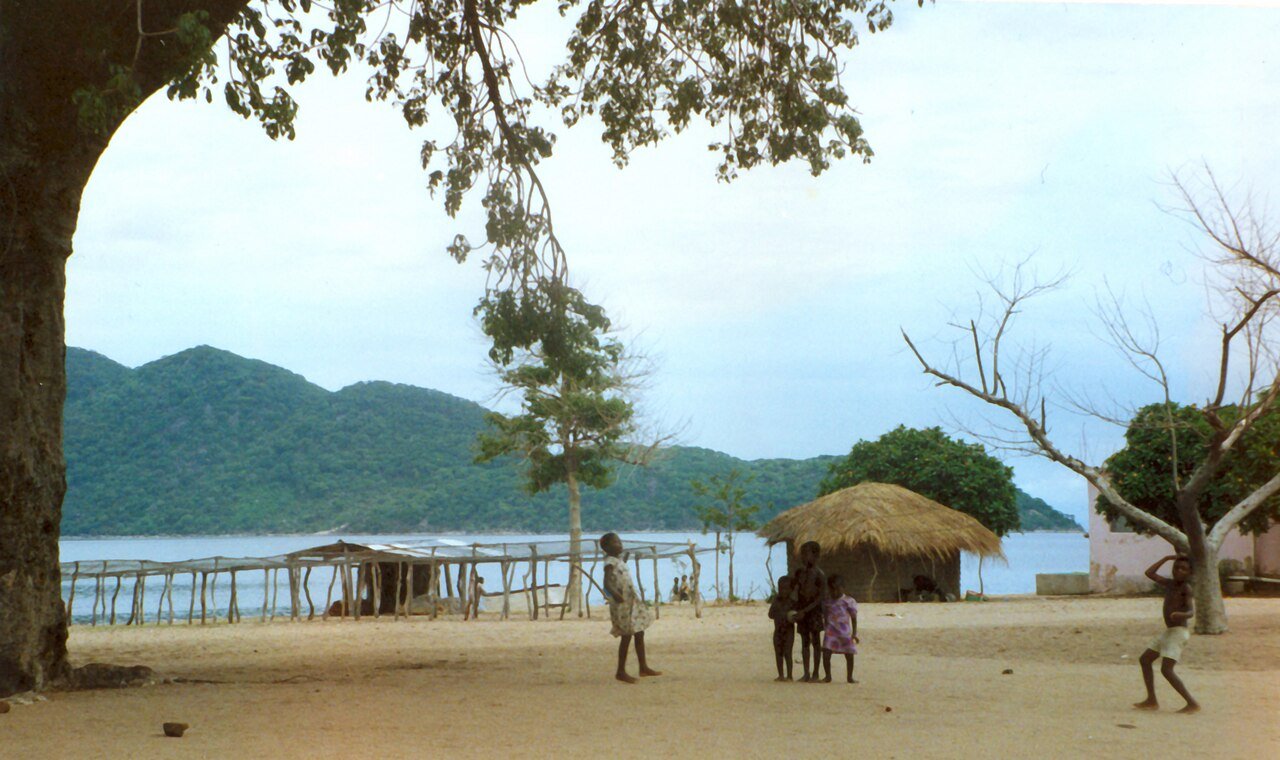
The park covers the southern portion of Lake Malawi and its shoreline, and the UNESCO citation centered on the lake’s extraordinary concentration of endemic cichlid fish species — estimated at several hundred — which have become a landmark case study in evolutionary biology. The lake itself is the ninth largest in the world by area and among the deepest in Africa, and its clarity made it an early focus of freshwater science well before formal protection arrived.
The most visited — and the alternatives
Lake Malawi National Park draws the largest international audience, partly because the lake is also Malawi’s primary tourism draw and the park overlaps with the popular Cape Maclear peninsula. The underwater snorkeling and diving among cichlid-rich shallows have made it a fixture on southern Africa itineraries. Less discussed is how the park’s terrestrial component — patches of miombo woodland and rocky headlands — shelters mammals including hippos, baboons, and monitor lizards alongside the shoreline.
The alternatives on the inscribed list offer something entirely different. Chongoni Rock-Art Area in the central region was recognized in 2006 and contains one of the highest concentrations of rock art in central Africa, with paintings attributed to the BaTwa hunter-gatherers and later to Chewa farming communities across more than 100 individual sites. Mount Mulanje Cultural Landscape, inscribed in 2025, is Malawi’s newest site — a massif rising abruptly from the southern lowlands whose tea estates, forest reserves, and climbing routes have been woven into the economic and spiritual life of surrounding communities for generations.
Natural and shared sites
Lake Malawi National Park stands as the country’s sole natural World Heritage property, and it is not part of any transnational or serial inscription. Its recognition rests substantially on the cichlid fish assemblage, which UNESCO described as an outstanding example of ongoing evolutionary processes — the criteria that also cover the Galápagos Islands and the Australian Fossil Mammal Sites. The lake’s freshwater ecosystem is considered one of the most species-rich in the world, with endemism rates that have drawn comparisons to coral reef biodiversity.
Mount Mulanje Cultural Landscape, though inscribed under cultural criteria, has a strong natural dimension: the massif is the highest point in central Africa south of Kilimanjaro and north of the Drakensberg, and its montane forests support endemic plant species found nowhere else. The 2025 inscription recognized the landscape as a mixed human-natural system rather than a purely cultural monument, reflecting how UNESCO’s criteria have evolved to accommodate places where neither category alone tells the full story.
How to find them
All three of Malawi’s World Heritage Sites are accessible by road, though the quality of infrastructure varies. Lake Malawi National Park is reached via the town of Monkey Bay and Cape Maclear on the southern lakeshore; the park entrance is well-signposted and boat transfers to the lake’s inner areas are available locally. Chongoni Rock-Art Area lies near Dedza in the central region, roughly 85 kilometres south of Lilongwe, and a heritage management site provides basic orientation for visitors. Mount Mulanje is in the far south, close to the Mozambique border, with Mulanje town serving as the gateway; the Cultural Landscape inscription covers both the mountain itself and the adjacent lowland communities.
Malawi’s World Heritage sites sit alongside thousands of other places on CHO’s interactive map, with GPS and sourced editorial history for each. See also our guides to Italy’s and France’s UNESCO sites, and our piece on cultural travel beyond mass tourism.
Frequently Asked Questions
How many UNESCO World Heritage Sites does Malawi have?
Malawi has three inscribed UNESCO World Heritage Sites as of 2025: Lake Malawi National Park (1984), Chongoni Rock-Art Area (2006), and Mount Mulanje Cultural Landscape (2025). The country also maintains seven properties on the UNESCO Tentative List, which are under consideration for future nomination.
What was Malawi’s first UNESCO World Heritage Site?
Lake Malawi National Park was inscribed in 1984, making it Malawi’s inaugural World Heritage Site and one of the earliest sites recognized in sub-Saharan Africa. It was designated under natural criteria for its exceptional cichlid fish diversity and the outstanding ecological values of the lake ecosystem.
What makes Chongoni Rock-Art Area significant?
Chongoni Rock-Art Area, inscribed in 2006, contains one of the densest concentrations of rock art in central Africa, spread across more than 100 sites in the forested granite hills of the central region. The paintings were created by successive communities — first the BaTwa hunter-gatherers and later Chewa farming peoples — and continue to hold ceremonial significance for local populations today.
When was Mount Mulanje Cultural Landscape inscribed?
Mount Mulanje Cultural Landscape received its World Heritage inscription in 2025, making it Malawi’s most recently recognized site. The inscription covers the massif — the highest point in central Africa between Kilimanjaro and the Drakensberg — together with the surrounding communities whose livelihoods, spiritual practices, and land use have shaped the landscape over centuries.
Sources used in this article
- UNESCO — State Party Malawi — World Heritage list.
- UNESCO — Malawi: World Heritage Sites.
- CHO magazine — What is a World Heritage Site?
- CHO — Interactive map of heritage sites.
Sources
- S1 — McCracken, John. A History of Malawi, 1859–1966. James Currey, 2012. ISBN 978-1-84701-050-6.
- S2 — Morris, Brian. Chewa Medical Botany: A Study of Herbalism in Southern Malawi. International African Institute, 1996. ISBN 978-3-8258-2637-6.
Spotted an error? Write to editorial@culturalheritageonline.com and we correct it the same day.