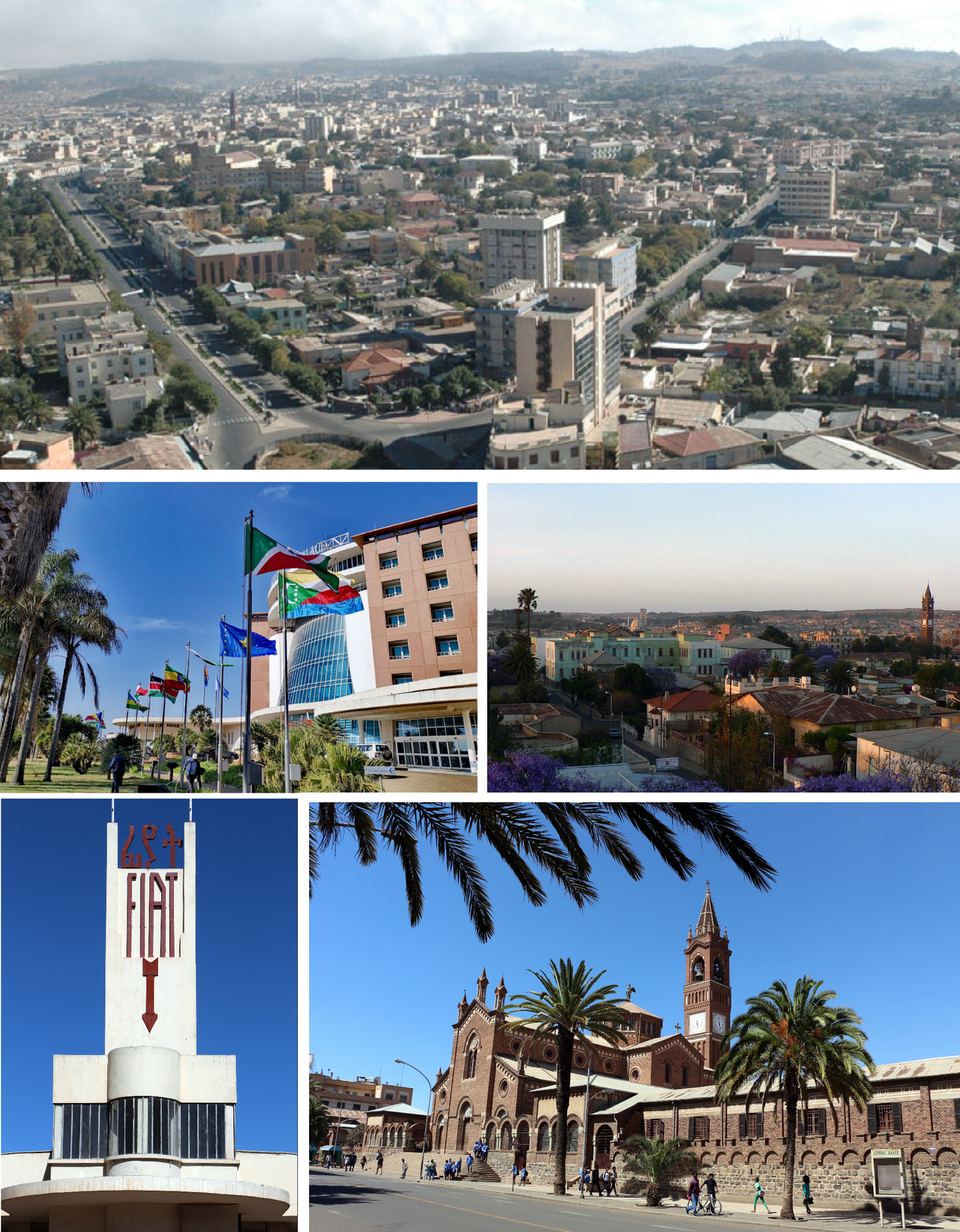
Eritrea has one UNESCO World Heritage Site, inscribed in 2017: the capital Asmara, recognised as an exceptional document of early modernist urbanism transplanted to the Horn of Africa. Small in number but singular in character, Eritrea’s World Heritage record opens a window onto one of the twentieth century’s most unusual experiments in colonial city-building — and onto the archaeological layers that preceded it by millennia. From Cultural Heritage Online.
Why Eritrea’s list looks the way it does
Eritrea ratified the UNESCO World Heritage Convention on 24 October 2001, relatively late compared with its neighbours. Years of post-independence reconstruction and limited institutional capacity slowed the preparation of nomination dossiers. The country’s Tentative List, submitted in 2011, names only one additional property — the Qohaito Cultural Landscape in the Debub Region — which means the pipeline toward future inscriptions exists but remains at an early stage.
The result is a World Heritage record that rests entirely on a single cultural inscription. There are no natural sites and no mixed-designation properties on the list as of 2026. That does not reflect a shortage of natural or archaeological significance; Eritrea’s Red Sea coastline, its ancient highland plateaux, and sites such as Qohaito, with rock art and structures dating to around 2500 BCE, are all candidates for recognition that nomination cycles have not yet reached.
The first inscription
Eritrea’s sole and first World Heritage inscription came in 2017, when the UNESCO World Heritage Committee meeting in Kraków added Asmara to the list. The city was recognised under cultural criteria as an outstanding example of early modernist urbanism applied at the beginning of the twentieth century in an African context.
- Asmara: A Modernist African City (2017) — cultural inscription, located in the Central Region of Eritrea.
The inscribed zone covers the historic perimeter of the city as shaped primarily between the 1890s and the early 1940s, when Italian colonial planners and architects imposed rationalist, futurist, and Art Deco design on the highland plateau. The nomination dossier argued, successfully, that the ensemble survived more intact than virtually any comparable modernist city anywhere in the world.
The most visited — and the alternatives
Asmara draws the travellers who reach Eritrea at all, and the inscription has sharpened international attention on a city that was already known among architecture enthusiasts. The Fiat Tagliero building — a cantilevered service station completed in 1938 with no central supports, engineered to resemble an aeroplane in flight — is regularly cited as one of the most audacious pieces of futurist architecture on the continent. The central market area, the Cinema Impero, and the covered market are among the dozens of buildings within the inscribed boundary that reward close attention.
Beyond the capital, Eritrea’s heritage landscape offers sites that fall outside the World Heritage list but carry substantial archaeological and cultural weight. The Qohaito Cultural Landscape, on the Tentative List since 2011, contains the ruins of an ancient city occupied from at least the first millennium BCE through the Aksumite period, alongside rock engravings and a dam structure of considerable antiquity. The coastal town of Massawa preserves Ottoman, Egyptian, and Italian-era architecture on a coral-island setting. The ancient port of Adulis, south of Massawa, was one of the most significant commercial harbours of the ancient Red Sea world and has been the subject of ongoing archaeological excavation.
Natural and shared sites
As of 2026, Eritrea has no UNESCO-inscribed natural sites and is party to no transnational or serial World Heritage inscriptions. The country’s Red Sea archipelago, the Dahlak Islands, contains important marine ecosystems and has been discussed in conservation circles as a potential future nomination, but no dossier has been formally submitted to UNESCO. Similarly, the Danakil Depression, which extends across Eritrea, Ethiopia, and Djibouti, has been examined for its geological and ecological significance without resulting in a coordinated cross-border nomination.
The absence of natural inscriptions is worth noting precisely because the country’s geography is striking: the dramatic escarpment dropping from the highland plateau to the coastal plain, the volcanic formations near the Dankalia region, and the Red Sea reef systems all represent environments that would merit serious consideration under UNESCO’s natural criteria if institutional frameworks and resources were directed toward nomination.
How to find them
Asmara’s inscribed zone is compact enough to cover on foot over several days, and the city’s grid layout — itself a product of the rationalist planning that earned the World Heritage designation — makes orientation straightforward. The main concentration of listed buildings runs along Harnet Avenue and the surrounding blocks. Independent travellers should note that Eritrea requires a visa and, for visits outside Asmara, a travel permit; conditions change, and checking current entry requirements through official channels before departure is essential.
Eritrea’s World Heritage sites sit alongside thousands of other places on CHO’s interactive map, with GPS and sourced editorial history for each. See also our guides to Italy’s and France’s UNESCO sites, and our piece on cultural travel beyond mass tourism.
Frequently Asked Questions
How many UNESCO World Heritage Sites does Eritrea have?
Eritrea has one UNESCO World Heritage Site as of 2026: Asmara: A Modernist African City, inscribed in 2017. The country holds one additional property on its Tentative List — the Qohaito Cultural Landscape — but this has not yet progressed to formal nomination.
What was Eritrea’s first UNESCO World Heritage Site?
Asmara: A Modernist African City is both Eritrea’s first and only World Heritage inscription, awarded in 2017. The city was recognised for its exceptional integrity as an early twentieth-century modernist urban ensemble built during the Italian colonial period.
What architectural styles define Asmara’s World Heritage status?
The inscribed area encompasses buildings in rationalist, futurist, Art Deco, and neo-classical styles, constructed primarily between the 1890s and the early 1940s. The ensemble is considered among the most intact collections of Italian modernist colonial architecture surviving anywhere in the world.
Does Eritrea have any natural UNESCO World Heritage Sites?
No. As of 2026, all of Eritrea’s World Heritage recognition falls under the cultural designation, and the country is party to no natural or mixed-category inscriptions. Potential candidates such as the Dahlak Islands marine environment remain undeveloped as formal nominations.
Sources used in this article
- UNESCO — State Party Eritrea — World Heritage list.
- UNESCO — Eritrea: World Heritage Sites.
- CHO magazine — What is a World Heritage Site?
- CHO — Interactive map of heritage sites.
Sources
- S1 — Denison, Edward, et al. Asmara: Africa's Secret Modernist City. Merrell Publishers, 2003. ISBN 978-1-85894-200-1.
- S2 — Pankhurst, Richard. The Ethiopian Borderlands: Essays in Regional History. Red Sea Press, 1997. ISBN 978-0-932415-19-6.
Spotted an error? Write to editorial@culturalheritageonline.com and we correct it the same day.