Within two hours of Madrid, seven UNESCO World Heritage Sites span two millennia of Iberian history — Roman engineering, Gothic cathedrals, Renaissance monasteries, Baroque royal gardens, and a university town that once shaped the intellectual map of the Spanish Empire. From Cultural Heritage Online.
Historic City of Toledo 30 min by AVE
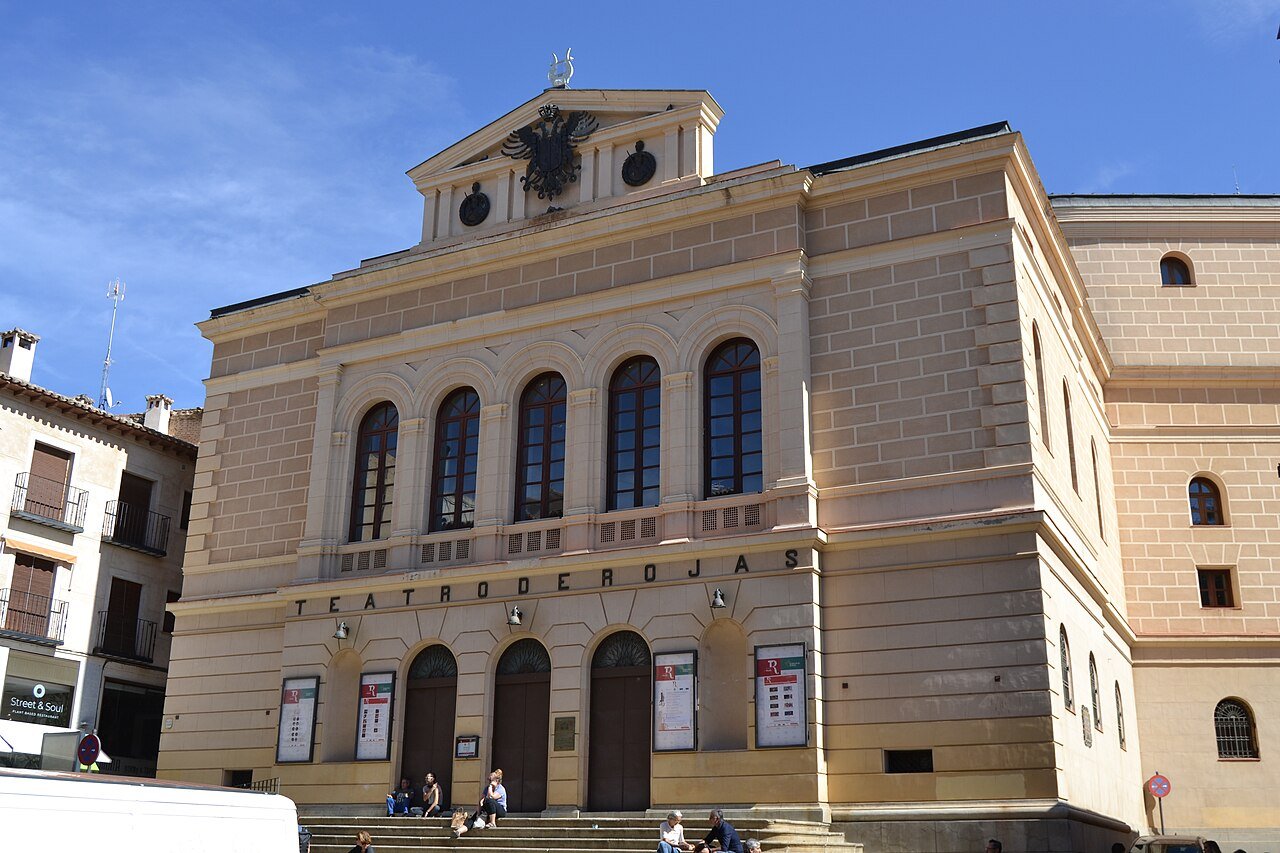
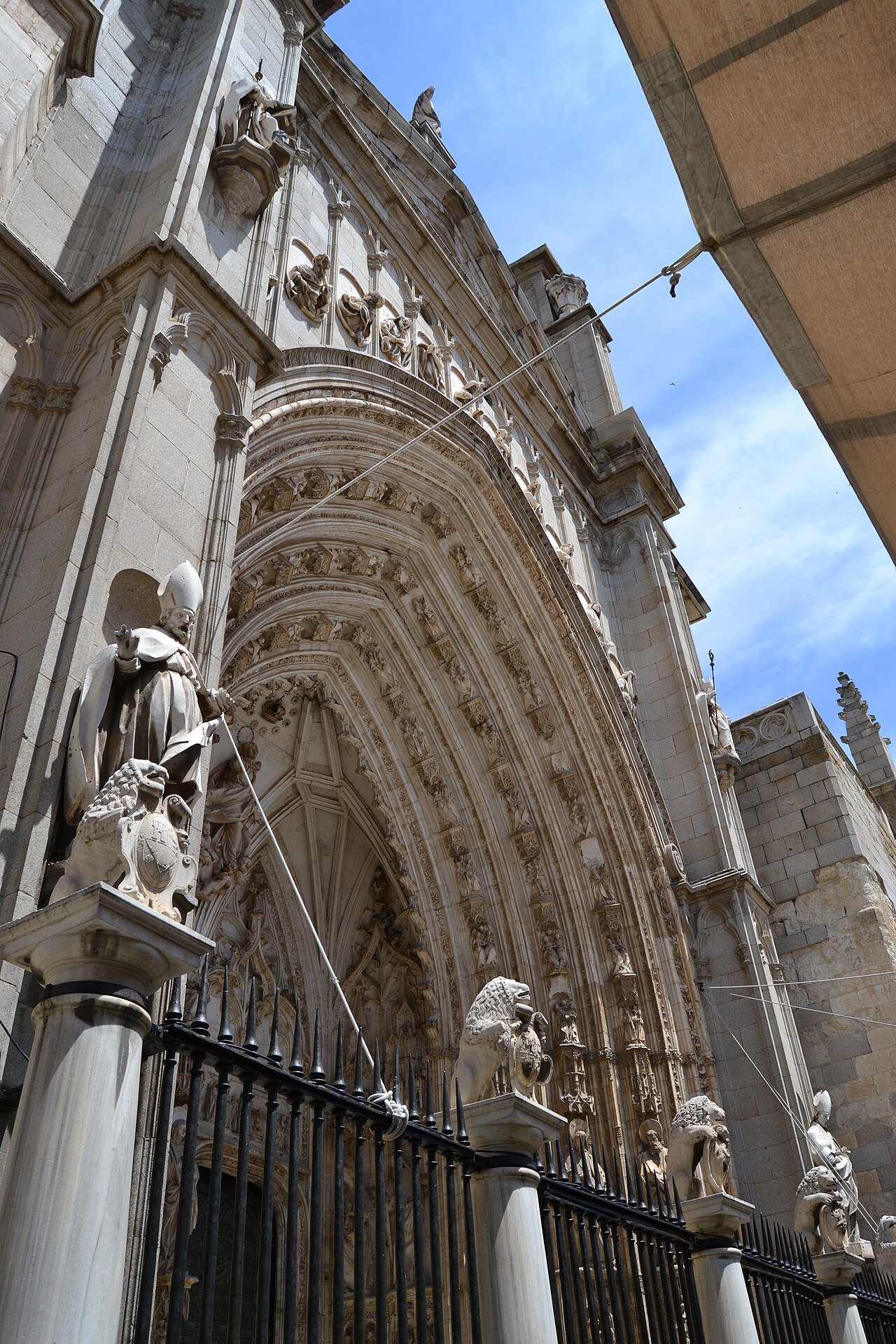
Toledo was inscribed as a UNESCO World Heritage Site in 1986, recognised for the rare coexistence of Christian, Muslim, and Jewish cultures within a single medieval urban fabric. Alfonso VI of León captured the city on 25 May 1085, ending four centuries of Arab rule while allowing each religious community to retain its own quarter. The Cathedral of Santa María — begun in 1226 and completed in 1493 following the model of Bourges — rises above a skyline that also contains ten synagogues, mosques converted into churches, and a Roman circus whose outlines persist in the street plan below. Walking the old city on an autumn afternoon, the limestone walls retain the warmth of the day long after the sun drops behind the Tagus gorge.
Getting there: AVE high-speed train from Madrid Puerta de Atocha; journey 30 minutes; service launched 15 November 2005. Allow: 4–5 hours. Best for: Visitors who want a single day that contains a Gothic cathedral, a Moorish mosque, a synagogue, and a hilltop Alcázar fortress — all within walking distance of each other.
Historic Walled Town of Cuenca 55 min by AVE
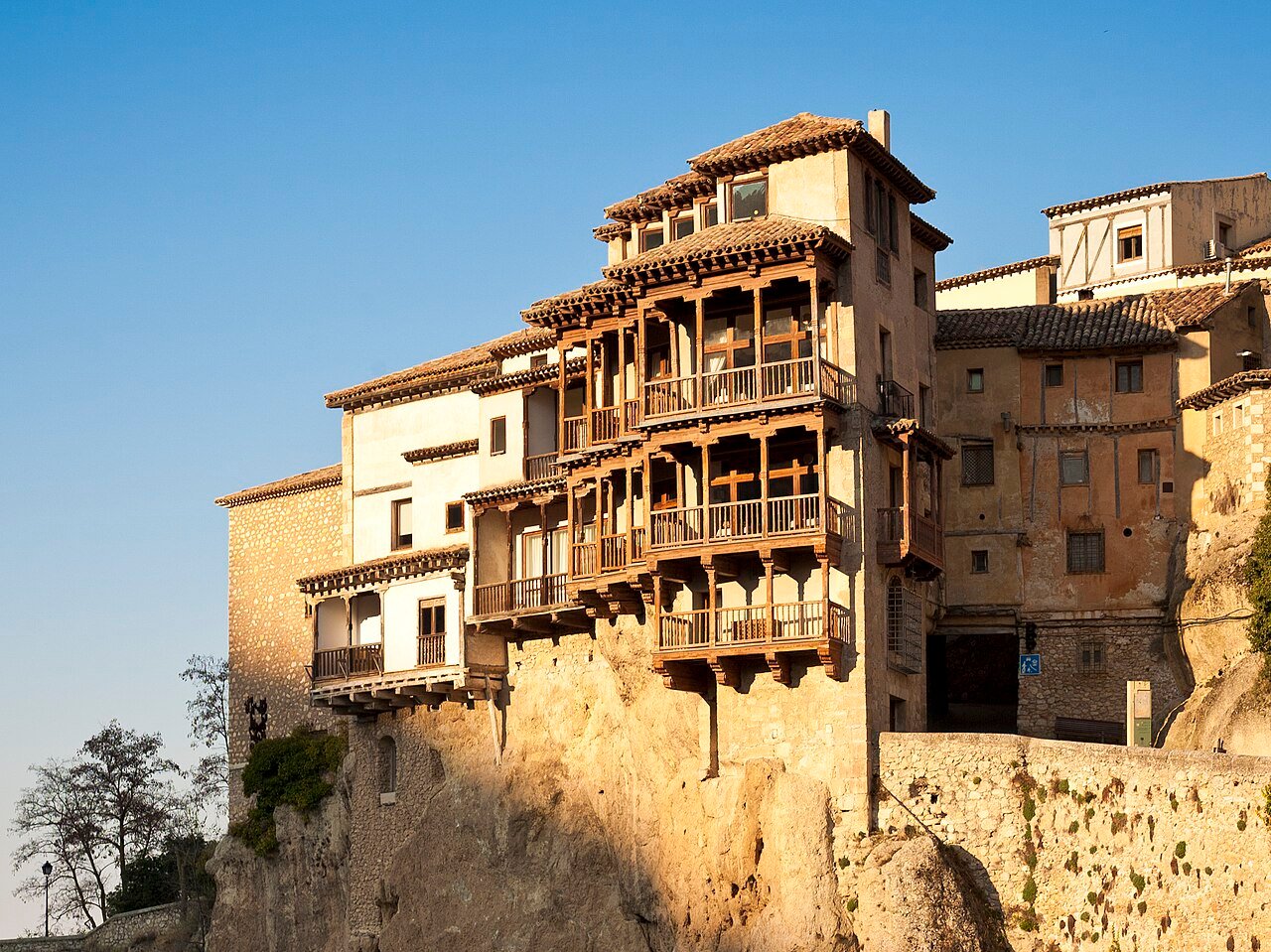
Cuenca earned its UNESCO designation in 1996 for the interlocking qualities of its medieval fortifications and its extraordinary vernacular architecture. The city stands on a promontory between the Júcar and Huécar gorges — a site seized by Alfonso VIII of Castile after a five-month siege in 1177. At the canyon’s edge, the 15th-century Casas Colgadas (Hanging Houses) project their timber-framed balconies directly over the Huécar, cantilevered above a drop of some 40 metres. They are the only surviving examples of this building type in Spain, and one now houses the Museum of Abstract Art. The Gothic cathedral, the first of its kind in Spain and begun in 1182 under Anglo-Norman influence, faces a long narrow square that amplifies the sound of the river below.
Getting there: AVE from Madrid Puerta de Atocha to Cuenca Fernando Zobel station; journey 55 minutes; the station sits outside the old town, so allow extra time for a taxi or the connecting bus. Allow: 3–4 hours. Best for: Anyone drawn to vertiginous medieval architecture and the combination of a serious contemporary art collection inside a building that hangs over a gorge.
Monastery and Site of the Escurial 1 hr by Cercanías + bus
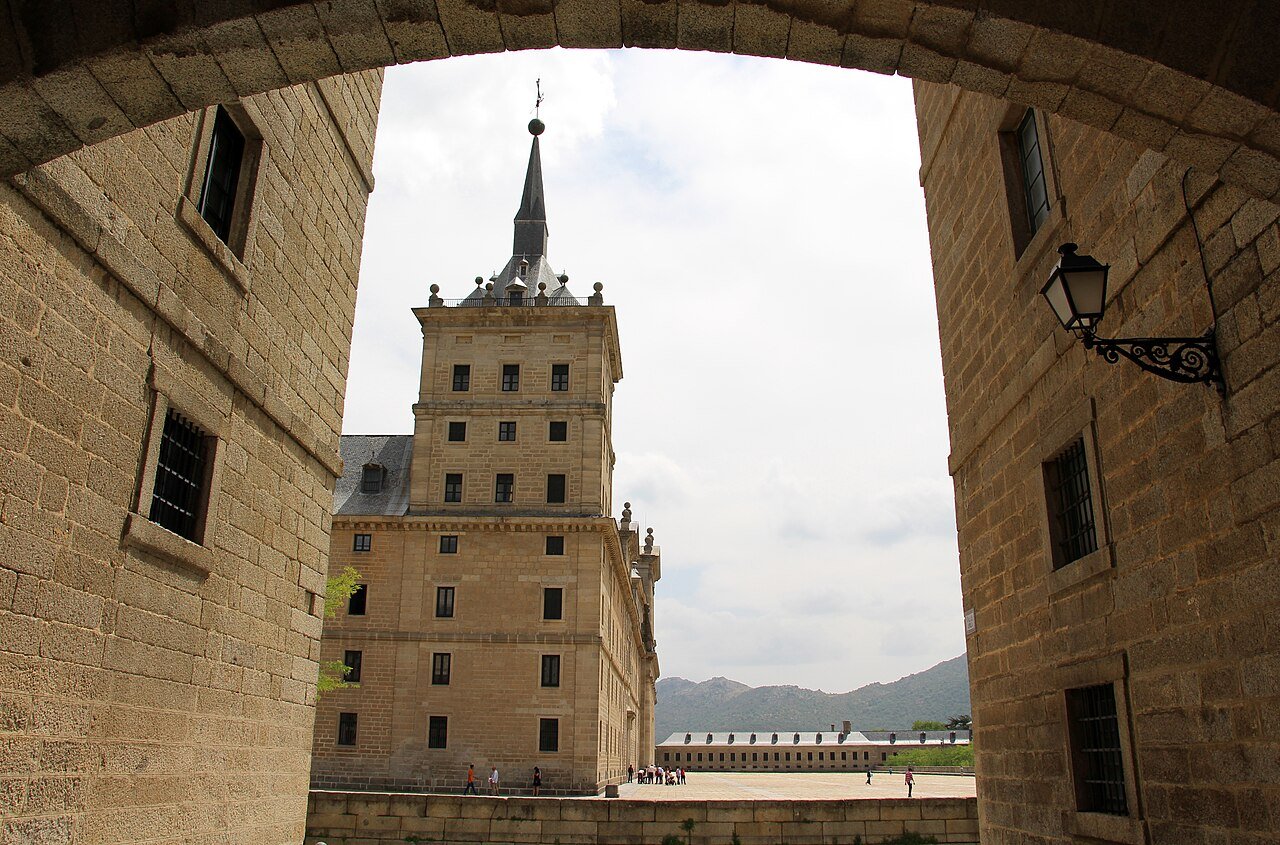
UNESCO inscribed El Escorial on 2 November 1984, recognising it as the largest Renaissance building in the world and the founding statement of the Herrerian architectural style. Philip II commissioned the complex in 1563; Juan Bautista de Toledo began work and Juan de Herrera completed it in 1584 after his master’s death. The finished structure forms a quadrangle of approximately 224 by 153 metres, containing a monastery, basilica, royal palace, mausoleum, library, and school within a single granite composition. From the south-facing terrace, the Sierra de Guadarrama frames the complex on all sides — the stone so precisely fitted that the joints between blocks are barely visible even at arm’s length. More than 500,000 visitors walk through it each year.
Getting there: Cercanías C-3a from Madrid Atocha to El Escorial station, then bus or taxi to the monastery; total journey approximately 1 hour. Allow: 3–4 hours. Best for: Those interested in the intersection of royal power and Renaissance architecture — the Pantheon of Kings alone justifies the journey.
Aranjuez Cultural Landscape 45 min by Cercanías
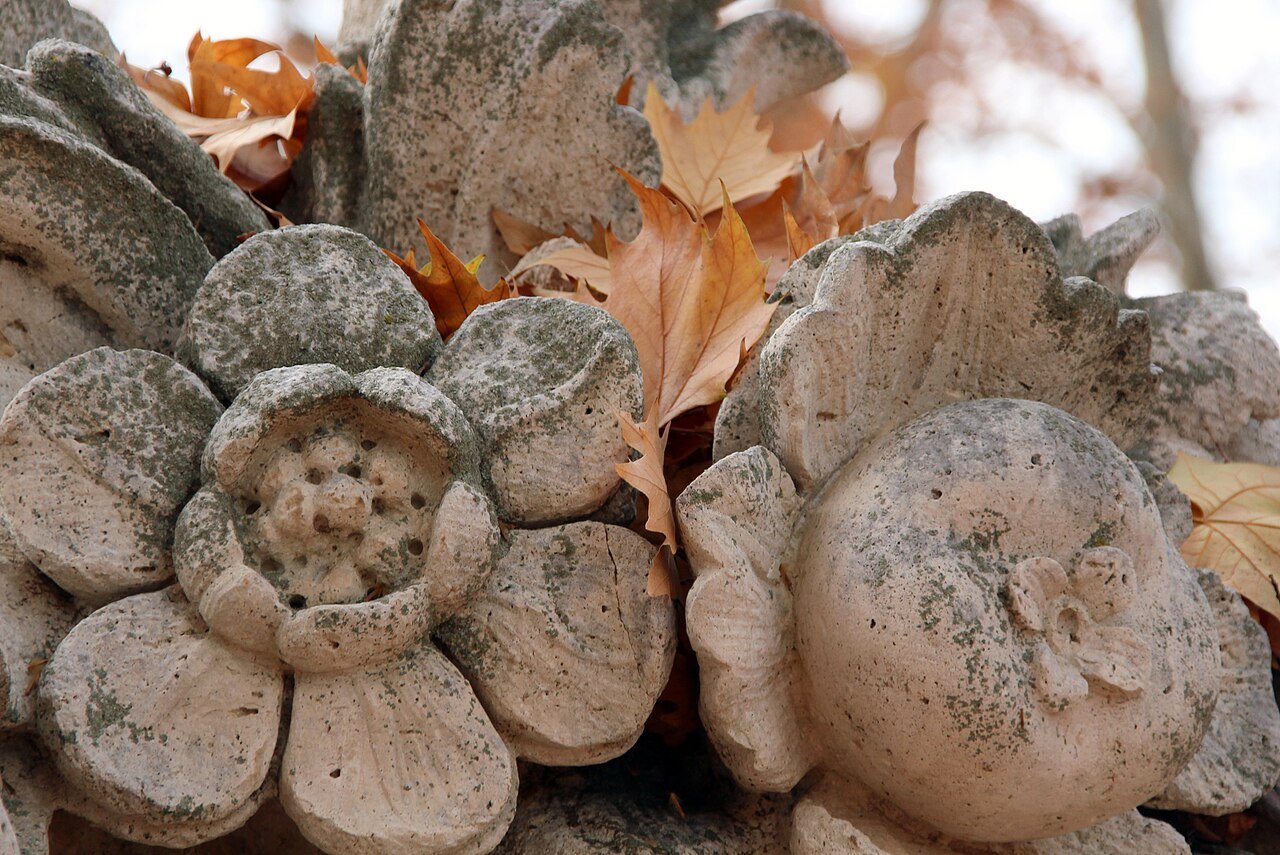
The Aranjuez Cultural Landscape became a World Heritage Site in 2001, acknowledged for the centuries-long dialogue between human intervention and the natural geography of the Tagus and Jarama confluence. Philip II declared Aranjuez a Royal Site in 1560, with the initial palace designs drawn by Juan Bautista de Toledo and later revised by Juan de Herrera. Subsequent Bourbon monarchs expanded the gardens considerably: Charles III opened the Jardín del Príncipe in the 18th century, commissioning the Long Bridge over the Jarama in 1761 and a model farm at Real Cortijo de San Isidro in 1763. The railway line connecting Madrid to Aranjuez, opened in 1851 and still operating as Cercanías C-3, is itself among Spain’s oldest. Autumn turns the plane tree avenues along the Tagus into a continuous corridor of gold and amber.
Getting there: Cercanías C-3 from Madrid Atocha; journey 45 minutes; the station is a short walk from the Royal Palace. Allow: 2–3 hours. Best for: A relaxed half-day combining royal palace interiors with a riverside walk through gardens that influenced landscape design across 18th-century Europe.
University and Historic Precinct of Alcalá de Henares 30 min by Cercanías
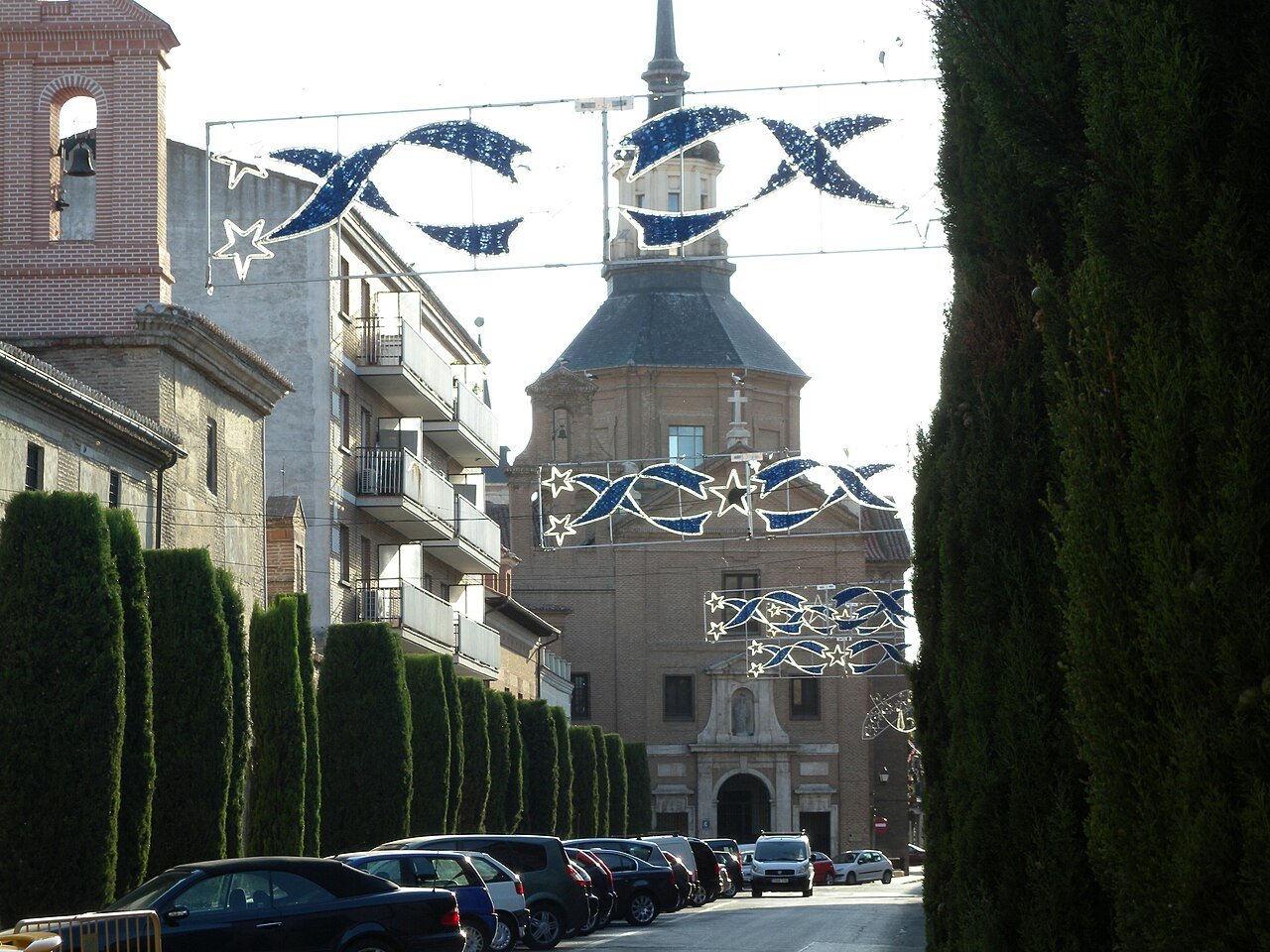
The University and Historic Precinct of Alcalá de Henares joined the World Heritage List in 1998, designated as the prototype of the Spanish Renaissance university city — a model that was exported to Latin America as the Spanish Empire expanded. Cardinal Cisneros founded the university in 1499, making it one of the first purpose-built planned university towns in Europe. The central Colegio Mayor de San Ildefonso bears a plateresque facade designed by Rodrigo Gil de Hontañón in 1543, its stone tracery intricate enough to read as textile rather than masonry. The town is also the birthplace of Miguel de Cervantes, born here in 1547. Each year, the university hosts the Cervantes Prize ceremony — the highest literary honour in the Spanish-speaking world.
Getting there: Cercanías C-2 from Madrid Atocha or Chamartín; journey 30 minutes; the historic precinct is a ten-minute walk from the station. Allow: 2–3 hours. Best for: Visitors interested in early modern scholarship and Spanish Golden Age literature — the university quarter, Cervantes’ birthplace, and the Bishop’s Palace are all within a single walkable circuit.
Old Town of Segovia and its Aqueduct 30 min by AVE
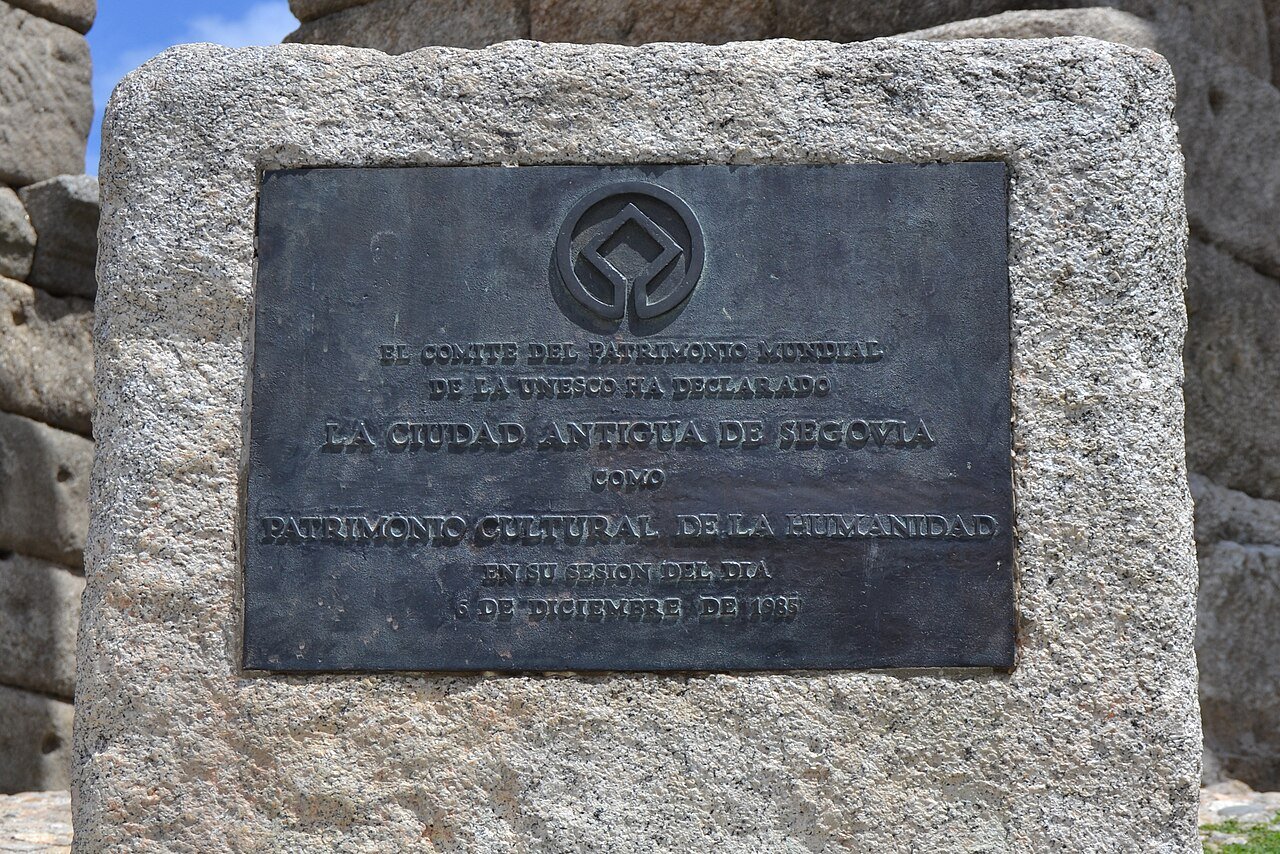
Segovia was inscribed as a World Heritage Site in 1985, with the Roman aqueduct serving as the defining monument of a city that layers two thousand years of history into a compact hilltop. Built in the late first or early second century AD, the aqueduct spans 818 metres and reaches a maximum height of 29 metres — its 167 arches assembled from some 25,000 granite blocks without a drop of mortar and without a single arch having failed in two millennia. The old town beyond it adds the Alcázar, first documented in 1122 and the model some historians cite for the Disneyland castle, and the last Gothic cathedral built in Spain, consecrated in 1768. The aqueduct at dusk, each arch silhouetted against a sky turning apricot, is among the most composed views in Castile.
Getting there: AVE from Madrid Chamartín station; journey approximately 30 minutes; a city bus connects the modern station to the historic centre. Allow: 3–4 hours. Best for: Anyone wanting Roman infrastructure, medieval castles, and a Gothic cathedral in a single compact itinerary — Segovia delivers all three without a single dull kilometre between them.
Old Town of Ávila with its Extra-Muros Churches 1 hr 30 min by AVE or bus
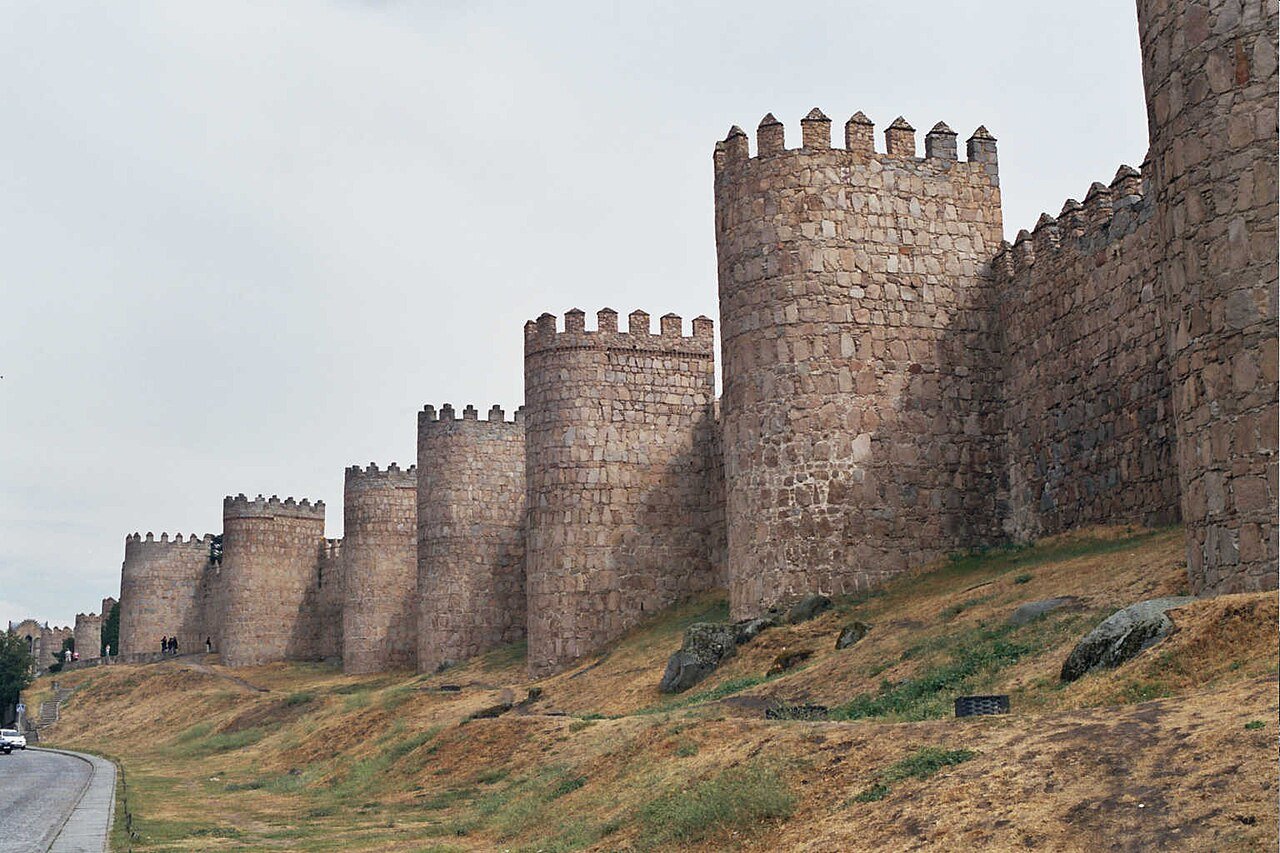
The Old Town of Ávila with its Extra-Muros Churches received UNESCO status in 1985, acknowledged for preserving what remains one of the most complete medieval fortification circuits in Europe. Construction of the walls began around 1090 following the Christian reconquest under Raymond of Burgundy, who reportedly employed the Italian master Casandro Romano and the French engineer Florin de Pontuenga to direct the work. The finished perimeter runs 2,516 metres, incorporating 88 semicircular towers, nine gates, and 2,500 merlons at an average height of 12 metres. The cathedral — begun in 1107 — doubles as a bastion, its eastern apse forming part of the wall itself, a rare architectural fusion of liturgical and military function. Standing on the parador terrace facing the walls at sunset, the honey-coloured granite turns the entire circuit into something closer to a geological formation than a human construction.
Getting there: AVE from Madrid Chamartín, approximately 1 hour 30 minutes; direct buses also run from Madrid Estación Sur in under 2 hours. Allow: 3–4 hours. Best for: Visitors seeking the most complete medieval walled city in Spain — the combination of walkable ramparts, a fortress-cathedral, and the extra-muros Romanesque basilicas rewards a full afternoon.
Frequently Asked Questions
How many UNESCO World Heritage Sites are near Madrid?
Seven UNESCO World Heritage Sites lie within approximately two hours of central Madrid by public transport or car: Toledo, Cuenca, El Escorial, Aranjuez, Alcalá de Henares, Segovia, and Ávila. No other European capital offers a comparable concentration of inscribed sites within a single day-trip radius.
What is the closest UNESCO World Heritage Site to Madrid?
Alcalá de Henares is the closest, reachable in around 30 minutes by Cercanías C-2 from Madrid Atocha or Chamartín. Toledo and Segovia both take the same 30 minutes by AVE high-speed train, though they require departure from Atocha and Chamartín respectively.
Can you visit more than one UNESCO site in a single day from Madrid?
Alcalá de Henares and Toledo can be combined in a single long day — Alcalá in the morning, Toledo in the afternoon — both accessible by direct train from Atocha. Most other sites benefit from a dedicated half-day or full day, particularly Ávila and Cuenca, where the journey time is longer and the old town rewards a slower pace.
Is a car or public transport better for visiting these UNESCO sites from Madrid?
All seven sites are accessible by public transport from Madrid, and for Toledo, Segovia, Alcalá de Henares, and Aranjuez the high-speed or Cercanías train is faster than driving in traffic. A car becomes more practical for El Escorial combined with a drive into the Sierra de Guadarrama, or for reaching Ávila and Cuenca if you want flexibility on arrival times.
Sources used in this article
- UNESCO World Heritage Centre — World Heritage List.
- Wikipedia — Historic City of Toledo.
- Wikipedia — El Escorial.
- Wikipedia — Aqueduct of Segovia.
- CHO — Interactive heritage map.
Sources
- S1 — Kagan, Richard L., ed. Spanish Cities of the Golden Age. University of California Press, 1989. ISBN 978-0-520-06310-5.
- S2 — Barton, Simon. A History of Spain. Palgrave Macmillan, 2009. ISBN 978-0-230-20012-8.
Spotted an error? Write to editorial@culturalheritageonline.com and we correct it the same day.