
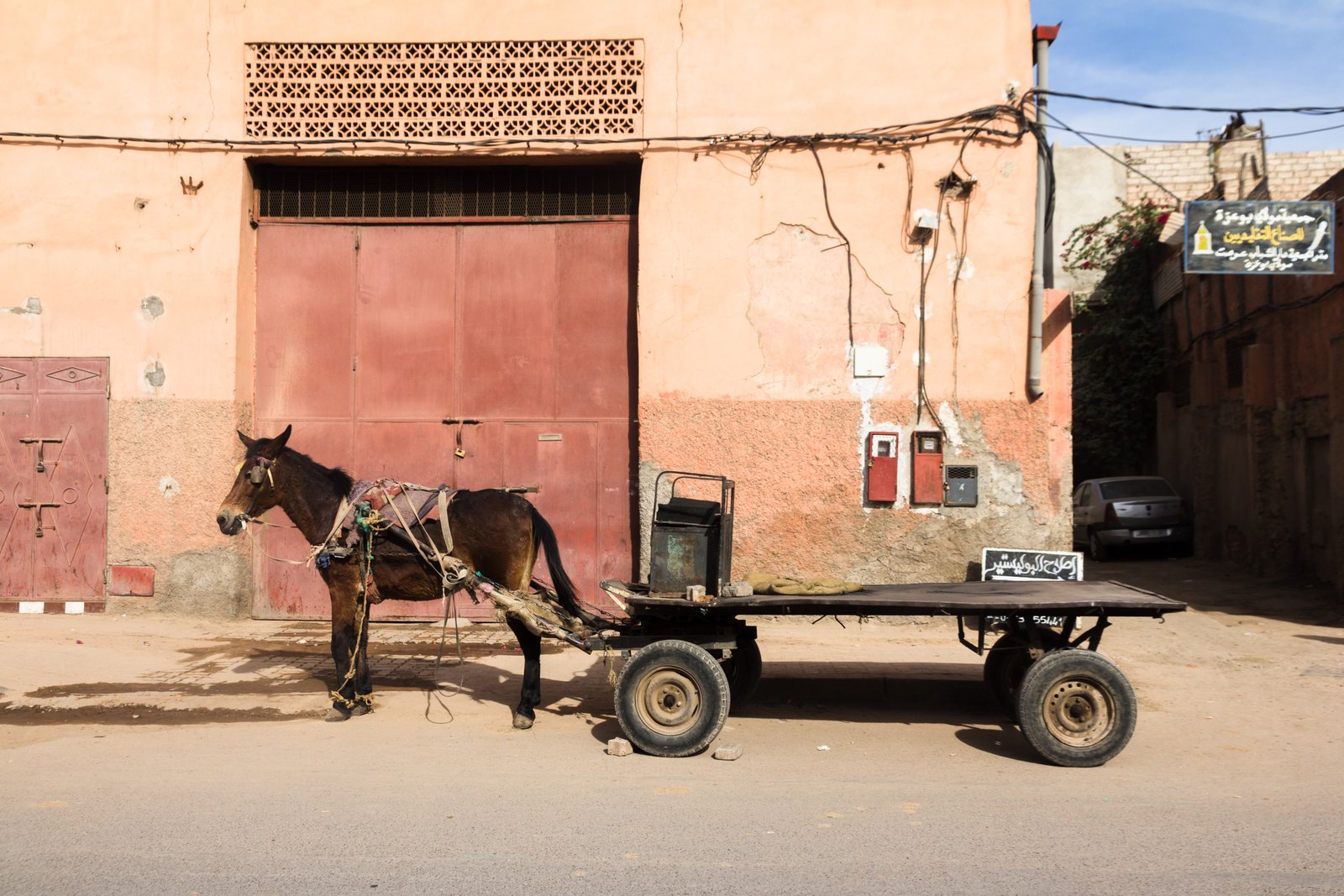
Marrakech sits at the centre of one of North Africa’s richest concentrations of UNESCO World Heritage Sites — from its own ancient medina to a desert fortress city and an Atlantic fortified port, all within a half-day’s reach. Each destination rewards the journey with a distinct architectural language and a layer of history that cannot be replicated. From Cultural Heritage Online.
Medina of Marrakesh In the city — no travel needed
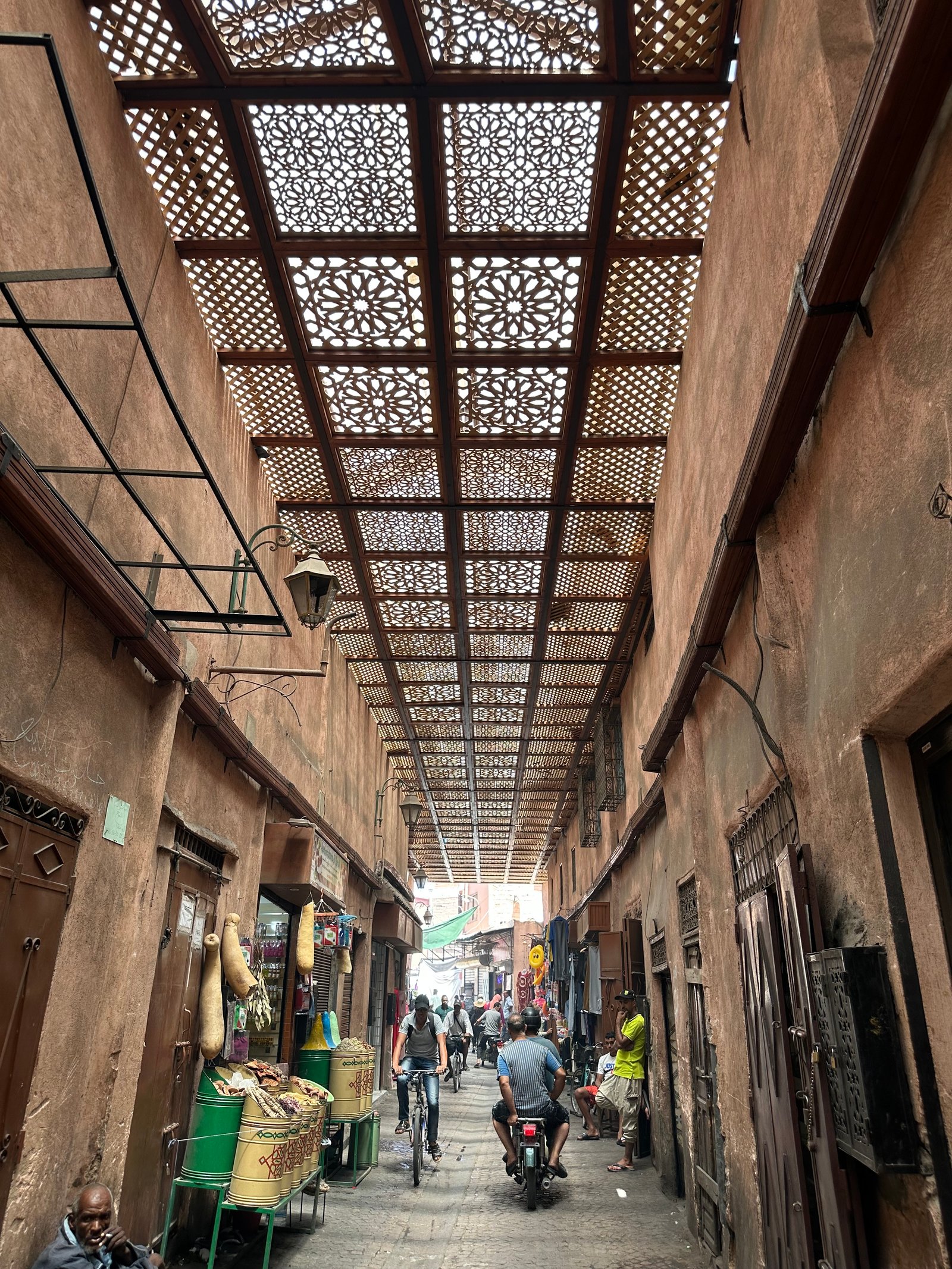
UNESCO inscribed the Medina of Marrakesh in 1985, recognising an urban fabric that has remained largely intact since the city’s founding in the 11th century under the Almoravid dynasty. The inscription covers the entire walled city: some 800 hectares of interlocking souks, palaces, mosques, madrasas and residential quarters, all built in a warm rose-tinted pisé that gives Marrakech its nickname, the Red City.
The Koutoubia Mosque, completed in the 12th century under the Almohad caliph Yaqub al-Mansur, anchors the skyline with a 70-metre minaret that became the model for the Giralda in Seville and the Hassan Tower in Rabat. Inside the medina, the Ben Youssef Madrasa — founded in the 14th century and substantially rebuilt in the 16th under the Saadian sultans — opens onto a courtyard of carved cedar, zellij tilework and marble that amplifies every sound into a quiet echo. The Saadian Tombs, sealed in the 17th century and rediscovered in 1917, hold the remains of Ahmad al-Mansur and his family in a chamber of extraordinary stucco density. The Bahia Palace, built for a 19th-century grand vizier, offers painted wooden ceilings that smell faintly of cedar even now.
Djemaa el-Fna square, additionally recognised by UNESCO as Intangible Cultural Heritage, transforms every evening: acrobats, storytellers, snake charmers and musicians fill a space that has functioned as a public stage for centuries. The noise is physical — drums, strings and the competing calls of food vendors — and unlike anything else in Morocco.
Getting there: The medina is Marrakech’s historic centre; walk from most riads and hotels, or take a taxi to Djemaa el-Fna. Allow: At minimum a full day; ideally two or three to move at an unhurried pace through the souks and major monuments. Best for: Travellers interested in Islamic architecture, urban history, and North African cultural traditions.
Ksar of Ait-Ben-Haddou 180 km southeast — 2.5–3 hr by car
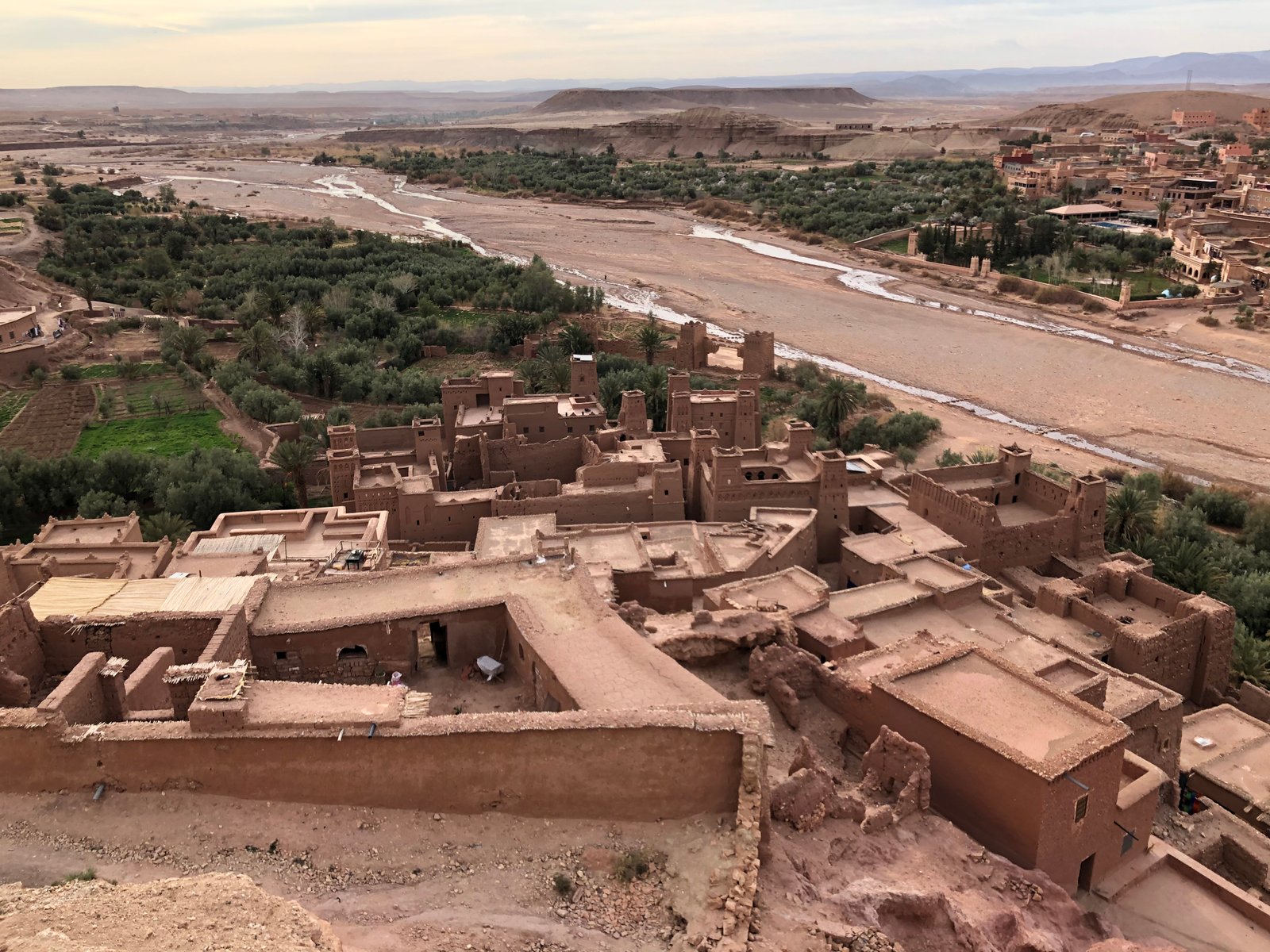
The road from Marrakech to Ait-Ben-Haddou crosses the High Atlas via the Tizi n’Tichka pass at 2,260 metres, where the air sharpens and the landscape shifts from red to ochre to the pale grey of cedar scrubland. The descent into the pre-Saharan valley reveals the ksar — a fortified village of earthen pisé towers — rising in tiers above the Ounila River. UNESCO inscribed it in 1987 as an outstanding example of southern Moroccan earthen architecture.
Pisé construction uses compacted layers of raw earth mixed with straw and gypsum. At Ait-Ben-Haddou the technique produced towers with geometric patterns pressed into the upper sections while still wet — each façade slightly different from the next, depending on which family built it and in which generation. The ksar sits on the ancient trans-Saharan caravan route between the Sahara and Marrakech; salt, gold and enslaved people passed through here for centuries before the route’s commercial decline in the 20th century. A handful of families still live within the walls.
Film productions have used the site since the 1950s. The 1962 film Lawrence of Arabia, Ridley Scott’s Gladiator (2000) and multiple seasons of Game of Thrones were shot here, which has made the ksar internationally recognisable — but does not diminish the experience of climbing the narrow lanes to the granary at the top, where the silence is broken only by wind and the distant sound of the river.
Getting there: Rent a car or hire a driver from Marrakech; the pass road is paved and well-maintained. Shared taxis and organised day tours operate from Marrakech. No direct bus. Allow: A half day on site; a full day if combining with Ouarzazate (12 km east). Best for: Architecture enthusiasts, film location visitors, anyone making their way toward the Draa Valley.
Medina of Essaouira (Mogador) 170 km west — 2.5 hr by CTM coach or car
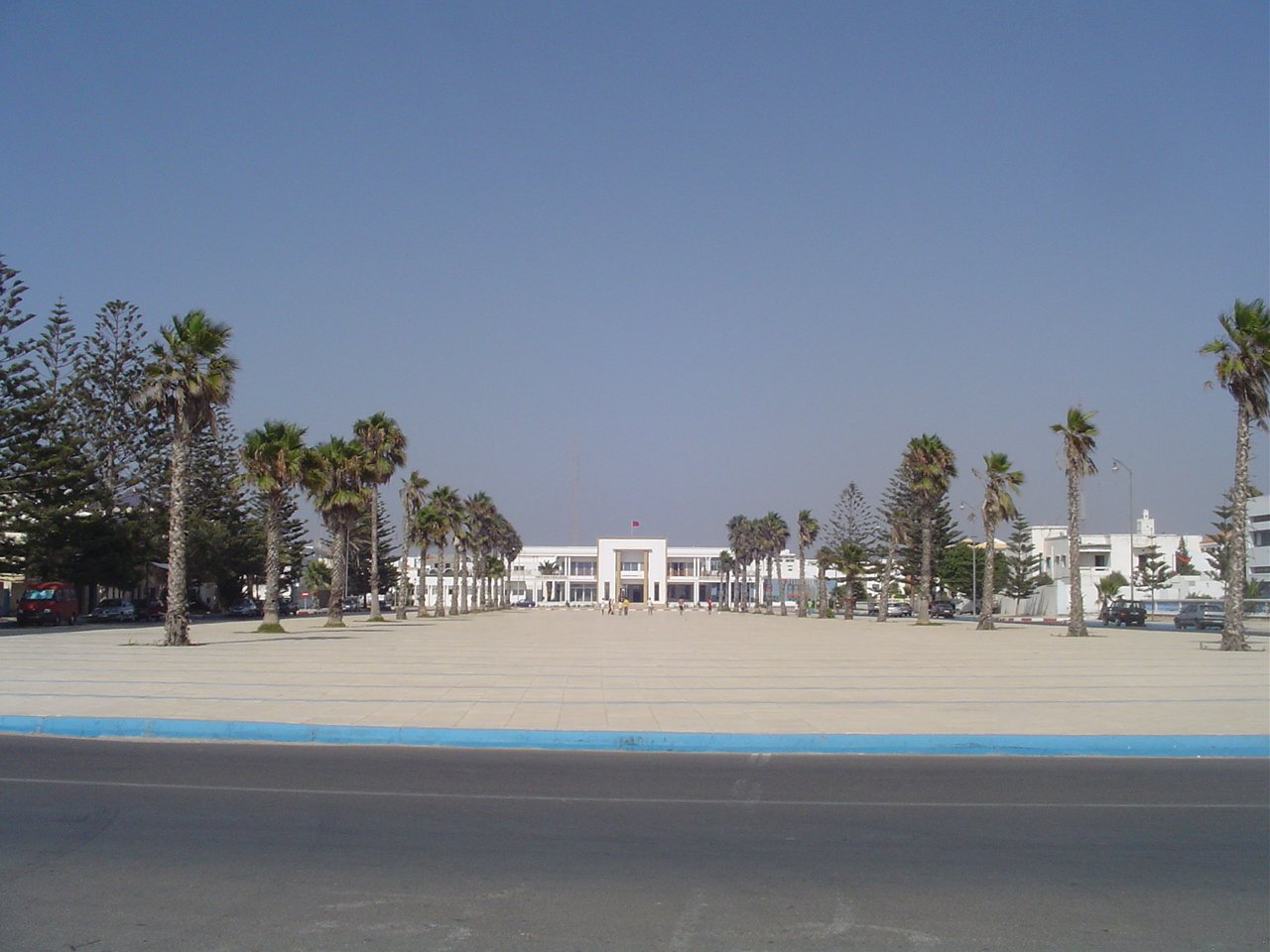
Essaouira stands on a headland jutting into the Atlantic, and the wind here — the alizé — blows almost every afternoon with enough force to strip a market stall bare. The city was planned in the 1760s by Sultan Mohammed III, who commissioned the French military architect Théodore Cornut to design a fortified port capable of competing with European trading powers. The result was an unusual hybrid: a rectilinear European street grid enclosed within Moorish walls, with Portuguese-era sea bastions rebuilt in the 18th century. UNESCO inscribed the medina in 2001 for this exceptional example of an 18th-century fortified colonial town.
The Scala de la Ville — the sea rampart — runs along the northern edge of the medina, its bronze Portuguese cannons still pointing west over the Atlantic. Below, the harbour smells of fresh sardines and salt. The medina’s whitewashed facades trimmed in cobalt blue give the city a graphic quality quite different from Marrakech’s earthen warmth. The souks here specialise in thuya wood marquetry, a craft using the burr of the native Atlas cedar that craftsmen shape into boxes, picture frames and geometric panels with hand tools.
Essaouira is also the centre of Gnawa music — a trance-ritual tradition brought by sub-Saharan enslaved Africans and now recognised internationally, celebrated each June at the Gnaoua World Music Festival. The rhythmic iron castanets (qraqeb) and three-stringed guembri bass give Essaouira a musical identity unlike anywhere else in Morocco.
Getting there: CTM coaches run several times daily from Marrakech’s main bus station; journey 2.5 hours. By car, take the A7/N1 west. Allow: A full day; consider an overnight to experience the medina in the early morning before day-trippers arrive. Best for: Travellers interested in 18th-century colonial architecture, Atlantic Morocco, craft traditions, and music culture.
Medina of Meknes 250 km northeast — 3.5 hr by road
Meknes requires a longer commitment than the sites above, but it rewards travellers who push north through the Middle Atlas. Sultan Moulay Ismail founded the imperial capital in the 17th century and built it with extraordinary ambition: 45 kilometres of ramparts, monumental granaries at Heri es-Souani, and Bab Mansour — widely considered the finest ceremonial gate in Morocco. UNESCO inscribed the medina in 1996.
Bab Mansour, completed in 1732 under Moulay Abdallah, is faced entirely in zellij tile and carved stucco, its arch spanning nearly 20 metres. The surrounding Place Hedim, once a demolition site where stones plundered from the Roman city of Volubilis were stockpiled, now functions as a second Djemaa el-Fna — food stalls, musicians and local families in the evenings. Volubilis itself, 33 kilometres north, is a separate UNESCO site and a natural extension of any Meknes visit: Roman mosaics remain in situ across a site that served as the westernmost capital of the Roman province of Mauretania Tingitana.
Most travellers combine Meknes with Volubilis and Fez in a circuit that requires at least two nights. It is not a Marrakech day trip; the distance and density of material justify their own itinerary.
Getting there: Train from Marrakech to Casablanca, then connecting train to Meknes (total approximately 5 hours) is more comfortable than road for a solo visit. By car, 3.5 hours via the A1 motorway. Allow: A full day for Meknes alone; two days to include Volubilis and a brief stop in Fez. Best for: Travellers on a Morocco circuit combining Atlantic and imperial cities.
Frequently Asked Questions
How many UNESCO World Heritage Sites are near Marrakech?
Four UNESCO World Heritage Sites are accessible from Marrakech as day trips or short extensions. The Medina of Marrakesh (inscribed 1985) is the city itself. The Ksar of Ait-Ben-Haddou (1987) is 180 km southeast. The Medina of Essaouira, inscribed in 2001, is 170 km west on the Atlantic coast. The Medina of Meknes (1996) is 250 km northeast and more naturally combined with Volubilis and Fez.
What should I see in the Medina of Marrakesh in one day?
Prioritise the Ben Youssef Madrasa for its carved courtyard, the Saadian Tombs for their concentrated richness, and the Koutoubia Mosque exterior for the minaret’s scale. Walk through the dyers’ souk (Souk Sabbaghin) to see wool hanks hanging in saffron, indigo and crimson over stone vats. Arrive at Djemaa el-Fna at dusk when the square shifts from market to performance space. The Bahia Palace and Majorelle Garden are worth separate mornings if you have more time.
Can I combine Ait-Ben-Haddou and Essaouira in a single trip from Marrakech?
They lie in opposite directions from Marrakech — southeast and west respectively — so combining them in a single day trip is not practical. The most efficient approach is to spend one night in Ouarzazate (near Ait-Ben-Haddou) and then return to Marrakech before heading to Essaouira the following day. Alternatively, Essaouira works well as a standalone overnight: take the morning CTM coach, stay one night, and return the next afternoon, leaving Ait-Ben-Haddou for a separate excursion.
What makes the Ksar of Ait-Ben-Haddou significant beyond its film appearances?
Ait-Ben-Haddou represents the peak of Moroccan earthen architecture — a building tradition that uses no fired brick or cut stone, relying entirely on compacted raw earth reinforced with organic material. The ksar demonstrates how this technique, when applied collectively by generations of builders, can produce a fortified settlement capable of withstanding centuries of use. The decorative geometric patterns pressed into the tower facades while the pisé was still wet are a direct record of craft knowledge transmitted within families. The UNESCO inscription recognises this continuity, not the cinematic associations, though both draw visitors to a site that might otherwise receive only specialist attention.
Sources
- S1 — Searight, Susan. The Story of Marrakesh. Pallas Athene, 2008. ISBN 978-1-84368-043-7.
- S2 — Pennell, C. R. Morocco: From Empire to Independence. Oneworld Publications, 2003. ISBN 978-1-85168-303-1.
Spotted an error? Write to editorial@culturalheritageonline.com and we correct it the same day.


.jpg)
.jpg)