Colombia has 9 UNESCO World Heritage Sites: a tightly curated list that moves from Caribbean colonial fortifications to Amazonian rock art, from pre-Hispanic burial hypogea to a living landscape of coffee cultivation shared with millions of smallholders. Each site represents a different register of the country’s layered identity — Indigenous, colonial, ecological — compressed into a list that rewards close reading. From Cultural Heritage Online.
Why Colombia’s list looks the way it does
Colombia ratified the World Heritage Convention in May 1983 and received its first inscription just one year later, making it an early adopter in Latin America. The nine sites inscribed since then — six cultural, two natural, one mixed — reflect UNESCO priorities across four decades: colonial urban fabric in the 1980s, archaeological parks in the mid-1990s, marine and biodiversity sites in the 2000s, and a cultural landscape and a transnational road system in the 2010s. The breadth is striking for a list of only nine entries.
The single mixed site, Chiribiquete National Park, illustrates how Colombia’s protected areas often carry dual significance: an ecosystem of global importance that also contains tens of thousands of pre-Hispanic rock paintings. That combination of cultural and natural outstanding universal value in a single designation is relatively uncommon worldwide, and it shapes how visitors and researchers approach the site.
The first inscriptions
Colombia’s inaugural inscription came in 1984, at the 8th session of the World Heritage Committee held in Buenos Aires. A decade of further additions followed through the mid-1990s:
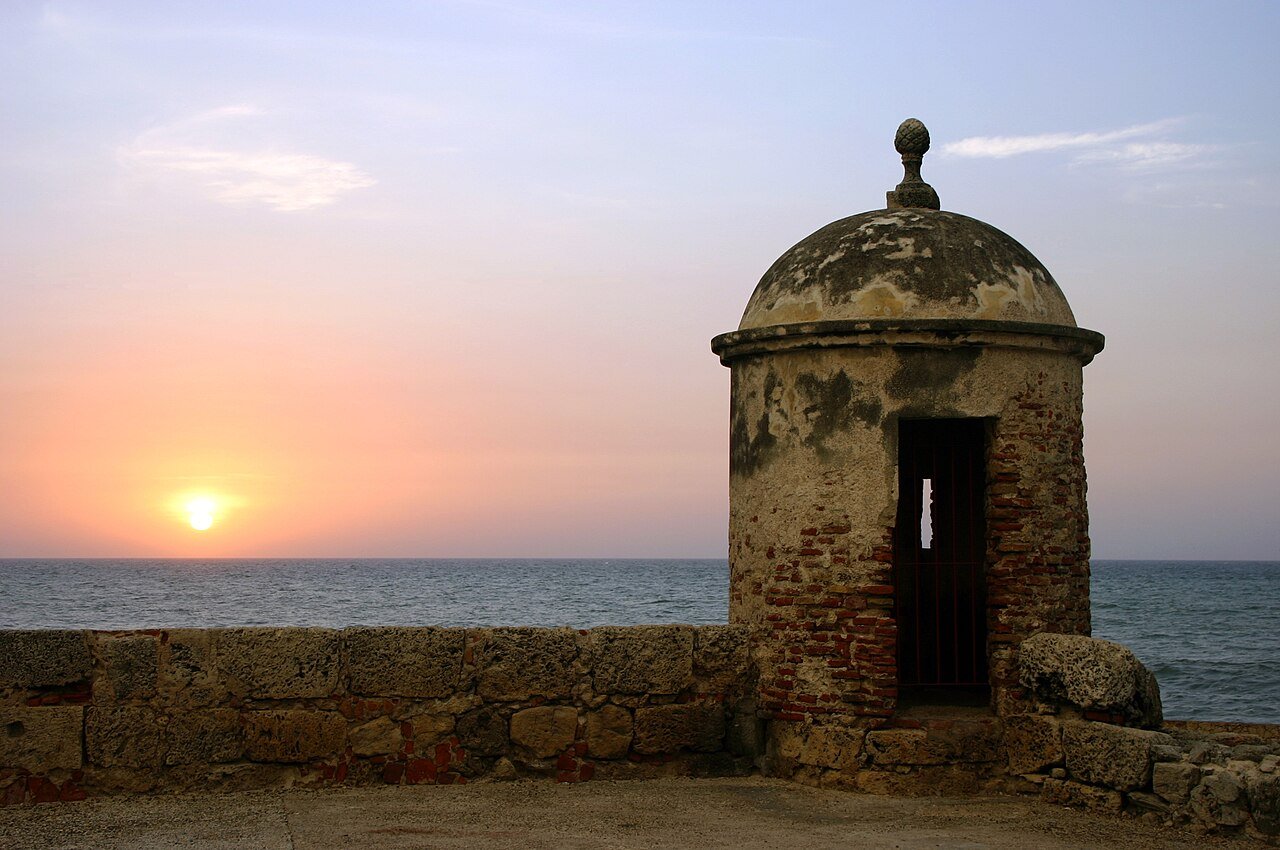
- Port, Fortresses and Group of Monuments, Cartagena (1984) — the Caribbean walled city and its ring of defensive works, among the best-preserved colonial fortification systems in the Americas.
- Los Katíos National Park (1994) — lowland rainforest on the border with Panama, part of a critical biological corridor connecting Central and South America.
- Historic Centre of Santa Cruz de Mompox (1995) — a river-island colonial town that retains its 16th-century street pattern almost entirely intact.
- National Archaeological Park of Tierradentro (1995) — a landscape of underground burial chambers dating from roughly 600 to 900 CE, decorated with geometric frescoes.
- San Agustín Archaeological Park (1995) — home to the largest concentration of pre-Hispanic religious monuments and megalithic statuary in South America.
The most visited — and the alternatives
Cartagena’s walled city draws far more international visitors than any other site on the list. Its bastions, coral-stone convents, and colonial plazas are among the most photographed in South America, and the city’s airport connections and cruise infrastructure mean it absorbs most of the heritage tourism directed at Colombia. San Agustín Archaeological Park is the other high-profile destination, its monolithic figures drawing archaeologically inclined travellers to the highlands of Huila.
Three sites remain substantially off international radar despite holding their own distinctive value. Mompox — formally the Historic Centre of Santa Cruz de Mompox — is a colonial river town reachable only by boat or a combination of road and ferry; its isolation has preserved its urban fabric more completely than sites with easier access. Tierradentro’s hypogea require a short hike between scattered hillside tombs, and most chambers retain their original painted decoration. The Coffee Cultural Landscape of Colombia, inscribed in 2011, covers a working agricultural territory across several departments, where the verticality of Andean slopes and the traditions of smallholder cultivation together constitute the outstanding value — a reminder that not every World Heritage Site is anchored to a monument or a ruin.
Natural and shared sites
Colombia’s two purely natural sites sit at opposite ends of the country’s geography. Los Katíos National Park, in the northwest, protects a stretch of humid tropical forest and wetlands that serve as a land bridge for species moving between the two American continents. Malpelo Fauna and Flora Sanctuary, inscribed in 2006, is an isolated oceanic island in the Pacific — its waters support one of the largest shark aggregations on the planet and are a reference point for marine biology research. Both sites are strictly protected and have very limited public access.
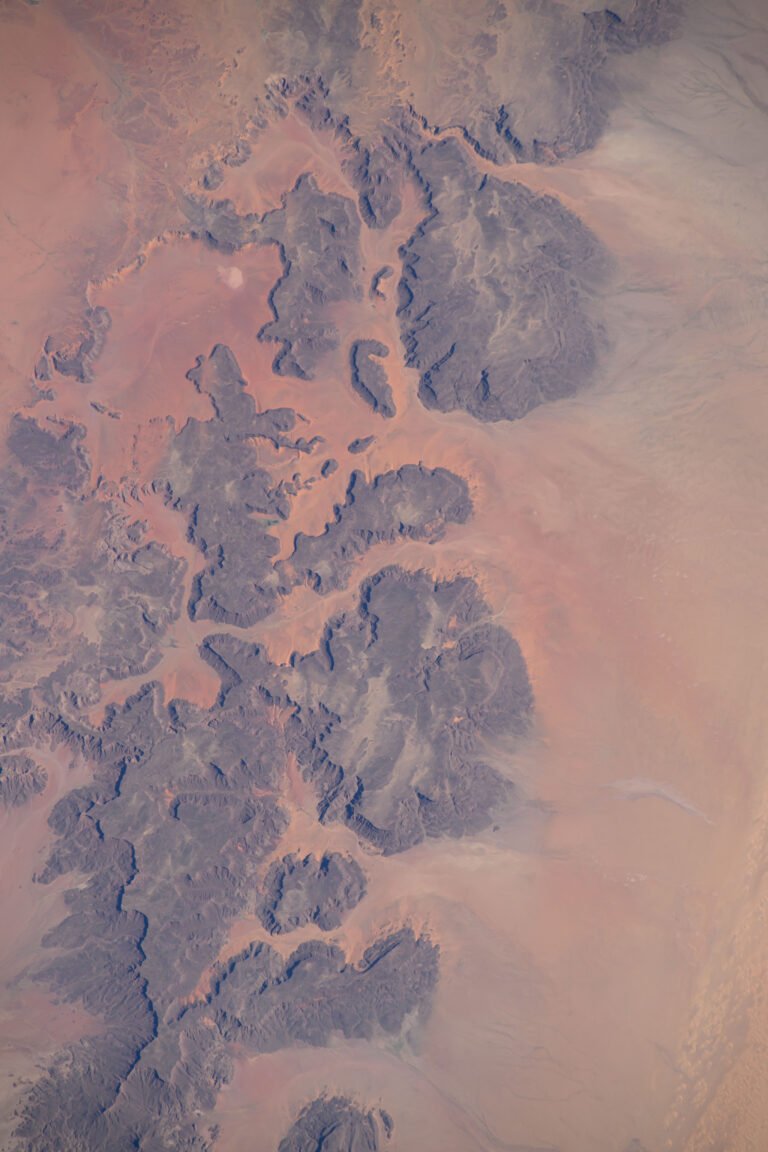
The transnational entry on the list is Qhapaq Ñan, the Andean Road System, inscribed in 2014 together with Argentina, Bolivia, Chile, Ecuador, and Peru. The network spans more than 30,000 kilometres in total; Colombia contributes nine of the 273 components recognised under the inscription. The shared designation reflects how pre-Columbian political and economic integration operated across the continent long before modern borders existed. Chiribiquete National Park, the mixed site inscribed in 2018, rounds out the natural category: its tepuis — ancient sandstone tabletop mountains — rise from Amazonian forest and carry thousands of rock paintings that constitute the largest collection of rock art in the Americas.
How to find them
Colombia’s nine sites are distributed across very different climatic and geographic zones, from Caribbean coast to Pacific island to Amazonian interior. No single itinerary links them conveniently, which means most visitors prioritise by type of interest — archaeological, ecological, or urban colonial — rather than attempting a single circuit. Distances are substantial, and internal flights are the practical option for crossing between, say, Cartagena and the highland parks of Huila or the Cauca department.
Colombia’s World Heritage sites sit alongside thousands of other places on CHO’s interactive map, with GPS and sourced editorial history for each. See also our guides to Italy’s and France’s UNESCO sites, and our piece on cultural travel beyond mass tourism.
Frequently Asked Questions
How many UNESCO World Heritage Sites does Colombia have?
Colombia has 9 UNESCO World Heritage Sites, comprising 6 cultural, 2 natural, and 1 mixed site. The country ratified the World Heritage Convention in 1983 and received its first inscription in 1984. The most recent addition, Chiribiquete National Park, was inscribed in 2018.
What was Colombia’s first UNESCO World Heritage Site?
The Port, Fortresses and Group of Monuments of Cartagena was Colombia’s first World Heritage inscription, recognised in 1984 at the 8th session of the World Heritage Committee in Buenos Aires. The site encompasses the colonial walled city and its extensive ring of military fortifications on the Caribbean coast.
Does Colombia have any shared or transnational World Heritage Sites?
Yes. Qhapaq Ñan, the Andean Road System, was inscribed in 2014 as a serial transnational property shared by Argentina, Bolivia, Chile, Ecuador, Colombia, and Peru. The road network totals more than 30,000 kilometres, and Colombia contributes nine of the 273 recognised components.
What is Chiribiquete National Park and why was it inscribed?
Chiribiquete National Park, inscribed in 2018 as Colombia’s only mixed World Heritage Site, protects a vast area of Amazonian tepui landscape in the south of the country. It holds the largest collection of rock art in the Americas alongside one of the most biodiverse ecosystems on earth, meeting both cultural and natural Outstanding Universal Value criteria.
Sources used in this article
- UNESCO — State Party Colombia — World Heritage list.
- UNESCO — Colombia: World Heritage Sites.
- CHO magazine — What is a World Heritage Site?
- CHO — Interactive map of heritage sites.
Sources
- S1 — Bushnell, David. The Making of Modern Colombia: A Nation in Spite of Itself. University of California Press, 1993. ISBN 978-0-520-08289-2.
- S2 — Langebaek, Carl Henrik. Arqueología colombiana. Fondo de Promoción de la Cultura, 1996. ISBN 978-958-9003-87-9.
Spotted an error? Write to editorial@culturalheritageonline.com and we correct it the same day.