No other city in Poland places so much UNESCO-listed heritage within a single day’s reach. From Krakow, five inscribed sites are accessible by public bus, private car, or on foot — spanning the royal city itself, an underground salt cathedral, the largest Nazi German extermination site in occupied Europe, a Baroque Marian sanctuary, and ancient wooden churches of the Carpathians. Each site demands a different kind of attention, from architectural wonder to solemn witness. From Cultural Heritage Online.
Historic Centre of Krakow city centre — 15 min walk from Krakow Glowny
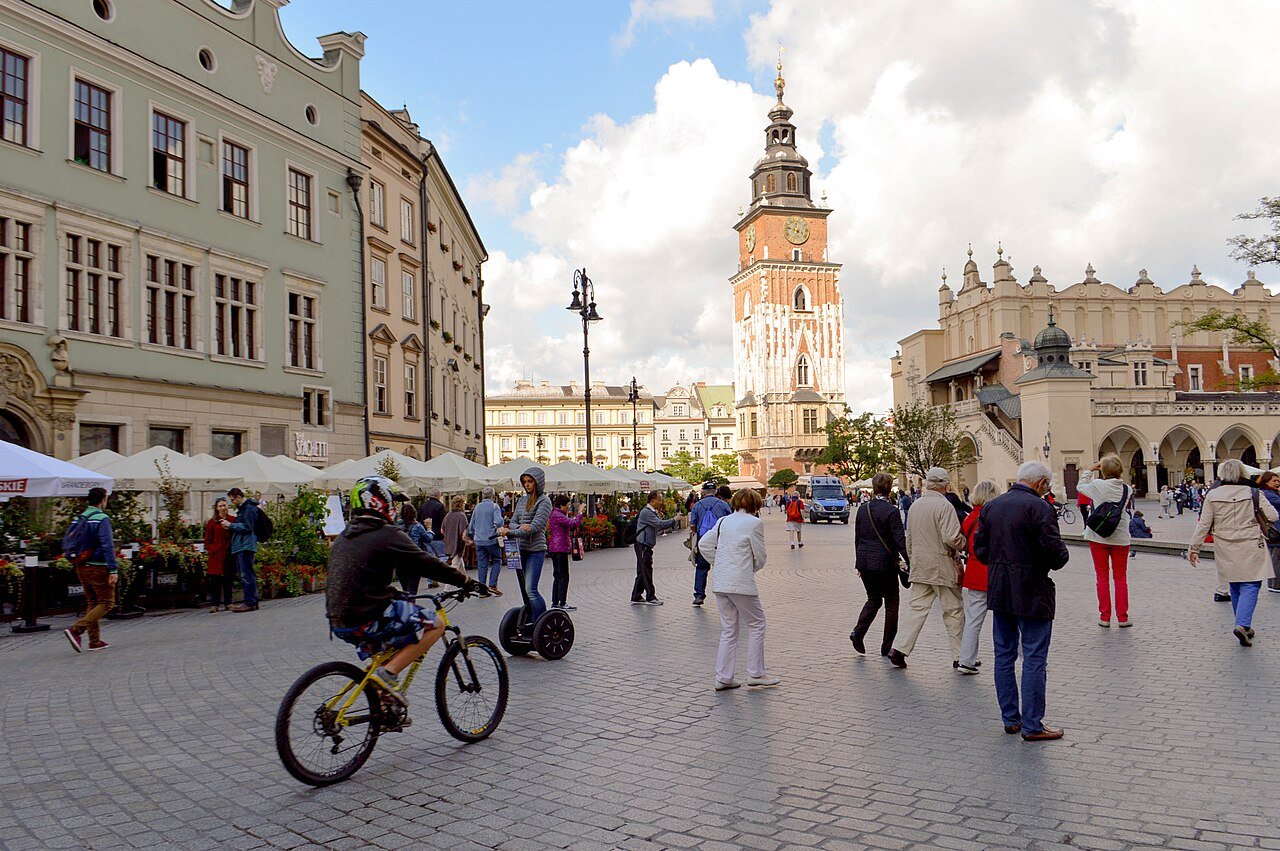
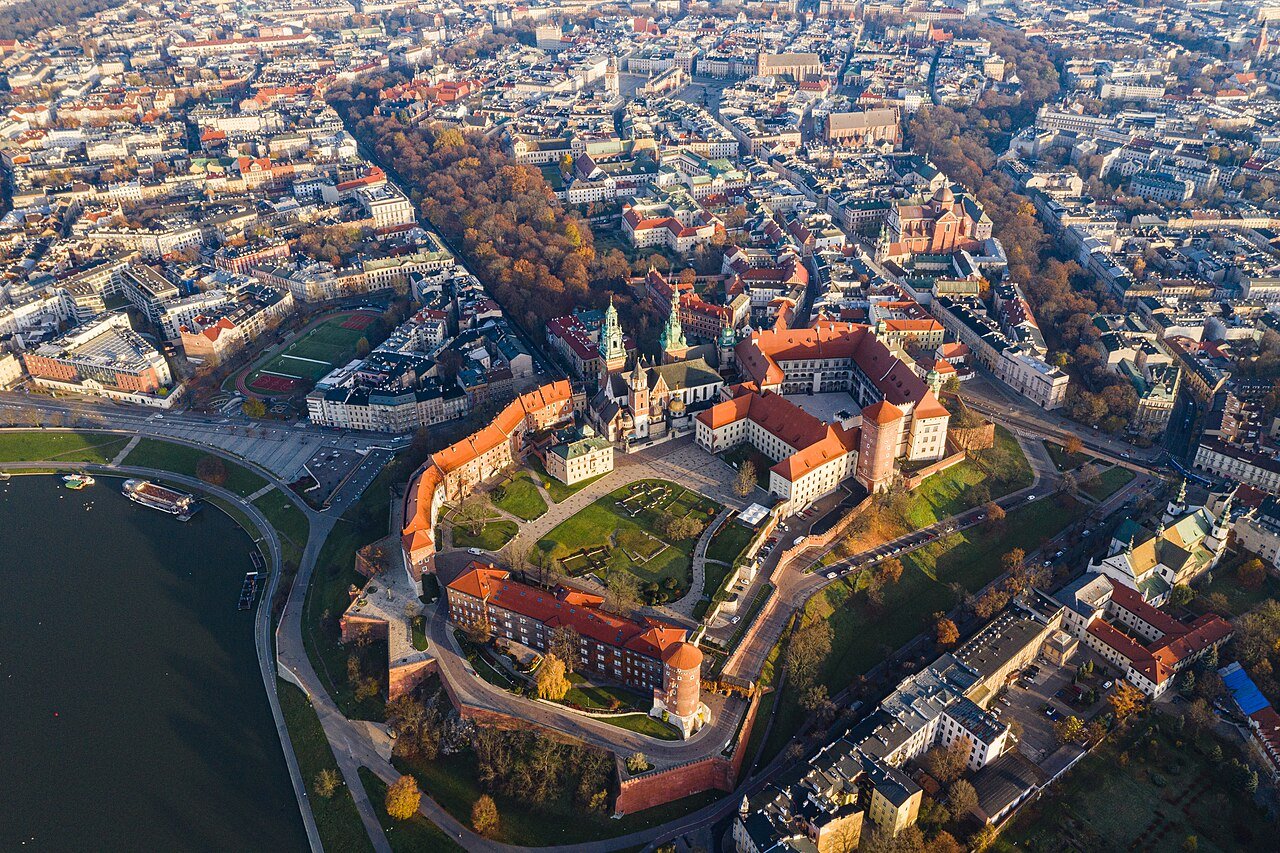
Krakow’s Historic Centre became one of the first twelve sites inscribed on the UNESCO World Heritage List in 1978, recognised for its exceptional concentration of medieval, Renaissance, and Baroque monuments across 149.65 hectares. The site encompasses four former historic quarters: the Old Town with its Main Market Square — at 200 metres across, one of the largest medieval market squares in Europe — the Royal Road, the Wawel Hill with its royal castle complex, and the Kazimierz district, the historic Jewish quarter. Wawel Castle, rebuilt under Sigismund I the Old between 1504 and 1536, stands as Poland’s foremost example of Renaissance royal architecture, combining a Gothic core with Italianate arcaded courtyards. The pale limestone of the Wawel Hill catches morning light with a warmth that contrasts sharply with the dark interiors of the cathedral beside it, where Polish kings were crowned and buried for centuries. The Gothic Church of St Mary dominates the Market Square with its asymmetric towers, and a trumpeter plays the Hejnał Mariacki from the taller spire every hour — a tradition unbroken since the 14th century.
Getting there: Walk 15 minutes south-west from Krakow Glowny station along ul. Basztowa, or take any tram toward Wawel. Allow: full day. Best for: travellers who want to read a thousand years of Polish royal history in a single afternoon.
Wieliczka and Bochnia Royal Salt Mines 30 min — MPK bus 304 from Krakow Glowny
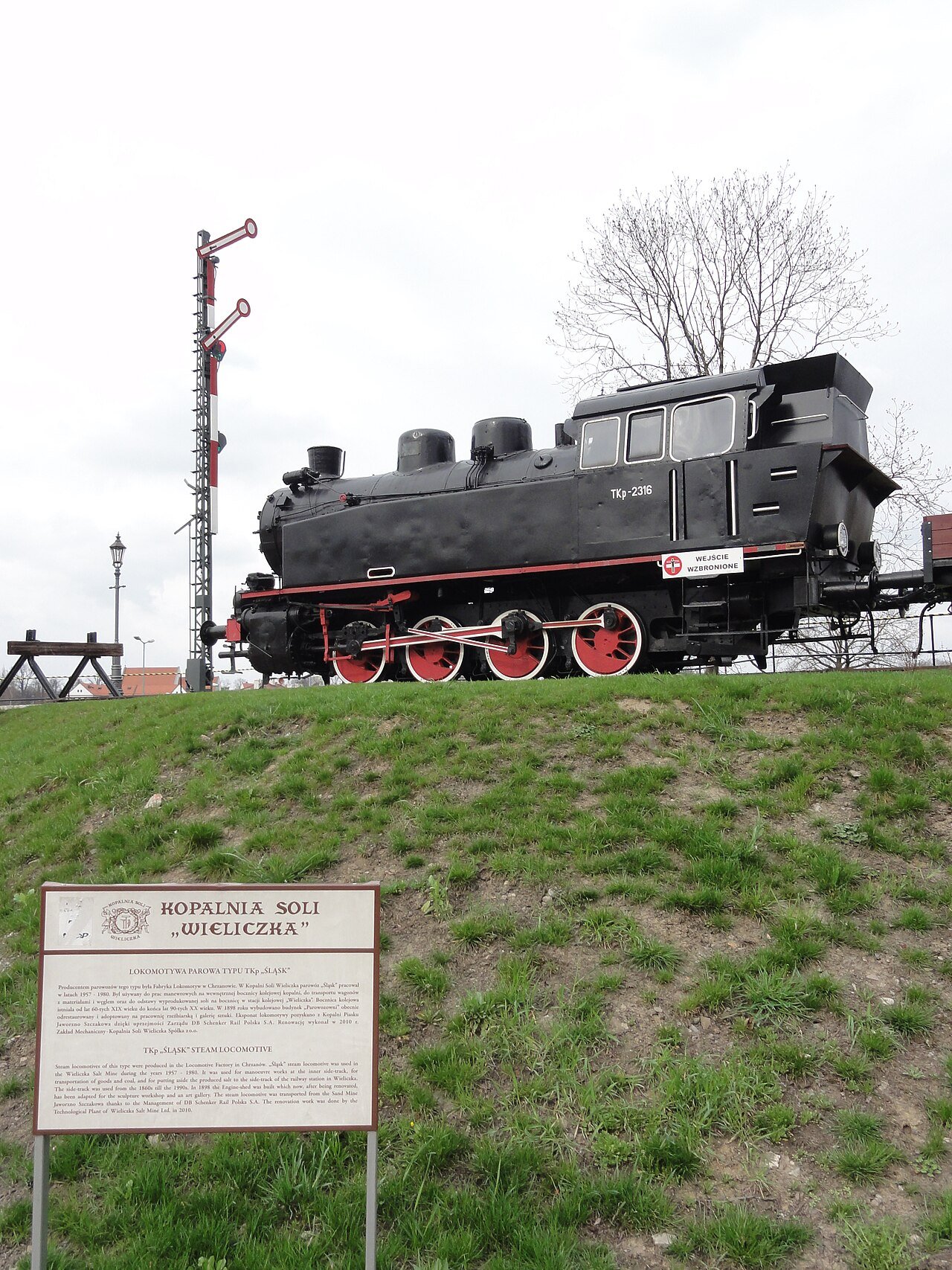
The Wieliczka and Bochnia Royal Salt Mines were inscribed on the World Heritage List alongside Krakow’s Historic Centre in 1978, with the inscription extended in 2008 and again in 2013 to include Bochnia. Wieliczka is the more visited of the two — its shafts were excavated from the 13th century and produced table salt continuously until 1996, one of the world’s longest-running industrial operations of any kind. The tourist route descends through nine levels to a depth of 135 metres, passing through more than 20 chambers. Four chapels carved entirely from rock salt stand along the route, the largest being the Chapel of St Kinga completed in 1895 at 54 metres long and 12 metres high. Every surface — chandeliers, altar reliefs, bas-relief wall panels — is cut from salt crystal. The air below ground carries a faint mineral tang, cool and unusually dry, and the salt crystals catch torchlight with a pale amber glow. The site spent a decade on UNESCO’s Danger List between 1989 and 1998 due to water infiltration, before conservation work stabilised the underground environment.
Getting there: MPK bus 304 from stand A outside Krakow Glowny, roughly every 20 minutes; journey 30 minutes. Guided tour mandatory underground. Allow: 3 hours underground. Best for: understanding how medieval salt revenue funded the Polish crown for centuries.
Auschwitz Birkenau Memorial and Museum 1 hr 30 min — PKS bus from Krakow bus station
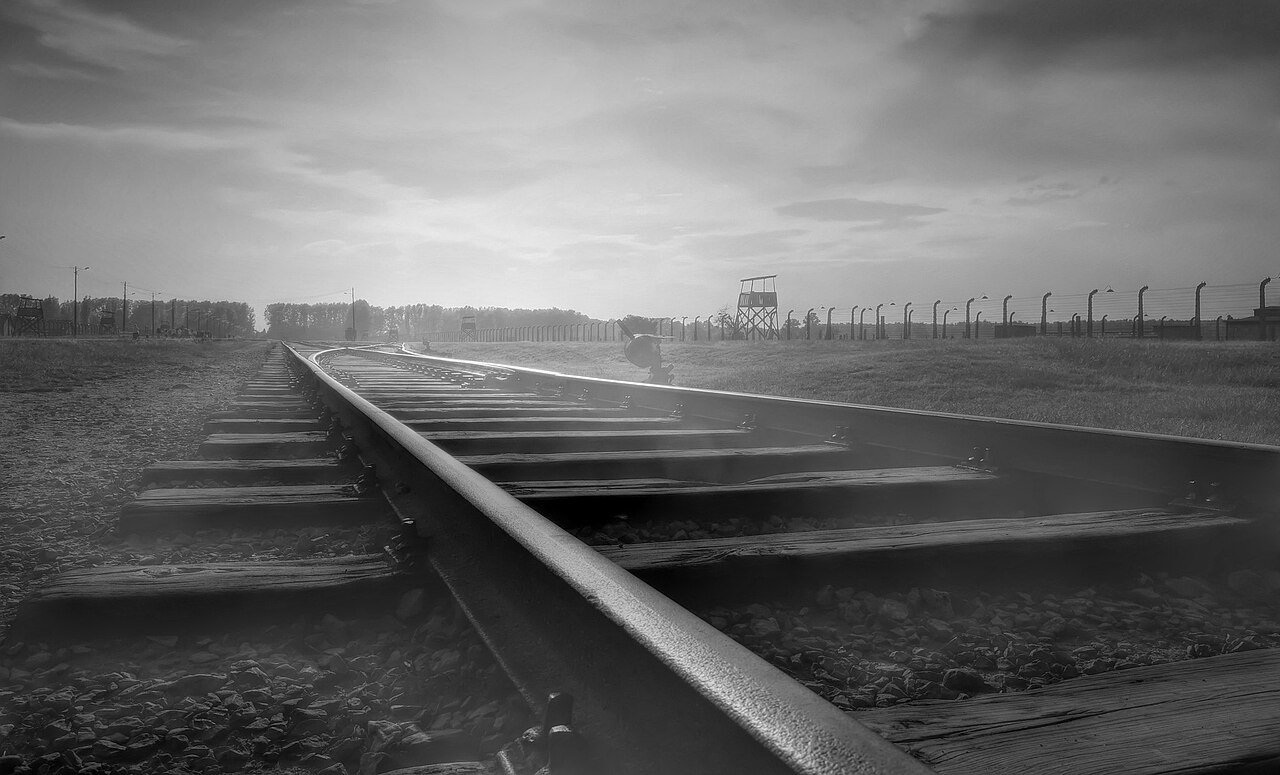
The Auschwitz Birkenau German Nazi Concentration and Extermination Camp was inscribed as a UNESCO World Heritage Site in 1979, in recognition of the obligation to preserve the site as evidence and memorial. The complex operated from May 1940 to January 1945 under the German SS. At least 1.1 million people — overwhelmingly Jewish men, women, and children — were killed here, along with Poles, Roma, and Soviet prisoners of war. Auschwitz II-Birkenau, two kilometres from the main Auschwitz I camp, contained the primary gas chambers and crematoria; its distinctive gate and watchtower, visible from the main rail line, have become the most recognised image of the Holocaust. Soviet forces liberated the camp on 27 January 1945, a date now observed internationally as Holocaust Remembrance Day. The museum preserves original structures, prisoner barracks, physical evidence of the crimes, and personal belongings of victims displayed in the former camp blocks. Silence falls over most visitors within minutes of entering the grounds. This is not a site for a half-day; three to four hours is the minimum needed to engage honestly with what the museum presents.
Getting there: PKS bus from Krakow Glowny bus station (behind the main rail station), journey approximately 1 hour 30 minutes to Oświęcim. Pre-booked guided tours are required during peak season and strongly advised year-round. Allow: 3–4 hours minimum. Best for: anyone who wishes to bear witness — the site functions as the world’s primary memorial to the industrial murder of European Jews.
Kalwaria Zebrzydowska 45 min — PKS bus from Krakow Glowny
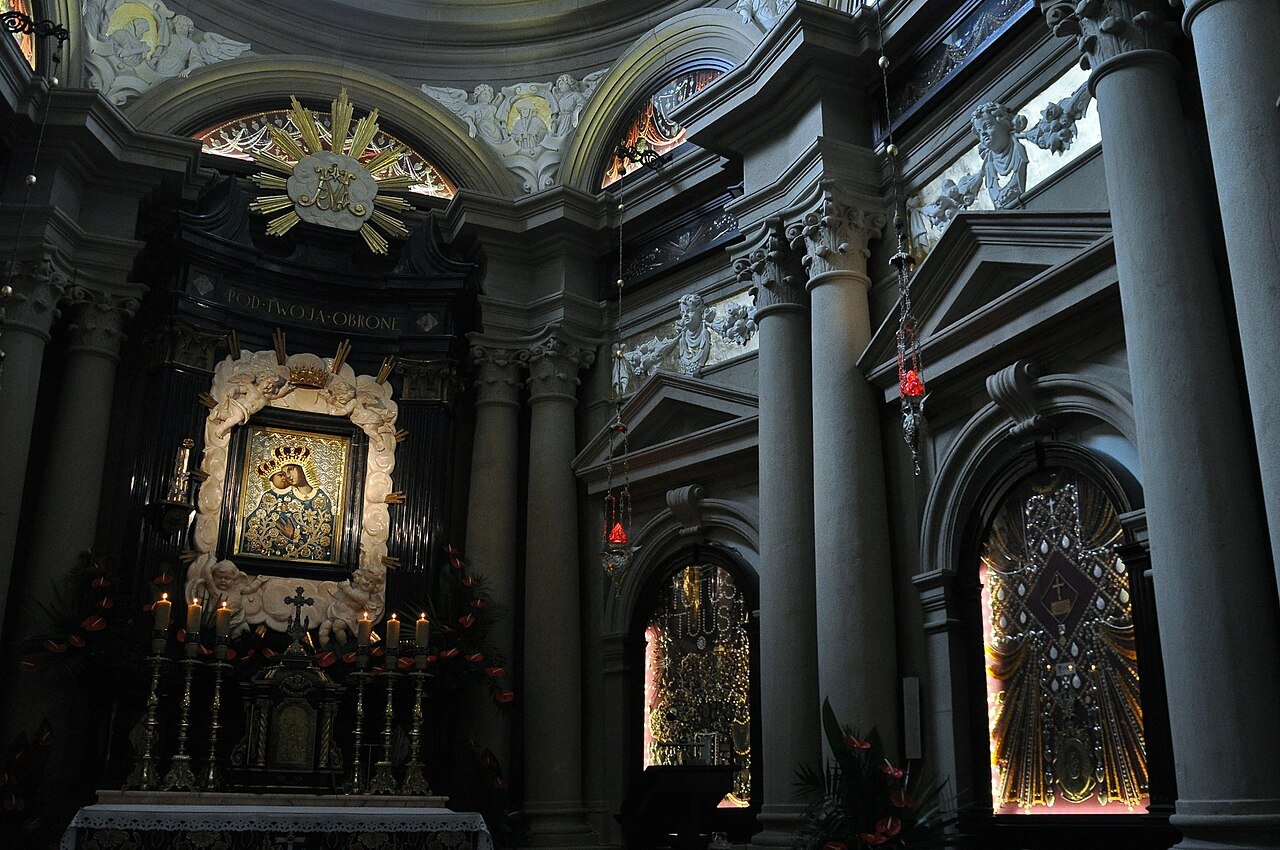
Kalwaria Zebrzydowska was inscribed as a UNESCO World Heritage Site in 1999 for its outstanding Mannerist architectural and park landscape, criteria that also recognise its living pilgrimage tradition. The complex was founded in the early 17th century by Mikołaj Zebrzydowski, the Voivode of Krakow, who obtained town rights in 1617. Construction began around 1600 with a Calvary — a series of chapels and pathways representing the Stations of the Cross — laid out across 380 hectares of wooded hills south-west of Krakow. The Franciscan Bernardine monastery and its Basilica of Our Lady of the Angels anchors the complex and has drawn pilgrims continuously since the 17th century. Pope John Paul II, born in nearby Wadowice, visited Kalwaria Zebrzydowska repeatedly and spoke of it as a place he knew from childhood. The site’s designation under UNESCO criteria (ii) and (iv) reflects both its influence on Calvary design across Catholic Europe and its architectural integrity — forty-two chapels, churches, and symbolic structures survive in a landscape that has changed little since the Baroque period. The air in the wooded pathways between chapels carries the particular stillness of active sacred space.
Getting there: PKS bus from Krakow Glowny bus station toward Wadowice, journey approximately 45 minutes; alight at Kalwaria Zebrzydowska. Allow: 2–3 hours to walk the main pilgrimage paths and visit the basilica. Best for: travellers interested in Counter-Reformation sacred landscape and the living tradition of Marian pilgrimage in Poland.
Wooden Tserkvas of the Carpathian Region 2 hours by car — car essential; churches spread across southern Małopolska
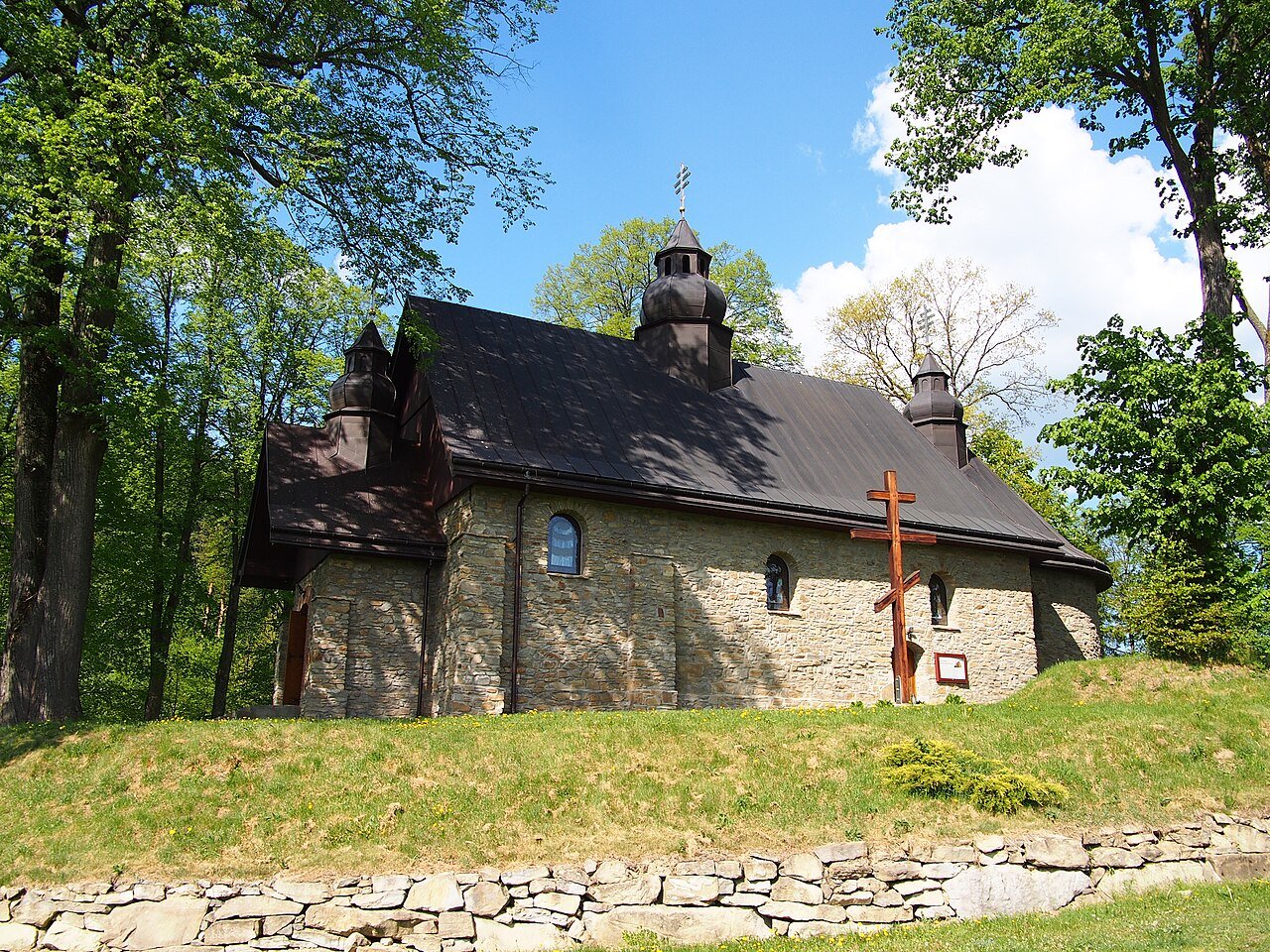
The Wooden Tserkvas of the Carpathian Region in Poland and Ukraine were jointly inscribed on the UNESCO World Heritage List in 2013. The sixteen Polish churches forming the inscribed group are Eastern Orthodox and Greek Catholic structures built of horizontal wooden logs between the 16th and 19th centuries, constructed by communities whose spiritual and cultural identity straddled the border between Latin and Byzantine Christianity. The tserkvas of southern Małopolska — particularly those in the Bieszczady range of the Carpathians — represent a distinct building tradition: three-part timber structures with onion domes or helmet-shaped towers, richly painted interiors with iconostases, and a cosmological symbolism encoded in the placement and orientation of each element. These are not museum objects. Several remain active parish churches. The drive from Krakow to the Bieszczady takes roughly two hours; the churches are scattered across mountain villages and require a car and a map. A practical approach is to plan a half-day circuit through Sanok, Lesko, and the Bieszczady valleys, where several inscribed churches are within a thirty-kilometre arc. This excursion extends naturally into an overnight stay if you want to engage seriously with the region.
Getting there: Car essential — no direct public transport links the inscribed Bieszczady churches. From Krakow, drive south-east via Rzeszów and Sanok; allow 2 hours each way. An overnight stay in Sanok or Lesko allows a more thorough visit. Allow: half day for a circuit of several churches, plus travel. Best for: travellers interested in Eastern Christian heritage, vernacular timber architecture, and the cultural history of the Carpathian borderlands.
Frequently Asked Questions
How many UNESCO World Heritage Sites are near Krakow?
Five UNESCO World Heritage Sites are accessible within approximately two hours of Krakow: the Historic Centre of Krakow itself, the Wieliczka and Bochnia Royal Salt Mines, the Auschwitz Birkenau Memorial and Museum, Kalwaria Zebrzydowska, and the Wooden Tserkvas of the Carpathian Region. No other city in Poland has as many inscribed sites within day-trip range.
What is the closest UNESCO World Heritage Site to Krakow?
The Historic Centre of Krakow is the closest, as the inscribed area includes the city itself — Wawel Hill, the Old Town, and Kazimierz are all within walking distance of the main railway station. Wieliczka Salt Mine, reachable in 30 minutes by MPK bus 304, is the nearest site outside the city.
Do I need to book tickets to Auschwitz in advance?
Yes. Pre-booked guided tours are mandatory during peak season (April to October) and strongly recommended year-round. Tickets for individual and group tours should be reserved through the official Auschwitz-Birkenau State Museum website at auschwitz.org well in advance, particularly for visits between June and August. Entry to the memorial is free, but guided tours carry a fee.
Can I visit the Wooden Tserkvas without a car?
The inscribed Carpathian tserkvas in southern Małopolska are scattered across remote mountain villages in the Bieszczady. No direct public transport connects them from Krakow. A rental car is the practical option; alternatively, some heritage tour operators in Krakow run day trips to the Bieszczady. An overnight stay in the region is worthwhile and makes the distances manageable.
Sources used in this article
- UNESCO World Heritage Centre — World Heritage List.
- Wikipedia — Historic Centre of Kraków.
- Wikipedia — Wieliczka Salt Mine.
- Wikipedia — Auschwitz concentration camp.
- Wikipedia — Wooden tserkvas of the Carpathian region.
- CHO — Interactive heritage map.
Sources
- S1 — Rożek, Michał. The Royal Cathedral at Wawel. Wydawnictwo św. Stanisława BM, 1981. ISBN 978-83-00-00194-1.
- S2 — Davies, Norman. God's Playground: A History of Poland. Columbia University Press, 2005. ISBN 978-0-231-12817-9.
Spotted an error? Write to editorial@culturalheritageonline.com and we correct it the same day.