Cuba has 9 UNESCO World Heritage Sites, spanning fortified colonial cities, sugar-industry landscapes, tobacco valleys, and two ecologically exceptional national parks. The list stretches from the first Spanish settlements founded in the early sixteenth century to a fortress city whose medieval street plan was never straightened out. Few Caribbean nations carry this density of recognised heritage in so compact a territory — and several of the sites remain genuinely under-visited. From Cultural Heritage Online.
Why Cuba’s list looks the way it does
Cuba’s inscriptions reflect the island’s role as the administrative and commercial hub of the Spanish Caribbean empire for more than three centuries. Havana was the assembly point for the silver fleets sailing to Seville; Santiago de Cuba guarded the eastern sea lanes; Trinidad accumulated plantation wealth from the Valle de los Ingenios. When UNESCO began evaluating the region in the early 1980s, Cuba’s colonial urban fabric was unusually intact — decades of limited commercial development had preserved street grids, building stock, and fortifications that elsewhere had been demolished or absorbed.
The two natural sites reflect a different logic entirely. Cuba’s eastern mountains harbour one of the highest levels of endemic biodiversity in the insular Caribbean, while the marine terraces and karst formations of the Granma coast represent geomorphological processes rarely preserved at this scale. Together, the nine inscriptions give Cuba a list balanced between the built and the natural — seven cultural sites, two natural, and no mixed designations as of 2025.
The first inscriptions
Cuba received its first UNESCO recognition at the sixth session of the World Heritage Committee in 1982. That single inscription established the template for much of what followed: an urban historic centre paired with its defensive infrastructure.
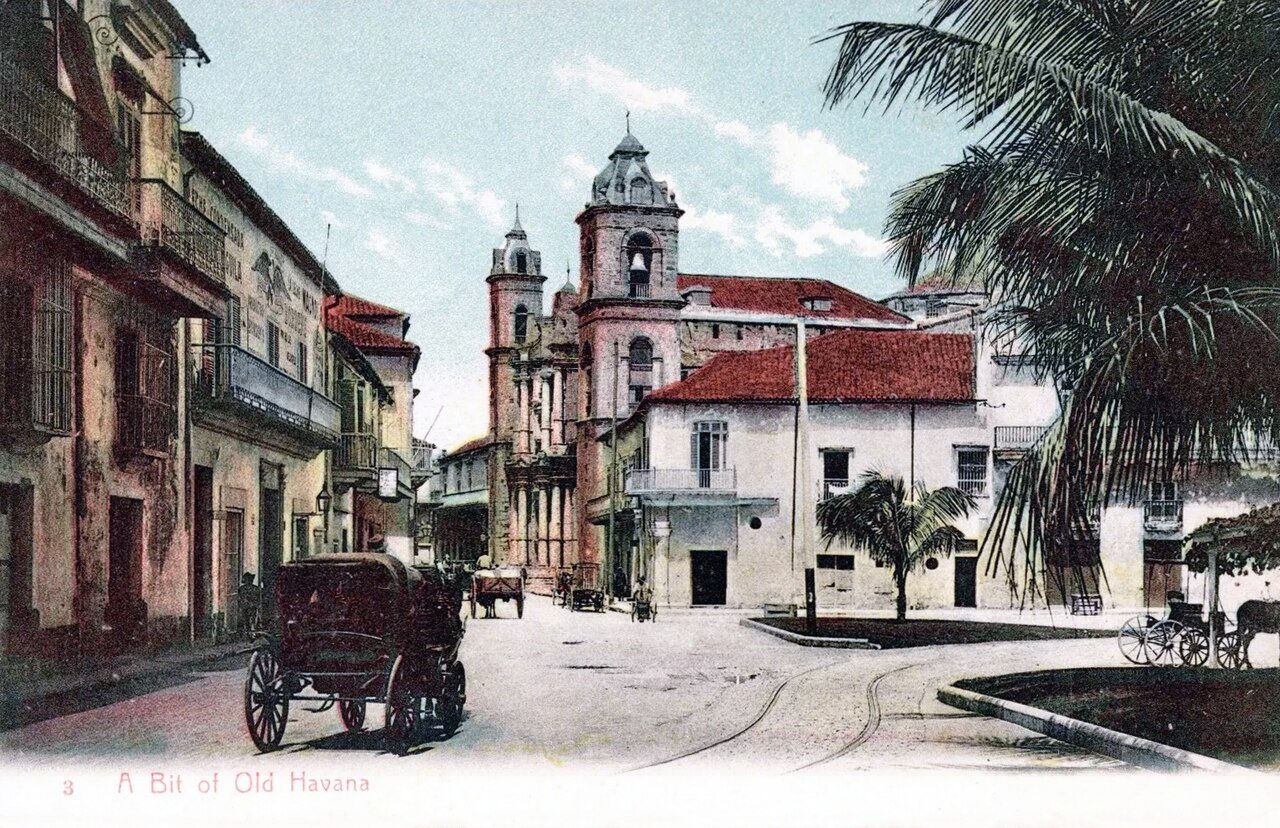
- Old Havana and its Fortifications (1982) — the colonial city centre, with its Baroque and Neoclassical architecture, and the ring of fortifications that made the port the most defended in the Americas.
Six years later the committee returned to Cuba with a serial inscription that would become one of the more analytically interesting entries on any Caribbean list: Trinidad and the Valley de los Ingenios, recognised together in 1988 as a cultural landscape linking an urban centre and its agrarian hinterland.
- Trinidad and the Valley de los Ingenios (1988) — the colonial city of Trinidad alongside the adjacent valley containing sugar mills, slave quarters, and plantation infrastructure that together document the island’s nineteenth-century sugar economy.
The most visited — and the alternatives
Old Havana draws the largest share of heritage tourism to Cuba, and for straightforward reasons: it sits in the capital, it is large, and its fortifications are among the most photogenic military architecture in the Western Hemisphere. Viñales Valley, inscribed in 1999, is the second most recognisable site internationally — the mogote limestone formations rising from tobacco fields have become one of the defining visual shorthand images of Cuba.
Three sites deserve more attention than they typically receive. The Historic Centre of Camagüey (2008), Cuba’s most recent inscription, is notable for its deliberately irregular street plan — a maze-like layout derived from medieval European precedent rather than the colonial grid, which has left the city centre visually unlike anywhere else on the island. The Archaeological Landscape of the First Coffee Plantations in the South-East of Cuba (2000) preserves the physical remains of nineteenth- and early twentieth-century coffee estates across challenging mountain terrain, offering a counterpoint to the better-known sugar landscape of the Ingenios. And the Historic Centre of Cienfuegos (2005), founded in 1819 by Spanish colonists who recruited French settlers from Louisiana and Bordeaux, presents a grid city whose architecture carries legible French urban influences — an anomaly in the Spanish Caribbean that earned its inscription partly on that distinction.
Natural and shared sites
Cuba’s two natural World Heritage Sites occupy the eastern end of the island. Desembarco del Granma National Park (1999) — named for the yacht that carried Fidel Castro and his guerrillas ashore in 1956 — protects one of the most significant marine terrace systems in the world alongside intact karst topography. The site is valued primarily for its geomorphological record rather than its biodiversity, though the coastal and montane ecosystems are ecologically intact. Alejandro de Humboldt National Park (2001), straddling Holguín and Guantánamo provinces, is the more biologically complex inscription: the park’s varied geology has produced exceptionally high levels of plant and animal endemism, making it one of the most important sites for biodiversity conservation in the insular Caribbean.
The serial inscription of Trinidad and the Valley de los Ingenios functions as Cuba’s closest equivalent to a shared or transnational landscape approach — two physically separate components (city and valley) recognised together as a single cultural property. Cuba has no transnational inscriptions shared with other states parties as of 2025.
How to find them
All nine sites are spread across Cuba’s western, central, and eastern regions. Old Havana, Viñales Valley, and the Camagüey historic centre are accessible by scheduled domestic transport; the two eastern national parks require more planning and are best approached via Baracoa (Humboldt) or Manzanillo (Granma). The Cienfuegos and Trinidad centres sit within a few hours of each other on the southern coast, making them practical to visit together. San Pedro de la Roca Castle is located on the edge of Santiago de Cuba and can be reached as a day excursion from the city.
Cuba’s World Heritage sites sit alongside thousands of other places on CHO’s interactive map, with GPS and sourced editorial history for each. See also our guides to Italy’s and France’s UNESCO sites, and our piece on cultural travel beyond mass tourism.
Frequently Asked Questions
How many UNESCO World Heritage Sites does Cuba have?
Cuba has 9 UNESCO World Heritage Sites as of 2025. Seven are cultural inscriptions, and two are natural sites. The list spans colonial fortified cities, plantation landscapes, tobacco valleys, and two nationally significant protected areas in the island’s eastern mountains.
What was Cuba’s first UNESCO World Heritage Site?
Cuba’s first inscription was Old Havana and its Fortifications, recognised by the World Heritage Committee in 1982. The site encompasses the historic colonial city centre and the ring of military fortifications built to defend what was then the most strategically important port in the Spanish Caribbean.
What is the most recently inscribed UNESCO site in Cuba?
The Historic Centre of Camagüey was inscribed in 2008, making it Cuba’s most recent World Heritage addition. The city is notable for its irregular, maze-like street layout — an unusual departure from the Spanish colonial grid that characterises most Cuban urban centres of the same era.
Does Cuba have any natural UNESCO World Heritage Sites?
Cuba has two natural World Heritage Sites. Desembarco del Granma National Park (1999) is recognised for its exceptional marine terrace system and karst landscape, while Alejandro de Humboldt National Park (2001) is valued for its extraordinary levels of plant and animal endemism in the mountainous terrain of eastern Cuba.
Sources used in this article
- UNESCO — State Party Cuba — World Heritage list.
- UNESCO — Cuba: World Heritage Sites.
- CHO magazine — What is a World Heritage Site?
- CHO — Interactive map of heritage sites.
Sources
- S1 — Thomas, Hugh. Cuba: The Pursuit of Freedom. Da Capo Press, 1998. ISBN 978-0-306-80827-2.
- S2 — Gott, Richard. Cuba: A New History. Yale University Press, 2004. ISBN 978-0-300-10411-0.
Spotted an error? Write to editorial@culturalheritageonline.com and we correct it the same day.