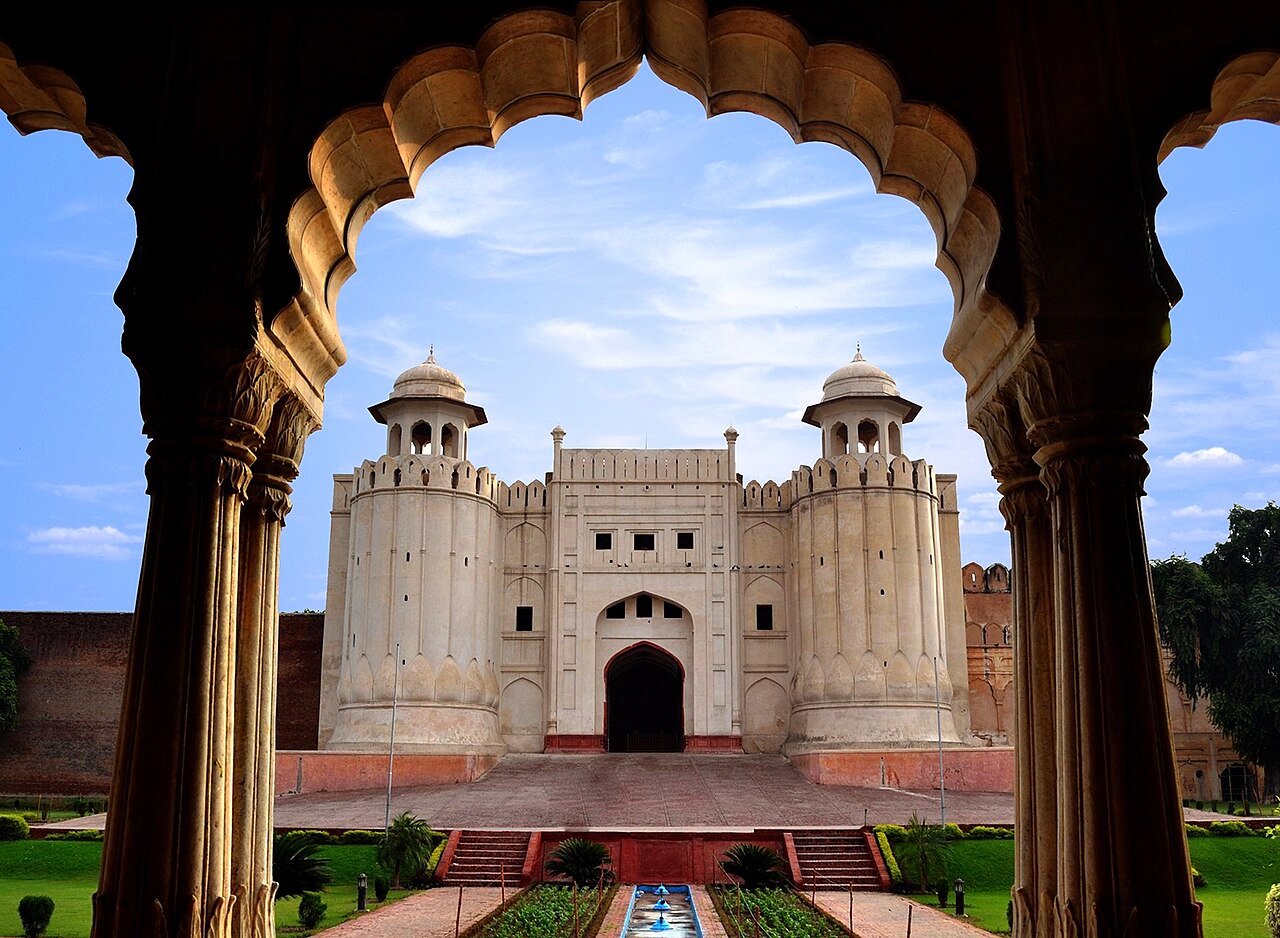
Pakistan has six UNESCO World Heritage Sites, each one spanning a different chapter of human civilisation on the subcontinent — from the planned grid cities of the Indus Valley to the sandstone ramparts of Mughal-era frontier forts, and from the carved stone stupas of the Buddhist Gandharan world to the layered imperial pageantry of Lahore. The list is short by the standards of larger heritage nations, but it is dense with historical weight, covering roughly four thousand years of continuous cultural achievement. From Cultural Heritage Online.
Why Pakistan’s list looks the way it does
All six of Pakistan’s inscribed sites are classified as cultural properties. The country has no inscribed natural site at present, though three areas — Central Karakoram National Park, Deosai National Park, and the Ziarat Juniper Forest — appear on the tentative list alongside the Salt Range and Khewra Salt Mine as a mixed nomination. The absence of natural inscriptions is not a reflection of ecological poverty: Pakistan contains some of the highest mountain terrain on earth, but the nomination process for these landscapes is still ongoing.
The concentration of cultural sites also reflects the extraordinary density of archaeological heritage in the regions that now form the Pakistani state. This territory was crossed by the ancient Silk Road, sat at the eastern edge of the Hellenistic world after Alexander’s campaigns, hosted the Kushan Empire at its height, and served as the Mughal Empire’s cultural heartland for centuries. Six inscriptions, in this context, represent only a fraction of what exists.
The first inscriptions
Pakistan entered the World Heritage list in 1980, when three sites were inscribed simultaneously — an unusually strong debut that signalled the breadth of the country’s ancient record:
- Archaeological Ruins at Moenjodaro — the best-preserved city of the Indus Valley Civilisation, dating to roughly 2500 BCE
- Buddhist Ruins of Takht-i-Bahi and Neighbouring City Remains at Sahr-i-Bahlol — a hilltop monastic complex in Khyber Pakhtunkhwa, unusually intact because its elevation discouraged later settlement
- Taxila — an archaeological complex covering several distinct city sites, associated with the Achaemenid, Mauryan, Greek, and Kushan periods
The remaining three sites followed over the next seventeen years: Fort and Shalamar Gardens in Lahore in 1981, Makli Hill Necropolis in 1981, and Rohtas Fort in 1997. Rohtas Fort remains the most recently inscribed property, meaning the list has not grown for nearly three decades — a situation that the tentative nominations may eventually change.
The most visited — and the alternatives
Lahore Fort and the adjacent Shalamar Gardens draw the largest share of international visitors, and the logic is straightforward: Lahore is the country’s second city, and the fort complex — locally known as Shahi Qila — contains some of the most elaborate Mughal decorative work anywhere, including the Sheesh Mahal (Palace of Mirrors) and the Naulakha pavilion. Moenjodaro, despite its remoteness in Sindh, is the site that carries the greatest global name recognition, often cited as one of the earliest examples of urban planning in human history.
The alternatives reward closer attention. Makli Hill, near Thatta in Sindh, is one of the largest necropolises in the world, with hundreds of thousands of graves spread across an arid plateau; the tombs of rulers and saints built between the fourteenth and eighteenth centuries display a distinctive fusion of Mughal court style and local Sindhi tilework. Takht-i-Bahi, perched on a natural hill above the Peshawar valley, preserves an almost complete monastic layout — assembly courts, monks’ cells, votive stupas — in weathered stone that has changed little since it was abandoned around the seventh century CE. Taxila, meanwhile, is not a single site but a landscape containing the remains of at least three successive cities and dozens of monasteries, spread across a valley that once sat at the junction of routes connecting Central Asia, India, and the wider Mediterranean world.
Natural and shared sites
As noted above, Pakistan currently holds no inscribed natural World Heritage Sites, though the tentative list includes nominations with strong ecological credentials. Central Karakoram National Park covers a section of the Karakoram range that contains some of the world’s highest peaks and largest glaciers outside the polar regions. Deosai National Park, in Gilgit-Baltistan, is one of the highest plateaus on earth and a habitat for the snow leopard. Both nominations have been pending for some time; the path to inscription for high-mountain landscapes often requires extensive scientific documentation and transboundary cooperation.
Pakistan is not currently party to any inscribed transnational or serial World Heritage nomination. The Edicts of Ashoka at Shahbazgarhi and Mansehra appear separately on the tentative list but have not yet been put forward as a joined serial nomination, despite sharing the same Mauryan emperor and the same script carved into the same type of rock face.
How to find them
Pakistan’s six sites are spread across four provinces — Sindh, Punjab, and Khyber Pakhtunkhwa each host multiple inscriptions — which makes combining them in a single journey logistically demanding but not impossible. Lahore is the most practical base for the Mughal-period sites, while the Gandharan Buddhist sites cluster within a few hours of Peshawar. Moenjodaro and Makli Hill require a separate journey into Sindh.
Pakistan’s World Heritage sites sit alongside thousands of other places on CHO’s interactive map, with GPS and sourced editorial history for each. See also our guides to Italy’s and France’s UNESCO sites, and our piece on cultural travel beyond mass tourism.
Frequently Asked Questions
How many UNESCO World Heritage Sites does Pakistan have?
Pakistan has six inscribed UNESCO World Heritage Sites, as of 2026. All six are classified as cultural properties; no natural site has yet been inscribed, though several — including Central Karakoram National Park and Deosai National Park — are on the country’s tentative list.
What was Pakistan’s first UNESCO World Heritage Site?
Pakistan inscribed three sites simultaneously in 1980: the Archaeological Ruins at Moenjodaro, the Buddhist Ruins of Takht-i-Bahi and Neighbouring City Remains at Sahr-i-Bahlol, and Taxila. All three were recognised in the same session, making it impossible to identify a single “first” inscription among them.
What is the most recently inscribed World Heritage Site in Pakistan?
Rohtas Fort, in Punjab province, was inscribed in 1997 and remains the most recently added site on Pakistan’s World Heritage list. Built in the sixteenth century by the Afghan ruler Sher Shah Suri, it is one of the best-preserved examples of early Muslim military architecture in South Asia.
Does Pakistan have any natural UNESCO World Heritage Sites?
No natural sites are currently inscribed in Pakistan. The tentative list includes nominations for Central Karakoram National Park, Deosai National Park, and the Ziarat Juniper Forest, all of which contain landscapes and habitats of significant ecological value but have not yet completed the inscription process.
Sources used in this article
- UNESCO — State Party Pakistan — World Heritage list.
- UNESCO — Pakistan: World Heritage Sites.
- CHO magazine — What is a World Heritage Site?
- CHO — Interactive map of heritage sites.
Sources
- S1 — Kenoyer, Jonathan Mark. Ancient Cities of the Indus Valley Civilization. Oxford University Press, 1998. ISBN 978-0-19-577940-0.
- S2 — Allchin, Bridget, and Raymond Allchin. The Rise of Civilization in India and Pakistan. Cambridge University Press, 1982. ISBN 978-0-521-28550-6.
Spotted an error? Write to editorial@culturalheritageonline.com and we correct it the same day.