

Birth Anniversary: Mario Tamagno — June 19, 1877
Mario Tamagno was born in Turin on 19 June 1877 and trained at the Accademia Albertina, the school that supplied […]

Stefano Vigolo photographs and documents Italian architecture of the interwar decades — the years known in Italy as the Ventennio — from Rationalism and Art Déco to the buildings that fall between the guidebooks. He is a researcher of the period.
Contributions: 561 articles · 145 heritage places · 687 events · 12 itineraries · 249 photographs
Published on beniculturalionline.it, the Italian archive of this publication, online since 1998. They are being brought into Cultural Heritage Online.
Mario Tamagno was born in Turin on 19 June 1877 and trained at the Accademia Albertina, the school that supplied […]

Venice: a brick block beside Santa Lucia station, built in the railway rebuilding of the area and now offices of the Veneto Region.
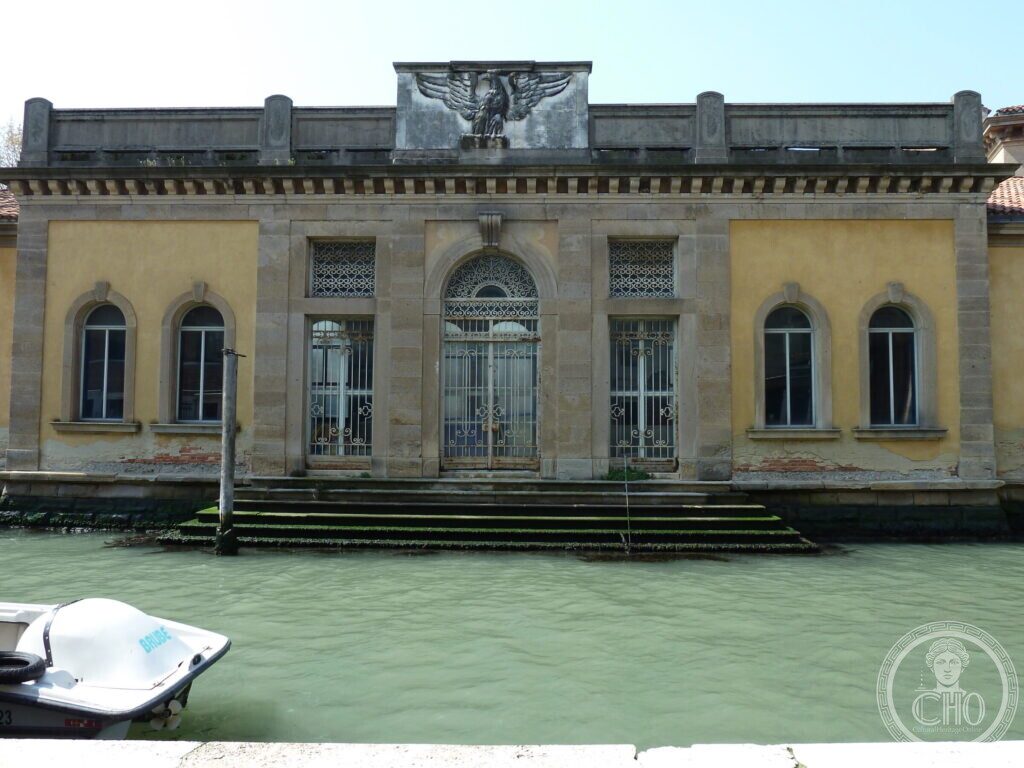
Venice: a canal-side building that housed the Fascist youth organisation, then a hostel for seamen passing through the port, and now a nursery school — with the eagle still on the parapet.
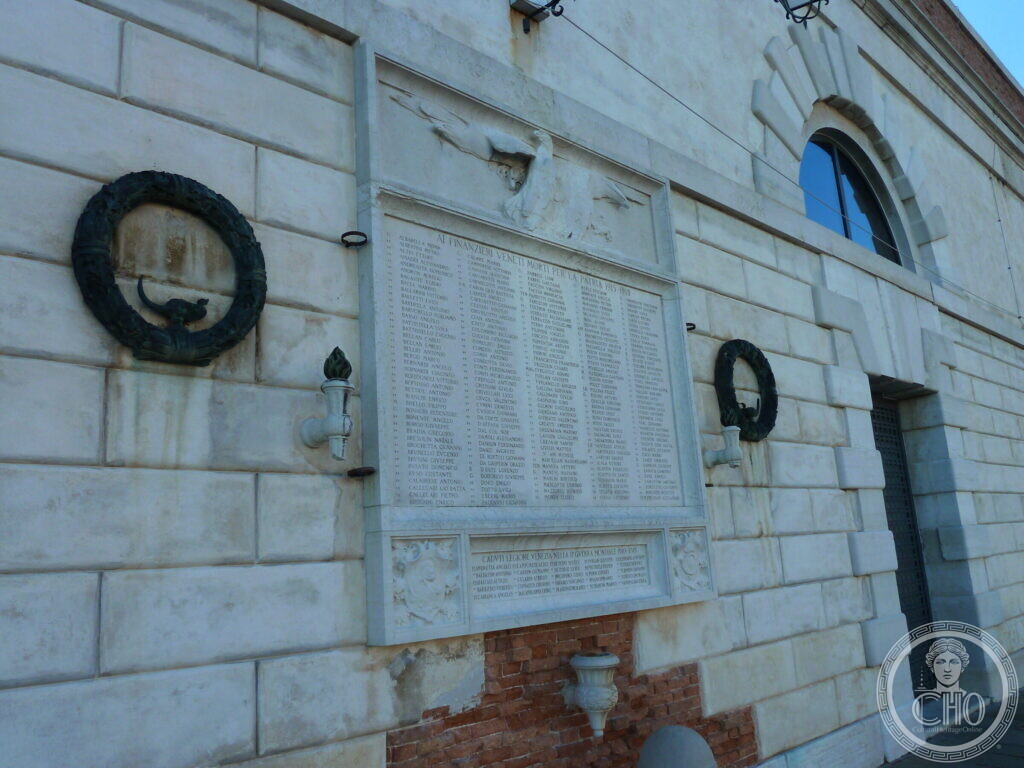
Venice: a marble tablet on the wall at Punta della Dogana, signed by the Venetian sculptor Angelo Franco, listing the Veneto customs officers killed in the First World War.

Venice (1926): built over a demolished convent to replace the prison on the Giudecca, and marked with a lion of Saint Mark whose motto reads «it guards, it punishes, it warns».
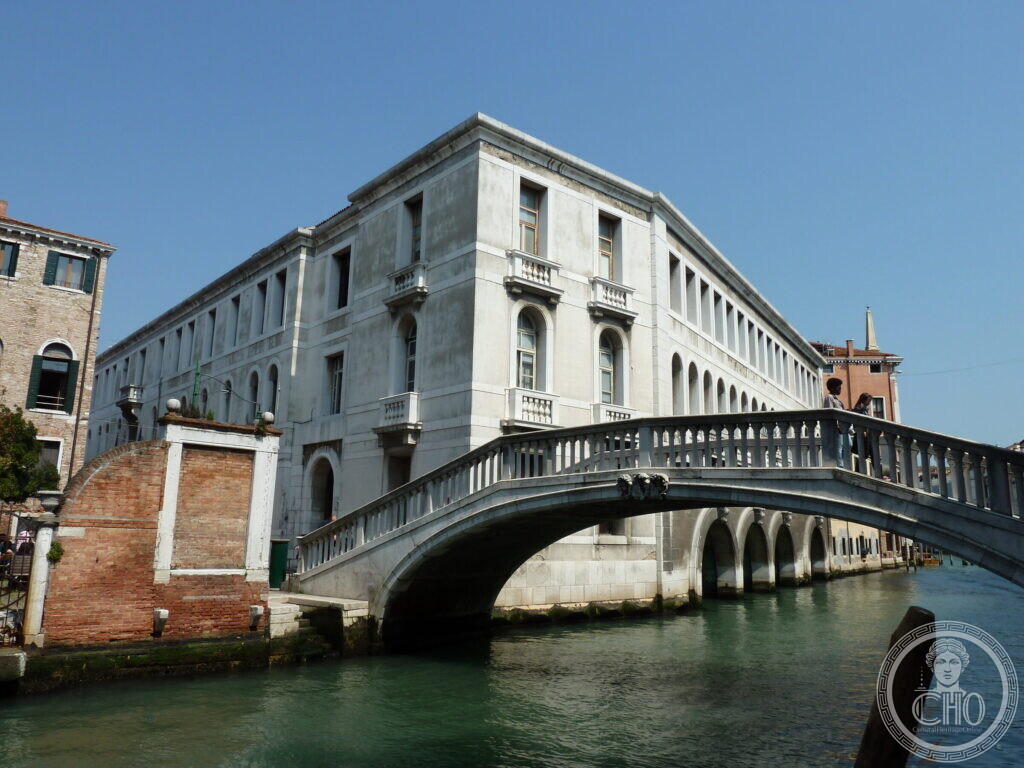
Venice (from 1928): a 77-metre barracks with boat garages opening straight onto the canal — the only fire station in the world whose engines are boats.
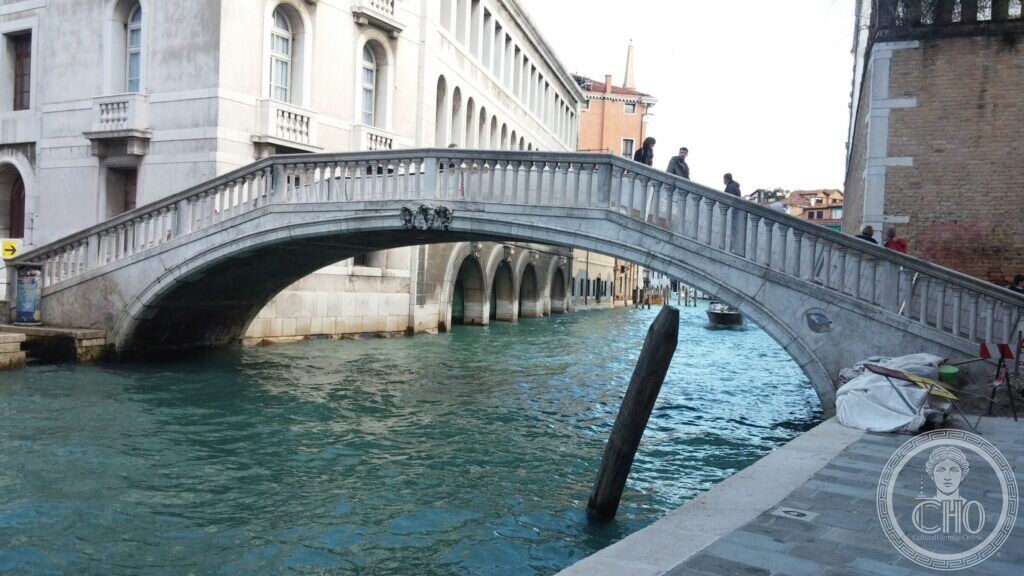
Venice (1932–33): the last of Miozzi’s Rio Novo bridges, at the point where the new canal comes out beside Ca’ Foscari.
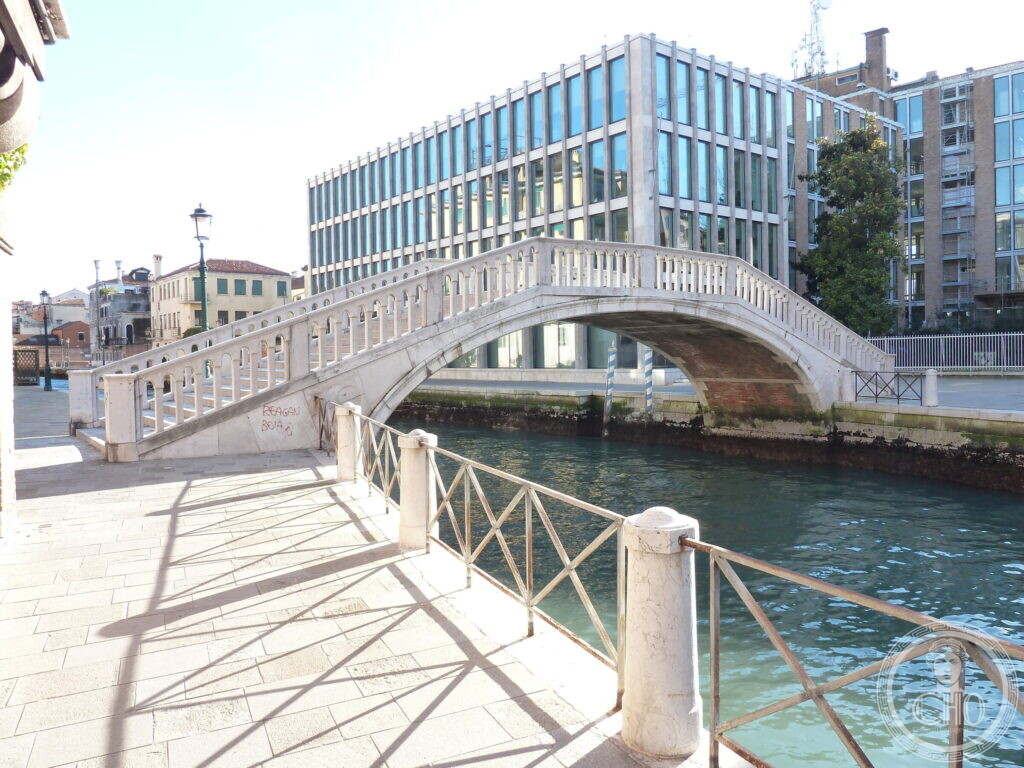
Venice (1933): one of the five bridges Eugenio Miozzi built when he cut the Rio Novo, with a lion of Saint Mark carved into its stone.
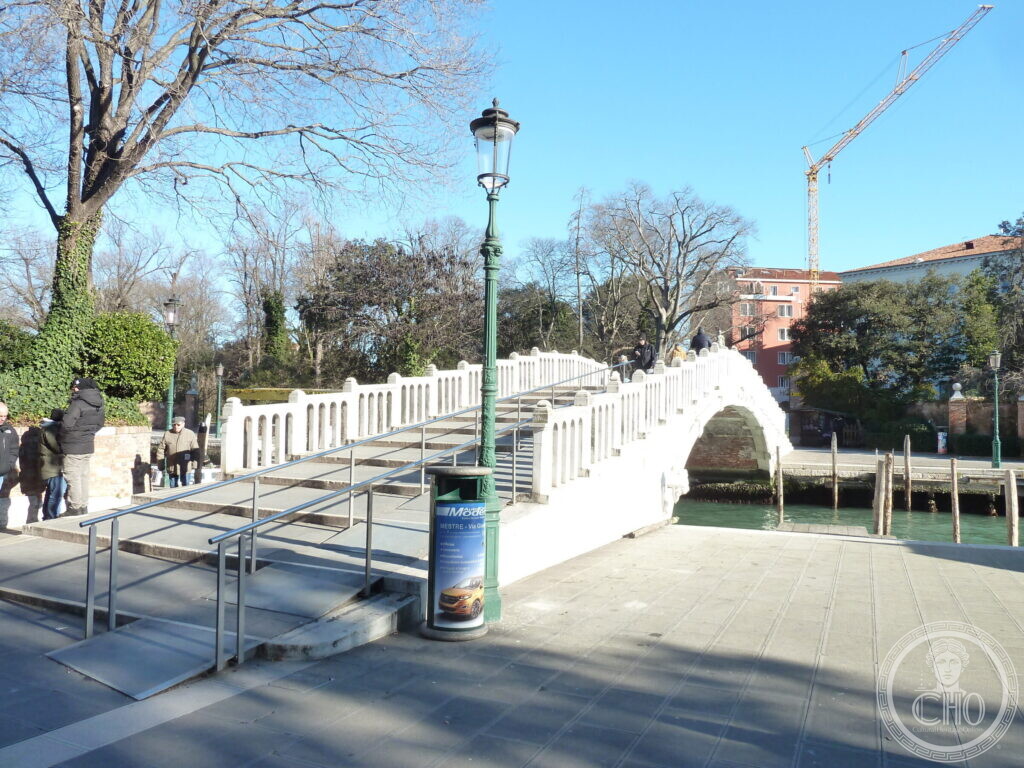
Venice (1933): the bridge Miozzi threw across his new canal where it cut through the Papadopoli garden — and one of the first in the city built in prestressed concrete.
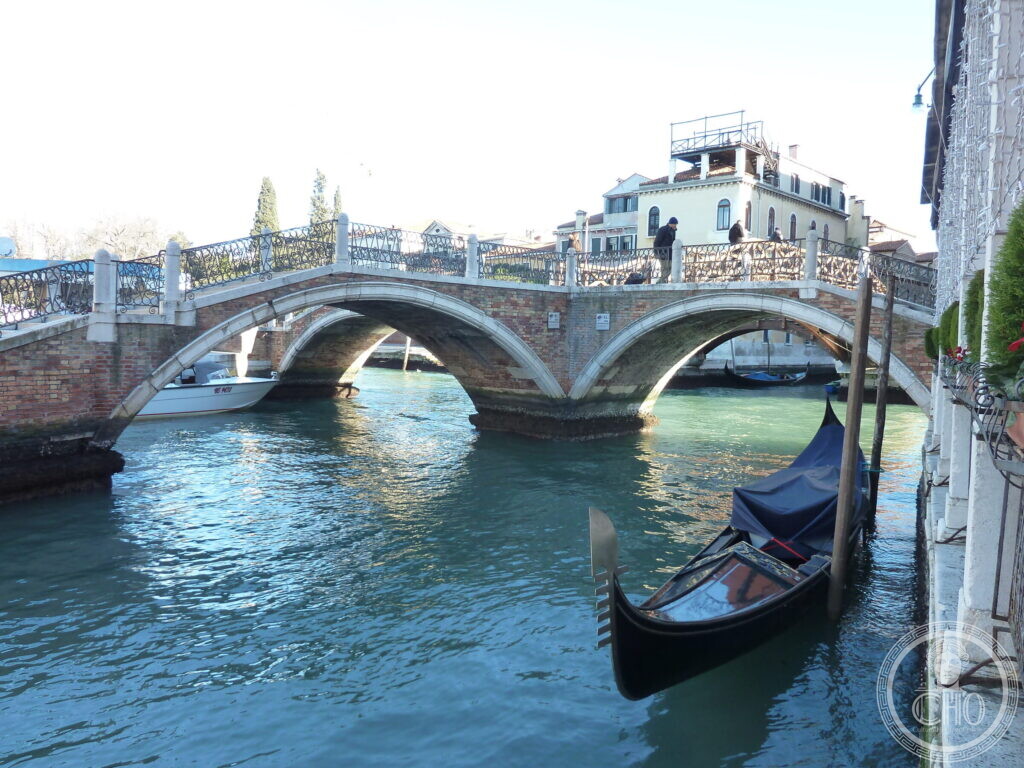
Venice (1933): where three canals meet, Miozzi rebuilt a knot of bridges joined on a single central pier — once called the Quattro Ponti, the four bridges.