
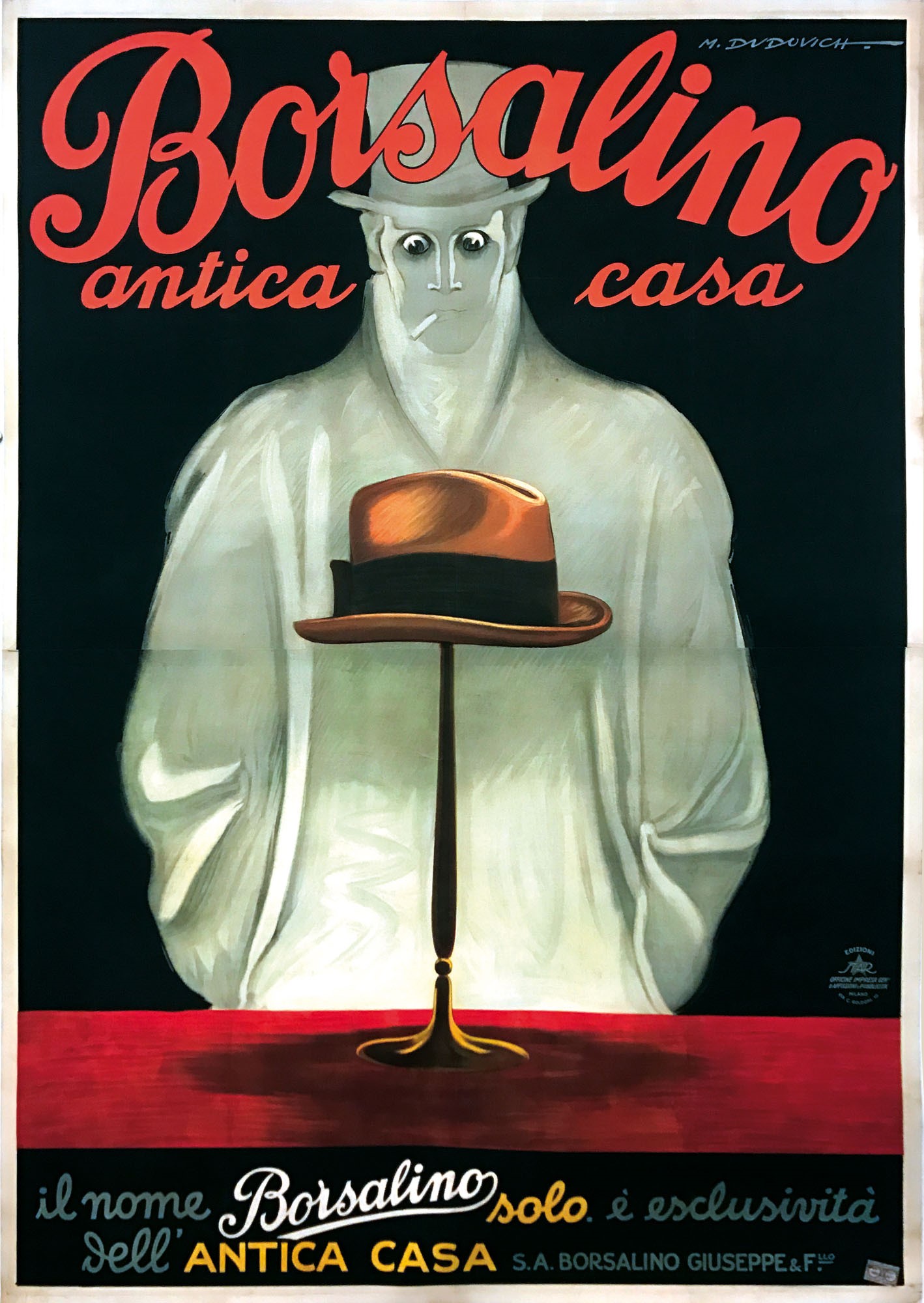
An advertising poster designed by Marcello Dudovich in 1928. Dudovich was one of the progenitors of Italian poster design, working alongside figures such as Leonetto Cappiello and Adolfo Hohenstein to establish the visual language of commercial advertising in Italy.
Born in Trieste in 1878, Dudovich trained as a lithographer and illustrator before relocating to Milan in 1897. He worked for the music publisher Ricordi, where he developed his distinctive approach to advertisement design. Throughout his career, Dudovich refined the graphic techniques and compositional strategies that would define Italian poster art of the early twentieth century. By 1928, when this poster was created, he was an established master of the medium, bringing decades of experience in commercial illustration and lithographic practice to his work.
About Marcello Dudovich
Dudovich (1878–1962) trained under the mentorship of Leopoldo Metlicovitz and worked across multiple publishing and advertising firms. His career spanned the late nineteenth and mid-twentieth centuries, establishing him as a foundational figure in Italian graphic design.
Details
- Creator: Marcello Dudovich
- Year: 1928
- Object type: Advertising poster
- Movement: Italian poster design
On video
Frequently asked questions
Who was Marcello Dudovich?
Marcello Dudovich (1878–1962) was an Italian painter, illustrator, and poster designer considered one of the progenitors of Italian poster design, working alongside Leonetto Cappiello, Adolfo Hohenstein, and others to establish modern commercial art in Italy.
What made Dudovich influential in poster design?
Dudovich trained as a lithographer in Trieste and Milan, working for major publishers including Ricordi. His mastery of lithographic technique and compositional innovation shaped the visual identity of Italian commercial advertising in the early twentieth century.
Where did Dudovich work?
After training in his native Trieste, Dudovich relocated to Milan in 1897, where he worked for the music publisher Ricordi designing advertisements. He continued his career across multiple firms, becoming a central figure in Italian graphic design.


