
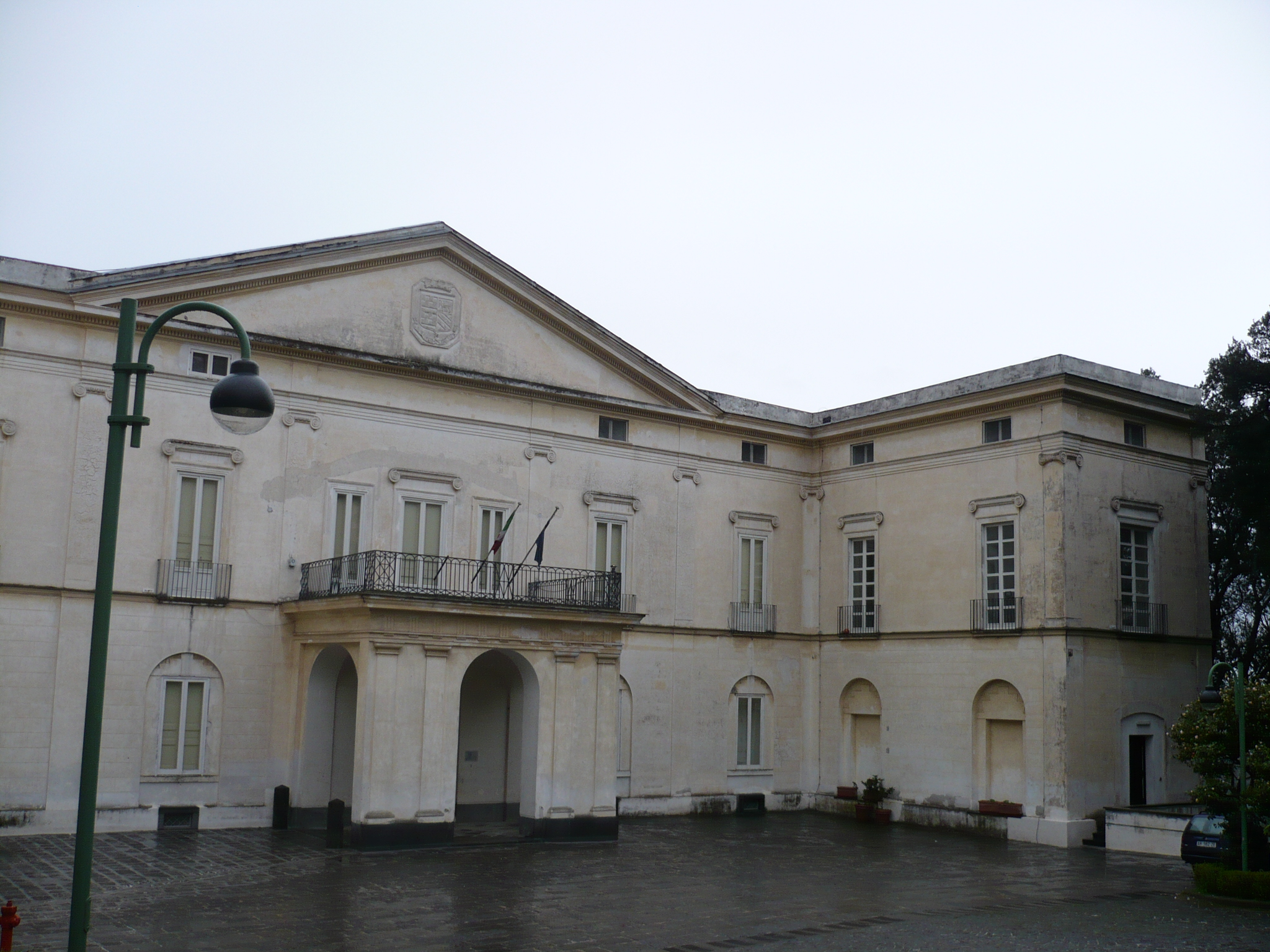
Villa Floridiana stands on the Vomero hill above Naples, set within a landscape park of roughly eight hectares that opens onto a long panorama of the Bay of Naples. The neoclassical villa was rebuilt between 1817 and 1819 by Antonio Niccolini, court architect of the Bourbon Real Casa, for Lucia Migliaccio, Duchess of Floridia and morganatic wife of King Ferdinand I of the Two Sicilies. Since 1931 the building has housed the Museo Nazionale della Ceramica Duca di Martina, whose collection of more than 6,000 ceramic and decorative-art objects spans Europe and the Far East.
- Address
- Via Domenico Cimarosa 77, 80127 Napoli NA (Vomero)
- Period
- 1817–1819 (Niccolini's neoclassical rebuild on earlier Pignatelli core)
- Architect
- Antonio Niccolini
- Patron
- Ferdinand I of the Two Sicilies (gift to his morganatic wife Lucia Migliaccio, Duchess of Floridia)
- Function
- Royal residence + landscape garden
- Current use
- Public park (free access); the villa houses the Museo Nazionale della Ceramica Duca di Martina; managed by the Direzione Regionale Musei Campania
- Coordinates
- 40.8417° N, 14.2336° E
- Notes
- Park of approximately 8 hectares; Museo Duca di Martina holds over 6,000 ceramic objects from Europe and the Far East; landscape design by Friedrich Dehnhardt
Gallery
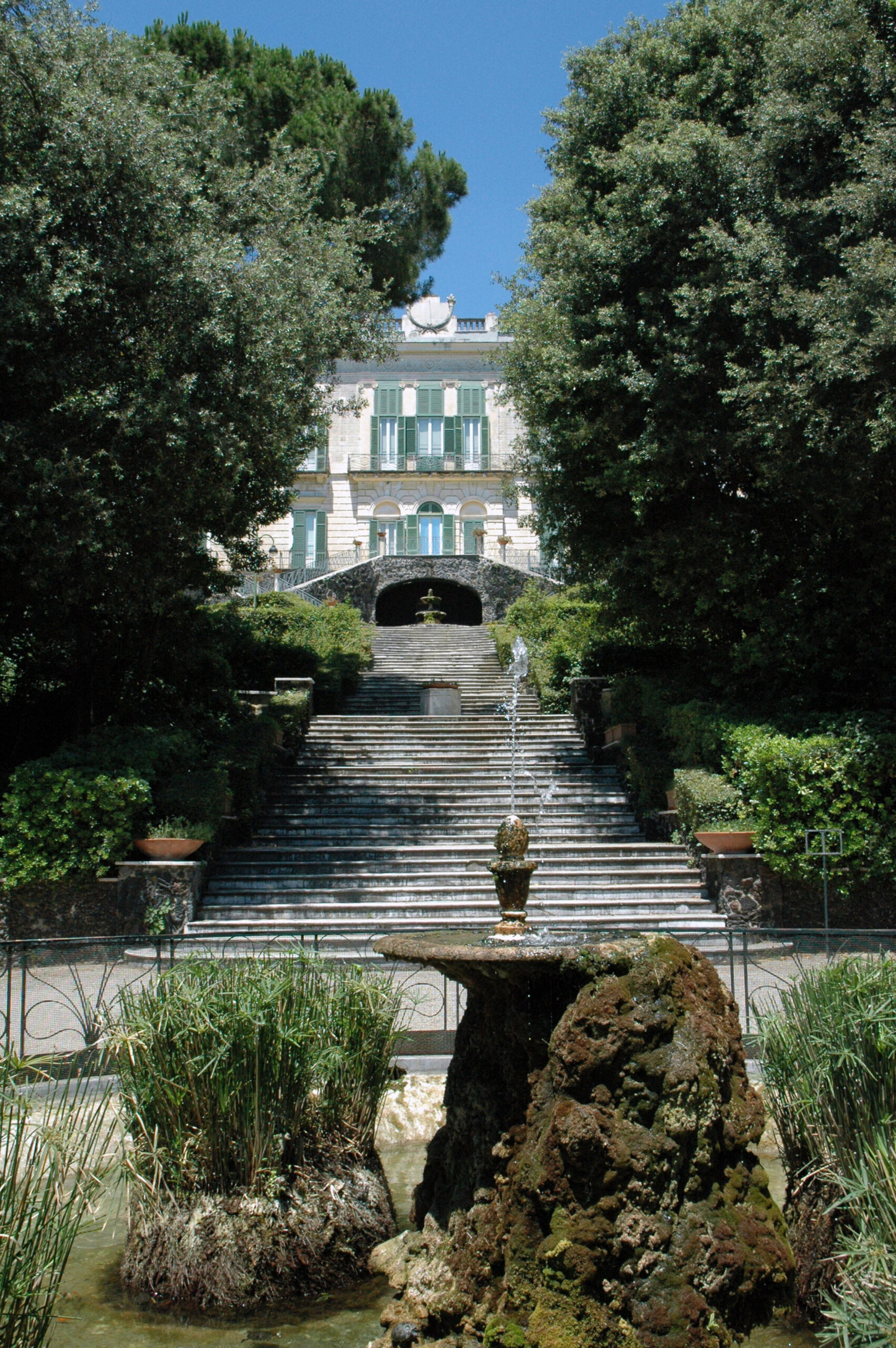
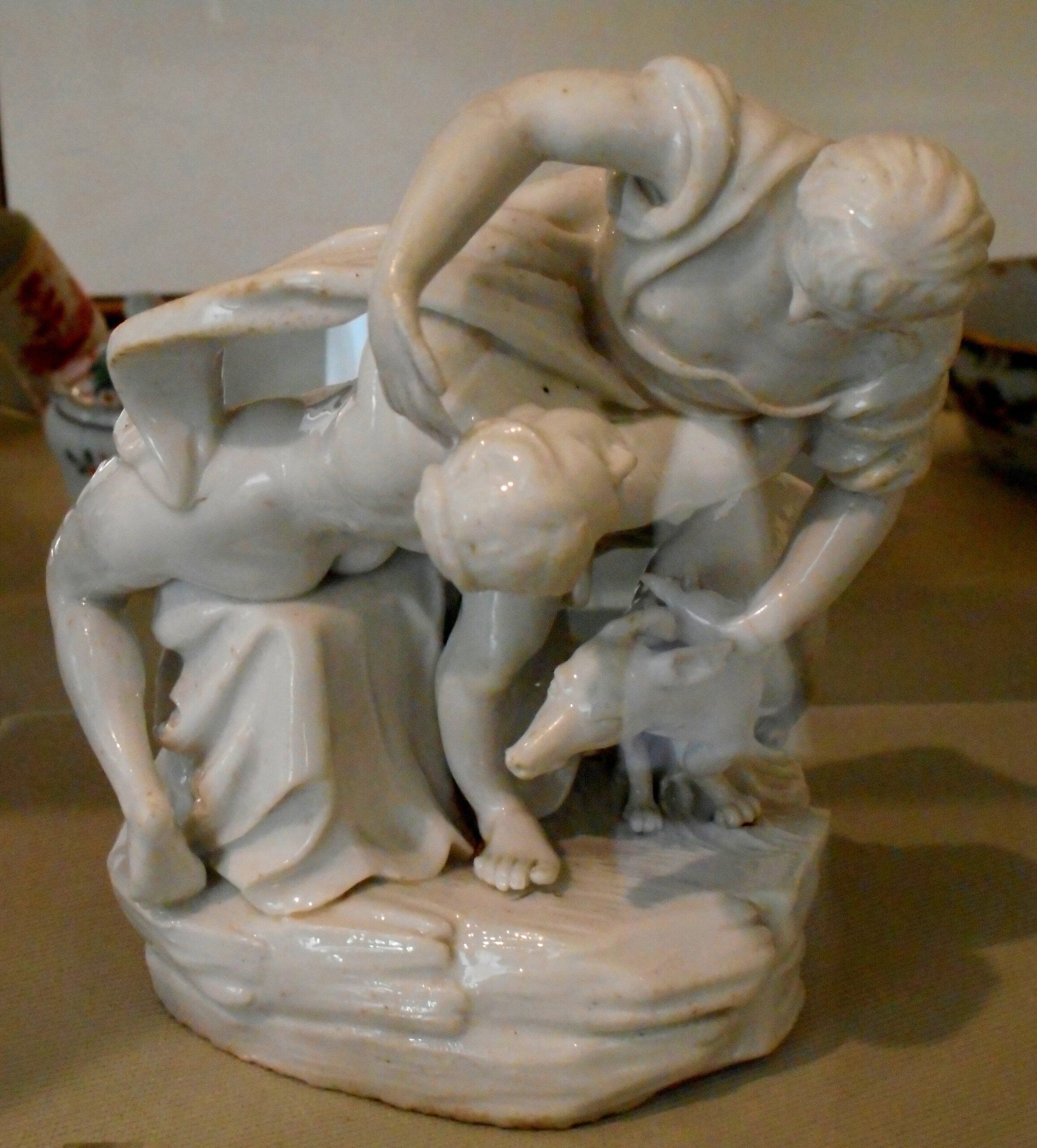
Two images from inside the estate: the romantic park laid out by Friedrich Dehnhardt, and a piece from the porcelain collection now housed inside the villa.
Visit on the map
Via Domenico Cimarosa 77 · 40.8417° N, 14.2336° E
Download for your navigator
A single waypoint, ready for GPS apps, navigators, and contacts.
The site on the Vomero ridge was bought by King Ferdinand I of the Two Sicilies in 1815 and given to Lucia Migliaccio, Duchess of Floridia, the morganatic wife he had married in 1814. The estate took the duchess’s title and became the Villa Floridiana. Between 1817 and 1819 Antonio Niccolini, architect of the Bourbon Real Casa and a leading neoclassical designer in Naples, rebuilt the existing Pignatelli core into a restrained white neoclassical villa, organised around a central body and symmetrical wings opening toward the gulf. Niccolini also planned the layout of the surrounding grounds, intended both as a private royal residence and as a stage from which to read the city below.
The park was developed in the English landscape manner by Friedrich Dehnhardt, director of the Naples Botanical Garden, who introduced more than one hundred species of trees and shrubs — oaks, pines, cypresses, palms, plane trees and an extensive camellia collection — laid out along winding paths, lawns and viewpoints. The original complex once included a second residence (Villa Lucia), a small Ionic temple, an outdoor theatre known as the Teatro della Verzura, fountains, artificial ruins and greenhouses. The today’s visitable park covers roughly eight hectares of the original estate and culminates in a long belvedere over the Bay of Naples, with Vesuvius on the horizon.
Following the end of the Bourbon era and successive subdivisions, the villa and remaining park passed to the Italian State in the early twentieth century. The collection assembled by Placido di Sangro, Duke of Martina — more than 6,000 objects of European and Far Eastern ceramics, including Meissen, Capodimonte, Sèvres, Chinese and Japanese porcelains, ivories, enamels and majolica — had been donated to the city of Naples in 1911 by his heirs. In 1931 the collection was installed inside the Villa Floridiana, where it has remained as the Museo Nazionale della Ceramica Duca di Martina. The villa and museum are managed today by the Direzione Regionale Musei Campania, while the park is open to the public free of charge as the principal green space of the Vomero district.
Resources & References
Editorial picks across Wikipedia, photo archives, and the official portal.
All photographs Wikimedia Commons (CC-BY / CC-BY-SA / Public Domain) unless otherwise stated. Editorial text Cultural Heritage Online, OASIS Tech LLC USA.
Find it on the map
See this place and what’s around it →Historical events at this place (1)
📷 Become a Cultural Heritage Online photographer
Share your photos of places: they stay published under your name as the author. The more they're seen, the more you get noticed — and soon a contest will reward the most appreciated photos.
Log in or sign up free to add a photoIs this page about you?
This page is read by travellers and heritage enthusiasts who find it on Google. Tell us how you are connected to this place and we will take it from there.