
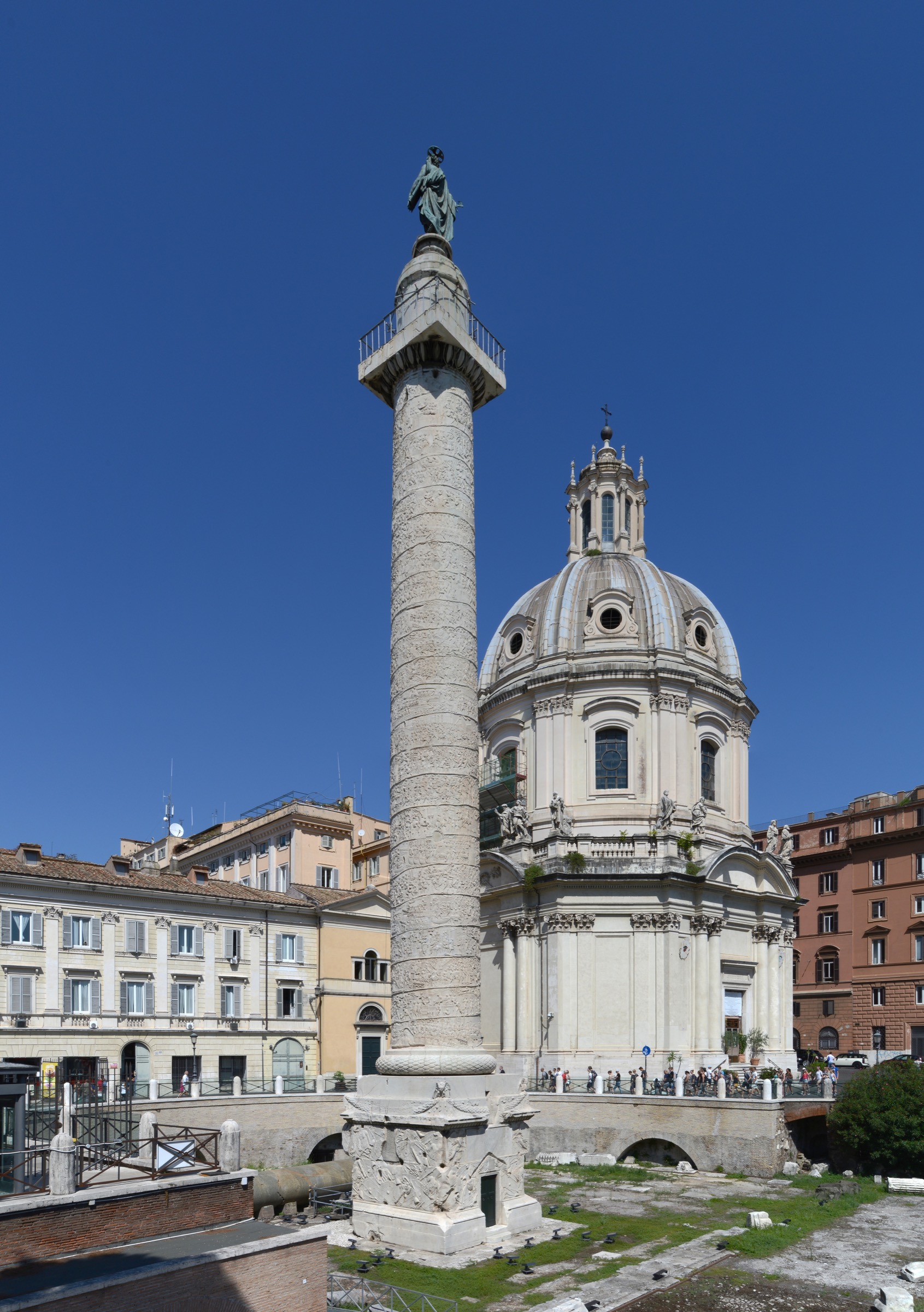
Trajan’s Column is a Roman triumphal column inaugurated on 12 May 113 CE in the heart of the Foro di Traiano. Roughly 35 metres tall including its pedestal, it is wrapped by a continuous helical bas-relief of 155 scenes that narrates the two Dacian Wars of 101–102 and 105–106 CE. The pedestal beneath the shaft once housed a golden urn with the ashes of the emperor Trajan, later joined by those of his wife Plotina.
- Address
- Via dei Fori Imperiali, 00187 Roma RM
- Period
- Inaugurated 12 May 113 CE
- Architect
- Apollodorus of Damascus
- Patron
- Emperor Trajan, following the Dacian Wars (101–102 and 105–106 CE)
- Function
- Triumphal column commemorating Trajan's Dacian campaigns; pedestal served as the imperial tomb for Trajan and Plotina
- Current use
- Open-air monument freely visible from Via dei Fori Imperiali; ticketed access to the surrounding archaeological complex through the Mercati di Traiano – Museo dei Fori Imperiali
- Coordinates
- 41.8957° N, 12.4843° E
- Notes
- Total height circa 35 m including pedestal; shaft circa 30 m, composed of 20 Carrara marble drums; helical frieze with 155 scenes and roughly 2,662 carved figures spiralling 23 times around the column. Original bronze Trajan statue replaced on 4 December 1587 by Pope Sixtus V with a bronze Saint Peter, still in place
Gallery
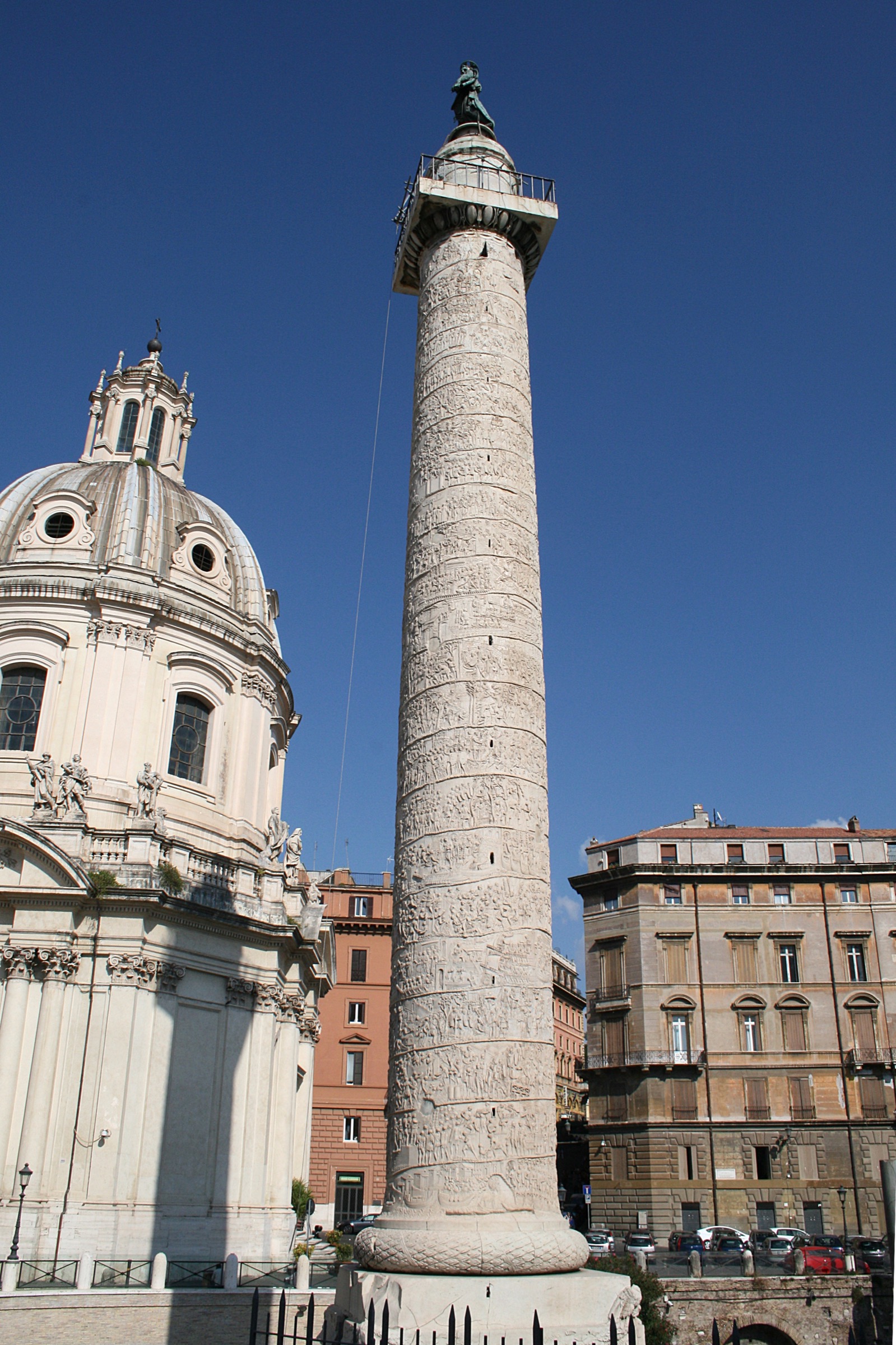
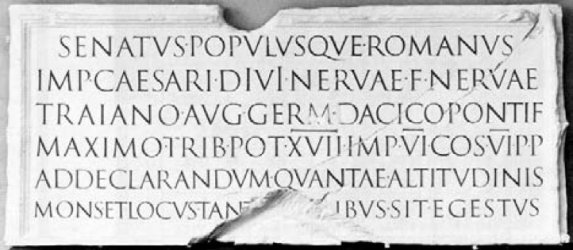
Two close readings of the monument that are difficult to perceive from the street: the spiralling narrative frieze and the heavily sculpted pedestal that served as the imperial tomb.
Visit on the map
Via dei Fori Imperiali · 41.8957° N, 12.4843° E
Download for your navigator
A single waypoint, ready for GPS apps, navigators, and contacts.
Trajan’s Column was inaugurated on 12 May 113 CE as the centrepiece of the Foro di Traiano, the last and most ambitious of the imperial fora in Rome. The project is traditionally attributed to Apollodorus of Damascus, the Greek architect and engineer who already served Trajan on the bridge across the Danube and on the design of the forum itself. The shaft rises about thirty metres and is built from roughly twenty colossal drums of Carrara marble, each weighing in the order of thirty tons; with pedestal and crowning statue the total height reaches some thirty-five metres. The column was conceived as both a triumphal monument and, eventually, an imperial sepulchre.
Its most celebrated feature is the continuous bas-relief that winds twenty-three times around the shaft, from base to capital, telling the story of Trajan’s two Dacian campaigns of 101–102 and 105–106 CE. Modern counts identify 155 distinct scenes and approximately 2,662 carved figures; the emperor himself appears more than fifty times. The relief is not a battle frieze in the ordinary sense: marches, river crossings, sieges, addresses to the troops, sacrifices and engineering works are given as much weight as combat, making the column an extraordinary document of Roman military practice as much as a propagandistic artwork. The carving widens slightly as it climbs, a calculated optical correction so that the upper scenes remain legible from below.
On 4 December 1587 Pope Sixtus V removed the original bronze statue of Trajan from the summit and replaced it with a bronze figure of Saint Peter, which still crowns the monument today. The pedestal at the base of the column, accessible through a small door, was conceived as an imperial tomb: a golden urn with Trajan’s ashes was placed inside after his death in 117 CE, later joined by the ashes of his wife Plotina. The column survived largely intact through the medieval period precisely because of its Christianisation, while the rest of the Foro di Traiano collapsed into the modern Via dei Fori Imperiali. Today the monument is freely visible from the street, and the surrounding archaeological area is interpreted through the nearby Mercati di Traiano – Museo dei Fori Imperiali.
Resources & References
Editorial picks across Wikipedia, photo archives, and the official portal.
All photographs Wikimedia Commons (CC-BY / CC-BY-SA / Public Domain) unless otherwise stated. Editorial text Cultural Heritage Online, OASIS Tech LLC USA.
See the place
Find it on the map
See this place and what’s around it →Historical events at this place (2)
📷 Become a Cultural Heritage Online photographer
Share your photos of places: they stay published under your name as the author. The more they're seen, the more you get noticed — and soon a contest will reward the most appreciated photos.
Log in or sign up free to add a photoIs this page about you?
This page is read by travellers and heritage enthusiasts who find it on Google. Tell us how you are connected to this place and we will take it from there.