
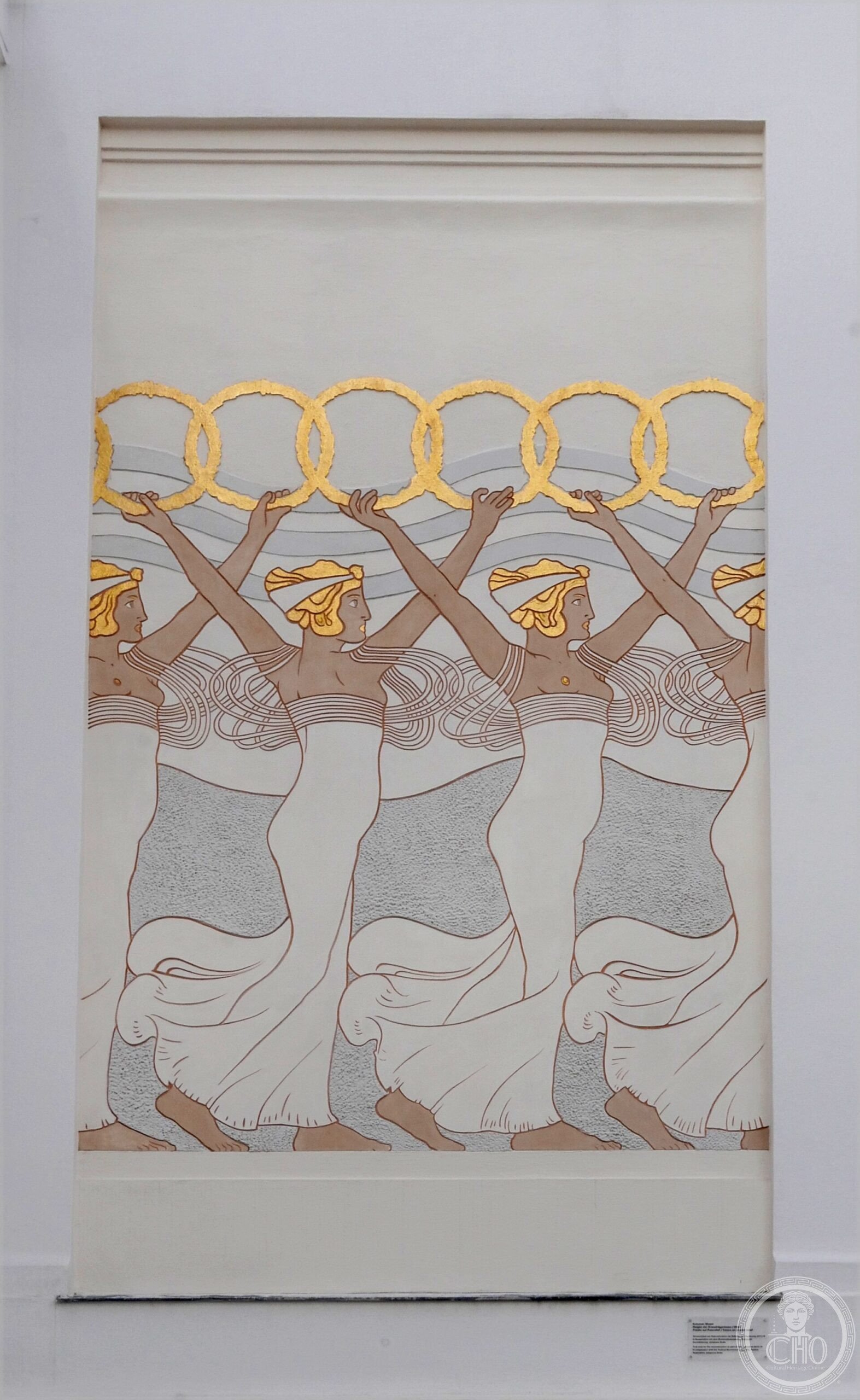
No other European city compressed so much artistic revolution into so few years. Between 1897 and 1918, Vienna produced Klimt, Schiele, Otto Wagner and an entire architectural movement that redefined modern decoration.
At a glance
Vienna stands as the undisputed capital of the Secessionist movement — the Central European branch of Art Nouveau that declared war on academic historicism in 1897. The founding of the Vienna Secession by Gustav Klimt and eighteen colleagues, their radical white exhibition hall by Josef Maria Olbrich, and the city’s simultaneous embrace of architectural innovation through Otto Wagner made Vienna a laboratory for the modern aesthetic. Today the city preserves more intact Jugendstil buildings per square kilometre than almost any other European capital.
Key facts
- Country: Austria
- Key period: 1897–1918 (Vienna Secession / Jugendstil)
- Key figures: Gustav Klimt (1862–1918), Egon Schiele (1890–1918), Otto Wagner (1841–1918), Josef Maria Olbrich (1867–1908)
- Essential sites: Vienna Secession, Belvedere (Klimt), Leopold Museum (Schiele), Otto Wagner Stadtbahn stations, Majolika Haus
- UNESCO heritage: Historic Centre of Vienna (World Heritage Site since 2001)
- Annual anniversaries: Klimt nascita 14 luglio, Schiele nascita 12 giugno, Wagner nascita 13 luglio
History
In April 1897, nineteen artists including Gustav Klimt resigned from the conservative Künstlerhaus association and established the Vereinigung bildender Künstler Österreichs — the Vienna Secession. Their manifesto was simple: “To every age its art, to art its freedom.” The phrase is still inscribed on the Secession’s golden-domed exhibition hall, completed in 1898 to a design by Josef Maria Olbrich.
Simultaneously, architect Otto Wagner was reshaping Vienna’s public infrastructure. His Stadtbahn stations (1898–1901) along the elevated railway brought Art Nouveau ornament into daily commuter life. His Majolika Haus (1899) on Linke Wienzeile dressed an apartment block in floral ceramic tiles — a gesture that made the decorative arts inseparable from the urban fabric.
The movement ended abruptly with the deaths of Klimt and Schiele within months of each other in 1918 — both taken by the Spanish flu. Wagner died that same April. Three deaths in one year closed Vienna’s golden age, but the buildings, canvases and drawings they left behind remain among the most visited cultural treasures in Europe.
What you see
The Vienna Secession building (Friedrichstraße 12) is the movement’s symbolic home: a white cube surmounted by a gilded laurel-leaf dome described by Viennese satirists as a “golden cabbage.” Inside, Klimt’s Beethoven Frieze (1902) occupies the basement — 34 metres of painted casein and mixed media that compress an entire philosophy of beauty into a single continuous surface. Admission covers both.
A ten-minute walk south along the Naschmarkt, Otto Wagner’s twin apartment blocks at Linke Wienzeile 38–40 demonstrate Jugendstil at domestic scale. The Majolika Haus (No. 40) is tiled floor-to-ceiling in rose patterns; its neighbour (No. 38) is decorated with gilded medallions by Koloman Moser. Wagner’s Stadtbahn stations at Karlsplatz — now a museum — preserve the original green-and-gold ironwork intact.
Practical information
- Best season: May–September for outdoor exploration; year-round for museums
- Vienna City Card: covers public transport and discounts at most Secession venues
- Secession: open Tue–Sun 10:00–18:00, closed Monday
- Leopold Museum: open daily, houses the world’s largest Schiele collection
- Time needed: minimum 2 days for a focused Jugendstil itinerary
Getting there
Vienna International Airport (VIE) is 18 km from the centre; the City Airport Train (CAT) reaches Wien Mitte in 16 minutes. From the station, U4 (green line) stops at Karlsplatz — the most central point for the Jugendstil itinerary. The Secession, the Naschmarkt and the Majolika Haus are all within 500 metres of Karlsplatz station.
Related in CHO
- Museum of Military History Vienna — Baroque and Imperial heritage
- Imperial Treasury Vienna — Habsburg collections
- Anniversario nascita: Gustav Klimt — 14 luglio 1862
- Anniversario nascita: Egon Schiele — 12 giugno 1890
- Anniversario nascita: Otto Wagner — 13 luglio 1841
Sources
Find it on the map
See this place and what’s around it →Events here — now on & upcoming
- Birth Anniversary: Otto Wagner — July 13, 184113 Jul 2027See the event →
- Death Anniversary: Otto Wagner — April 11, 191811 Apr 2027See the event →
- Birth Anniversary: Gustav Klimt — July 14, 186214 Jul 2027See the event →
- Death Anniversary: Gustav Klimt — February 6, 191806 Feb 2027See the event →
- Birth Anniversary: Egon Schiele — June 12, 189012 Jun 2027See the event →
- Death Anniversary: Egon Schiele — October 31, 191831 Oct 2026See the event →
📷 Become a Cultural Heritage Online photographer
Share your photos of places: they stay published under your name as the author. The more they're seen, the more you get noticed — and soon a contest will reward the most appreciated photos.
Log in or sign up free to add a photo