
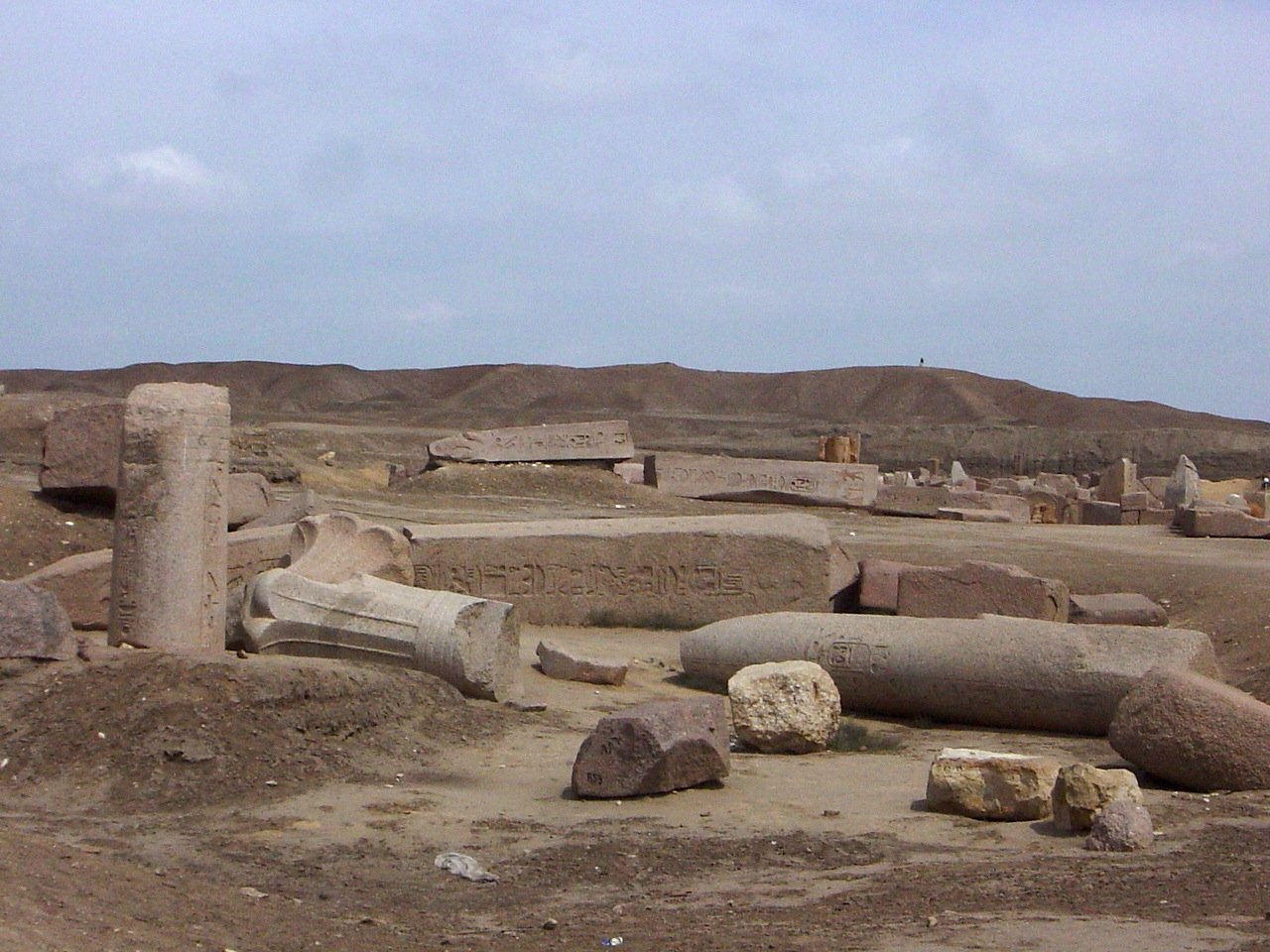
The ancient Egyptian capital where six intact royal tombs — discovered by Pierre Montet in 1939 on the eve of the Second World War and largely overshadowed by it — contained golden coffins, silver death masks, and treasure that rivals Tutankhamun; and the real location behind the Tanis dig in Raiders of the Lost Ark.
At a glance
In the eastern Nile Delta approximately 100 km northeast of Cairo, the ancient city of Tanis — called Djanet in ancient Egyptian and San el-Hagar in Arabic — served as the capital of Egypt during the 21st and 22nd Dynasties of the Third Intermediate Period (c. 1069–715 BC). In 1939, French archaeologist Pierre Montet discovered six royal tombs here containing the undisturbed burials of pharaohs including Psusennes I, Sheshonq II, and Amenemope — a find that was, when it was uncovered, the greatest discovery of intact royal Egyptian burials since Tutankhamun tomb in 1922, buried under a layer of obscurity by the outbreak of the Second World War. In 1981, Steven Spielberg and George Lucas named Tanis as the specific location of their fictional dig site in Raiders of the Lost Ark.
Key facts
- Period: Capital during 21st–22nd Dynasties, c. 1069–715 BC (Third Intermediate Period)
- Discovery of royal tombs: 27 February 1939, by Pierre Montet (French–Swiss archaeologist)
- Key burials found: Psusennes I, Sheshonq II (with solid silver coffin), Amenemope, and others
- Comparable find: Rivals Tutankhamun tomb in quantity and quality; largely unknown outside Egyptology
- Pop culture: Named in Raiders of the Lost Ark (1981) as location of the Tanis dig and the Well of Souls
- Modern name: San el-Hagar (Arabic); Sharqia Governorate, eastern Nile Delta
- Location: 100 km northeast of Cairo; eastern Nile Delta
History
Tanis rose to prominence during the Third Intermediate Period, when Egypt fragmented after the death of Ramesses XI and power shifted to the Nile Delta. The 21st Dynasty established Tanis as Egypt capital, importing monumental statuary, obelisks, and architectural elements from earlier New Kingdom sites — including Piramesse, the great Ramesside capital — which explains the confusing presence of Ramesside royal cartouches on monuments at a city whose glory days came centuries after Ramesses II. The 22nd Dynasty, founded by a Libyan military family, continued to use Tanis as a royal residence.
The royal tombs were discovered on 27 February 1939, less than a week before Germany invaded Czechoslovakia. Montet opened the intact burial of Psusennes I and found within a nested sequence of coffins: an outer granite sarcophagus, a black granite anthropoid coffin, a silver coffin, and finally the mummy of the pharaoh wearing a golden death mask of extraordinary quality. The silver coffin of Sheshonq II — a solid silver anthropoid coffin, unique in Egyptian archaeology — was found in an adjacent chamber. None of this received significant international press coverage; the impending war consumed all attention. Montet, methodical and rigorous, spent years excavating and publishing his results; his work is now considered among the best-documented major discoveries in Egyptian archaeology.
In 1981, George Lucas and Steven Spielberg explicitly named Tanis as the location of their fictional dig site in Raiders of the Lost Ark. The film use of real Egyptological knowledge — the city of Tanis genuinely exists — embedded the name in global popular culture and has driven generations of viewers to investigate the actual site and Pierre Montet career, creating an unusual chain of cultural transmission from serious archaeology through popular film back to archaeology.
What you see
The visible ruins of Tanis are dominated by the great temple enclosure of Amun — a massive mudbrick temenos wall enclosing a forest of broken obelisks, column stumps, and scattered statuary, much of it reused from Ramesside sites. The scale of the enclosure (approximately 430 by 370 metres) communicates the city one-time importance. The royal tombs discovered by Montet were cut into the floor of the main temple enclosure — an unusual location for royal burials — and their openings are visible, though the burial goods were transferred to the Egyptian Museum in Cairo.
The site museum in the nearby village of San el-Hagar holds some objects and explanatory panels. The majority of Tanis treasures — including the golden death mask of Psusennes I, the silver death mask of Sheshonq II, and the extraordinary silver coffin — are in Room 2 of the Egyptian Museum in Cairo. Visiting both the Cairo Museum and Tanis itself creates the full picture of what Montet found.
Practical information
- On-site: Open archaeological zone; minimal infrastructure; bring water and sun protection
- Nearby museum: Small site museum in San el-Hagar village
- Egyptian Museum Cairo: Room 2 holds the Tanis royal treasure — essential complement to any site visit
- Best time: October to April; summer temperatures in the Delta are intense
- Visitor numbers: Very low — Tanis receives a fraction of the visitors of Giza or Luxor
Getting there
Tanis is located near the village of San el-Hagar in Sharqia Governorate, approximately 100 km northeast of Cairo and 80 km east of Zagazig. The most practical approach is by private car or taxi from Cairo (approximately 1.5–2 hours) or from Zagazig. There is limited public transport; microbus services from Zagazig reach the area but require local navigation. Tanis is rarely included in standard Nile Delta tour itineraries despite its importance, making a private day trip from Cairo the most reliable option.
Nearby
- Bubastis (Tell Basta) — ancient cult centre of the cat goddess Bastet near Zagazig; remains of the temple described by Herodotus as among the most beautiful in Egypt
- Avaris (Tell el-Dab a) — the Hyksos capital in the eastern Delta, excavated by Manfred Bietak Austrian mission; approximately 50 km from Tanis
- Egyptian Museum Cairo — holds the Tanis royal treasure in Room 2; the find full significance is only visible when the Cairo objects and the site are considered together
Sources
- Montet, P. (1947–1960). La necropole royale de Tanis (3 vols). Paris — primary excavation publication
- James, T.G.H. (1992). Tanis. In Oxford Encyclopedia of Ancient Egypt
- Tyldesley, J. (2012). Egypt: How a Lost Civilization Was Rediscovered. BBC Books
- Egyptian Museum Cairo — Room 2 object labels and catalogue for Tanis treasures
- Wikipedia: Tanis — cross-reference and image attribution
Find it on the map
See this place and what’s around it →Historical events at this place (1)
📷 Become a Cultural Heritage Online photographer
Share your photos of places: they stay published under your name as the author. The more they're seen, the more you get noticed — and soon a contest will reward the most appreciated photos.
Log in or sign up free to add a photo