

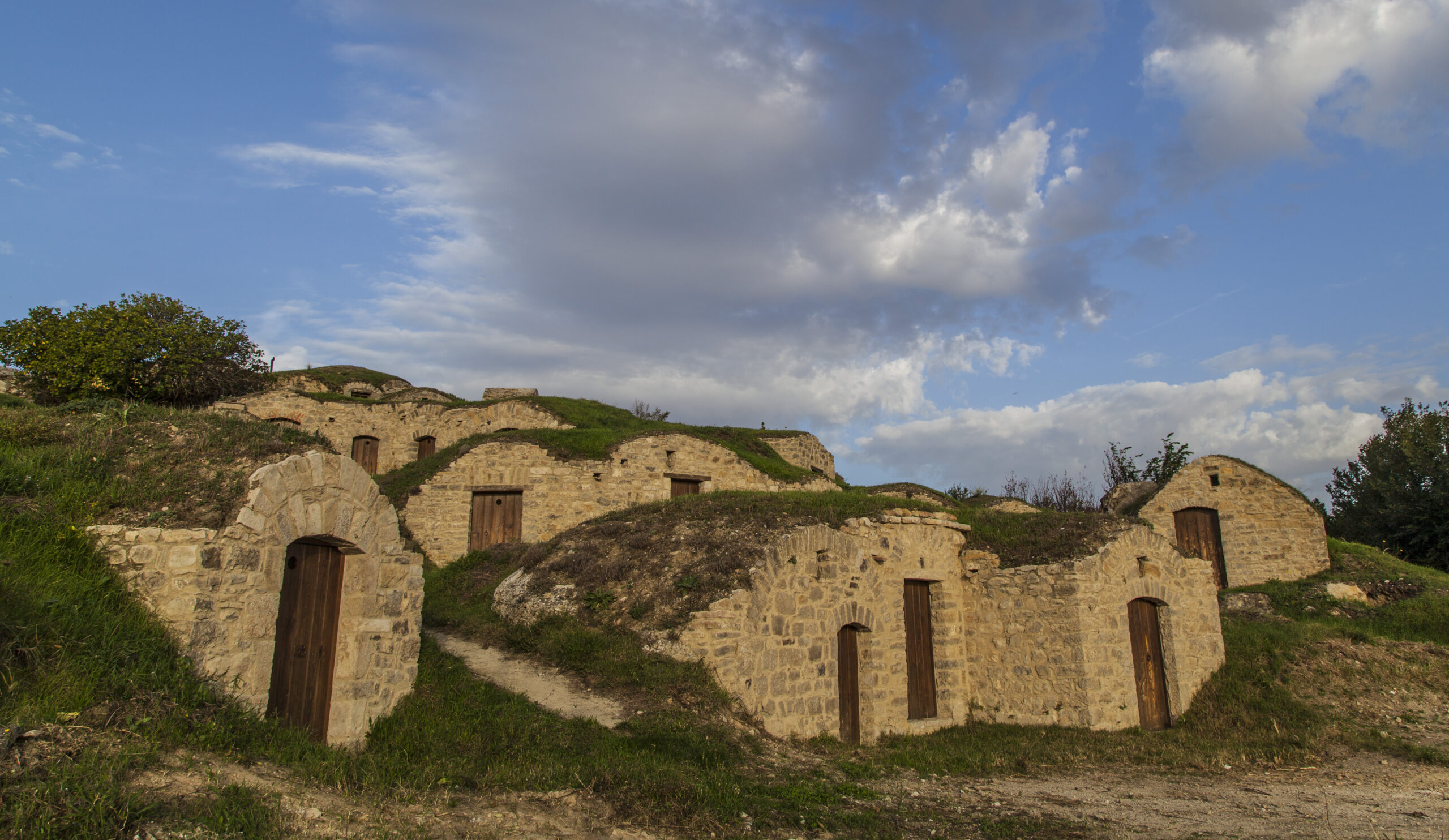
On the northern edge of Pietragalla, a hill town in inland Basilicata, roughly two hundred palmenti — small rural wine cellars dug into the tuff — form one of the most concentrated complexes of rock-cut vinification architecture in Italy. Documented in use from at least the 16th century and built progressively through the 18th and 19th centuries, they served generations of peasant families for the pressing and fermentation of locally grown grapes. The Comune di Pietragalla has restored the site as the Parco Urbano dei Palmenti, an open-air ethno-anthropological heritage park.
- Address
- Località Palmenti, 85016 Pietragalla PZ
- Period
- Use documented from the 16th century; principal construction phase 18th–19th centuries; restored as a public park in the 2000s
- Function
- Rural agrarian complex of rock-cut wine cellars (palmenti) used for grape pressing and must fermentation
- Current use
- Open-air park managed by the Comune di Pietragalla; recognised as an ethno-anthropological heritage site
- Coordinates
- 40.7531° N, 15.8869° E
- Notes
- Approximately 200 palmenti dug into the tuff at the northern edge of the historic centre — among the largest concentrations of rural rock-cut wine cellars in southern Italy
Gallery
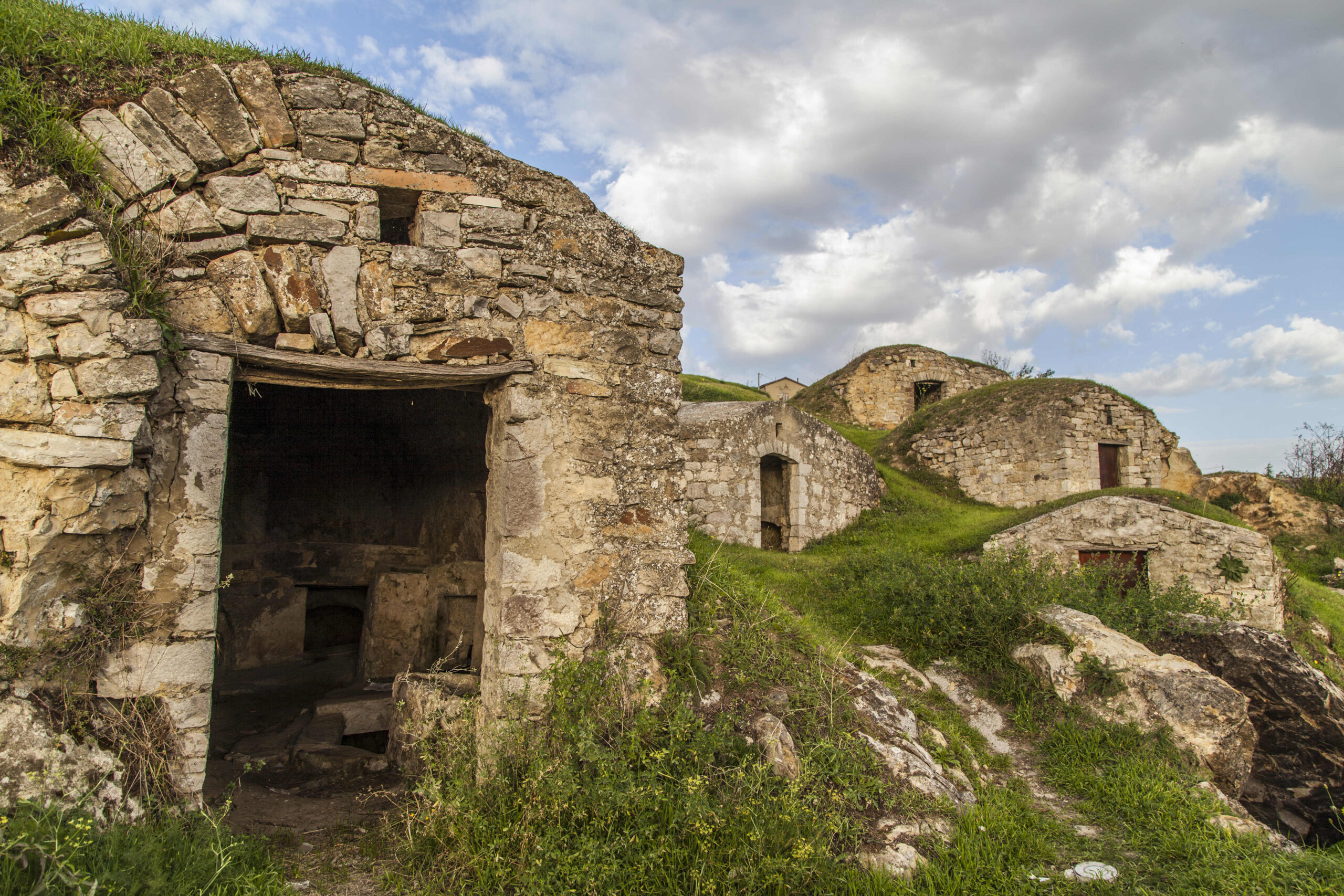
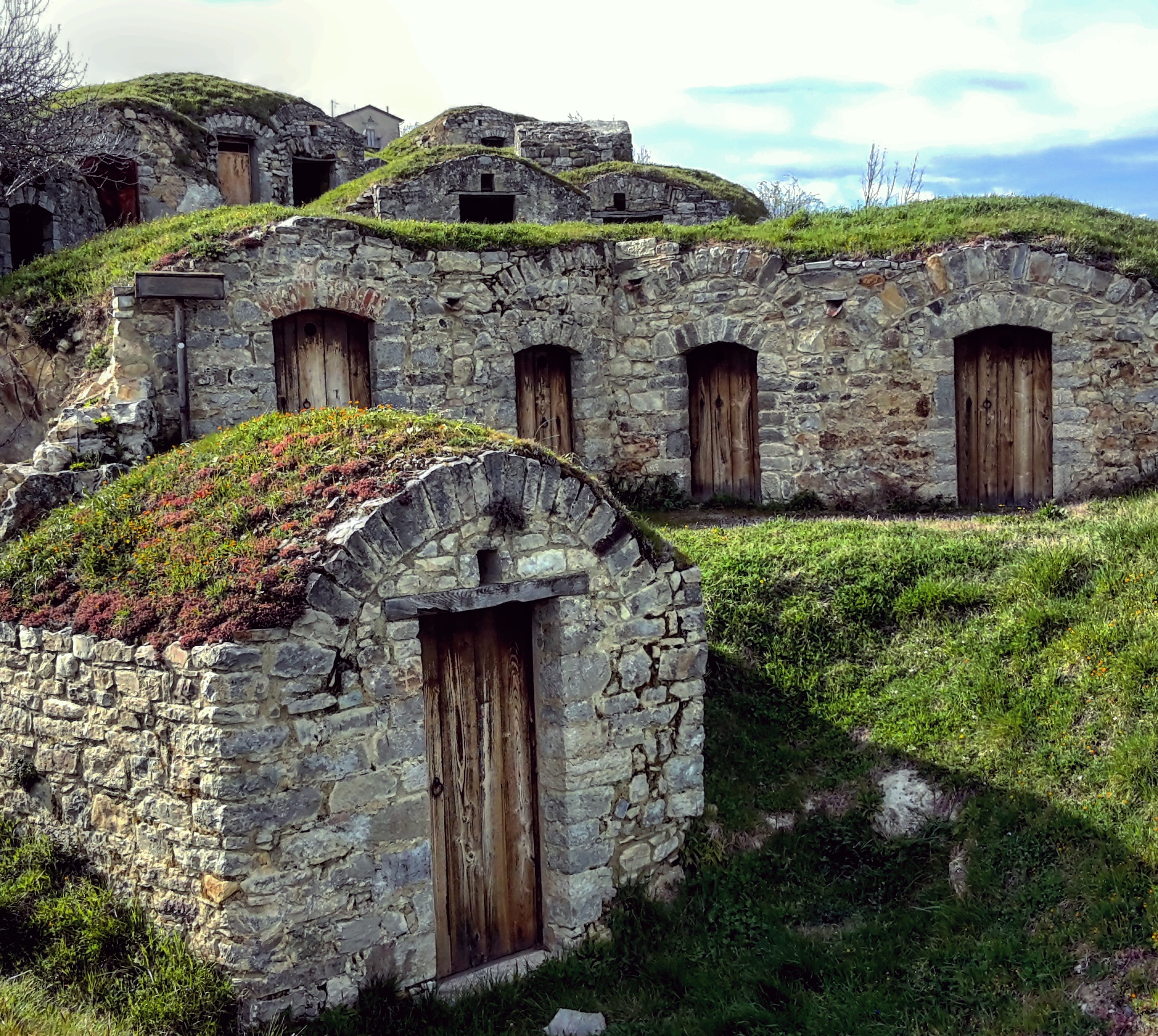
Two photographs documenting the architectural detail and the present-day conservation of the complex.
Visit on the map
Località Palmenti · 40.7531° N, 15.8869° E
Download for your navigator
A single waypoint, ready for GPS apps, navigators, and contacts.
Pietragalla is a hill town in the province of Potenza, set at roughly 800 metres above sea level on a tufaceous ridge of inland Basilicata. The economy of the historic centre was for centuries dominated by smallholder viticulture, and the palmenti at the northern edge of the village — a contiguous belt of around two hundred small rock-cut cellars — are the most visible material trace of that rural wine culture. Written sources document use of palmenti at Pietragalla from the 16th century onward, while the surviving architecture is largely the product of progressive construction and reconstruction through the 18th and 19th centuries, when the practice of household vinification reached its widest extent and each family typically owned or shared a unit.
Each palmento is a compact ipogeic structure carved directly into the tuff and faced externally in dressed stone. The interior is organised around two or three communicating basins: an upper pressing vat, into which grapes were tipped from baskets and trodden by foot; a connecting chute or aperture through which the must drained; and a lower fermentation basin where, together with the stems, the wine completed roughly twenty days of fermentation before being decanted into wooden barrels and stored in adjacent cellars locally known as rutt. A small slit above each entrance allowed carbon dioxide produced during fermentation to escape. The repetition of this modular unit, packed side by side along the slope, produces a coherent rural landscape of monumental character — comparable in typology to the palmenti complexes of Vico del Gargano in Apulia, but more densely concentrated on a single site.
Domestic vinification at Pietragalla declined through the 20th century as mechanised winemaking displaced household production, and many of the palmenti fell into disuse. From the early 2000s the Comune di Pietragalla undertook a programme of conservation and consolidation, opening the site to the public as the Parco Urbano dei Palmenti. The complex is now recognised as an ethno-anthropological heritage site, freely accessible as an open-air park, and remains the subject of ongoing ethnographic and architectural research. A small number of cellars are kept open for visit, providing a direct reading of the pressing chamber, the fermentation basin and the storage area in their original configuration.
Resources & References
Editorial picks across Wikipedia, photo archives, and the official portal.
All photographs Wikimedia Commons (CC-BY / CC-BY-SA / Public Domain) unless otherwise stated. Editorial text Cultural Heritage Online, OASIS Tech LLC USA.
Find it on the map
See this place and what’s around it →📷 Become a Cultural Heritage Online photographer
Share your photos of places: they stay published under your name as the author. The more they're seen, the more you get noticed — and soon a contest will reward the most appreciated photos.
Log in or sign up free to add a photoIs this page about you?
This page is read by travellers and heritage enthusiasts who find it on Google. Tell us how you are connected to this place and we will take it from there.