

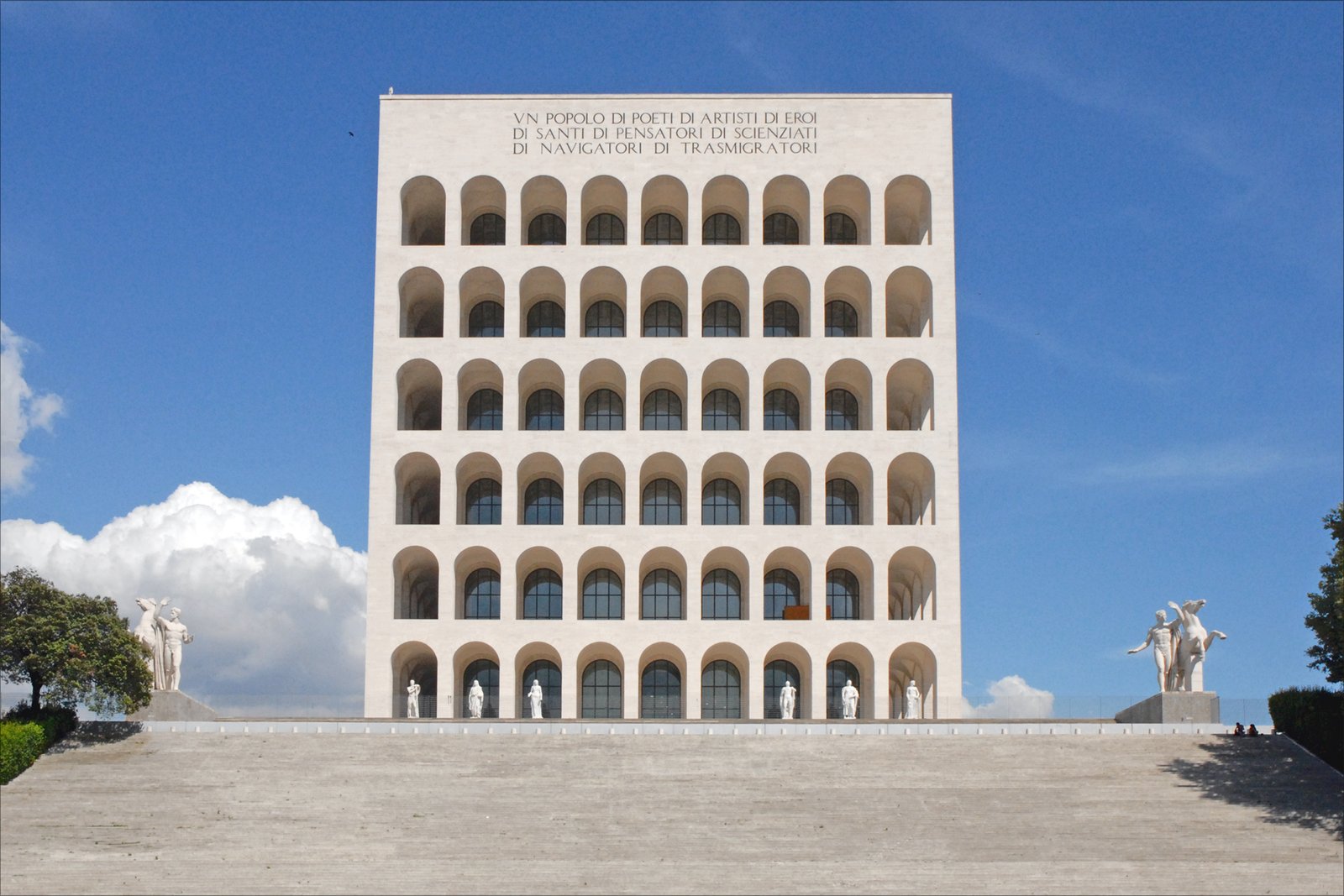
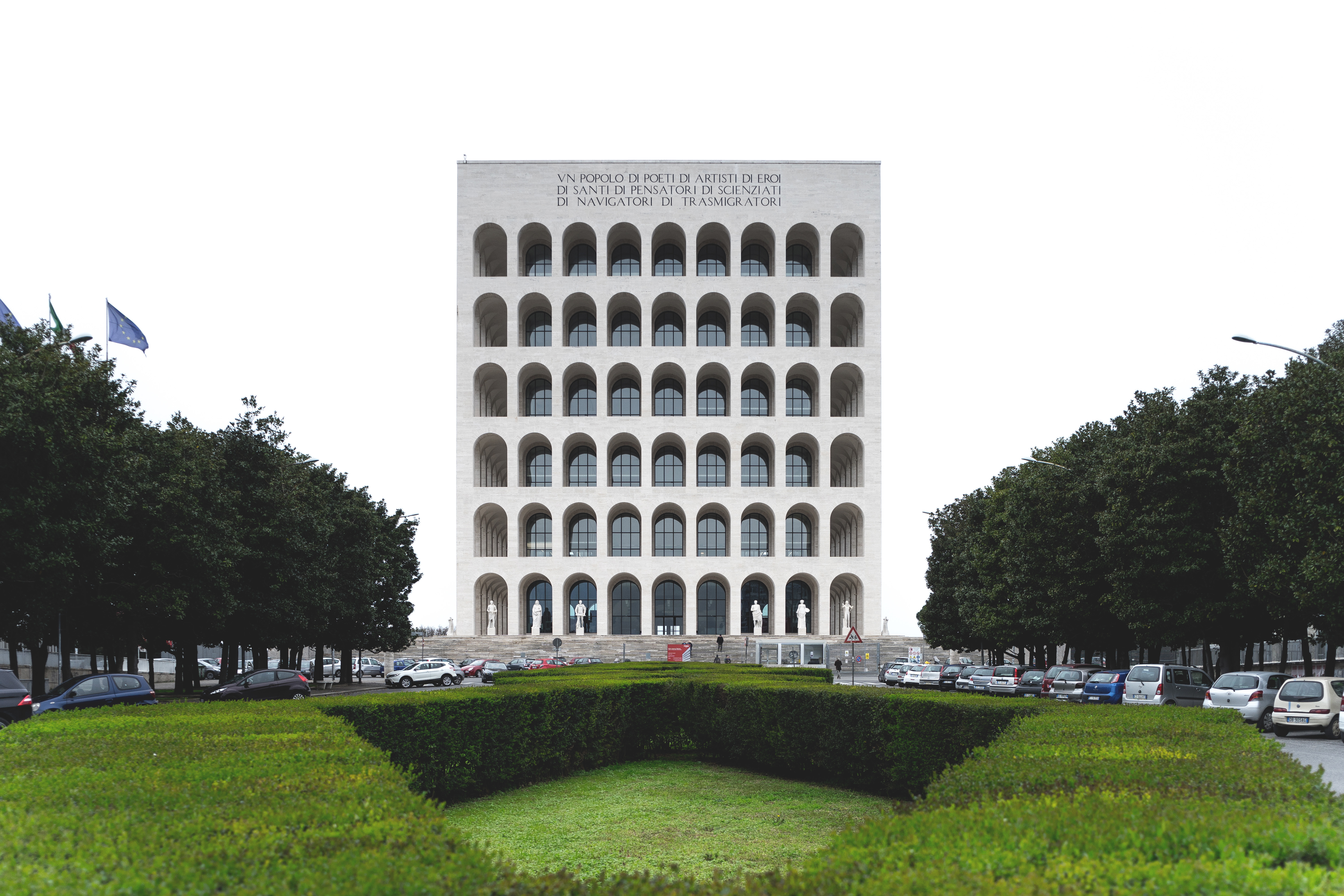
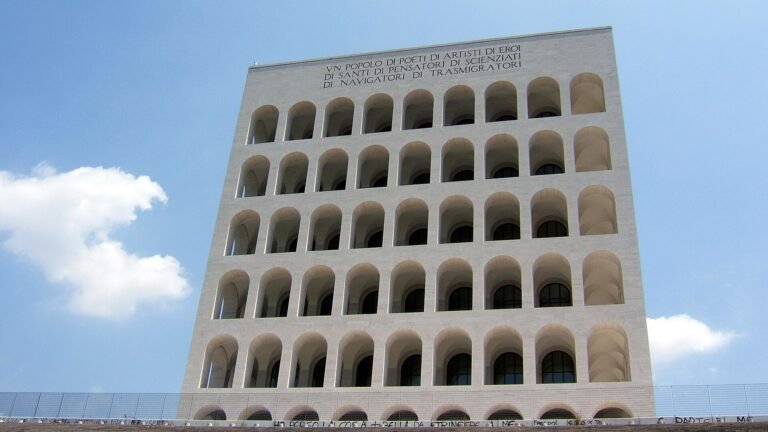
On the southern edge of Rome’s EUR district, the Palazzo della Civiltà Italiana presents a single image and refuses to give up another: a travertine cube, six rows of nine arches per face, lifted on a low plinth above an artificial plain. Romans call it the Colosseo Quadrato. Guerrini, La Padula, and Romano finished it in 1943 for an exposition that never opened.
- Address
- Quadrato della Concordia 5, 00144 Roma
- Period
- 1938–1943, Italian Rationalism
- Architects
- Giovanni Guerrini, Ernesto La Padula, Mario Romano; revised by Marcello Piacentini
- Original commission
- For the 1942 Esposizione Universale Roma (E’42), cancelled in 1941
- Current tenant
- Fendi (luxury fashion house) since 2015, on a 15-year lease
- Coordinates
- 41.8367° N, 12.4653° E
- Nickname
- Colosseo Quadrato (Square Colosseum)
Gallery
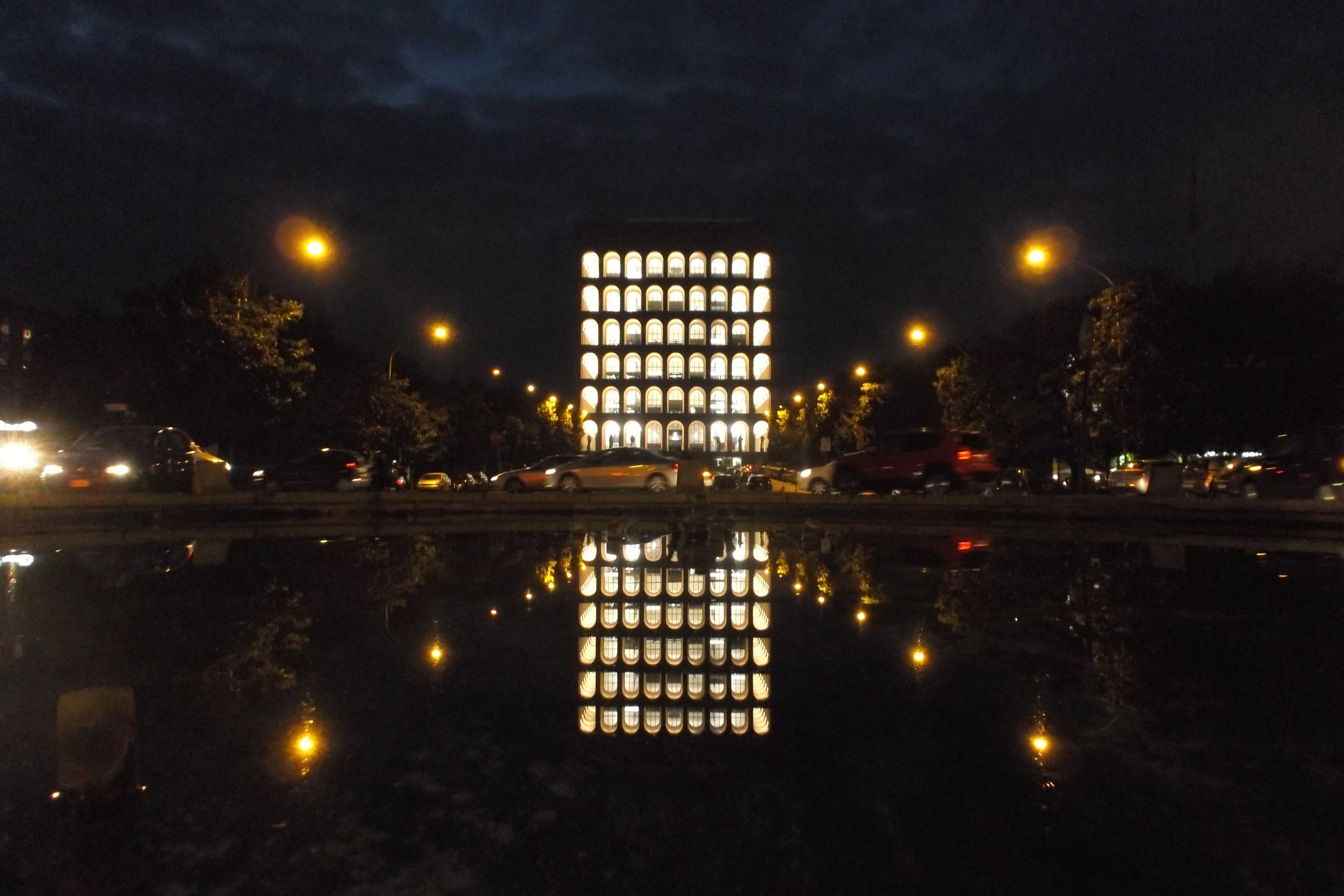
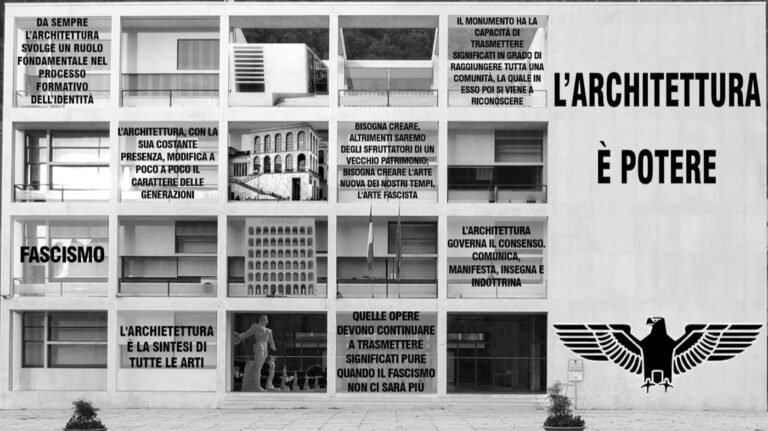
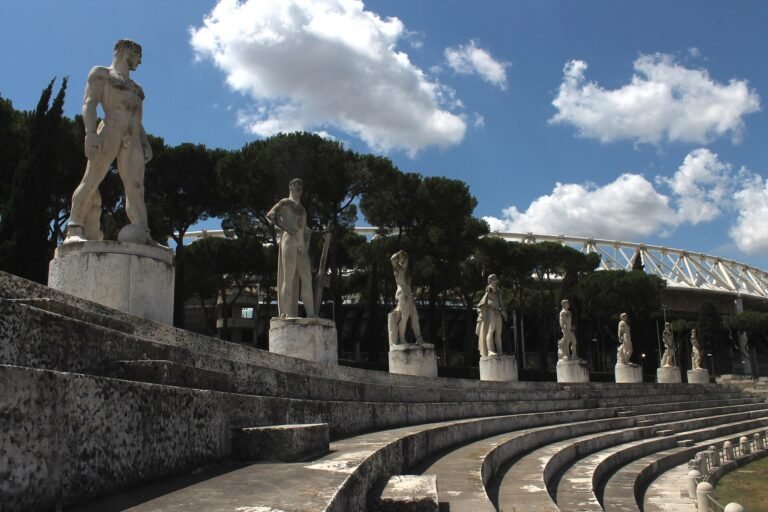
Two further views — a full corner perspective and the building at night, when the arch grid becomes the only legible element.
Visit on the map
Quadrato della Concordia 5, 00144 Roma · 41.8367° N, 12.4653° E
Download for your navigator
A single waypoint, ready for GPS apps, navigators, and contacts.
Italian Rationalism reached its most theatrical scale here. The three architects who won the 1937 competition — Giovanni Guerrini, Ernesto La Padula, and Mario Romano — proposed a building stripped of every classical decoration except the arch itself, repeated 216 times across the four facades. Marcello Piacentini, as architectural superintendent of the E’42 master plan, revised the proportions and clad the concrete skeleton entirely in travertine. The result is paradoxical: a cube that reads as both ancient (the Colosseum’s arched logic) and modern (no entablature, no order, no ornament beyond the inscription).
“Un popolo di poeti, di artisti, di eroi, di santi, di pensatori, di scienziati, di navigatori, di trasmigratori.”
Inscription on the facade — from Benito Mussolini’s speech of October 2, 1935.
The 1942 universal exposition was cancelled in 1941. The building was finished anyway in 1943, then sat largely unused while the surrounding EUR district was completed in the 1950s for the 1960 Rome Olympics. The Italian state owned it until 2008. Fendi has leased it as headquarters since 2015, paying 2.8 million euros a year on a fifteen-year commitment, restoring the travertine and opening the ground floor to public exhibitions.
The inscription on each facade is a 1935 Mussolini quote that Roman institutions discuss but do not remove, treating the building as documentary modernism rather than active rhetoric. The base measures 51.6 by 51.6 metres; the four corners hold the Dioscuri statues by Publio Morbiducci and Alberto Felci, added in 1942.
Resources & References
Editorial picks across Wikipedia, photo archives, and the official tourism portal.
All photographs Wikimedia Commons (CC-BY-2.0 / CC-BY-SA) unless otherwise stated. Editorial text Cultural Heritage Online, OASIS Tech LLC USA.
Find it on the map
See this place and what’s around it →
Historical events at this place (1)
- 2018 Introduzione all'E42
📷 Become a Cultural Heritage Online photographer
Share your photos of places: they stay published under your name as the author. The more they're seen, the more you get noticed — and soon a contest will reward the most appreciated photos.
Log in or sign up free to add a photoIs this page about you?
This page is read by travellers and heritage enthusiasts who find it on Google. Tell us how you are connected to this place and we will take it from there.