

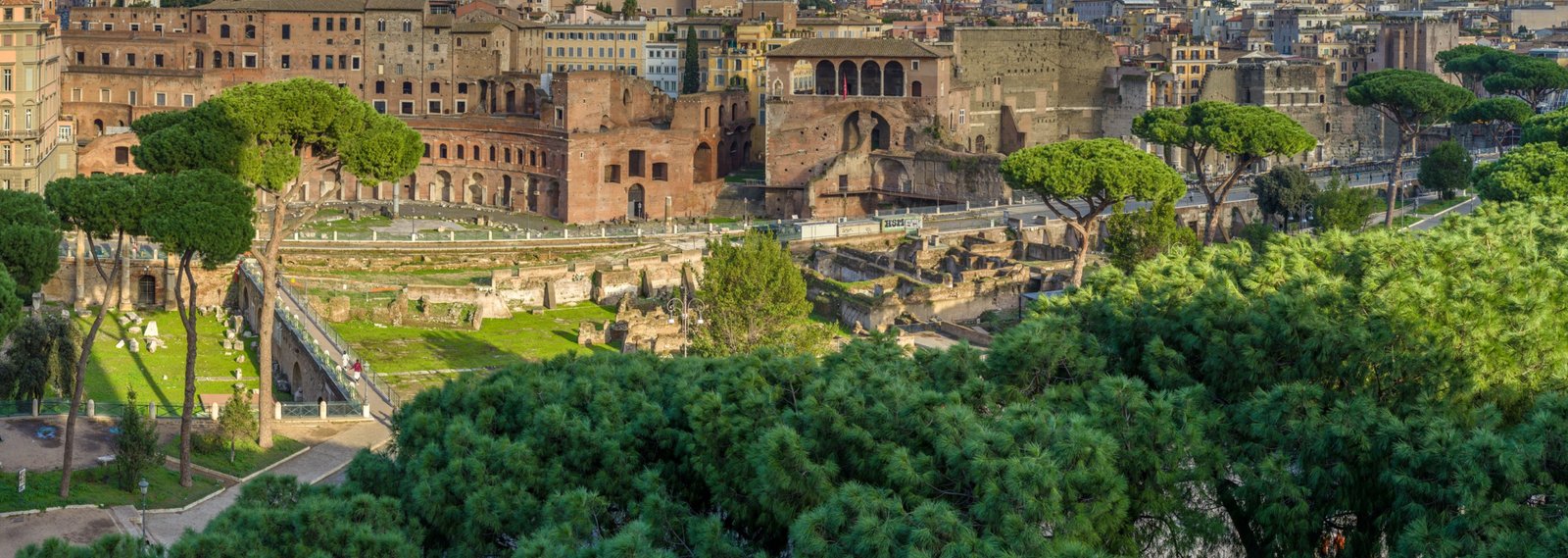
The Imperial Forums are a complex of five monumental public squares built in Rome between 46 BCE and 113 CE by Julius Caesar, Augustus, Vespasian, Nerva and Trajan to extend the original Roman Forum northward. Cleared between 1924 and 1932 of the medieval Alessandrino quarter that had grown over them, the ruins now lie on either side of Via dei Fori Imperiali, the avenue opened by Benito Mussolini on 9 April 1932.
- Address
- Via dei Fori Imperiali, 00184 Roma
- Period
- 46 BCE – 113 CE
- Patrons
- Julius Caesar, Augustus, Vespasian, Nerva, Trajan
- Architect (Trajan's Forum)
- Apollodorus of Damascus
- Function
- Five imperial fora: civic, religious, administrative
- Current use
- Archaeological park; partial ticketed access (Trajan's Markets museum)
- Coordinates
- 41.8938° N, 12.4849° E
- Notes
- Via dei Fori Imperiali avenue opened by Mussolini on 9 April 1932
Gallery
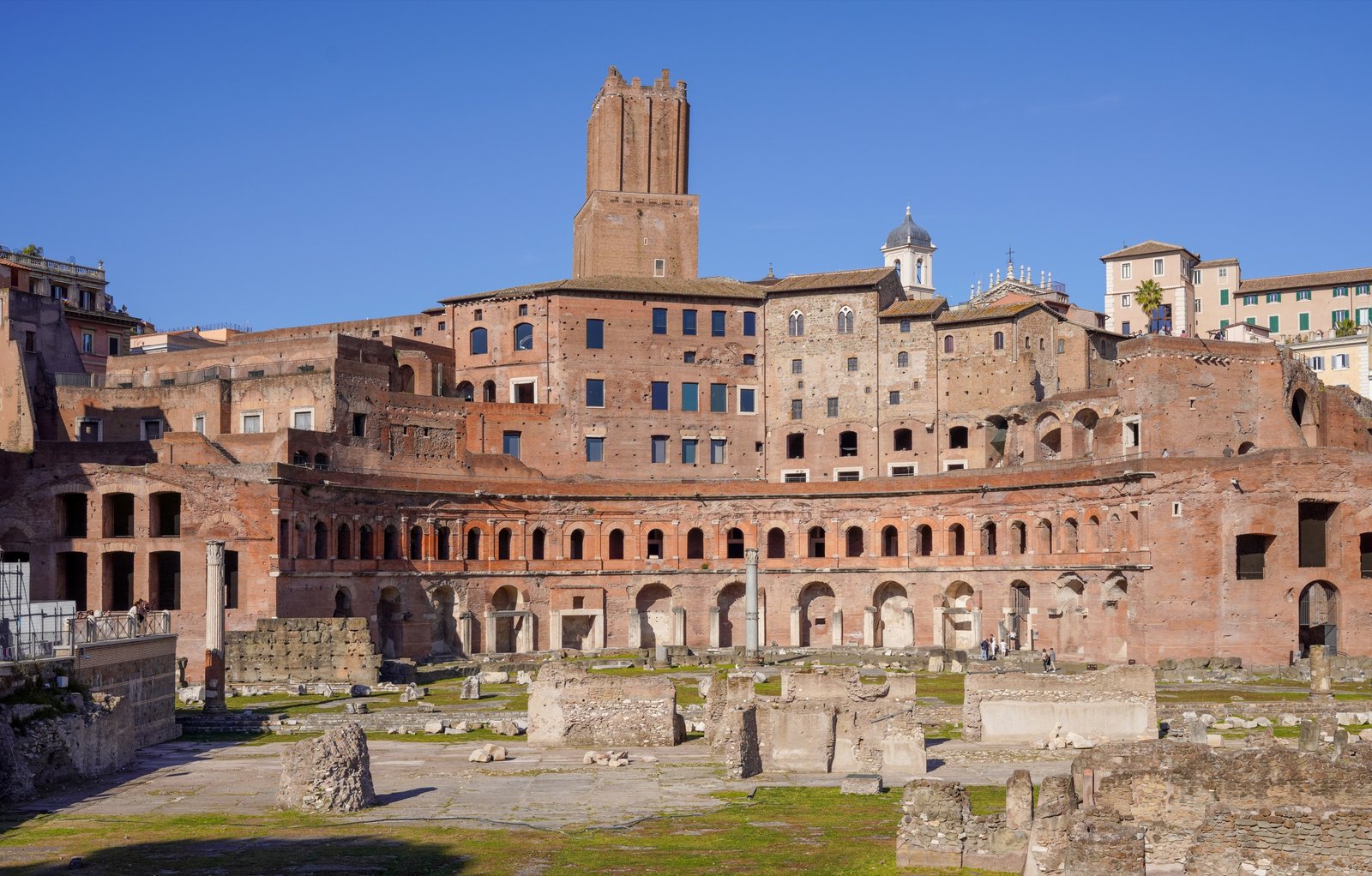
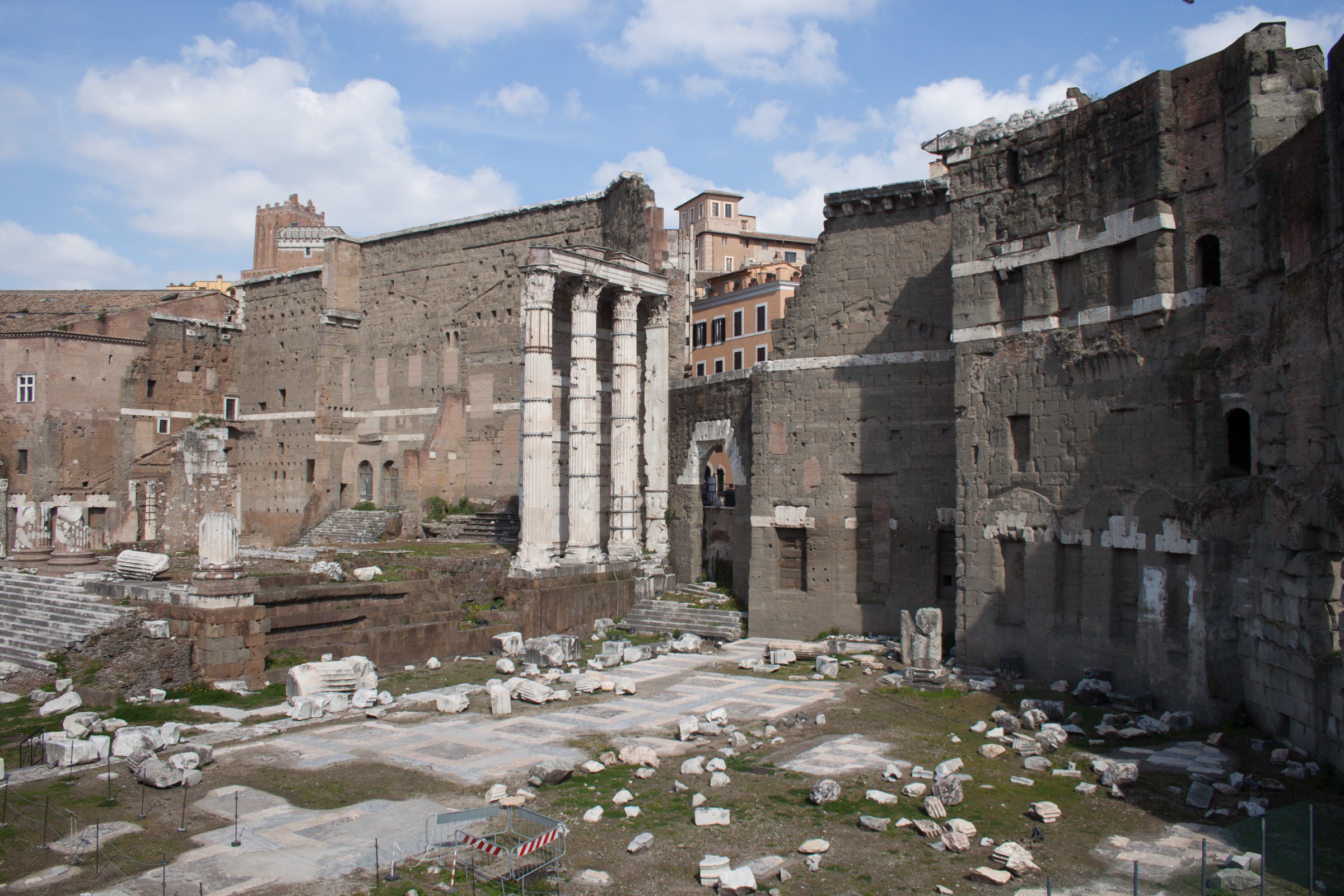
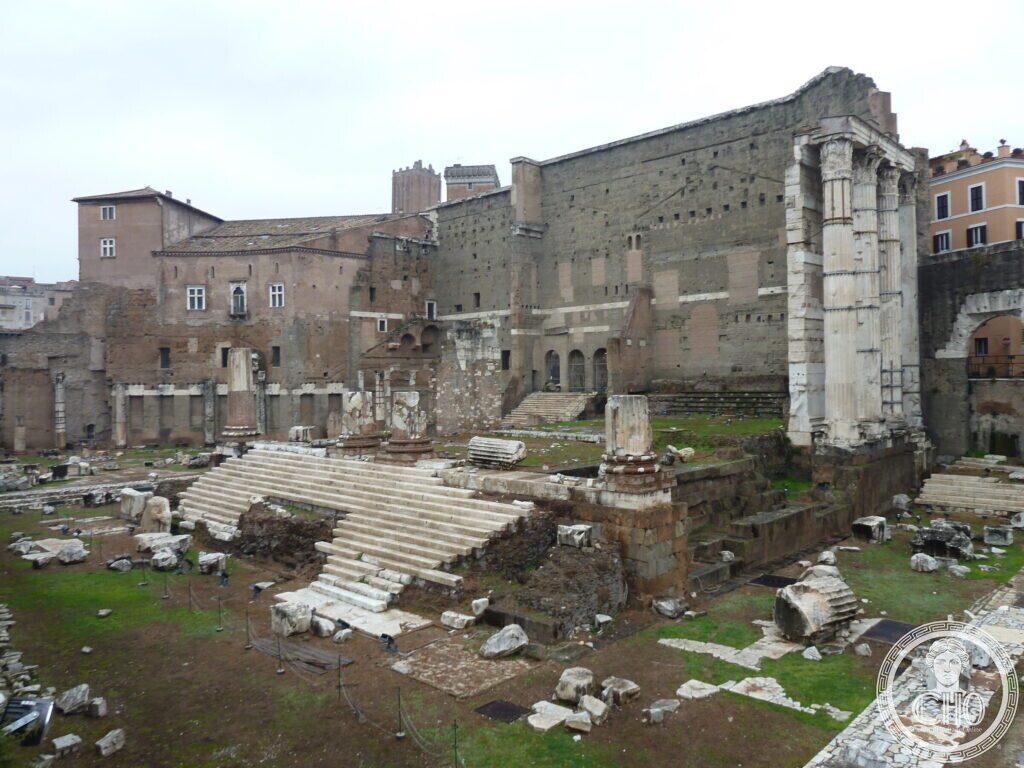
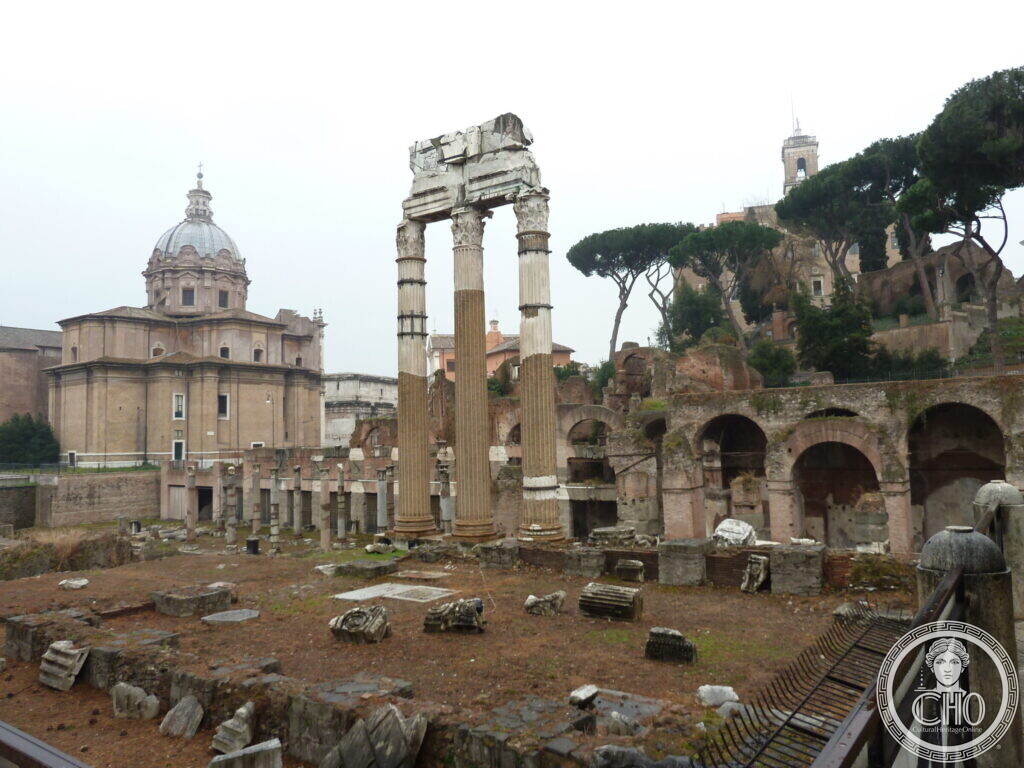
Two of the five fora that survive in legible form: the Markets of Trajan, now home to the Museo dei Fori Imperiali, and the Forum of Augustus with the Temple of Mars Ultor.
Visit on the map
Via dei Fori Imperiali · 41.8938° N, 12.4849° E
Download for your navigator
A single waypoint, ready for GPS apps, navigators, and contacts.
The complex grew in five successive campaigns over roughly 160 years. Julius Caesar inaugurated the first new square in 46 BCE, dedicated to his patron goddess Venus Genetrix. Augustus added his own forum in 2 BCE, after some forty years of construction, centred on the Temple of Mars Ultor. Vespasian followed in 75 CE with the Templum Pacis, which housed the Forma Urbis Romae, a vast marble plan of the city. Nerva completed the narrow Forum Transitorium begun by Domitian. Trajan’s Forum, the largest and the last, was inaugurated in 112 CE, with Trajan’s Column erected the following year. Each emperor extended the civic centre of Rome further north from the Republican Forum, in a deliberate sequence of architectural one-upmanship.
Trajan’s Forum was designed by Apollodorus of Damascus, the engineer who had bridged the Danube during the Dacian Wars and funded the work from Dacian spoils. The piazza measured roughly 300 by 185 metres, paved in Carrara marble and closed to the north by the Basilica Ulpia. Behind the basilica rose Trajan’s Column, a 38-metre shaft wrapped in a continuous spiral relief of the Dacian campaigns, flanked by a Latin and a Greek library. To the east, built into the Quirinal hill, the Markets of Trajan formed a multi-level brick complex of more than 150 rooms that buttressed the excavation and served administrative and commercial functions. Visiting Rome in 357 CE, the emperor Constantius II, according to Ammianus Marcellinus, described the forum as a construction unique under the heavens.
The forums lay buried under the Alessandrino quarter, a dense Renaissance and medieval neighbourhood, until the excavation campaign of 1924 to 1932 cleared more than three hectares and displaced 746 families to the city periphery. The avenue laid across the site, first called Via dei Monti and then Via dell’Impero, was opened by Mussolini on 9 April 1932; it took its current name, Via dei Fori Imperiali, after the Second World War. Today the exposed remains form an open archaeological park visible from the street, while the Markets of Trajan house the Museo dei Fori Imperiali, the only ticketed enclosure of the complex.
Resources & References
Editorial picks across Wikipedia, photo archives, and the official portal.
All photographs Wikimedia Commons (CC-BY / CC-BY-SA / Public Domain) unless otherwise stated. Editorial text Cultural Heritage Online, OASIS Tech LLC USA.
Find it on the map
See this place and what’s around it →Historical events at this place (5)
📷 Become a Cultural Heritage Online photographer
Share your photos of places: they stay published under your name as the author. The more they're seen, the more you get noticed — and soon a contest will reward the most appreciated photos.
Log in or sign up free to add a photo