
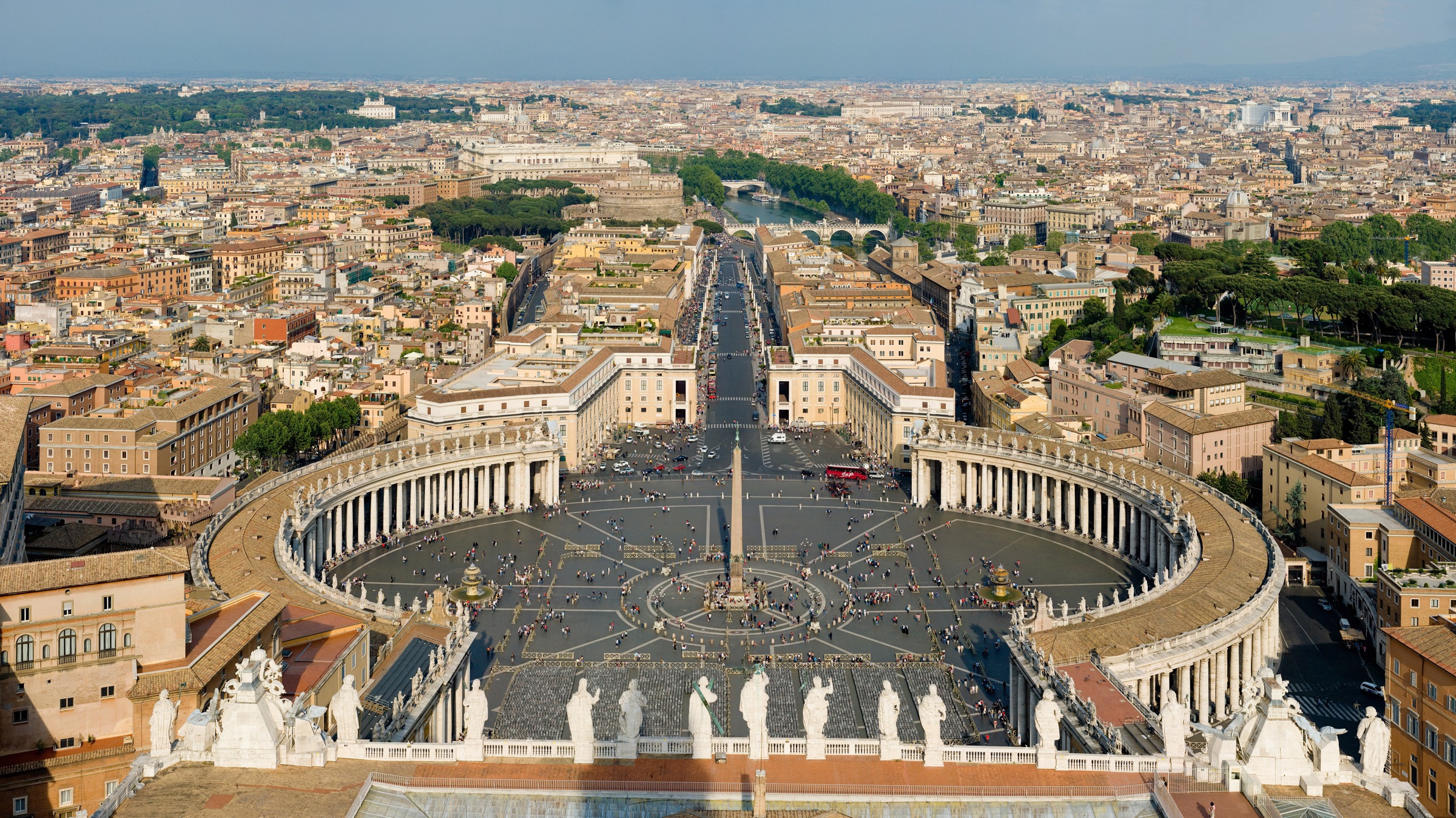
St. Peter’s Square is the elliptical forecourt of St. Peter’s Basilica in Vatican City, framed by the four-row Tuscan colonnade designed by Gian Lorenzo Bernini between 1656 and 1667. At its centre rises the uninscribed Egyptian obelisk relocated from the Circus of Nero in 1586, while the basilica facade by Carlo Maderno closes the western end. Bernini conceived the colonnade as two encircling arms reaching out to embrace pilgrims arriving from the city.
- Address
- Piazza San Pietro, 00120 Città del Vaticano
- Period
- 1656–1667 (Bernini's colonnade); obelisk relocated 1586
- Architect
- Gian Lorenzo Bernini
- Patron
- Pope Alexander VII Chigi
- Function
- Liturgical and ceremonial forecourt of St. Peter's Basilica
- Current use
- Active papal piazza; Sunday Angelus, Wednesday general audiences, canonizations, Easter and Christmas blessings
- Coordinates
- 41.9022° N, 12.4566° E
- Notes
- Vatican Obelisk: red granite, 25.5 m tall (41 m including base and cross), moved by Domenico Fontana for Pope Sixtus V from the Circus of Nero in 1586
Gallery
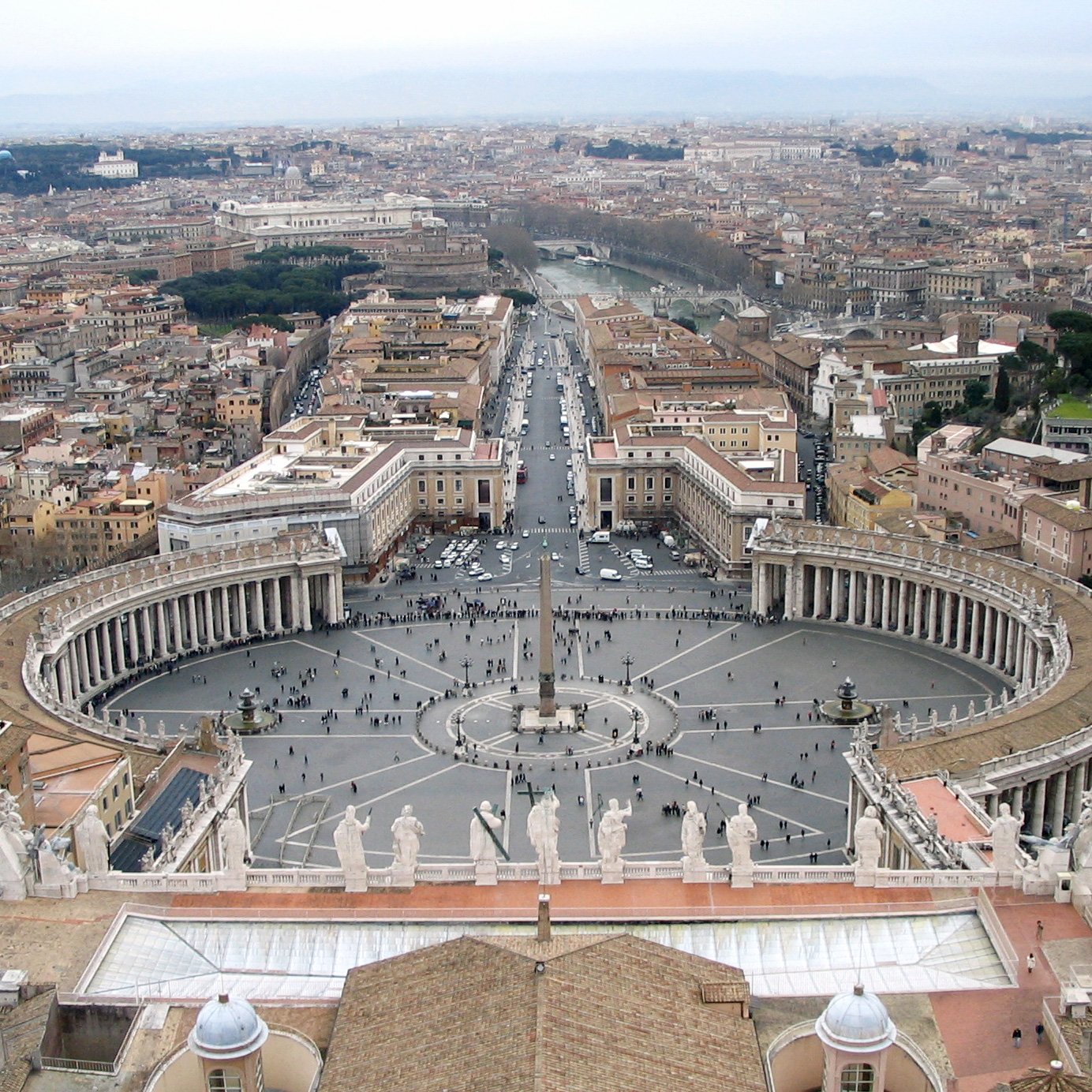
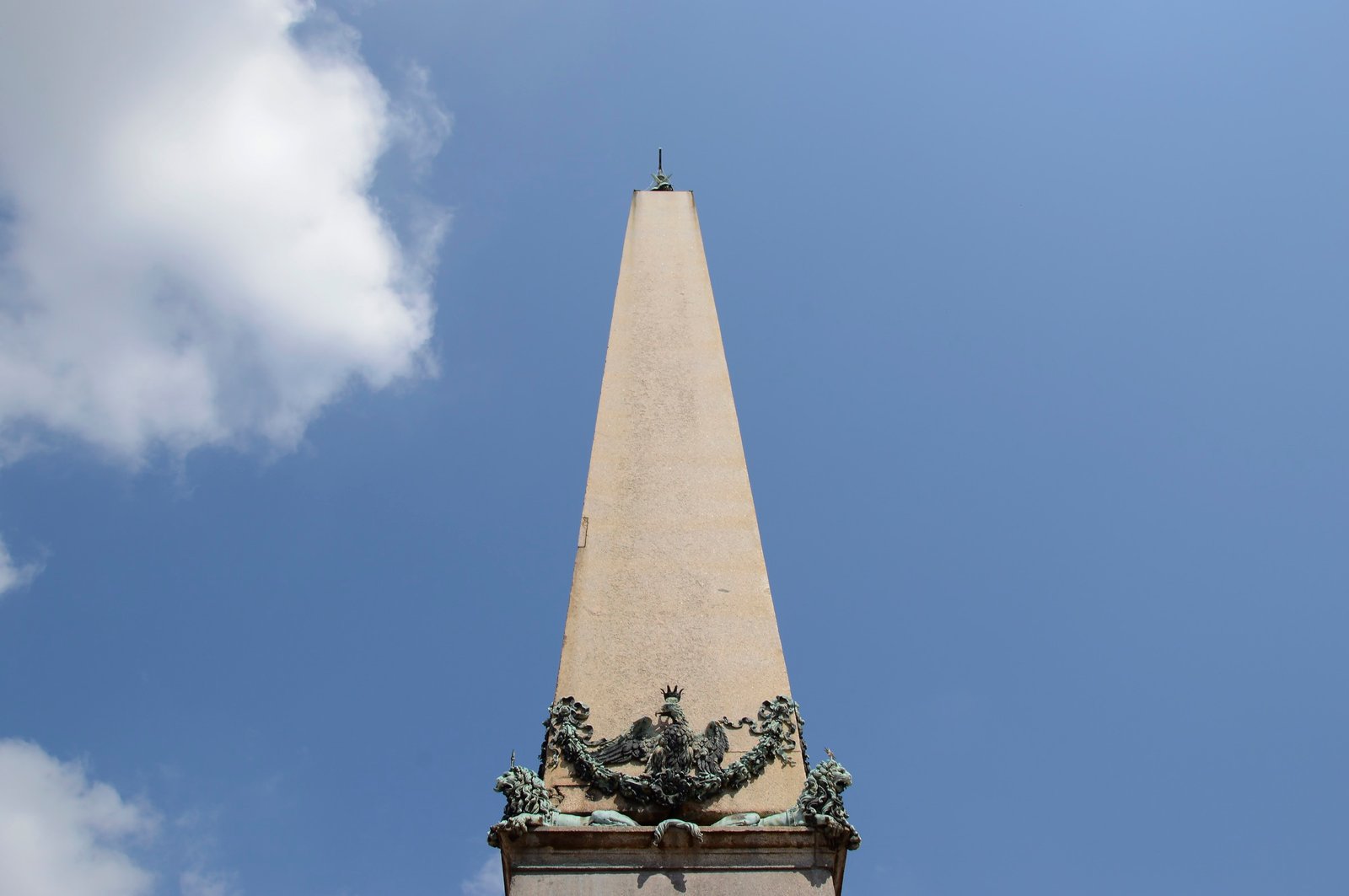
Two views of the piazza: the elliptical embrace of Bernini’s colonnade from above, and the ancient Egyptian obelisk that anchors its centre.
Visit on the map
Piazza San Pietro · 41.9022° N, 12.4566° E
Download for your navigator
A single waypoint, ready for GPS apps, navigators, and contacts.
Pope Alexander VII Chigi commissioned Gian Lorenzo Bernini in 1656 to give the forecourt of St. Peter’s Basilica a definitive urban form. Working until 1667, Bernini drew an elliptical piazza some 240 metres across (the ovato tondo) and enclosed it with two curving wings of free-standing colonnade in the Tuscan order, four columns deep. The whole assembly counts 248 columns and 88 pilasters, crowned by an entablature and a balustrade carrying 140 over-lifesize statues of saints sculpted by Bernini’s workshop. The architect described the two arms as reaching out to embrace the faithful arriving in the city.
At the centre of the ellipse stands the Vatican Obelisk, a red granite monolith 25.5 metres high (41 metres including base and cross) brought from Heliopolis to Rome in antiquity and set on the spina of the Circus of Nero just south of the basilica. In 1586 Pope Sixtus V charged the engineer-architect Domenico Fontana with moving it to its present position, an operation that made the obelisk the only one in Rome never to have toppled since classical times. Carlo Maderno’s fountain of 1613 was matched by a twin designed by Bernini in 1675 on the opposite side, balancing the composition. Discs set into the pavement in 1817 mark the tip of the obelisk’s noon shadow at each sign of the zodiac.
The square remains the principal liturgical and ceremonial stage of the Catholic Church. The reigning pope delivers the Sunday Angelus from a window of the Apostolic Palace, holds general audiences here on Wednesdays, and presides over canonizations, Easter and Christmas blessings urbi et orbi, and conclave announcements from the central loggia of the basilica. The colonnade and the basilica facade together form one of the most photographed architectural ensembles in Europe and a continuous point of arrival for pilgrims and visitors to Vatican City.
Resources & References
Editorial picks across Wikipedia, photo archives, and the official portal.
All photographs Wikimedia Commons (CC-BY / CC-BY-SA / Public Domain) unless otherwise stated. Editorial text Cultural Heritage Online, OASIS Tech LLC USA.
Find it on the map
See this place and what’s around it →Historical events at this place (2)
📷 Become a Cultural Heritage Online photographer
Share your photos of places: they stay published under your name as the author. The more they're seen, the more you get noticed — and soon a contest will reward the most appreciated photos.
Log in or sign up free to add a photoIs this page about you?
This page is read by travellers and heritage enthusiasts who find it on Google. Tell us how you are connected to this place and we will take it from there.