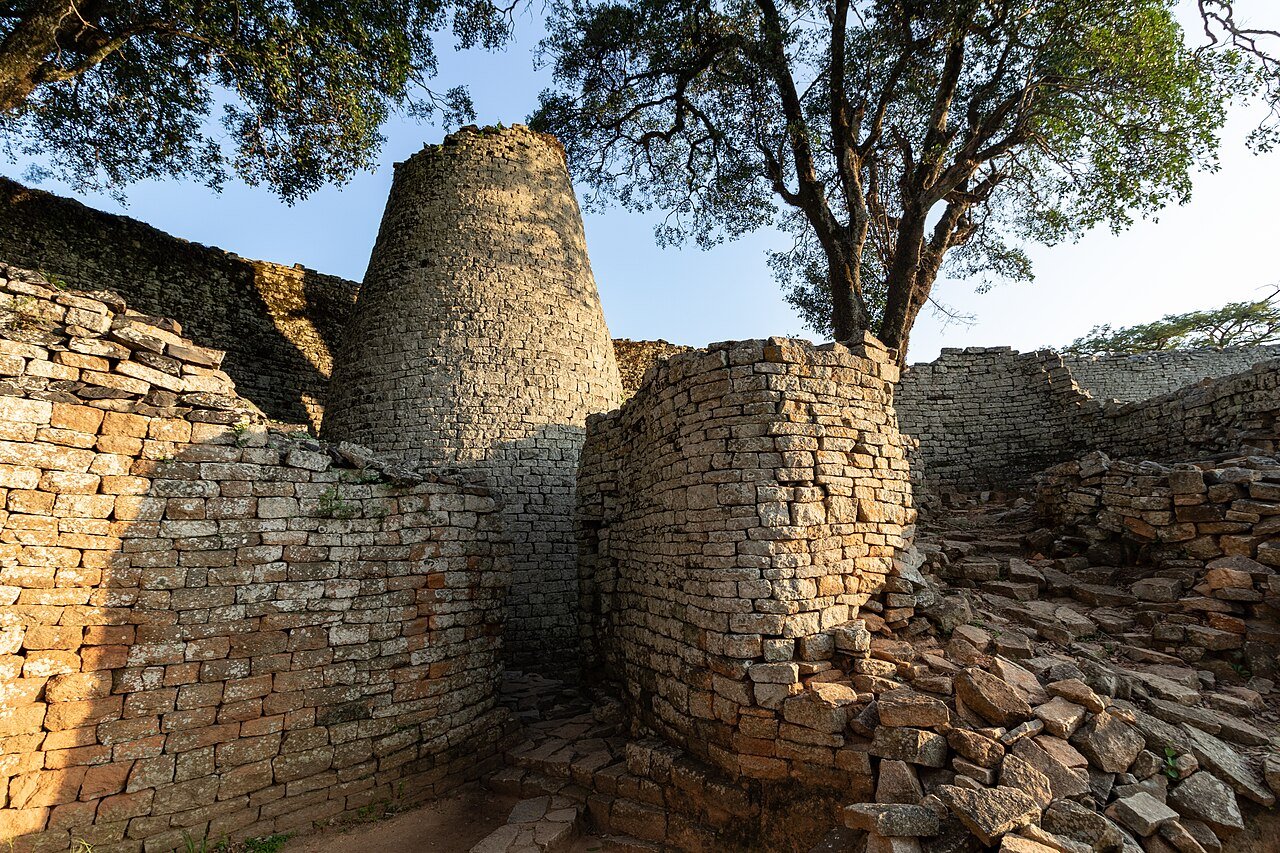
Zimbabwe has five UNESCO World Heritage Sites, a compact list that spans ancient stone cities, vast wilderness corridors, and a waterfall that straddles an international border. Together they trace a remarkably long human presence on the plateau — from Iron Age farmers who raised walls without mortar to San hunter-gatherers who recorded their world in ochre on granite — while also protecting some of southern Africa’s most intact wild river systems. From Cultural Heritage Online.
Why Zimbabwe’s list looks the way it does
Five inscriptions spread across nearly two decades reflect both the country’s extraordinary archaeological depth and the sheer scale of its protected landscapes. UNESCO recognised the first Zimbabwean site in 1984, a period when the newly independent nation was bringing its own heritage narrative to the international stage. The list balances the cultural legacy of the Shona-speaking kingdoms that once dominated the interior with ecosystems significant enough to attract global conservation attention.
The cultural and natural properties do not sit in isolation from one another. Matobo Hills, inscribed in 2003, is classified as a cultural landscape — a category that acknowledges how communities have shaped and been shaped by terrain over millennia. That blending of environment and human meaning runs through the Zimbabwean list as a whole, making it more coherent than its small size might suggest.
The first inscriptions
Zimbabwe’s inaugural UNESCO inscription came in 1984, with a wilderness property in the Zambezi Valley. The following years brought two further additions that grounded the list firmly in the country’s pre-colonial past:
- Mana Pools National Park, Sapi and Chewore Safari Areas (1984)
- Great Zimbabwe National Monument (1986)
- Khami Ruins National Monument (1986)
The 1986 double inscription of Great Zimbabwe and Khami Ruins signalled the importance Zimbabwe placed on its Iron Age archaeological heritage. Both sites are products of the same broad civilisational tradition — stone enclosure architecture built by Shona-speaking peoples — and their simultaneous recognition underscored the continuity between successive political centres on the plateau.
The most visited — and the alternatives
Great Zimbabwe National Monument draws the largest share of scholarly and tourist attention. Founded by the Shona in the 11th century, the complex grew into a regional capital with an estimated population of 10,000 at its peak, maintaining documented trade links with China and Persia through the East African coast. The towering elliptical enclosure and the Hill Complex remain among the most impressive stone structures in sub-Saharan Africa.
Visitors who look beyond the flagship site find equally significant places. Khami Ruins, capital of the Torwa dynasty from around 1450 to 1650, sits quietly west of Bulawayo; Chinese and Spanish porcelain recovered from its platforms confirms that long-distance trade networks persisted long after Great Zimbabwe’s decline. Matobo Hills, south of Bulawayo, presents a granite landscape populated by thousands of rock paintings — some dating back at least 13,000 years — and continues to function as a living centre of the Mwari religion, giving it a spiritual significance that extends well into the present day.
Natural and shared sites
Zimbabwe’s two natural inscriptions protect very different environments. Mana Pools National Park, Sapi and Chewore Safari Areas covers a stretch of the middle Zambezi Valley where seasonal flooding creates an ecosystem that supports large concentrations of elephant, buffalo, lion, and wild dog. The area’s relative inaccessibility has kept human pressure low, preserving the floodplain dynamics that underpin the whole system.
Mosi-oa-Tunya / Victoria Falls, inscribed in 1989, is the country’s sole transnational site, shared with Zambia. The falls themselves — more than 1,700 metres wide and dropping over 100 metres — generate a plume of spray visible for tens of kilometres, earning the Kololo name that translates roughly as “the smoke that thunders.” The serial inscription recognises that the ecological and scenic values of this landscape cannot be managed meaningfully from one side of a border.
How to find them
All five sites are distributed across a relatively accessible arc: the two Bulawayo-area properties (Khami and Matobo) sit within day-trip range of the city, while Mana Pools, Great Zimbabwe, and Victoria Falls each anchor a distinct travel zone. Road infrastructure in Zimbabwe is uneven outside main routes, and the Mana Pools floodplain is best reached by charter flight or well-equipped four-wheel-drive during the dry season.
Zimbabwe’s World Heritage sites sit alongside thousands of other places on CHO’s interactive map, with GPS and sourced editorial history for each. See also our guides to Italy’s and France’s UNESCO sites, and our piece on cultural travel beyond mass tourism.
Frequently Asked Questions
How many UNESCO World Heritage Sites does Zimbabwe have?
Zimbabwe has five UNESCO World Heritage Sites as of 2026: three cultural properties and two natural properties. They were inscribed between 1984 and 2003, spanning ancient stone-enclosure monuments, rock-art landscapes, wild river systems, and one of the world’s largest waterfalls.
What was Zimbabwe’s first UNESCO World Heritage Site?
The first site to be inscribed was Mana Pools National Park, Sapi and Chewore Safari Areas, recognised by UNESCO in 1984. This natural property in the Zambezi Valley protects a seasonally flooded ecosystem of international significance for large mammal conservation.
What is the most recently inscribed UNESCO World Heritage Site in Zimbabwe?
Matobo Hills, inscribed in 2003, is Zimbabwe’s most recently added World Heritage Site. The cultural landscape encompasses dramatic granite formations and a concentration of rock paintings dating back at least 13,000 years, and remains a living centre of the Mwari religion.
Does Zimbabwe share any UNESCO World Heritage Sites with other countries?
Yes. Mosi-oa-Tunya / Victoria Falls is a transnational site shared between Zimbabwe and Zambia, inscribed in 1989. The serial inscription reflects the fact that the falls and their surrounding ecosystem straddle an international border and require coordinated cross-border management.
Sources used in this article
- UNESCO — State Party Zimbabwe — World Heritage list.
- UNESCO — Zimbabwe: World Heritage Sites.
- CHO magazine — What is a World Heritage Site?
- CHO — Interactive map of heritage sites.
Sources
- S1 — Garlake, Peter S. Great Zimbabwe. Thames and Hudson, 1973. ISBN 978-0-500-39012-2.
- S2 — Pwiti, Gilbert. Continuity and Change: An Archaeological Study of Farming Communities in Northern Zimbabwe. Societas Archaeologica Upsaliensis, 1996. ISBN 978-91-506-1188-5.
Spotted an error? Write to editorial@culturalheritageonline.com and we correct it the same day.