North Macedonia has 2 UNESCO World Heritage Sites — a small count for a country whose territory has been inhabited, contested, and layered with meaning since the Bronze Age. Both inscriptions are transnational, tying the country to wider Balkan and European narratives rather than standing alone. The list is short, but what it contains is substantive: an ancient lakeside region of exceptional biodiversity and Byzantine architecture, and a vast serial forest landscape stretching across nearly two dozen countries. From Cultural Heritage Online.
Why North Macedonia’s list looks the way it does
North Macedonia has one of the shorter UNESCO lists in Europe, but this reflects the country’s history with the nomination process more than any scarcity of heritage. The state gained independence in 1991, and building the institutional capacity for UNESCO submissions — documentation, management plans, buffer zones — takes time and resources. Several sites remain on the Tentative List, indicating active preparation rather than absence of candidates.
The two inscribed properties also illustrate a structural feature of modern UNESCO nominations: the shift toward serial and transnational formats. Both of North Macedonia’s sites are shared with other countries, which strengthens the scientific case for Outstanding Universal Value and distributes the administrative burden across multiple state parties.
The first inscriptions
North Macedonia’s World Heritage story began at the third session of the World Heritage Committee in 1979, making Ohrid one of the earliest inscriptions anywhere in Europe. The site was originally inscribed under North Macedonia alone, then extended in 2019 to include the Albanian portion of the Ohrid region — one of the few cases where an existing property has been significantly enlarged to cross an international border.
- Natural and Cultural Heritage of the Ohrid Region (1979 / extended 2019, shared with Albania) — a mixed inscription covering the town, its lake, and surrounding landscape.
The 1979 inscription was also unusual for being a mixed site from the outset, recognising both the natural values of Lake Ohrid and the density of Byzantine churches, monasteries, and medieval urban fabric within the same boundary. Mixed inscriptions remain relatively rare globally, which places Ohrid in a select category.
The most visited — and the alternatives
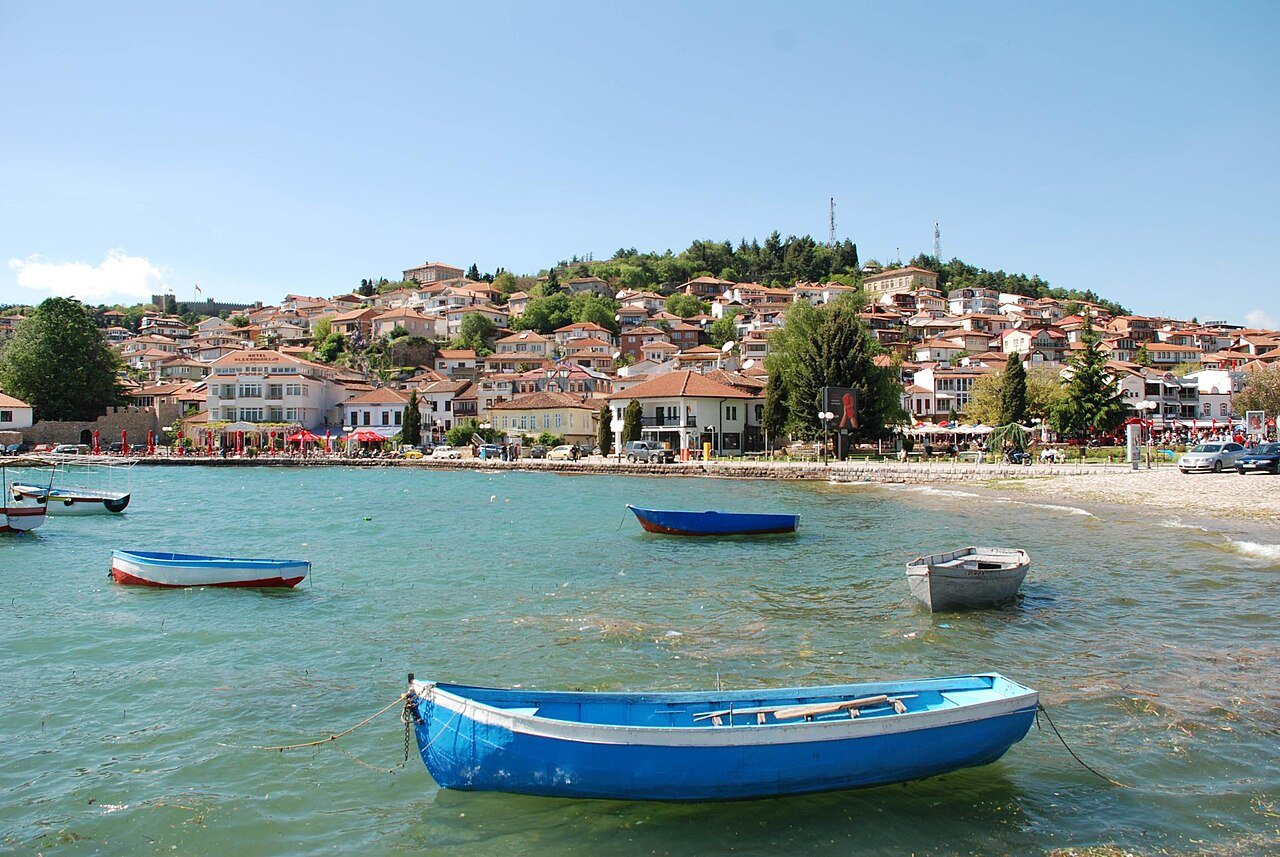
Ohrid draws the overwhelming majority of international visitors who come to North Macedonia specifically for its World Heritage status. The lake is one of the oldest in Europe — estimates range up to three million years — and supports endemic species found nowhere else. The town itself preserves more than 800 Byzantine icons and the remains of a medieval fortress overlooking the water.
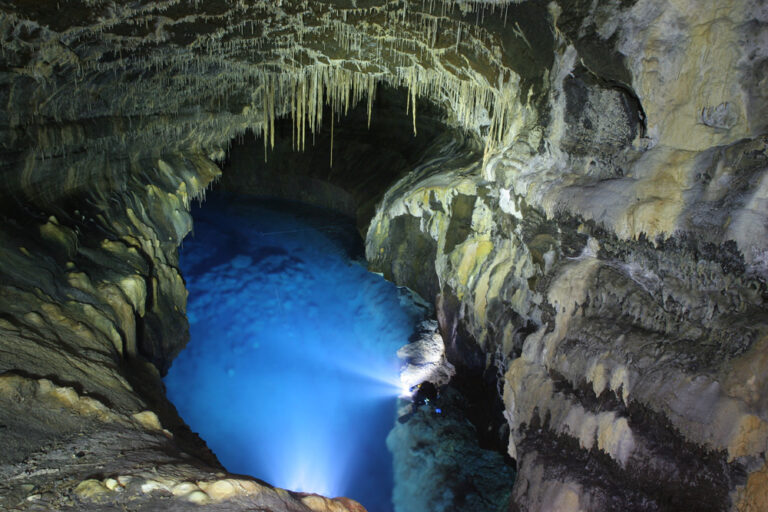
Beyond Ohrid, the country’s Tentative List points toward sites that receive little international attention. Kokino, a Bronze Age megalithic observatory on the summit of Tatićev Kamen, was recognised by NASA as one of the world’s significant ancient astronomical sites. The cave system of Slatinski Izvor is the longest explored karst cave in the country. The Church of St. George at Kurbinovo, a twelfth-century Orthodox structure, contains Byzantine Renaissance frescoes of exceptional quality that specialists regard as among the finest of their period in the region.
Natural and shared sites
North Macedonia’s second inscribed property is the serial transnational site Ancient and Primeval Beech Forests of the Carpathians and Other Regions of Europe, extended in 2021 to include forest components within Mavrovo National Park. The site spans eighteen European countries in total and was originally inscribed in 2007, with successive extensions bringing in additional national components as documentation standards were met.
Mavrovo is the largest national park in North Macedonia, and its inclusion in the beech forests serial site gives the country a foothold in one of UNESCO’s most expansive natural inscriptions. The old-growth beech stands represent a reference ecosystem for forest dynamics across the continent — these forests have developed without significant human interference and serve as benchmarks for ecological research. Lake Ohrid, meanwhile, carries its own natural designation within the mixed site, valued for its endemic fish species and the exceptional clarity of its waters.
How to find them
Both inscribed sites are accessible by road from Skopje, the capital. Ohrid lies roughly 170 kilometres southwest and is well served by regional transport, with the lake town a manageable day trip or short stay. The beech forest components within Mavrovo National Park are closer to the capital but require access via mountain roads, with the park infrastructure oriented toward hiking and wildlife observation rather than mass tourism.
North Macedonia’s World Heritage sites sit alongside thousands of other places on CHO’s interactive map, with GPS and sourced editorial history for each. See also our guides to Italy’s and France’s UNESCO sites, and our piece on cultural travel beyond mass tourism.
Frequently Asked Questions
How many UNESCO World Heritage Sites does North Macedonia have?
North Macedonia has 2 UNESCO World Heritage Sites as of 2021. Both are transnational inscriptions: the Natural and Cultural Heritage of the Ohrid Region, shared with Albania, and the Ancient and Primeval Beech Forests of the Carpathians and Other Regions of Europe, a serial site spanning eighteen countries.
What was North Macedonia’s first UNESCO World Heritage Site?
The Natural and Cultural Heritage of the Ohrid Region was inscribed in 1979 at the third session of the World Heritage Committee, making it one of the earliest European inscriptions. It is a mixed site, recognised for both its natural values — including the ancient, biologically unique Lake Ohrid — and its concentration of Byzantine churches, icons, and medieval urban fabric.
Is the Ohrid inscription shared with another country?
Yes. The Ohrid site was originally inscribed under North Macedonia alone in 1979, then extended in 2019 to include the Albanian side of the Ohrid region. This transnational extension is one of the few examples of an existing property being enlarged across an international border.
What is the Kokino site and why is it significant?
Kokino is a Bronze Age megalithic astronomical complex located on the summit of Tatićev Kamen in northern North Macedonia. It has been identified by NASA as one of the world’s important ancient observatories and currently sits on North Macedonia’s UNESCO Tentative List, under active preparation for a formal nomination.
Sources used in this article
- UNESCO — State Party North Macedonia — World Heritage list.
- UNESCO — North Macedonia: World Heritage Sites.
- CHO magazine — What is a World Heritage Site?
- CHO — Interactive map of heritage sites.
Sources
- S1 — Georgieva, Valentina, and Sasha Konechni. Historical Dictionary of the Republic of Macedonia. Scarecrow Press, 1998. ISBN 978-0-8108-3336-4.
- S2 — Cowan, Jane K., ed. Macedonia: The Politics of Identity and Culture. Pluto Press, 2000. ISBN 978-0-7453-1589-8.
Spotted an error? Write to editorial@culturalheritageonline.com and we correct it the same day.