South Korea has 17 UNESCO World Heritage Sites, ranging from ancient Buddhist grottoes and royal Confucian shrines to volcanic lava tubes, tidal wetlands, and a fortress designed to serve as a wartime capital. From Cultural Heritage Online.
Why South Korea’s list looks the way it does
South Korea’s World Heritage list is overwhelmingly cultural — 15 of its 17 inscriptions recognise built or intangible heritage, with just two natural sites. This reflects a peninsula whose recorded history spans more than two millennia and whose successive kingdoms — Silla, Goryeo, Baekje, Joseon — each left a distinct architectural and artistic tradition. Buddhism, Confucianism, and a highly developed court culture all appear repeatedly across the list.
What makes the Korean selection distinctive is its emphasis on living traditions. Several inscribed complexes — monasteries, ritual shrines, royal archives — remain in active daily use. The list is not a catalogue of ruins but a cross-section of a civilisation that maintained unbroken institutional continuity even through periods of invasion and colonial occupation.
The first inscriptions
South Korea entered the World Heritage list in 1995 with three inscriptions in a single year, immediately signalling the breadth of what the country would bring to the register:
- Seokguram Grotto and Bulguksa Temple — an 8th-century granite Buddha sanctuary and adjacent temple complex on Mount Tohamsan near Gyeongju, considered the pinnacle of Unified Silla Buddhist art.
- Haeinsa Temple Janggyeong Panjeon — the 15th-century storage halls at Haeinsa Monastery that preserve the Tripitaka Koreana, more than 81,000 engraved wooden printing blocks representing the complete Buddhist canon.
- Jongmyo Shrine — the Joseon royal ancestral shrine in Seoul, still the site of the annual Jongmyo Jerye ritual involving music, dance, and ceremony largely unchanged since the 15th century.
The most visited — and the alternatives
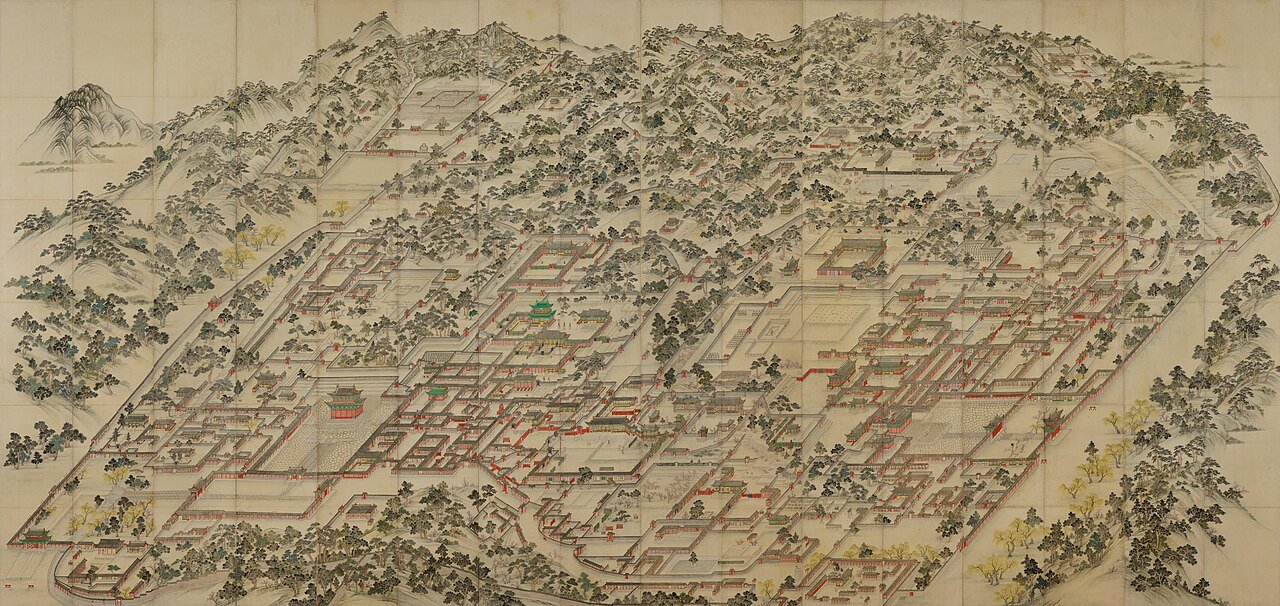
Among the sites that draw the largest visitor numbers, Changdeokgung Palace Complex in Seoul — with its celebrated Secret Garden — and the Historic Areas of Gyeongju, the ancient Silla capital sometimes called the “museum without walls,” consistently appear at the top. Jeju Volcanic Island and Lava Tubes, a natural site of globally rare geological formation, attracts domestic and international visitors alike.
Less frequented but equally rewarding are several inscriptions that reward slower travel. Namhansanseong (2014), a mountain fortress south of Seoul, was engineered in the early 17th century as a fully self-sufficient emergency capital capable of housing an entire government and some 4,000 residents. Sansa, Buddhist Mountain Monasteries (2018) covers seven monasteries founded between the 7th and 9th centuries, each still functioning as a monastic community, offering temple-stay programmes. Gaya Tumuli (2023) comprises seven burial mound complexes from the Gaya confederacy, a polity largely overlooked in popular history despite flourishing for six centuries and mediating remarkable exchanges of culture and craft between the Korean peninsula and Japan.
Natural and shared sites
South Korea’s two natural inscriptions occupy opposite ends of the ecological spectrum. Jeju Volcanic Island and Lava Tubes (2007) encompasses Hallasan, the country’s highest peak, a shield volcano flanked by extraordinary lava tube systems — including Geomunoreum, one of the finest examples of a lava tube cave system on Earth. The site received UNESCO triple recognition as a World Heritage Site, a Biosphere Reserve, and a Global Geopark. Getbol, Korean Tidal Flats (2021) covers four intertidal mudflat areas along the Yellow Sea coast, recognised as among the most biologically rich coastal habitats remaining in East Asia and critical staging grounds for migratory shorebirds.
South Korea holds no transnational World Heritage inscriptions, a notable contrast with neighbours China and Japan who participate in several serial nominations. The country’s sites are all nationally bounded, though the Baekje Historic Areas (2015) and the Gaya tumuli attest to dense historical connections with the Japanese archipelago that future cross-border nominations may eventually formalise. The most recent addition to the list, Petroglyphs along the Bangucheon Stream, was inscribed in 2025, bringing prehistoric rock-art into a list otherwise dominated by historic-era architecture.
How to find them
South Korea’s World Heritage sites sit alongside thousands of other places on CHO’s interactive map, with GPS and sourced editorial history for each. See also our guides to Italy’s and France’s UNESCO sites, and our piece on cultural travel beyond mass tourism.
Frequently Asked Questions
How many UNESCO World Heritage Sites does South Korea have?
South Korea has 17 UNESCO World Heritage Sites as of 2025. Fifteen are cultural inscriptions and two are natural, covering Buddhist temple complexes, royal palaces, Confucian shrines, prehistoric petroglyphs, volcanic geology, and tidal wetlands.
What was South Korea’s first UNESCO World Heritage Site?
South Korea received its first three inscriptions simultaneously in 1995: Seokguram Grotto and Bulguksa Temple, Haeinsa Temple Janggyeong Panjeon, and Jongmyo Shrine. All three remain among the country’s most significant cultural landmarks.
What is South Korea’s most recently inscribed World Heritage Site?
The most recent inscription is the Petroglyphs along the Bangucheon Stream, added to the World Heritage List in 2025. The site preserves prehistoric rock carvings that extend the Korean list into the domain of ancient non-architectural heritage for the first time.
Does South Korea have any natural UNESCO World Heritage Sites?
Yes, two. Jeju Volcanic Island and Lava Tubes (2007) is recognised for its exceptional volcanic geology and lava tube cave systems. Getbol, Korean Tidal Flats (2021) protects four Yellow Sea mudflat areas that serve as vital habitat for migratory birds and rare marine species.
Sources used in this article
- UNESCO — State Party South Korea — World Heritage list.
- UNESCO — South Korea: World Heritage Sites.
- CHO magazine — What is a World Heritage Site?
- CHO — Interactive map of heritage sites.