Slovakia has eight UNESCO World Heritage Sites, spanning medieval mining towns, a preserved Carpathian village, Gothic fortifications, timber churches, ancient cave systems, primeval forest, and the remains of Rome’s Danubian frontier. The list is compact but unusually varied: it ranges from living cultural landscapes to some of Central Europe’s most intact natural environments. From Cultural Heritage Online.
Why Slovakia’s list looks the way it does
Slovakia joined UNESCO’s World Heritage Convention as an independent state in 1993, the same year it gained sovereignty following the dissolution of Czechoslovakia. Three sites were inscribed immediately, a reflection of how much heritage infrastructure the new state inherited from decades of Central European scholarly documentation. The country’s eight sites as of 2021 represent six cultural properties and two natural ones — a ratio that reflects the density of medieval and early modern settlement across the Carpathian Basin rather than any institutional preference.
Slovakia’s geography also makes it a natural partner in transnational nominations. The country shares two of its eight sites with neighbouring states: the Caves of Aggtelek Karst and Slovak Karst is a joint inscription with Hungary, while the Ancient and Primeval Beech Forests of the Carpathians and Other Regions of Europe is a serial property shared with seventeen other European nations. The most recent addition, the Danube Limes, brought Slovakia into a Roman-frontier nomination alongside Germany and Austria.
The first inscriptions
Slovakia’s inaugural World Heritage inscriptions arrived in 1993 and set the tone for everything that followed. All three reflected the country’s Central European identity: a medieval mining economy, feudal military architecture, and rural vernacular building traditions that survived where urbanisation did not reach.
- Historic Town of Banská Štiavnica and Technical Monuments — a 13th-century silver-mining settlement whose engineered reservoir system (the “tajchy”) is as significant as its Baroque townscape.
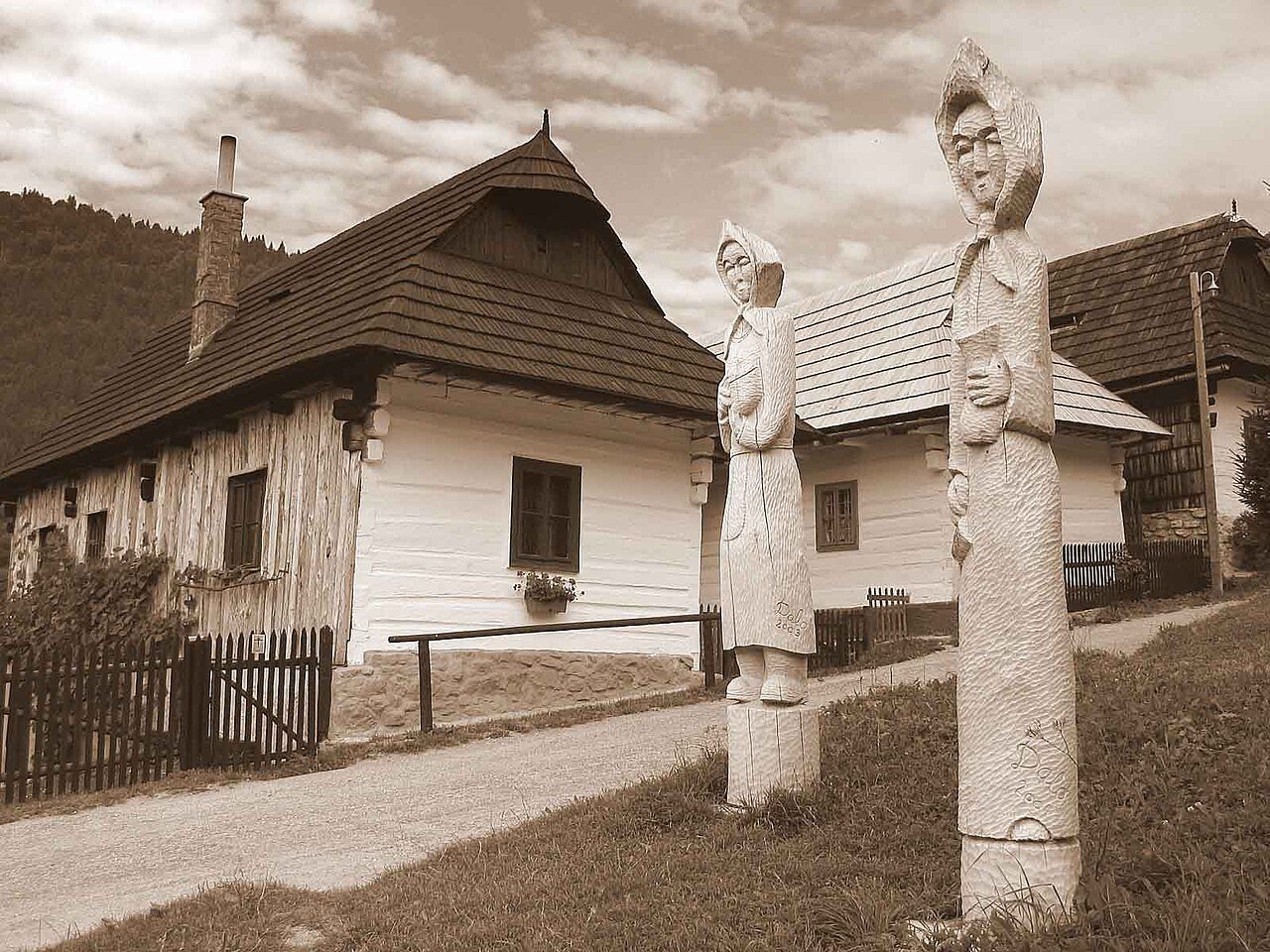
- Vlkolínec — a hillside village in the Žilina region whose 45 log houses represent one of the best-preserved Central European folk settlements still inhabited today.
- Spišský Hrad (Spiš Castle) and its Associated Cultural Monuments — one of the largest castle complexes in Central Europe, along with the ecclesiastical ensemble at Spišská Kapitula and the town of Spišské Podhradie below it.
The most visited — and the alternatives
Spiš Castle draws the largest visitor numbers of any Slovak World Heritage property, its ruined towers visible for kilometres across the high plateau. Banská Štiavnica is increasingly popular with travellers interested in industrial heritage. Both are well served by transport and have established accommodation options nearby.
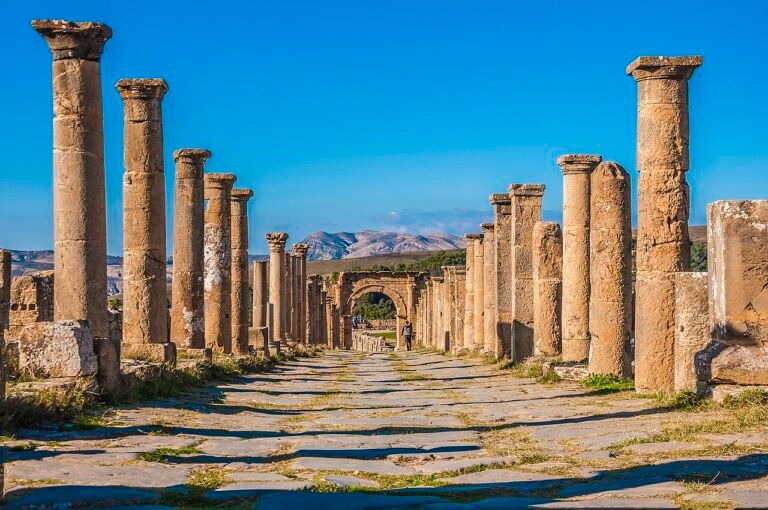
Three sites reward visitors willing to look further. The fortified medieval town of Bardejov (inscribed 2000) retains a largely intact ring of Gothic walls and a central square that has changed little since the 15th century — it is rarely crowded even in summer. The Wooden Churches of the Slovak Carpathians (2008) are a serial property comprising eight timber Greek-Catholic and Roman Catholic churches scattered across remote eastern Slovak villages, each built between the 16th and 18th centuries without a single metal nail in the structure. The Danube Limes (2021), representing Rome’s northeastern military frontier, includes watchtower foundations and legionary camp traces in the Bratislava and Nitra regions — a site that requires some imagination but rewards anyone with an interest in Roman provincial history.
Natural and shared sites
The Caves of Aggtelek Karst and Slovak Karst, listed since 1995 and extended in 2000, straddle the Slovak-Hungarian border and contain more than 700 caves, including the Domica and Baradla cave systems. The formations include some of the largest stalactite chambers in Europe, and the property also preserves evidence of Neolithic human occupation. It is Slovakia’s only bilateral natural site.
The Ancient and Primeval Beech Forests of the Carpathians and Other Regions of Europe is one of the most expansive serial natural World Heritage properties on the continent. Slovakia participates through stands of old-growth beech in the Poloniny National Park in the country’s far northeast — forest that has regenerated and succeeded across millennia without significant human intervention, and that serves as a reference ecosystem for temperate deciduous woodland across Europe.
How to find them
Slovakia’s eight sites are spread across the country’s length, from Bratislava and the Danube plain in the west to the eastern Carpathian ranges near the Ukrainian border. Most are accessible by regional rail and bus, though the wooden churches and the beech forest stands require a car or organised transport. Spring and early autumn offer the best conditions for both the cave systems and the upland sites.
Slovakia’s World Heritage sites sit alongside thousands of other places on CHO’s interactive map, with GPS and sourced editorial history for each. See also our guides to Italy’s and France’s UNESCO sites, and our piece on cultural travel beyond mass tourism.
Frequently Asked Questions
How many UNESCO World Heritage Sites does Slovakia have?
Slovakia has eight UNESCO World Heritage Sites as of 2021, comprising six cultural and two natural properties. The most recent addition was the Danube Limes (Frontiers of the Roman Empire), inscribed in 2021 as a transnational site shared with Germany and Austria.
What was Slovakia’s first UNESCO World Heritage Site?
Slovakia had three sites inscribed simultaneously in 1993, the year of independence: the Historic Town of Banská Štiavnica and Technical Monuments, Vlkolínec, and Spišský Hrad (Spiš Castle) and its Associated Cultural Monuments. All three remain on the list today without significant boundary changes.
Does Slovakia have any natural UNESCO World Heritage Sites?
Slovakia has two natural World Heritage Sites. The Caves of Aggtelek Karst and Slovak Karst, shared with Hungary, protects one of Europe’s most extensive cave systems. The Ancient and Primeval Beech Forests of the Carpathians and Other Regions of Europe, a serial property across eighteen countries, includes old-growth beech stands in Slovakia’s Poloniny National Park.
What are the wooden churches inscribed as UNESCO sites in Slovakia?
The Wooden Churches of the Slovak Carpathians were inscribed in 2008 as a serial property of eight churches built between the 16th and 18th centuries across remote villages in eastern Slovakia. They include both Greek-Catholic and Roman Catholic structures, and are notable for their traditional timber joinery built without metal fastenings.
Sources used in this article
- UNESCO — State Party Slovakia — World Heritage list.
- UNESCO — Slovakia: World Heritage Sites.
- CHO magazine — What is a World Heritage Site?
- CHO — Interactive map of heritage sites.
Sources
- S1 — Kirschbaum, Stanislav J. A History of Slovakia: The Struggle for Survival. St. Martin's Press, 1995. ISBN 978-0-312-10403-0.
- S2 — Bartl, Július, et al. Slovak History: Chronology & Lexicon. Bolchazy-Carducci Publishers, 2002. ISBN 978-0-86516-444-4.
Spotted an error? Write to editorial@culturalheritageonline.com and we correct it the same day.