

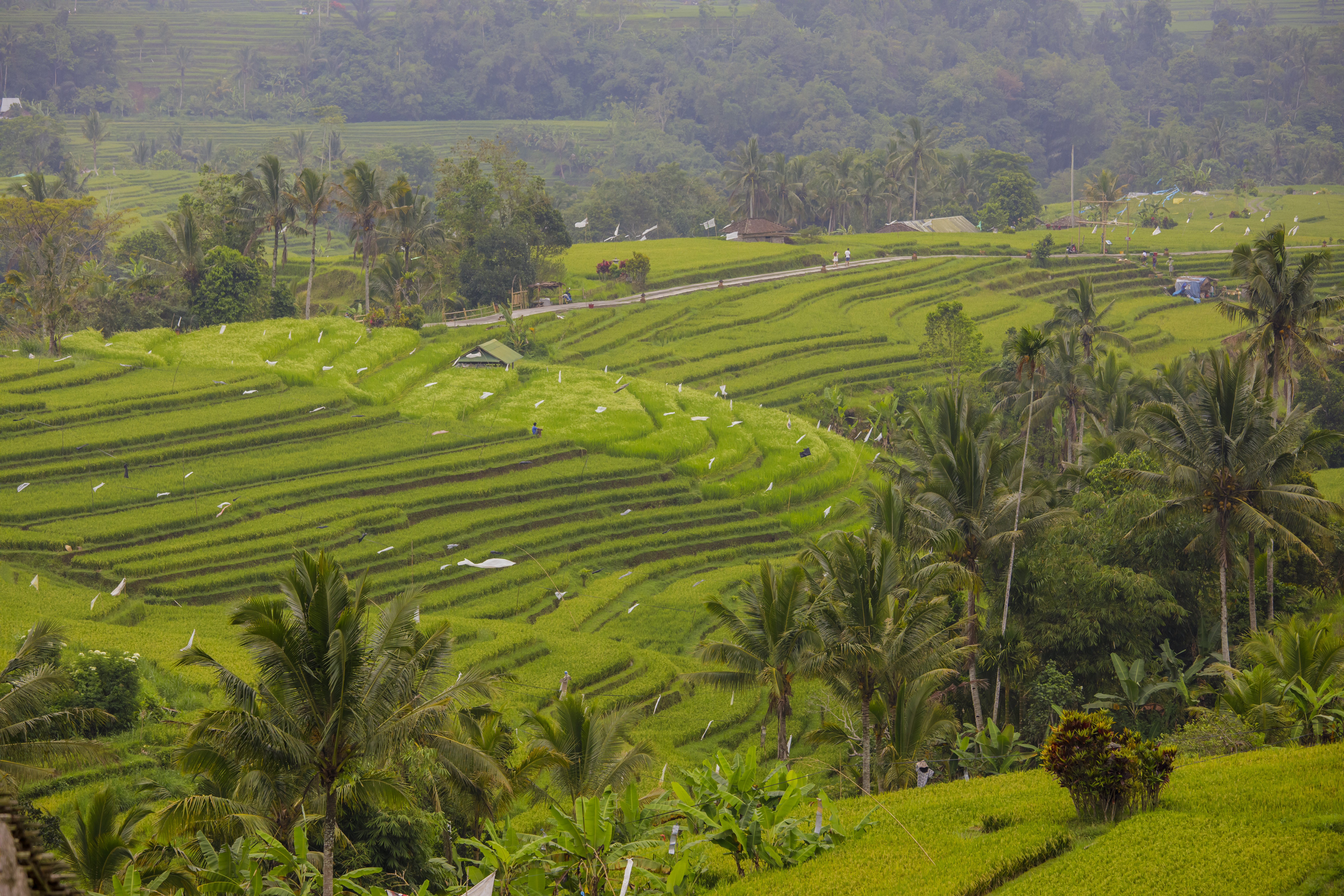
No other World Heritage site lies closer than 451 km to Bali’s subak landscape. The nearest are Komodo National Park (451 km), the Sangiran Early Man Site (486 km) and the Prambanan Temple Compounds (514 km), all in Indonesia. The property itself, inscribed in 2012, is five areas of rice terraces and water temples that UNESCO treats as one living system of shared irrigation.
The World Heritage sites within reach of Bali
The distances below are straight lines between the reference points that UNESCO publishes for each property. They show what is near, not how long the journey takes; none of these sites is a day trip from Bali.
| Site | Country | Distance | Inscribed | Type |
|---|---|---|---|---|
| Komodo National Park | Indonesia | 451 km | 1991 | Natural |
| Sangiran Early Man Site | Indonesia | 486 km | 1996 | Cultural |
| Prambanan Temple Compounds | Indonesia | 514 km | 1991 | Cultural |
| The Cosmological Axis of Yogyakarta and its Historic Landmarks | Indonesia | 527 km | 2023 | Cultural |
| Borobudur Temple Compounds | Indonesia | 545 km | 1991 | Cultural |
The five neighbours span very different ages. Sangiran, inhabited for the past one and a half million years, is a key site for understanding human evolution. Borobudur is a Buddhist temple of the 8th and 9th centuries; Prambanan, built in the 10th century, is the largest temple compound dedicated to Shiva in Indonesia; the Yogyakarta axis was laid out in the 18th century by Sultan Mangkubumi. Komodo is a natural site of volcanic islands. Borobudur and Prambanan show two of the faiths that UNESCO also names behind Bali’s water temples, Vajrayana Buddhism and Saivasiddhanta Hinduism, but in Bali they were folded into an irrigation institution found nowhere else.
Why did UNESCO list a landscape and not a temple?
Because the thing being protected is a way of sharing water. A subak is a self-governing association of farmers who share responsibility for the just and efficient use of the water needed to grow paddy rice. Bali has about 1,200 of them, and between 50 and 400 farmers manage the water supply from one source. The word first appears in royal inscriptions in the 11th century, and UNESCO dates the system back to at least the 9th century.
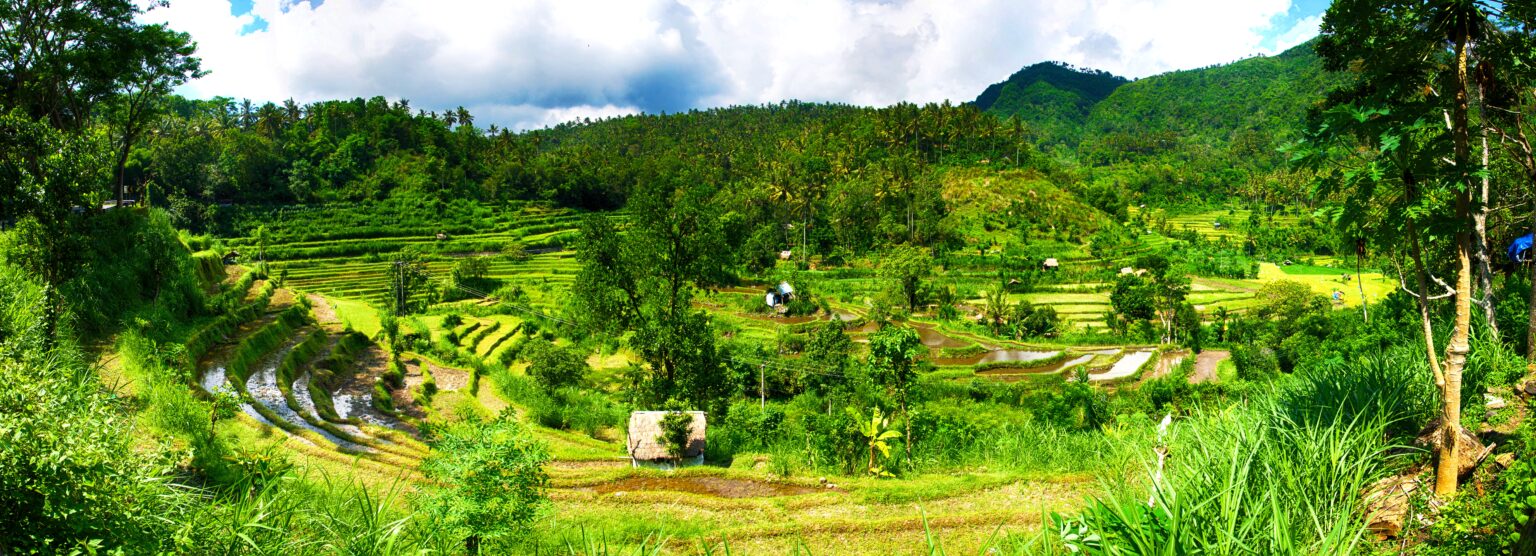
The water temples are the hinge. Since the 11th century, UNESCO says, networks of them have managed the ecology of the terraces at the scale of whole watersheds, adjusting irrigation schedules for clusters of subaks. ICOMOS adds that the same system controls pests by inducing synchronised fallow cycles. Behind it sits the philosophy of Tri Hita Karana, which ICOMOS glosses as “three causes of goodness”: harmony between the realms of the spirit, the human world and nature. Most subaks, ICOMOS notes, have written legal codes setting out rights and responsibilities.
The five components, from a crater lake to a royal moat
The property covers about 19,500 hectares in five parts. Lake Batur is a crater lake regarded as the abode of the Goddess of the Lake and the ultimate source of water for the subaks. On its rim stands the Supreme Water Temple of Pura Ulun Danu Batur, supported by contributions from more than 250 subaks; ICOMOS records that temple and village were destroyed by the eruption of 1926 and rebuilt higher up. Its five courtyards hold shrines to some 45 deities.
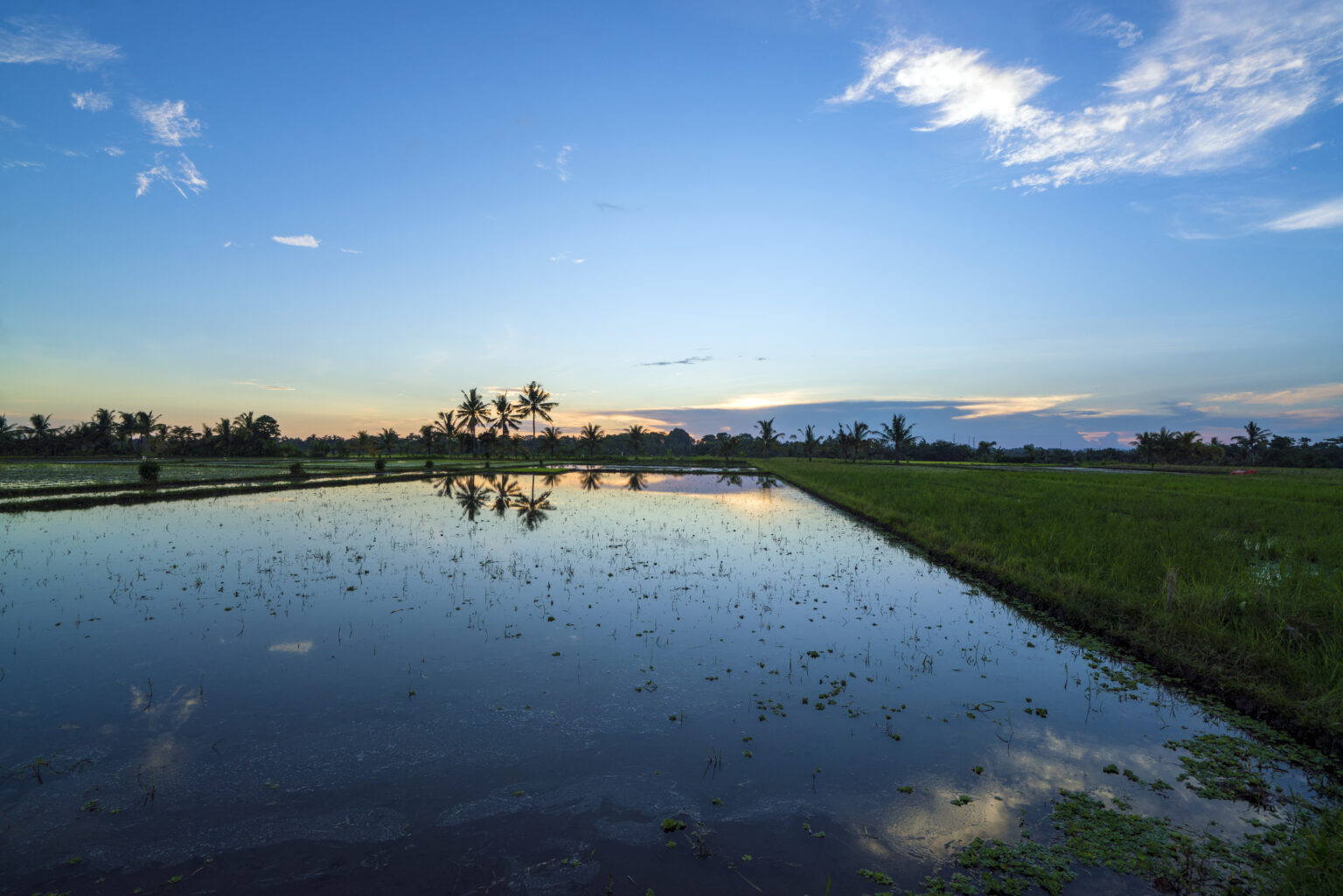
The Pakerisan watershed holds the oldest known irrigation system in Bali. Its Tirtha Empul temple, built in the 10th century, surrounds a spring, and an inscription of 962 AD refers to a dam there; the rock-cut Gunung Kawi tombs date to the 11th century. Catur Angga Batukaru takes in the forests of Mount Batukaru (2,276 m) and terraces mentioned in a 10th-century inscription. Last is Pura Taman Ayun, a royal water temple built in the early 18th century and ringed by a moat, with 29 shrines in its inner yard. ICOMOS sees Majapahit and Chinese influence in its architecture.
How close was the subak landscape to being turned down?
Closer than the 2012 listing suggests. In 2008 the World Heritage Committee deferred the first nomination and asked Indonesia to reconsider its choice of sites, to show the close link between terraces, water temples, villages and forest catchments, and to put in place a management system. A revised nomination followed on 28 January 2011, and ICOMOS sent a mission from 12 to 19 October 2011. It recommended inscription under criteria (iii), (v) and (vi).
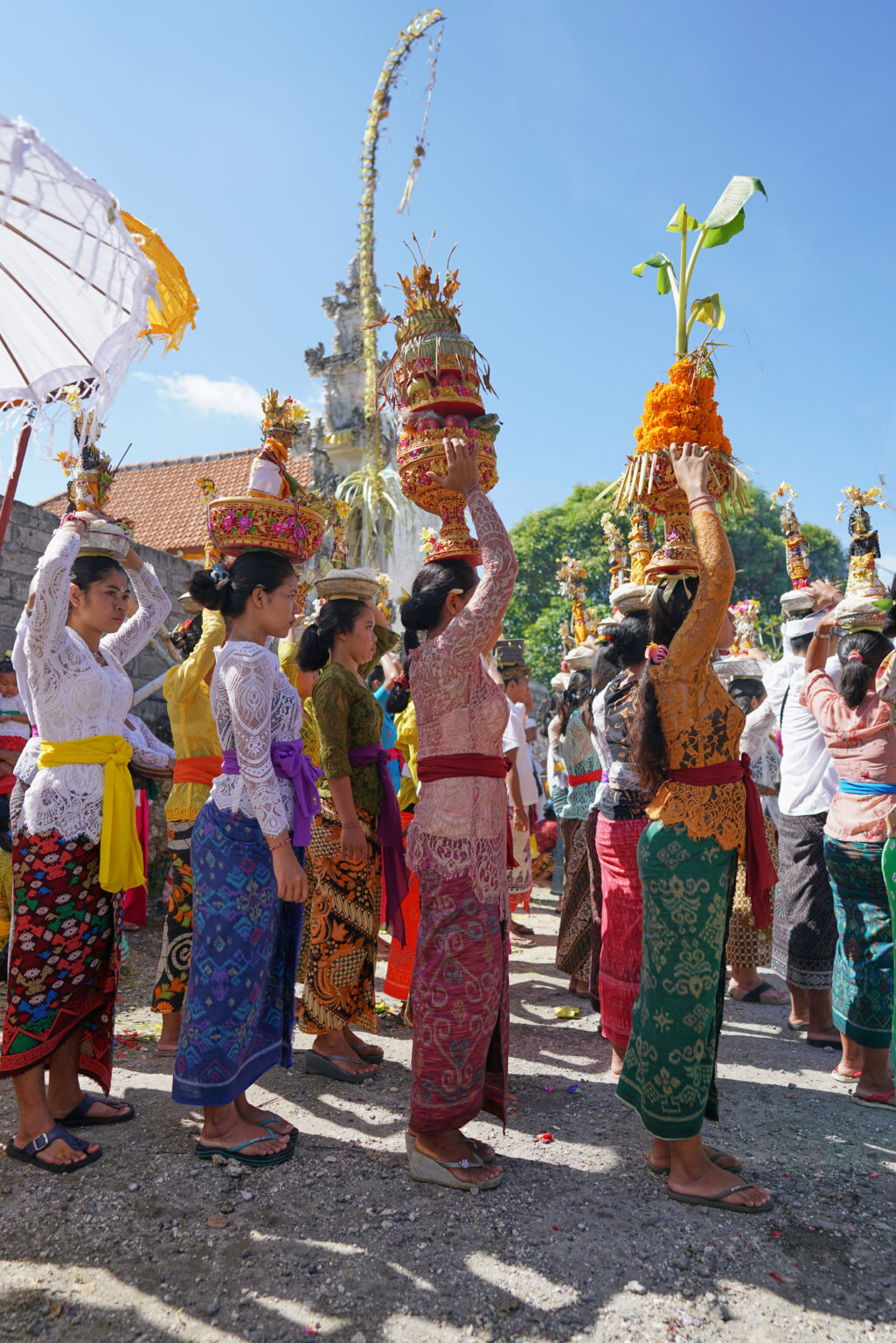
The pressures it flagged are modern ones. Hybrid “Green Revolution” rice sells cheaply, rising land prices tempt farmers to sell, and ICOMOS singled out the souvenir stalls and traffic crowding the approach to Pura Gunung Kawi. By contrast it found Pura Taman Ayun, though heavily visited, ably managed by the Royal House of Mengwi. UNESCO’s own verdict is that no component is under threat, but that the terraced landscape is highly vulnerable to changes in farming and to tourism.
Frequently Asked Questions
Which UNESCO World Heritage sites are near Bali?
None is close. In straight lines the nearest are Komodo National Park (451 km), Sangiran (486 km), Prambanan (514 km), the Cosmological Axis of Yogyakarta (527 km) and Borobudur (545 km), all in Indonesia. Bali’s own subak landscape is the only inscribed property on the island.
What is a subak?
A subak is a self-governing association of farmers who share responsibility for the water needed to grow paddy rice. Bali has about 1,200, each drawing on a shared source and tied to a water temple. The word first appears in royal inscriptions in the 11th century.
When was the subak landscape inscribed, and why?
In 2012, under criteria (iii), (v) and (vi): for the Tri Hita Karana tradition that shaped the landscape, for the subak system as an exceptional testimony to a democratic way of managing water, and for the water temples as unique institutions.
Which temples are part of the Bali World Heritage landscape?
Pura Ulun Danu Batur on the crater rim, Pura Taman Ayun, Pura Luhur Batukaru, and the Pakerisan temples, among them Tirtha Empul, Pura Mengening, Pura Pegulingan and the rock-cut Gunung Kawi. They sit within five inscribed areas, not as separate monuments.
Sources
- UNESCO World Heritage Centre, Cultural Landscape of Bali Province: the Subak System as a Manifestation of the Tri Hita Karana Philosophy (inscribed 2012). https://whc.unesco.org/en/list/1194/
- ICOMOS, Advisory Body Evaluation No 1194rev, Cultural Landscape of Bali Province (14 March 2012). https://whc.unesco.org/archive/advisory_body_evaluation/1194rev.pdf
- UNESCO World Heritage Centre, Komodo National Park (inscribed 1991). https://whc.unesco.org/en/list/609/
- UNESCO World Heritage Centre, Sangiran Early Man Site (inscribed 1996). https://whc.unesco.org/en/list/593/
- UNESCO World Heritage Centre, Prambanan Temple Compounds (inscribed 1991). https://whc.unesco.org/en/list/642/
- UNESCO World Heritage Centre, Borobudur Temple Compounds (inscribed 1991). https://whc.unesco.org/en/list/592/
- UNESCO World Heritage Centre, The Cosmological Axis of Yogyakarta and its Historic Landmarks (inscribed 2023). https://whc.unesco.org/en/list/1671/
Spotted an error? Write to editorial@culturalheritageonline.com and we correct it the same day.


.jpg)

