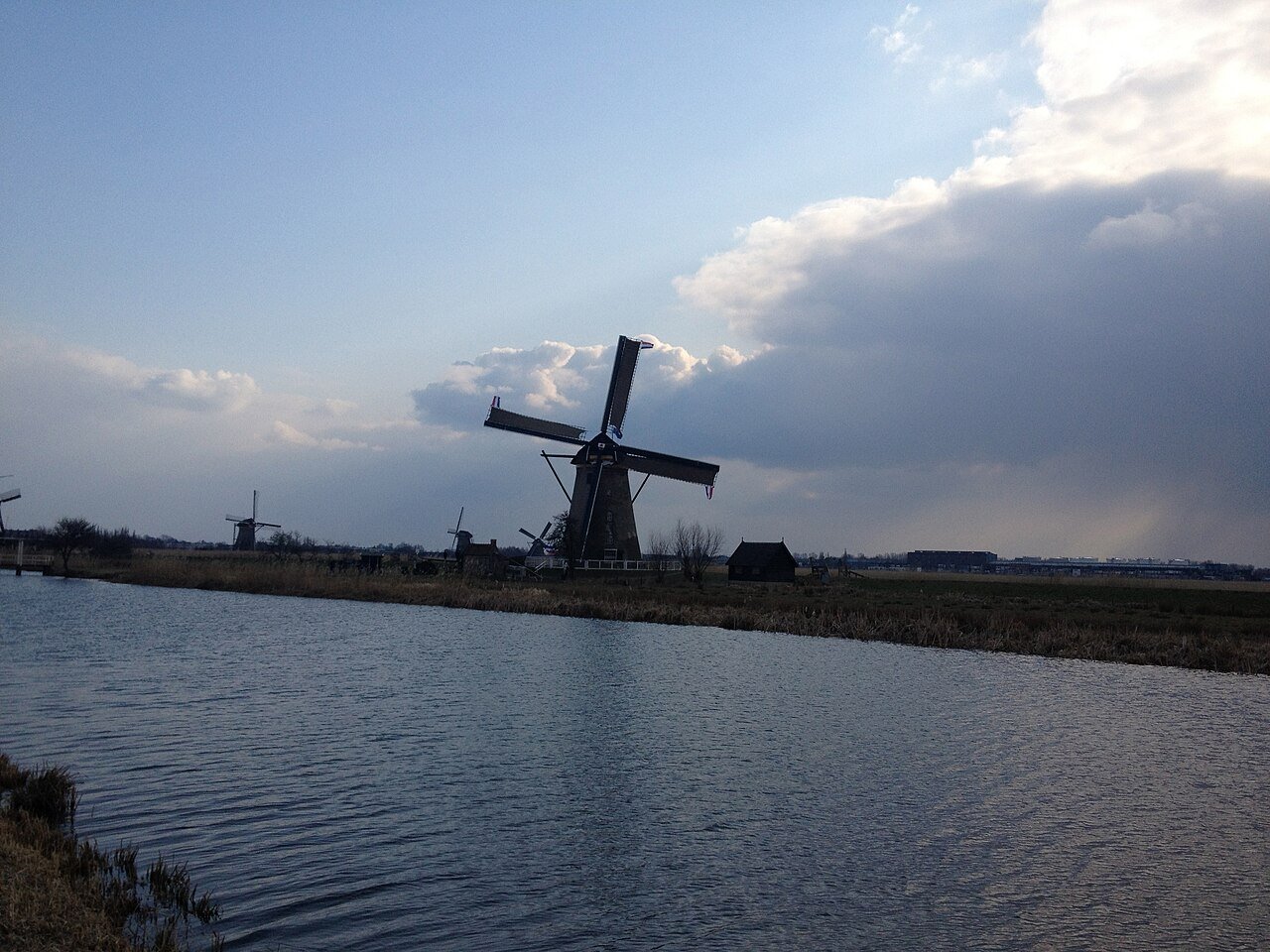
Within two hours of Amsterdam, six UNESCO World Heritage Sites span four centuries of Dutch ingenuity — from the Golden Age canal houses of the city centre to a polder that was once an inland sea, a defensive water-line stretching 135 kilometres, 19 eighteenth-century windmills, a modernist factory praised by Le Corbusier, and an island swallowed by the Zuiderzee. From Cultural Heritage Online.
Seventeenth-Century Canal Ring of Amsterdam City centre — tram 2 or 12
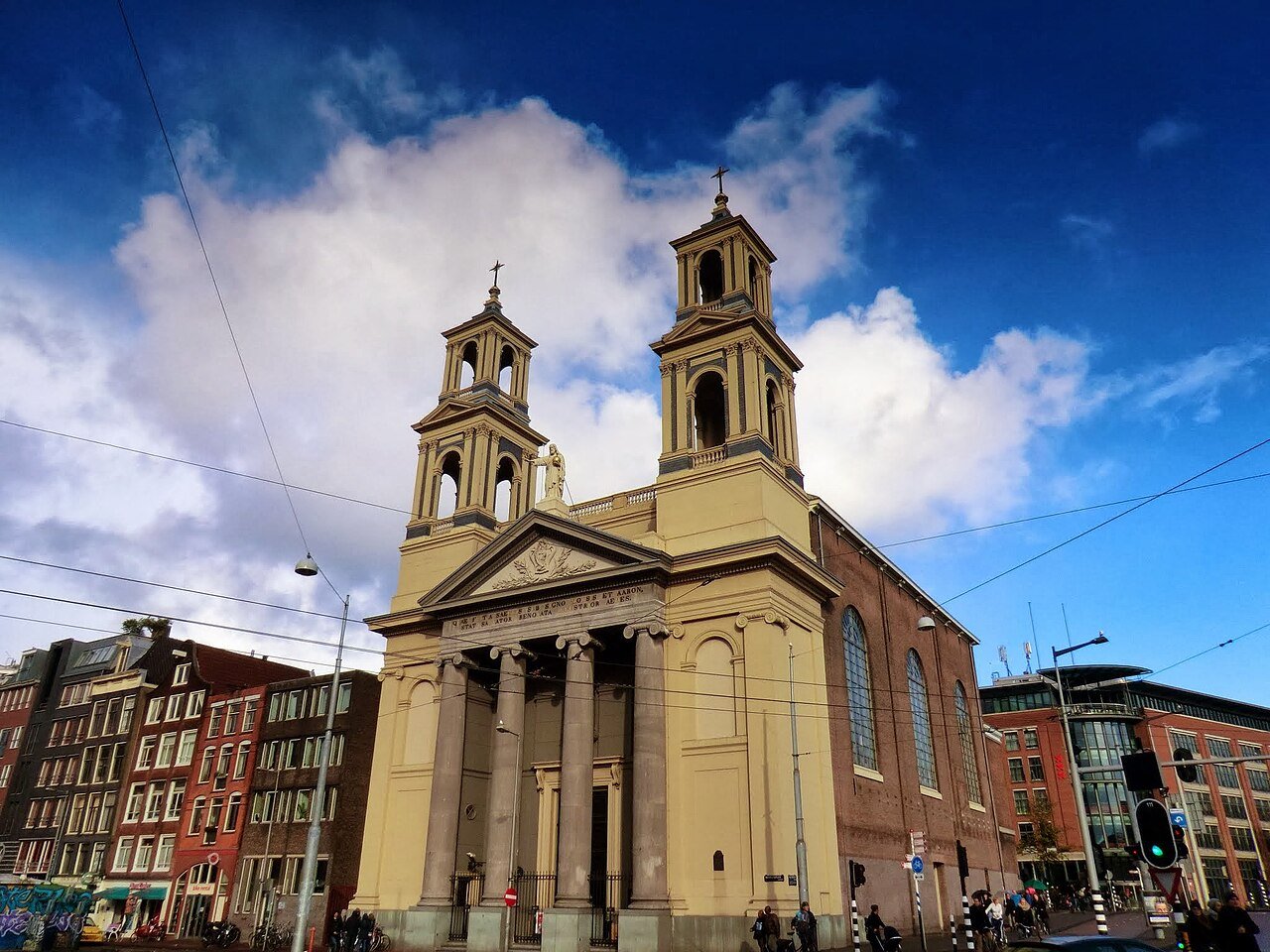
Inscribed in 2010, Amsterdam’s canal ring covers 198 hectares inside the Singelgracht and represents one of the most ambitious urban planning projects of the Dutch Golden Age. Construction on the three great arcs — Herengracht, Keizersgracht, and Prinsengracht — began in 1613 during the Twelve Years’ Truce, when Amsterdam’s merchant class needed space for both warehouses and townhouses. The layout follows a precise semicircular plan, with plots laid out at standard widths to accommodate the step-gabled façades that still line the water today. Walking these quays in the amber light of an early morning, before the tourist boats multiply, the scale becomes legible: roughly 1,500 canal houses, most dating to the seventeenth century, their reflections doubling every gable in the black water below. The UNESCO committee recognised the site under criteria reflecting both masterpiece status and its exceptional influence on urban planning across northern Europe.
Getting there: Tram lines 2 and 12 run along the main canals; the ring is walkable from Amsterdam Centraal in under 20 minutes. Allow: 2–3 hours. Best for: Architecture enthusiasts who want to combine a World Heritage site with the city’s finest museum district in a single morning.
Defence Line of Amsterdam 45 min — bus 170 from Amstel
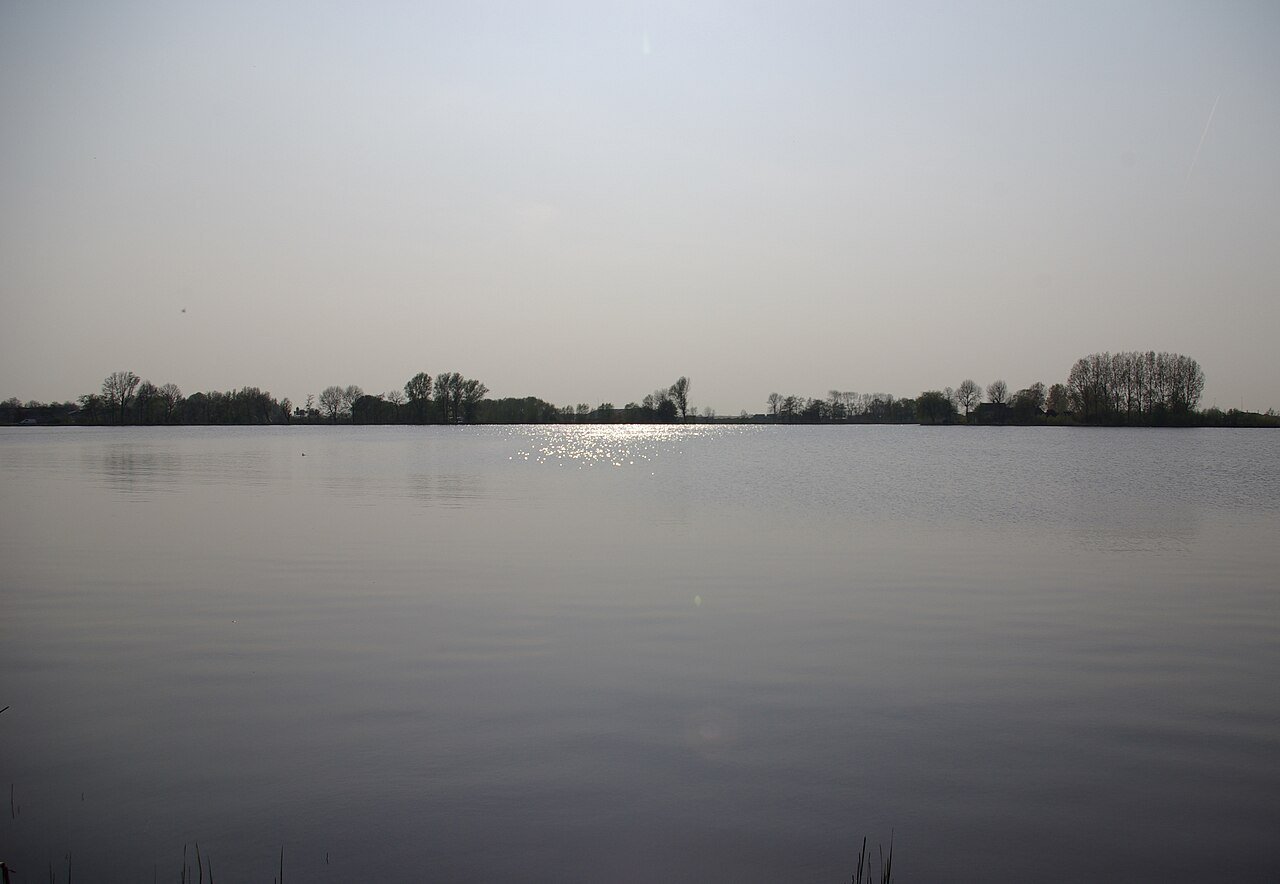
Inscribed in 1996 and extended in 2021 as part of the Dutch Water Defence Lines, the Stelling van Amsterdam encircles the city in a 135-kilometre ring of 45 forts, dams, dikes, locks, and pumping stations. Construction began in earnest in 1897 and was completed by 1920. The strategic principle was elegant in its severity: in the event of invasion, controlled inundation would flood the surrounding countryside to a depth of precisely 30 centimetres — too shallow for boats, too deep for infantry. Forts were positioned 10 to 15 kilometres from the city centre, each within artillery range of the next. The line mobilised during the First World War, when the Netherlands remained neutral, and was partially activated during the German invasion of 1940, only to become obsolete before it could be tested in combat. It was decommissioned in 1963. Today the forts are open as museums, event venues, and cycling destinations; the moats and meadows around Fort Abcoude feel remarkably remote for a site so close to Schiphol.
Getting there: Bus 170 from Amstel station to Fort Abcoude takes around 45 minutes. Allow: 3–4 hours for a single fort and its surroundings. Best for: Visitors who want to understand the Dutch relationship with water as both threat and defence, with good cycling routes connecting multiple forts.
Kinderdijk-Elshout Windmills 1 hr 15 min — Waterbus from Rotterdam
Nineteen windmills built around 1740 line the canals of the Alblasserwaard polder at Kinderdijk, the largest concentration of historic windmills in the Netherlands, inscribed on the UNESCO list in 1997. The mills operated as a cascading system: smaller ones pumped water upward into an intermediate reservoir; larger mills then expelled that water into the River Lek when tidal conditions allowed. The arrangement reflects the chronic problem of a polder that sits well below sea level — without continuous drainage, the land would return to marsh within seasons. Standing at the foot of one of these smock mills, its tarred timber body tapering four storeys above you, the wooden sails sweeping close enough to feel the displaced air, the scale of the pre-industrial engineering effort becomes visceral rather than abstract. Several mills remain inhabited, their interiors open for tours during the summer season.
Getting there: Take an Intercity train from Amsterdam Centraal to Rotterdam Centraal (40 min), then the Waterbus from Erasmusbrug to Kinderdijk (35 min). Allow: 2–3 hours. Best for: Families and photographers who want the Netherlands’ most iconic landscape without renting a car.
Beemster Polder 1 hr — bus 315 from Amsterdam Centraal
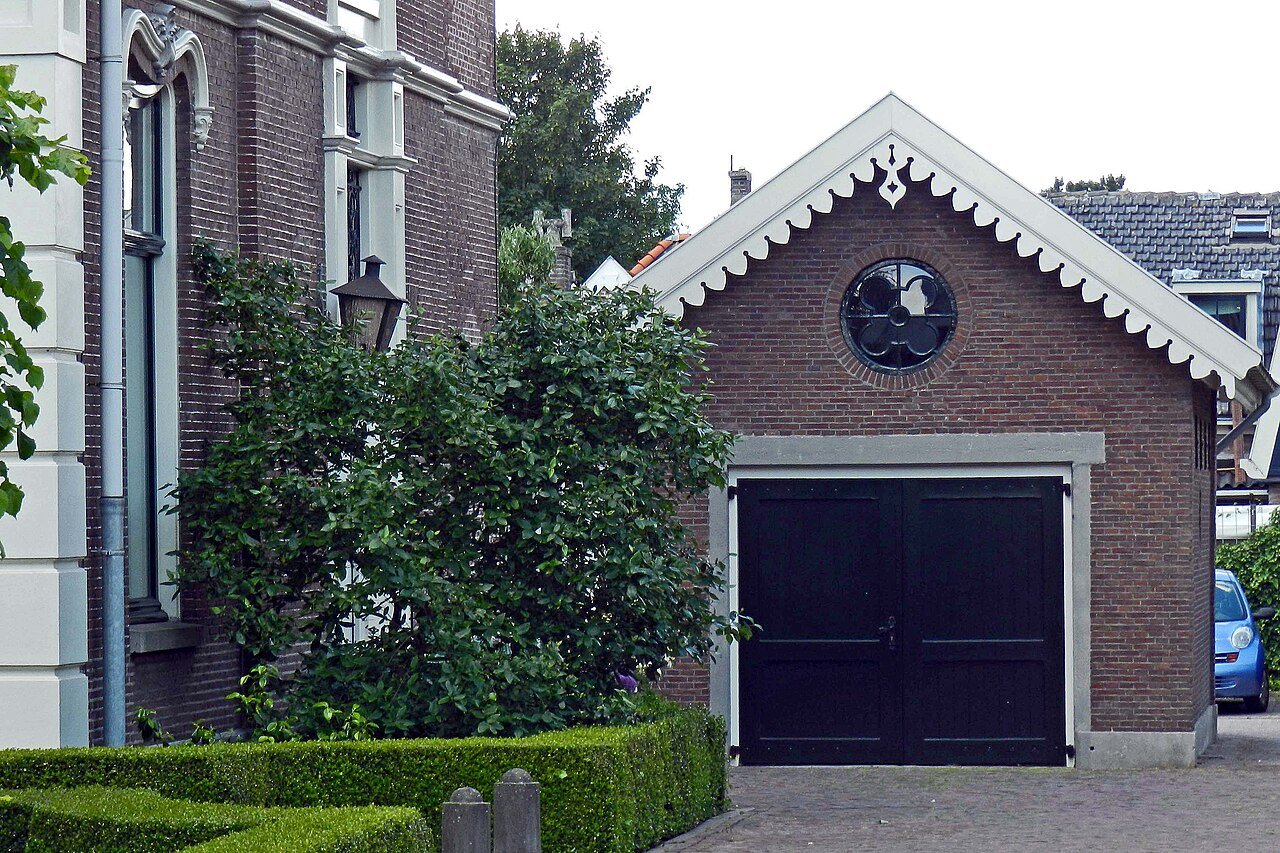
The Beemster is the oldest surviving Dutch polder and, inscribed in 1999, the first polder in the Netherlands to be reclaimed from an open lake. Between 1609 and 1612, windmills extracted the water from the Beemstermeer, exposing a flat canvas of 72 square kilometres that Amsterdam’s merchant élite immediately divided into farms, country estates, and tree-lined roads laid out on a Renaissance-influenced grid. The geometry is deliberate: roads and canals run parallel at regular intervals, the larger feeder canals offset roughly one kilometre from the main roads, giving the landscape a calm, measured quality that reads from a bicycle saddle as a kind of open-air urban plan. That original seventeenth-century structure — fields, roads, canals, dykes — has been preserved almost intact, making the Beemster one of the most legible examples anywhere of early modern land reclamation applied at agricultural scale.
Getting there: Bus 315 from Amsterdam Centraal to Middenbeemster takes around 1 hour. Allow: 2 hours, ideally by bicycle hired locally. Best for: Travellers who want a quiet, uncommercialised World Heritage site and a genuine sense of the Dutch countryside that shaped Golden Age Amsterdam.
Van Nellefabriek, Rotterdam 40 min — Intercity to Rotterdam + tram
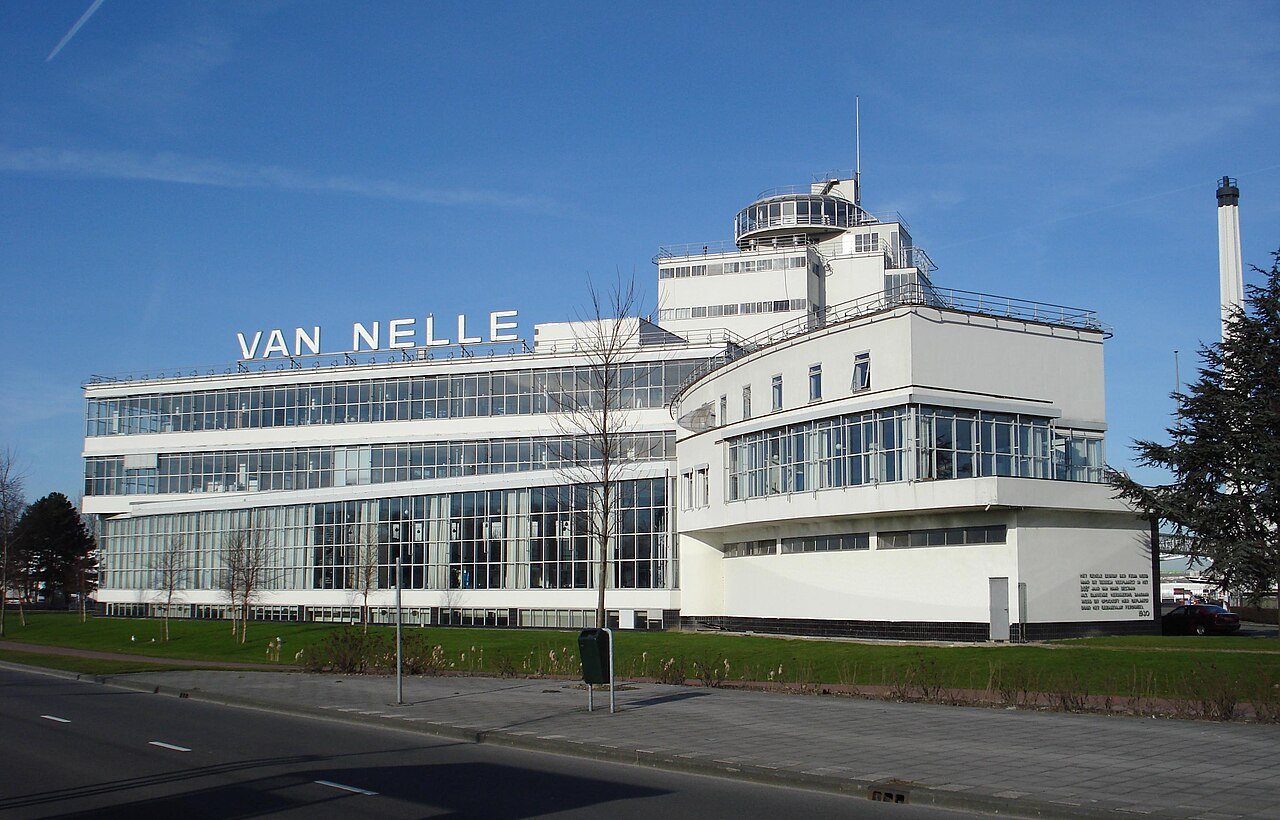
Designed by Leendert van der Vlugt and Johannes Brinkman, with structural engineering by J.G. Wiebenga, and built between 1925 and 1931, the Van Nellefabriek was inscribed on the UNESCO list in 2014 as an outstanding example of the modernist Nieuwe Bouwen movement and one of the most influential factory buildings ever constructed. The complex processed coffee, tea, and tobacco for the Dutch market, and its architects replaced the traditional opaque factory wall with what is claimed to be the first industrially prefabricated curtain wall in the world — floor-to-ceiling glass panels that flood the production floors with light and make the building’s steel skeleton legible from the outside. Le Corbusier, visiting in 1932, called it “the most beautiful spectacle of the modern age.” The building is now a creative business campus and a Dutch national monument; exterior views are freely accessible, and interior tours run on selected dates.
Getting there: Intercity from Amsterdam Centraal to Rotterdam Centraal (40 min), then tram toward Spaanse Polder. Allow: 1–2 hours (exterior freely accessible; interior by guided tour). Best for: Architecture and design enthusiasts making a Rotterdam day trip that also takes in the Kunsthal or the Markthal.
Schokland and Surroundings 1 hr 30 min — train to Kampen + local bus
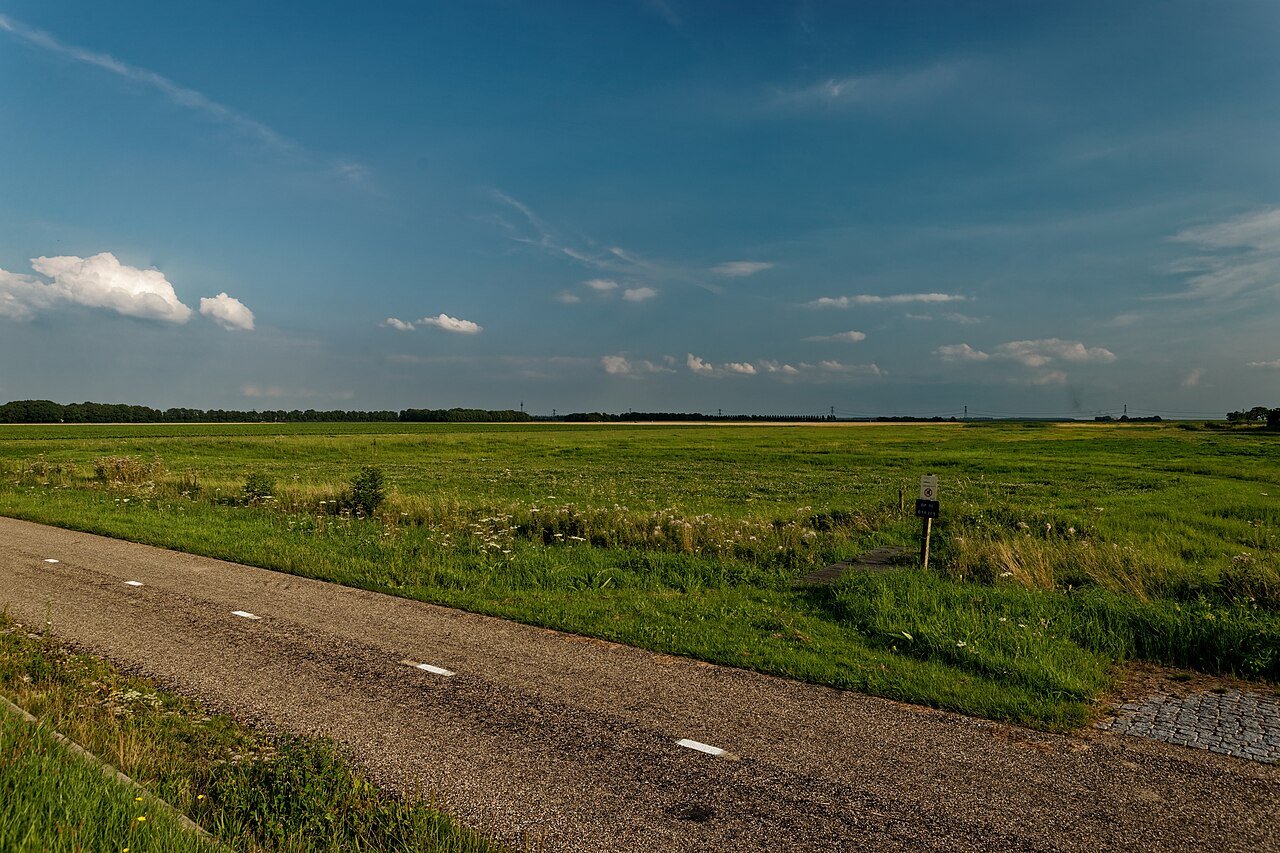
Schokland holds the distinction of being the first UNESCO World Heritage Site inscribed in the Netherlands, recognised in 1995. For centuries it was a narrow strip of peat rising above the Zuiderzee, inhabited by fishing communities who retreated to three artificially raised mounds as the surrounding water eroded the land. A catastrophic flood in 1825 accelerated the crisis, and in 1859 the Dutch government ordered the island permanently evacuated. When the Noordoostpolder was drained in 1942, Schokland re-emerged as a slightly elevated ridge in the new agricultural plain, its former shoreline now visible only as a change in soil colour. Museum Schokland interprets the site through archaeology and maritime history; the church at Middelbuurt, its sea wall still intact, stands as the most tangible reminder that this quiet field was once an island fighting the sea. The surrounding polder itself — flat, windswept, and traversed by long straight drainage ditches — forms an essential part of the inscription.
Getting there: Train from Amsterdam Centraal to Kampen (approximately 1 hr 15 min), then a local bus or taxi; a car makes the logistics considerably easier. Allow: 1–2 hours at the site. Best for: Travellers interested in the human history of the Dutch struggle with water, with a stop at Museum Schokland recommended.
Frequently Asked Questions
How many UNESCO World Heritage Sites are near Amsterdam?
Six UNESCO World Heritage Sites lie within approximately two hours of Amsterdam by public transport or car: the Seventeenth-Century Canal Ring, the Defence Line of Amsterdam, the Kinderdijk-Elshout Windmills, the Beemster Polder, the Van Nellefabriek in Rotterdam, and Schokland and Surroundings. Together they span inscriptions from 1995 to 2014 and cover water management, urban planning, industrial architecture, and maritime heritage.
What is the closest UNESCO World Heritage Site to Amsterdam?
The Seventeenth-Century Canal Ring of Amsterdam is the closest — it is the city itself. Tram lines 2 and 12 run directly along the main canals, and the entire inscribed area is walkable from Amsterdam Centraal station. The Defence Line of Amsterdam, whose forts begin roughly 10 to 15 kilometres from the city centre, is the next closest by public transport.
Can you visit all six UNESCO sites near Amsterdam in one day?
Visiting all six in a single day is not practical; travel times and minimum visit durations add up to well over twelve hours. A realistic approach is to pair sites by direction: combine the canal ring and the Beemster Polder on a northern day trip, Kinderdijk and Van Nellefabriek on a Rotterdam day, and Schokland as a standalone excursion, ideally by car.
Is the Beemster Polder worth visiting if you do not have a bicycle?
The Beemster Polder is at its most rewarding on a bicycle, since the grid of roads and canals is best experienced from saddle height and on foot the distances between features are long. That said, the village of Middenbeemster has historic buildings worth seeing from the bus stop, and local bicycle hire is available on arrival, making it easy to explore independently without bringing your own.
Sources used in this article
- UNESCO World Heritage Centre — World Heritage List.
- Wikipedia — Grachtengordel (Amsterdam Canal Ring).
- Wikipedia — Defence Line of Amsterdam.
- Wikipedia — Kinderdijk.
- Wikipedia — Van Nellefabriek.
- Wikipedia — Schokland.
- Wikipedia — Beemster.
- CHO — Interactive heritage map.
Sources
- S1 — Schama, Simon. The Embarrassment of Riches: An Interpretation of Dutch Culture in the Golden Age. Vintage Books, 1988. ISBN 978-0-679-78124-0.
- S2 — Israel, Jonathan I. The Dutch Republic: Its Rise, Greatness, and Fall 1477–1806. Oxford University Press, 1995. ISBN 978-0-19-873072-9.
Spotted an error? Write to editorial@culturalheritageonline.com and we correct it the same day.