Singapore has 1 UNESCO World Heritage Site, inscribed in 2015: the Singapore Botanic Gardens, a 160-year-old living institution that shaped tropical horticulture across Southeast Asia and the world. One entry on the World Heritage List is enough to anchor an entire editorial tradition — and this one carries the weight of colonial science, post-independence national identity, and some of the most significant plant research in the southern hemisphere. From Cultural Heritage Online.
Why Singapore’s list looks the way it does
Singapore covers 733 square kilometres — less than half the area of greater London — making it one of the smallest sovereign states to hold any UNESCO inscription at all. The density of urban development, the pace of post-independence transformation, and the relatively recent consolidation of national cultural heritage institutions all shaped the trajectory of nominations. Singapore submitted the Botanic Gardens dossier over many years, building an unusually thorough comparative analysis before the 2015 session of the World Heritage Committee in Bonn.
The country has no natural World Heritage Sites and no transnational or serial inscriptions. That single cultural designation, however, was argued on two of the most demanding criteria in the UNESCO framework: criterion (ii), for the interchange of human values across landscape design and horticultural science, and criterion (iv), for an outstanding example of a botanical garden type that influenced the development of tropical agriculture globally. Passing both criteria on a first nomination is not routine.
The first inscription
Singapore’s sole World Heritage inscription was made at the 39th session of the World Heritage Committee in 2015. The inscribed property is:
- Singapore Botanic Gardens (2015) — cultural site, criteria (ii) and (iv)
The gardens were founded in 1859 and administered for much of the colonial period by Kew-trained directors. Henry Ridley, who served as director from 1888 to 1912, used the gardens as the base for his campaign to introduce Hevea brasiliensis rubber cultivation across Malaya — a decision that reshaped the regional economy for generations. The inscription recognised not only the aesthetic and scientific value of the gardens themselves but the global influence they exercised through plant exchange networks that connected Singapore to botanical institutions from London to Calcutta.
The most visited — and the alternatives
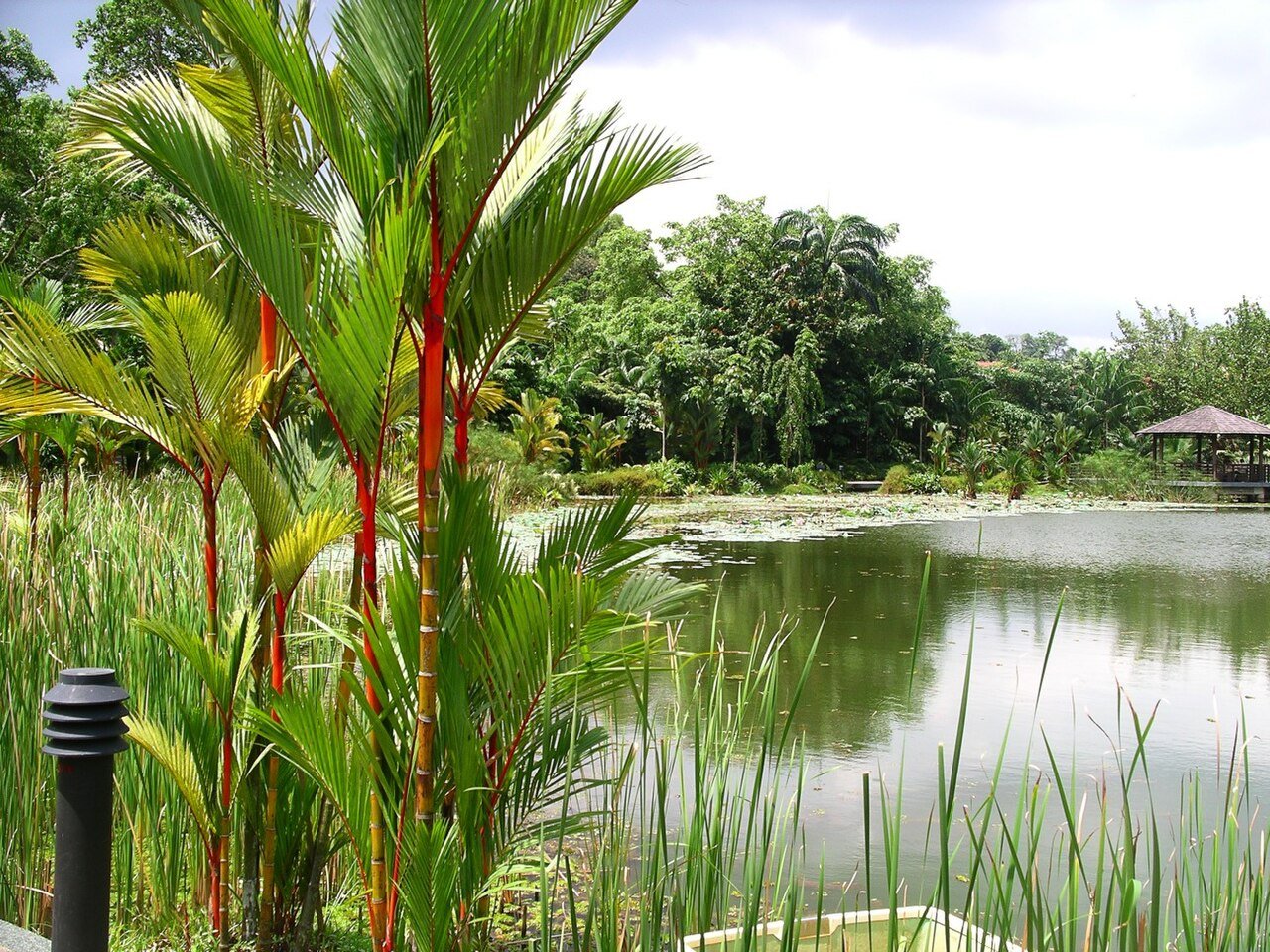
The Singapore Botanic Gardens receive around four million visitors annually and remain free to enter except for the National Orchid Garden within the grounds. Most visitors follow the central lakes and the Shaw Foundation Symphony Stage, which hosts the Singapore Symphony Orchestra for open-air concerts. The Tanglin Core, the oldest section of the gardens dating to the 1860s, receives considerably less foot traffic despite containing the most historically layered landscape on the site.
Within the 49-hectare inscribed area, three zones reward closer attention. The Ethnobotany Garden, opened in 2003, documents the relationship between plants and people across Singapore’s multi-ethnic communities and holds specimens with direct links to the colonial-era economic botany programme. The Evolution Garden traces 3.8 billion years of plant life through a geological landscape that doubles as one of the more unusual horticultural designs in Southeast Asia. The Healing Garden, with over 400 medicinal plants, reflects the gardens’ longstanding role as a centre for applied botanical research rather than purely ornamental display.
Natural and shared sites
Singapore holds no natural UNESCO World Heritage Sites. The city-state’s most ecologically significant remnant — Bukit Timah Nature Reserve, which contains one of the last primary rainforest patches in Southeast Asia within an urban area — has been discussed in conservation literature but has not been the subject of a formal nomination. Singapore is also not party to any transnational World Heritage inscription, unlike some of its ASEAN neighbours whose cultural routes or natural systems cross borders.
The absence of natural designations does not reflect a lack of biodiversity effort. Singapore’s National Parks Board manages a network of nature reserves and park connectors that function as green corridors through the urban fabric. The Southern Ridges and the Sungei Buloh Wetland Reserve — a Ramsar-listed wetland — sit outside the World Heritage framework but occupy a significant place in regional conservation planning. Whether a future nomination might bring one of these into the UNESCO system remains an open question.
How to find them
The Singapore Botanic Gardens occupy the Tanglin and Buona Vista districts, accessible from Orchard Road via the Botanic Gardens MRT station on the Circle Line. The inscribed boundary covers 49 hectares, with a 137-hectare buffer zone extending into the surrounding parkland. Signage within the gardens distinguishes the heritage-listed sections from later additions, and the visitor centre near the Tanglin Gate holds interpretive material on the UNESCO nomination process and the gardens’ scientific history.
Singapore’s World Heritage sites sit alongside thousands of other places on CHO’s interactive map, with GPS and sourced editorial history for each. See also our guides to Italy’s and France’s UNESCO sites, and our piece on cultural travel beyond mass tourism.
Frequently Asked Questions
How many UNESCO World Heritage Sites does Singapore have?
Singapore has 1 UNESCO World Heritage Site as of 2026: the Singapore Botanic Gardens, inscribed in 2015. It is classified as a cultural site and is the only inscription Singapore holds, reflecting both the city-state’s compact geography and its selective approach to the nomination process.
What was Singapore’s first UNESCO World Heritage Site?
The Singapore Botanic Gardens, inscribed in 2015 at the 39th session of the World Heritage Committee in Bonn, is Singapore’s first and to date only UNESCO World Heritage Site. The nomination was accepted under criteria (ii) and (iv), recognising the gardens’ global influence on tropical horticulture and landscape design over more than 160 years.
Does Singapore have any natural UNESCO World Heritage Sites?
No. Singapore holds no natural or mixed UNESCO World Heritage Sites. Its sole inscription, the Singapore Botanic Gardens, is classified as a cultural property. Ecologically significant areas such as Bukit Timah Nature Reserve and Sungei Buloh Wetland Reserve are protected under national and Ramsar frameworks but have not been nominated for World Heritage status.
What UNESCO criteria did the Singapore Botanic Gardens meet?
The Singapore Botanic Gardens were inscribed under criteria (ii) and (iv). Criterion (ii) recognised the site’s role in the interchange of human values, particularly its influence on landscape design and the global transfer of tropical botanical knowledge. Criterion (iv) acknowledged the gardens as an outstanding example of a colonial botanical garden that shaped tropical agriculture, most significantly through the development of the Malayan rubber industry.
Sources used in this article
- UNESCO — State Party Singapore — World Heritage list.
- UNESCO — Singapore: World Heritage Sites.
- CHO magazine — What is a World Heritage Site?
- CHO — Interactive map of heritage sites.
Sources
- S1 — Turnbull, C. M. A History of Modern Singapore, 1819–2005. NUS Press, 2009. ISBN 978-9971-69-430-2.
- S2 — Kiew, Ruth, et al. The Singapore Botanic Gardens: A Living History. Editions Didier Millet, 2012. ISBN 978-981-4385-23-7.
Spotted an error? Write to editorial@culturalheritageonline.com and we correct it the same day.