

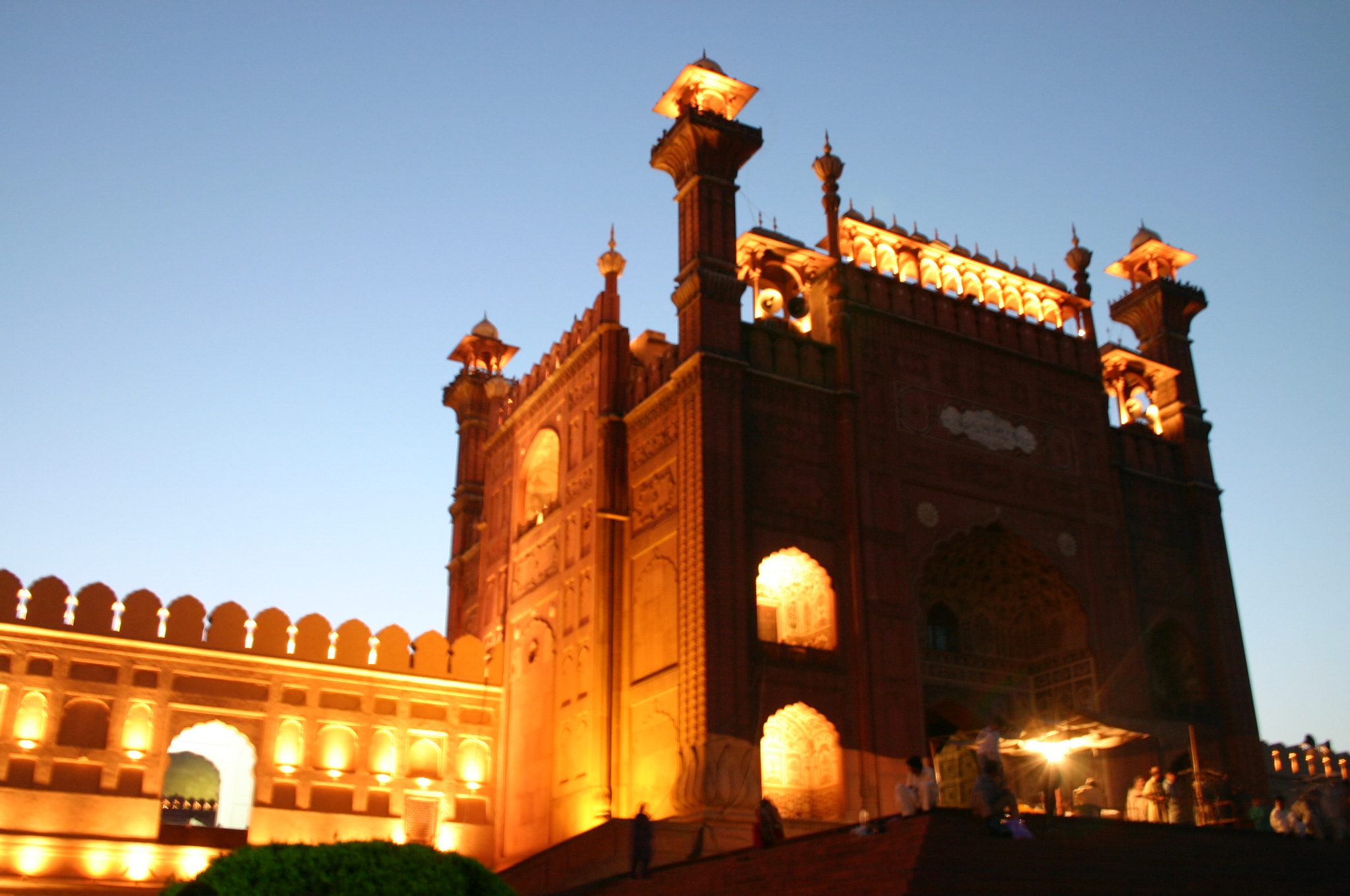
Three UNESCO World Heritage Sites lie within reach of Lahore: the Mughal imperial fort and the Shalamar Gardens inside the city, and Rohtas Fort, a 16th-century stone citadel two hours south. Together they span a thousand years of South Asian statecraft, garden design, and military architecture. From Cultural Heritage Online.
Fort and Shalamar Gardens in Lahore In the city — 15 min by rickshaw from The Mall
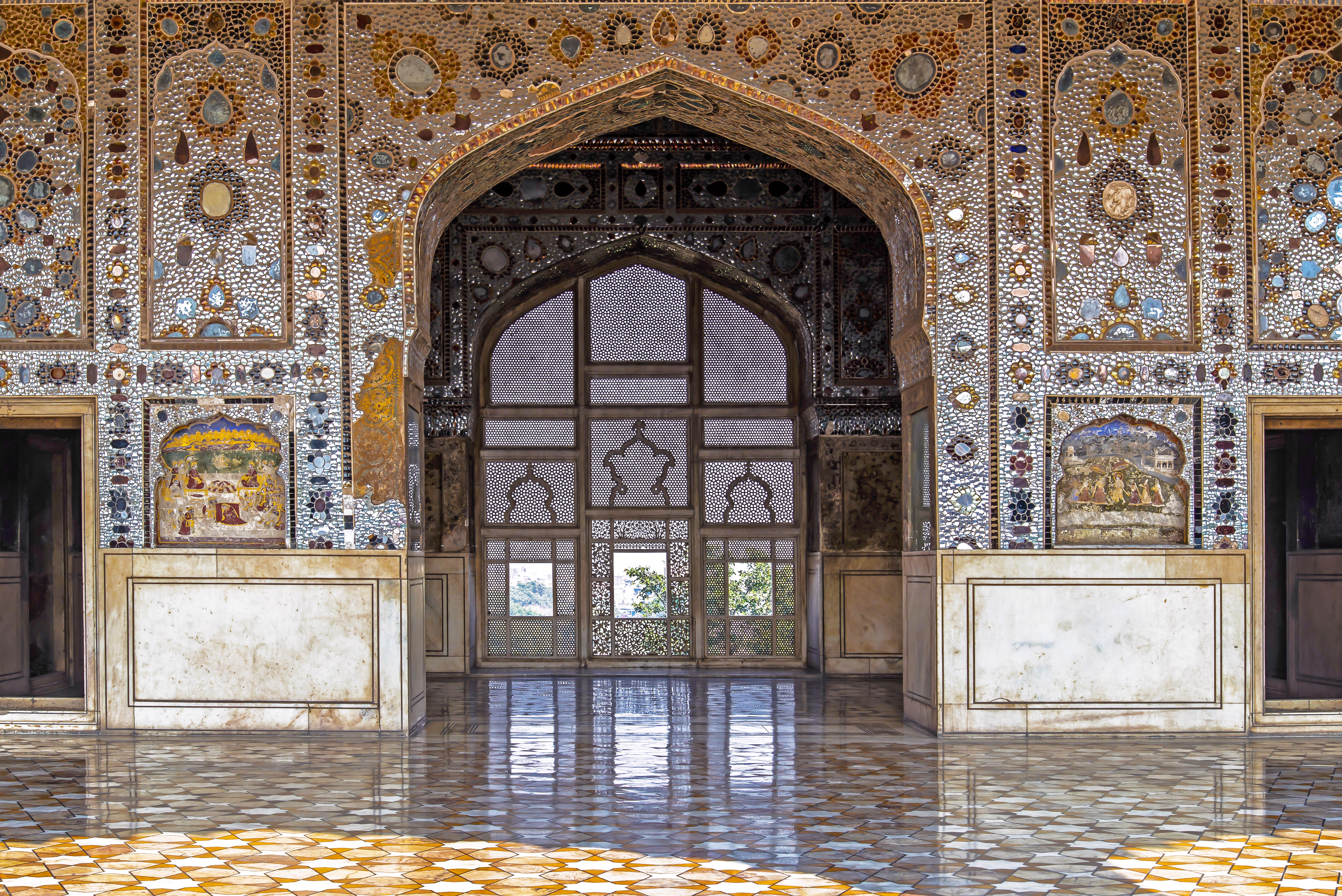
Lahore Fort — Shahi Qila in Punjabi — sits at the northwest corner of the old walled city, a 20-hectare compound of 21 distinct monuments built across successive Mughal reigns. Akbar began construction in the 1560s on an older mud-brick fortification; Jahangir, Shah Jahan, and Aurangzeb each added pavilions, gates, and courtyards that read like a dynasty’s autobiography in red sandstone and white marble. UNESCO inscribed the site in 1981 for its outstanding example of Mughal architecture and its illustration of how an imperial court expressed power through built form.
The fort’s northern face carries the Picture Wall, a tiled surface running roughly 450 metres that was built between 1617 and 1631. It is the world’s largest surviving area of Mughal tile mosaic, depicting elephants, camels, polo matches, and royal hunts in vivid polychrome. Inside the compound, the Sheesh Mahal — Shah Jahan’s private audience chamber, completed around 1632 — fills every inch of its ceiling and walls with convex glass set in plaster, so that a single candle reflects into thousands of points of light. The Naulakha Pavilion beside it is faced in pietra dura, the same inlay technique used on the Taj Mahal, built just a few years later by the same emperor.
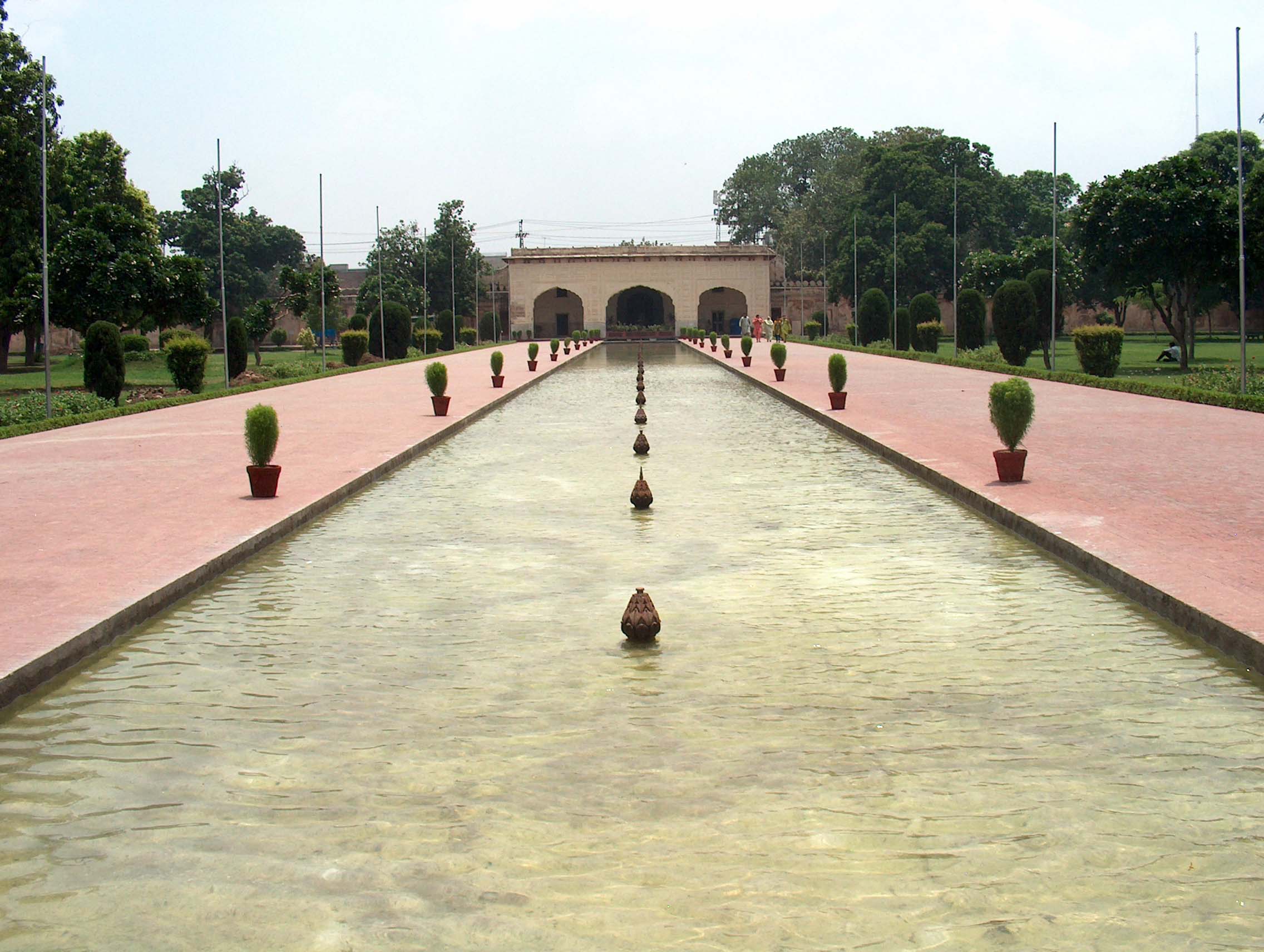
The Shalamar Gardens, inscribed alongside the fort, occupy a walled enclosure about five kilometres northeast of the city centre. Shah Jahan laid them out in 1642 as a royal pleasure ground on the classical chahar-bagh plan: a rectangle divided into four quadrants by raised walkways and water channels. Three descending terraces carry 410 marble fountains that, when the system is operating, fill the air with a low, continuous sound. The gardens remain a working public park as much as a heritage monument, frequented by families on weekend mornings.
Getting there: Lahore Fort entrance is on Fort Road; rickshaws and taxis from the city centre cost under PKR 300. Shalamar Gardens are on the Grand Trunk Road, easily reached by auto-rickshaw or Lahore Metro bus (stop: Shalimar). Allow: 3–4 hours for the fort; 1–2 hours for Shalamar. Best for: Architectural historians, first-time visitors to Mughal heritage, travellers combining with the nearby Badshahi Mosque.
Rohtas Fort ~100 km south-east — 2 hr by road via GT Road or N-55
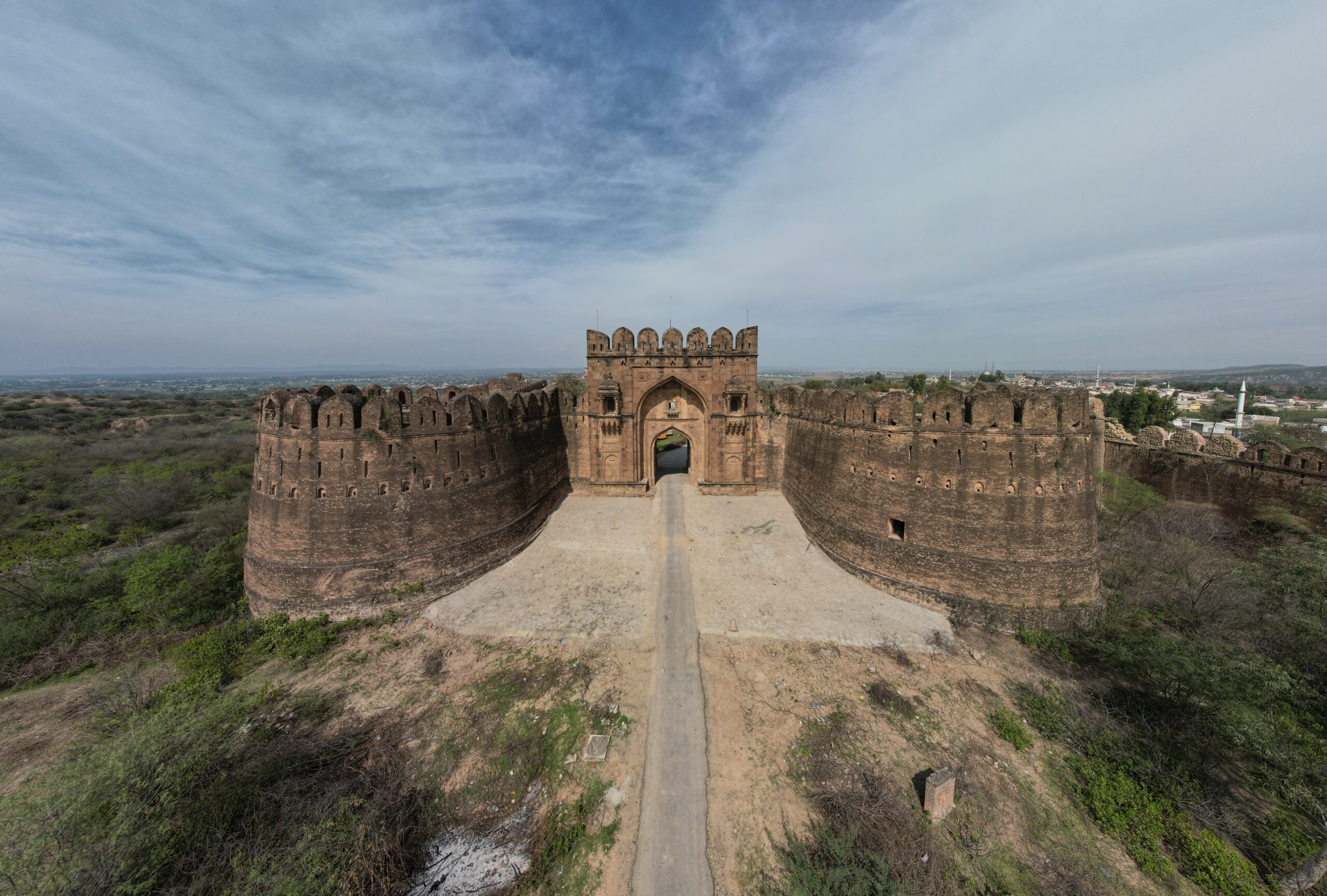
Rohtas Fort is a different order of monument from the Mughal constructions in Lahore — older, rawer, and built for a single urgent purpose. Sher Shah Suri, the Afghan ruler who briefly displaced the Mughal emperor Humayun, commissioned it in 1541 to subdue the local Gakhar tribe and control the strategic corridor between Lahore and Kabul. Construction took roughly two years; what survives is one of the best-preserved examples of 16th-century military architecture in the subcontinent. UNESCO inscribed it in 1997.
The perimeter wall runs 4.3 kilometres and stands up to 18 metres high in places, punctuated by 12 gates of varying character. The Sohail Gate on the north side is the most elaborately finished, with projecting bastions and decorated spandrels that reveal a Persian-Afghan aesthetic quite distinct from the Mughal vocabulary a few decades later. Inside the walls, which enclose a largely rural landscape of fields and scattered buildings, the Shahi Mosque preserves elegant arched screened galleries. The site receives relatively few international visitors, which gives the fort an uncrowded, exploratory quality that the larger monuments in Lahore cannot easily offer.
Getting there: Drive south from Lahore on the Grand Trunk Road (N-5) toward Jhelum; the fort is signposted near Dina, off the N-5. No direct public transport; hire a car or join a guided day-tour from Lahore. Allow: Half a day including travel. Best for: Travellers with a specific interest in pre-Mughal and Afghan military architecture, or those combining the trip with the Salt Range landscape.
Frequently Asked Questions
How many UNESCO World Heritage Sites are near Lahore?
Three UNESCO World Heritage Sites are directly accessible from Lahore: the Fort and Shalamar Gardens in Lahore (inscribed 1981, covering two interconnected properties in the city), and Rohtas Fort (inscribed 1997), located approximately 100 kilometres south-east near Jhelum. A fourth Pakistani UNESCO site, Taxila (inscribed 1980), is about 240 kilometres north of Lahore via the M-2 motorway and requires a longer day trip or overnight stay.
How do you get from Lahore to Rohtas Fort?
The most practical option is to hire a private car from Lahore for the day; the drive takes roughly two hours each way via the Grand Trunk Road (N-5), with the fort signposted near Dina in Jhelum district. No direct public bus links the two sites reliably. Several Lahore-based tour operators include Rohtas Fort in half-day or full-day heritage excursions that also stop at the nearby Salt Range or the Mangla area.
What is the best season to visit Lahore’s UNESCO sites?
October to March is the most comfortable window. Temperatures between November and February sit between 8°C and 22°C, making outdoor exploration of the fort perimeter and the Shalamar Gardens’ terraces manageable at any hour. April and May bring a rapid rise in heat; summer months from June through September see temperatures regularly above 40°C and monsoon humidity that can make the stone-walled interiors of Lahore Fort feel oppressive. Winter mornings at Shalamar often carry a fine mist that lifts to reveal the fountain channels and marble pavilions at their most photogenic.
What makes the Picture Wall at Lahore Fort historically significant?
The Picture Wall runs along the entire northern face of Lahore Fort and was constructed in phases between 1617 and 1631 under the Mughal emperors Jahangir and Shah Jahan. It preserves the largest surviving area of Mughal tile mosaic in the world: a continuous field of glazed-tile panels depicting royal processions, elephant fights, hunting scenes, and mythological subjects rendered in a palette of cobalt blue, turquoise, white, and yellow. The wall is remarkable partly for its content — representational imagery on a royal Islamic monument — and partly for its technical ambition, combining moulded terracotta and hand-painted tile in a surface that has survived four centuries of weather on an exposed exterior facade.
Sources
- S1 — Koch, Ebba. Mughal Architecture: An Outline of Its History and Development. Prestel, 1991. ISBN 978-3-7913-1070-1.
- S2 — Glover, William J. Making Lahore Modern: Constructing and Imagining a Colonial City. University of Minnesota Press, 2008. ISBN 978-0-8166-5021-7.
Spotted an error? Write to editorial@culturalheritageonline.com and we correct it the same day.


.jpg)
.jpg)

