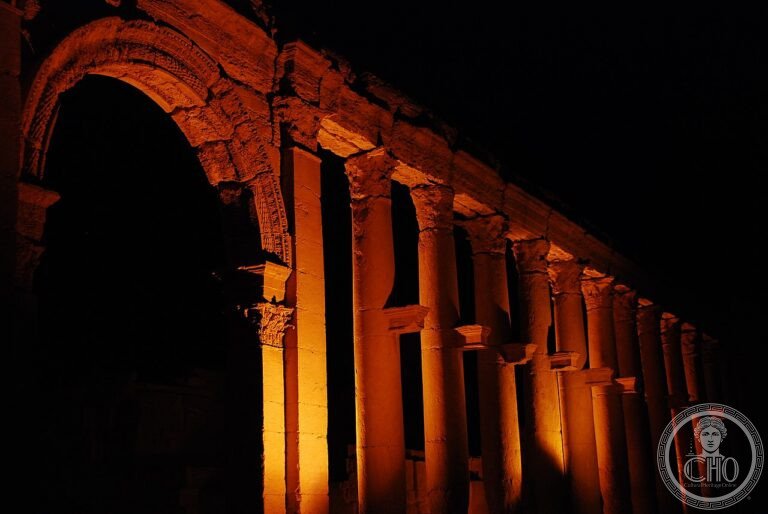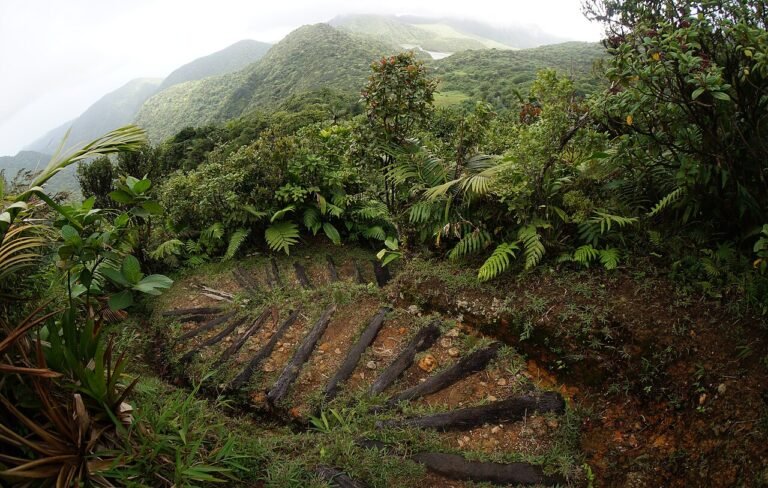
Saudi Arabia has eight UNESCO World Heritage Sites, a roster that spans Nabataean rock-cut tombs, the world’s largest oasis, early Islamic urban architecture, rock art etched over ten millennia, and a sweeping natural desert landscape of almost unimaginable scale. The list reflects a country whose cultural and environmental record reaches back to before written history — and that has only recently opened its heritage to sustained international attention. From Cultural Heritage Online.
Why Saudi Arabia’s list looks the way it does
Saudi Arabia joined the World Heritage Convention in 1978, but its first inscription did not come until 2008 — a gap that reflects both the pace of heritage documentation in the region and the country’s historically cautious approach to international cultural diplomacy. Since then, inscriptions have arrived at a steadier rate, with seven of the eight sites added between 2008 and 2024. The list is almost entirely cultural: seven of the eight inscriptions are cultural sites, with only one natural designation.
The sites also span an unusually wide chronological range. Rock art in the Hail Region documents human presence over 10,000 years, while Al-Faw Archaeological Area, inscribed in 2024, anchors the list’s most recent addition to the pre-Islamic trade networks of the Arabian Peninsula. That breadth — prehistoric through early modern — gives the collection a coherence that is more chronological than geographic.
The first inscriptions
Saudi Arabia’s entry into the World Heritage list began with a single site in 2008, followed by a second two years later. Both remain among the country’s most significant cultural designations:
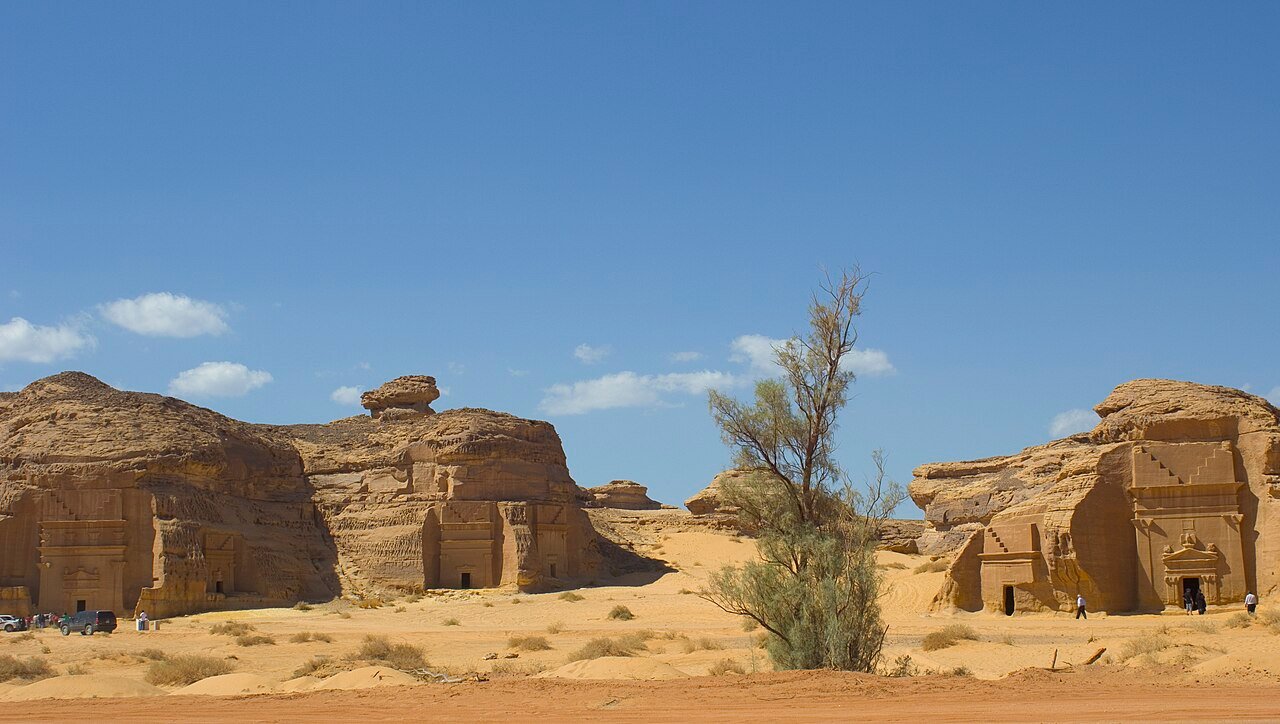
- Al-Hijr Archaeological Site (Madâin Sâlih) — inscribed 2008; a Nabataean city preserving well-decorated monumental tombs dating from the 1st century BC to the 1st century AD, the first World Heritage Site designated in Saudi Arabia.
- At-Turaif District in Diriyah — inscribed 2010; a historic urban district in central Arabia representing Najdi-style desert architecture and the original seat of the Saudi state.
Al-Hijr, also known as Hegra, is particularly significant as the southernmost major city of the Nabataean kingdom — the same civilisation responsible for Petra in Jordan. Its inscription signalled the beginning of a new phase in how Saudi Arabia engaged with international heritage frameworks.
The most visited — and the alternatives
Al-Hijr and Historic Jeddah tend to draw the most international visitors. Jeddah’s old city, known as Al-Balad, served for centuries as the principal Indian Ocean gateway for Muslim pilgrims travelling to Mecca by sea, and its coral-stone architecture and projecting wooden balconies are immediately distinctive. Al-Hijr, now accessible as part of a purpose-built heritage tourism zone, offers a rare encounter with Nabataean monumental carving at scale.
Less-visited but equally compelling are several other sites on the list. Al-Ahsa Oasis, inscribed in 2018, is the largest oasis in the world, containing some 2.5 million date palms and evidence of continuous human settlement from the Neolithic period. Rock Art in the Hail Region documents representations of humans and animals across a timespan of 10,000 years, making it one of the longest continuous records of pictorial expression in the Arabian Peninsula. Ḥimā Cultural Area, inscribed in 2021, adds a further dimension with rock art illustrating hunting, fauna, and the rhythms of life over 7,000 years, alongside ancient well inscriptions that mark it as one of the largest and best-preserved rock art sites in the world.
Natural and shared sites
Saudi Arabia’s sole natural World Heritage Site, ‘Uruq Bani Ma’arid Protected Area, was inscribed in 2023. It protects a portion of the Rub’ al-Khali — the Empty Quarter — described as the greatest expanse of windblown sand on Earth. The site conserves a desert landscape of exceptional visual and ecological character, including populations of Arabian oryx reintroduced after local extinction, as well as sand gazelles and other desert-adapted wildlife.
None of Saudi Arabia’s current World Heritage Sites are transnational or serial inscriptions. Each site stands as an individual nomination. The 2024 inscription of Al-Faw Archaeological Area, a cultural landscape along ancient pre-Islamic trade routes in the south of the country, suggests continued momentum, and further nominations from the Arabian Peninsula’s rich archaeological record remain possible in coming years.
How to find them
The eight sites are distributed across Saudi Arabia’s geography — from Jeddah on the Red Sea coast to the oasis settlements of the Eastern Province, and from the Hail region in the north to Al-Faw in the south. Distances are substantial, and most sites require either domestic flights or long overland journeys. Saudi Arabia’s Vision 2030 tourism initiative has improved access infrastructure at several key sites, particularly Al-Hijr and Diriyah.
Saudi Arabia’s World Heritage sites sit alongside thousands of other places on CHO’s interactive map, with GPS and sourced editorial history for each. See also our guides to Italy’s and France’s UNESCO sites, and our piece on cultural travel beyond mass tourism.
Frequently Asked Questions
How many UNESCO World Heritage Sites does Saudi Arabia have?
Saudi Arabia has eight UNESCO World Heritage Sites as of 2024. Seven are classified as cultural sites and one — ‘Uruq Bani Ma’arid Protected Area, inscribed in 2023 — is a natural site. The most recently designated site is the Cultural Landscape of Al-Faw Archaeological Area, added to the list in 2024.
What was Saudi Arabia’s first UNESCO World Heritage Site?
Al-Hijr Archaeological Site, also known as Madâin Sâlih or Hegra, was inscribed in 2008 as Saudi Arabia’s first World Heritage Site. It preserves Nabataean monumental tombs with decorated facades dating from the 1st century BC to the 1st century AD, making it the southernmost known major settlement of the Nabataean kingdom.
Does Saudi Arabia have any natural UNESCO World Heritage Sites?
‘Uruq Bani Ma’arid Protected Area, inscribed in 2023, is Saudi Arabia’s only natural World Heritage Site. It protects part of the Rub’ al-Khali — the Empty Quarter — one of the largest continuous sand deserts in the world, along with wildlife including reintroduced Arabian oryx and sand gazelles.
What is the largest oasis in the world, and is it a UNESCO site?
Al-Ahsa Oasis in Saudi Arabia’s Eastern Province is the largest oasis in the world, with approximately 2.5 million date palms and traces of human settlement stretching back to the Neolithic period. It was inscribed as a UNESCO World Heritage Site in 2018.
Sources used in this article
- UNESCO — State Party Saudi Arabia — World Heritage list.
- UNESCO — Saudi Arabia: World Heritage Sites.
- CHO magazine — What is a World Heritage Site?
- CHO — Interactive map of heritage sites.