The United Arab Emirates has two UNESCO World Heritage Sites, both cultural, representing a civilisation that flourished in the desert long before the glass towers of the Gulf horizon were imagined. Oasis agriculture that sustained Bronze Age cities, and a palaeolandscape that preserves evidence of early human dispersal across Arabia — these two inscriptions chart a story of survival, ingenuity, and deep time on one of the world’s most demanding terrains. From Cultural Heritage Online.
Why the United Arab Emirates’s list looks the way it does
The UAE ratified the World Heritage Convention in 2001, relatively late compared to its Gulf neighbours. That timing, combined with the country’s rapid urbanisation and a cultural heritage policy that matured gradually through the 2000s, explains why the national list remains short. Both inscriptions are classified as cultural sites; no natural property has yet reached inscription, though Wadi Wurayah National Park in Fujairah — one of the Gulf’s rare permanent freshwater wadis — has been on the tentative list since 2020.
The country served on the World Heritage Committee between 2009 and 2013, a period that coincided with its first successful nomination. Several additional sites remain under development on the tentative list, so the two current inscriptions should be understood as a foundation rather than a final count.
The first inscriptions
The UAE’s entry into the World Heritage system came in 2011 with a single, substantial serial nomination covering the Al Ain region of Abu Dhabi. The site groups together a cluster of oasis, fort, and archaeological components under one inscription:
- Cultural Sites of Al Ain (Hafit, Hili, Bidaa Bint Saud and Oases Areas) — inscribed 2011
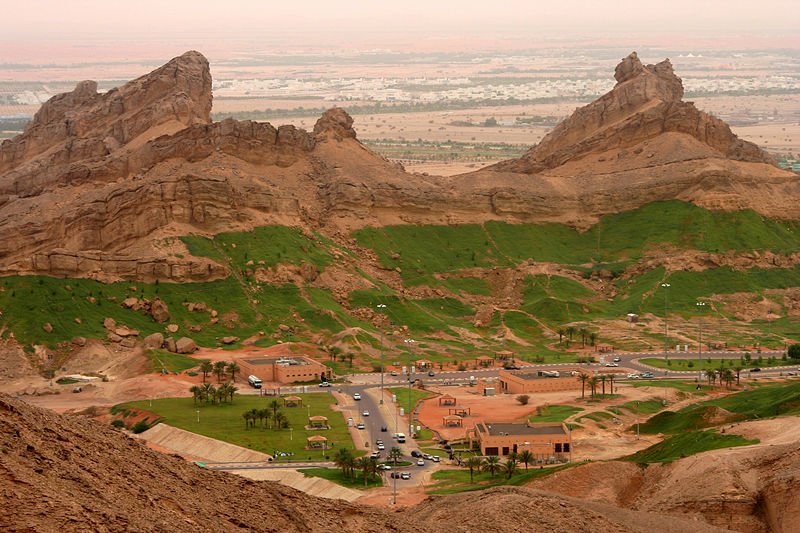
The Al Ain inscription encompasses the Hafit and Hili tomb complexes, which date from the third millennium BCE, alongside the living oasis of Al Ain itself — one of the world’s oldest continuously inhabited settlements and a working example of the ancient aflaj irrigation system. The site satisfied four UNESCO criteria simultaneously, covering interchange of human values, archaeological testimony, traditional land use, and outstanding examples of architecture and technology.
The most visited — and the alternatives
Al Ain is the centrepiece of UAE heritage tourism: the Al Jahili Fort, the Hili Archaeological Park, and the Al Ain Oasis (a UNESCO-listed component in its own right) draw visitors from across the Emirates and beyond. The oasis is a working agricultural landscape, not a museum piece — date palms shade the ancient irrigation channels and the air carries a coolness unusual in this part of Arabia. For many travellers, Al Ain offers the most direct sensory encounter with pre-petroleum Gulf life.
The 2025 inscription of the Faya Palaeolandscape in Sharjah represents a markedly different register of heritage. Faya is an archaeological and geological site that documents early human dispersal routes across the Arabian Peninsula during periods when the region was greener and more hospitable. It is not yet set up for large-scale tourism, which makes it precisely the kind of site that rewards early attention. On the tentative list, Mleiha (also in Sharjah, added 2023) preserves a pre-Islamic Arabian kingdom centre with a fort, necropolis, and ancient souq — a coherent urban landscape awaiting its moment. Shimal in Ras Al Khaimah, which satisfies five separate UNESCO criteria across multiple settlement periods, is among the most archaeologically layered candidates in the Gulf.
Natural and shared sites
As of 2025, the UAE holds no inscribed natural or mixed sites. The tentative candidacy of Wadi Wurayah National Park reflects a growing awareness that the country’s wadis, mangroves, and desert ecosystems carry outstanding universal value, but that case has not yet been made to the World Heritage Committee’s satisfaction. The UAE has not, to date, participated in any transnational or serial World Heritage inscription alongside neighbouring states, though the region’s archaeological corridors — stretching through Oman, Saudi Arabia, and beyond — offer natural ground for future joint nominations.
The absence of natural inscriptions is also a reflection of how recently the country has engaged with conservation frameworks on an international level. Protected area legislation and management plans have strengthened substantially since the early 2000s, which positions future natural nominations more credibly than would have been possible a decade ago.
How to find them
Both inscribed sites are accessible by road from major UAE cities. Al Ain is approximately 160 kilometres east of Abu Dhabi and is served by the main highway network; the Al Ain Oasis and Hili Archaeological Park are within the city itself. The Faya Palaeolandscape site in Sharjah is more recently inscribed and visitor infrastructure continues to develop — checking current access arrangements directly with Sharjah’s Department of Antiquities before visiting is advisable.
the United Arab Emirates’s World Heritage sites sit alongside thousands of other places on CHO’s interactive map, with GPS and sourced editorial history for each. See also our guides to Italy’s and France’s UNESCO sites, and our piece on cultural travel beyond mass tourism.
Frequently Asked Questions
How many UNESCO World Heritage Sites does the United Arab Emirates have?
As of 2025, the United Arab Emirates has two UNESCO World Heritage Sites, both classified as cultural properties. The Cultural Sites of Al Ain were inscribed in 2011, and the Faya Palaeolandscape in Sharjah received inscription in 2025. No natural or mixed sites are currently on the list.
What was the United Arab Emirates’s first UNESCO World Heritage Site?
The Cultural Sites of Al Ain — encompassing the Hafit and Hili tomb complexes, the Bidaa Bint Saud area, and the Al Ain oasis system — were inscribed in 2011 as the country’s inaugural World Heritage designation. The site dates to the third millennium BCE and includes one of the world’s oldest continuously inhabited oasis settlements. The UAE had ratified the World Heritage Convention ten years earlier, in 2001.
What makes Al Ain’s oasis system significant for UNESCO?
The Al Ain oasis is one of the oldest continuously inhabited settlements in the world and preserves a functioning aflaj irrigation system — an ancient network of underground channels that channels water from distant sources to sustain agriculture in the desert. This combination of living agricultural tradition, Bronze Age archaeology, and fortified urban history satisfied four separate UNESCO criteria at inscription. The oasis continues to produce dates and other crops under the same hydrological principles used millennia ago.
What is the Faya Palaeolandscape and why was it inscribed?
The Faya Palaeolandscape is an archaeological and geological site in Sharjah that documents early human movement across the Arabian Peninsula during periods of increased rainfall and more habitable conditions. It was inscribed in 2025 for its evidence of early hominin dispersal routes out of Africa and into Eurasia. The site adds a deep-prehistory dimension to the UAE’s World Heritage portfolio that complements the Bronze Age focus of the Al Ain inscription.
Sources used in this article
- UNESCO — State Party the United Arab Emirates — World Heritage list.
- UNESCO — the United Arab Emirates: World Heritage Sites.
- CHO magazine — What is a World Heritage Site?
- CHO — Interactive map of heritage sites.