Italy has 58 UNESCO World Heritage Sites — the most of any country — spanning ancient ruins, Renaissance cities, Baroque landscapes, pre-historic rock art, Alpine geology, and Aeolian volcanology. This is a guide to what they are, where to find them, and how to visit beyond the ten most famous. From Cultural Heritage Online.
Why Italy leads the count
Italy’s 58 inscriptions (2024) reflect the concentration of cultural and natural history in a single peninsula. Three thousand years of documented civilisation — Etruscan, Greek colonial, Roman, medieval, Renaissance, Baroque, and modern — have left stratified urban centres, archaeological landscapes, and technical systems (aqueducts, centuriation, road networks) across every region. Italy also has five natural World Heritage Sites, from the Aeolian Islands volcanic archipelago to the Dolomites’ exceptional glacial and karst formations.
The first inscriptions: 1979 and 1980
Italy’s first World Heritage Sites were inscribed at the third session of the World Heritage Committee in 1979:
- Rock Drawings in Valcamonica, Lombardy (prehistoric; over 140,000 carved symbols).
- Church and Dominican Convent of Santa Maria delle Grazie with “The Last Supper” by Leonardo da Vinci, Milan.
- Historic Centre of Rome, the Holy See, and the Basilica of San Paolo Fuori le Mura.
In 1980 the list grew to include the Archaeological Areas of Pompei, Herculaneum, and Torre Annunziata; the Villa Romana del Casale; and the Historic Centre of Florence.
The most visited — and the alternatives
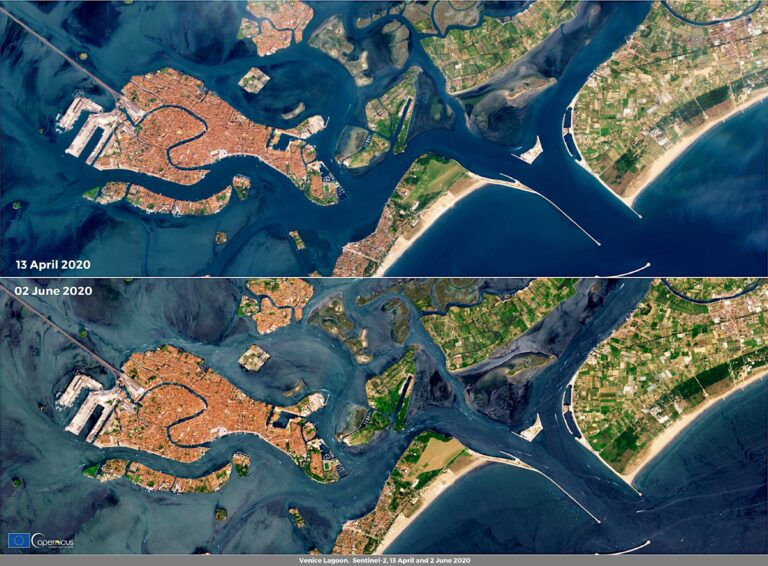
The five most-visited Italian World Heritage Sites by annual footfall are the Historic Centre of Rome (which encompasses the Colosseum, Forums, and Pantheon), Historic Florence, Pompeii, Venice, and the Amalfi Coast. Each receives millions of visitors annually. Within the same UNESCO boundary, or a short distance away, are sites with far fewer visitors that offer equivalent historical depth: the Museo Nazionale Romano’s four sites (Baths of Diocletian, Crypta Balbi, Palazzo Altemps, Palazzo Massimo), the Herculaneum excavations, the villas of Oplontis.
Natural and mixed sites
Italy’s five natural World Heritage Sites are: the Aeolian Islands (volcanic geology); the Dolomites (mountain glacial landscape); Monte San Giorgio (Triassic marine fossils); the Val d’Orcia (cultural landscape); and the Italian Longobards (though this is a serial transnational inscription). The Po Delta, Italy’s most recently inscribed site (2025), covers the largest delta in the Mediterranean.
How to find them
All Italian UNESCO sites are accessible on CHO’s interactive map: filter by region or browse themed clusters. Individual place_cards document each major site with sourced editorial history, GPS, and downloadable itinerary routes. For a guide to responsible, uncrowded visiting, see our piece on cultural travel beyond mass tourism.
Frequently Asked Questions
How many UNESCO World Heritage Sites does Italy have?
Italy has 58 UNESCO World Heritage Sites as of 2024, more than any other country. Of these, 53 are cultural properties and 5 are natural. The most recently inscribed is the Po Delta (2025 session).
What was Italy’s first UNESCO World Heritage Site?
Three sites were inscribed simultaneously at the 1979 World Heritage Committee session: the Rock Drawings in Valcamonica (Lombardy), the Church and Convent of Santa Maria delle Grazie with Leonardo’s “Last Supper” (Milan), and the Historic Centre of Rome (jointly with the Holy See).
Which Italian UNESCO site has the fewest visitors?
Among the better-known sites, the Rock Drawings in Valcamonica, the Crespi d’Adda industrial village, and the Longobard Sites in Italy attract a fraction of the visitors that Rome, Florence, or Venice receive, despite comparable inscribed value. Many of Italy’s serial inscriptions include components almost unknown outside specialist circles.
Can I visit all 58 Italian UNESCO sites?
All 58 are accessible to the public in some form, though access conditions vary: some are urban centres visited freely, some are archaeological parks with entry fees, and some (like the Monte San Giorgio fossils) require a specialist guided visit. Most are within a day’s travel of major Italian cities.
Sources used in this article
- UNESCO — Italy: World Heritage Sites.
- UNESCO — State Party Italy — World Heritage reporting.
- CHO magazine — What is a World Heritage Site?
- CHO magazine — Cultural travel beyond mass tourism.
- CHO — Interactive map of Italian heritage sites.
Sources
- S1 — Settis, Salvatore. Italia S.p.A.: L'assalto al patrimonio culturale. Einaudi, 2002. ISBN 978-88-06-16390-7.
- S2 — Montanari, Tomaso. Le pietre e il popolo: Restituire ai cittadini l'arte e la storia delle città italiane. Minimum Fax, 2013. ISBN 978-88-7521-482-1.
Spotted an error? Write to editorial@culturalheritageonline.com and we correct it the same day.