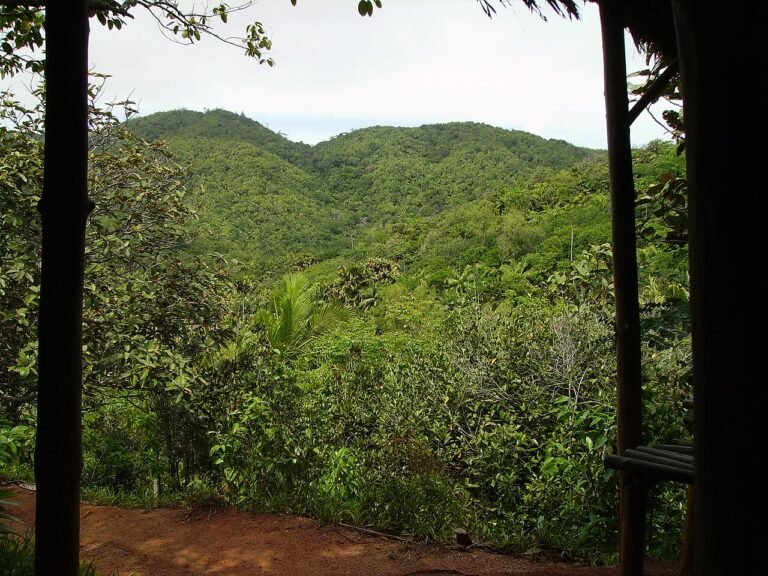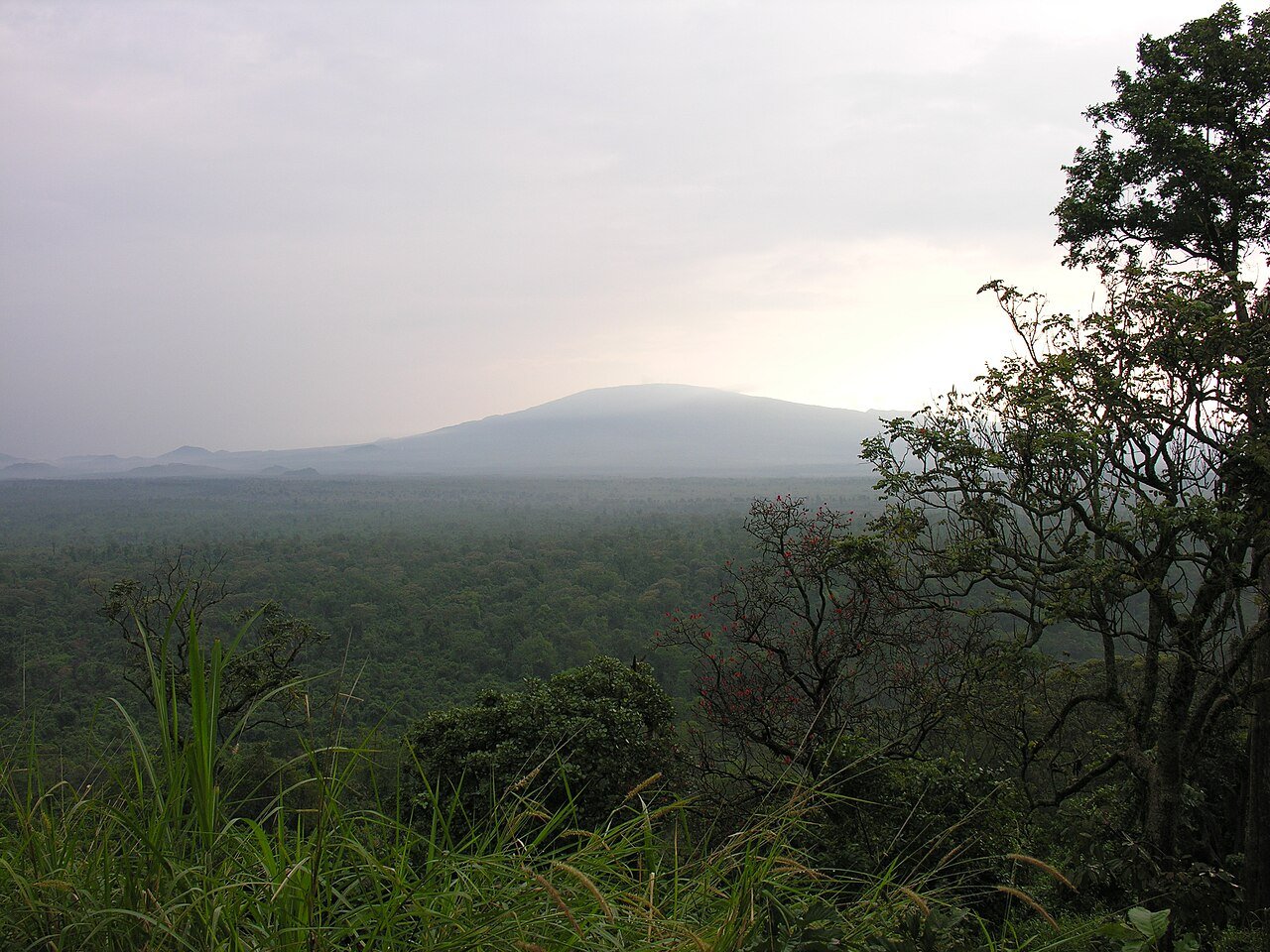
The Democratic Republic of the Congo has five UNESCO World Heritage Sites, each one a vast tract of equatorial wilderness that together protect some of the most biodiverse and ecologically important landscapes on the planet. From the volcanic highlands of the east to the barely penetrated heart of the Congo Basin, these inscriptions represent an extraordinary conservation legacy — one matched, in recent decades, by an equally extraordinary set of pressures. From Cultural Heritage Online.
Why the Democratic Republic of the Congo’s list looks the way it does
All five of the DRC’s World Heritage Sites are natural inscriptions. The country holds no cultural or mixed designations, a fact that reflects both the UNESCO evaluation process and the geopolitical realities that have made documentation and nomination of cultural sites difficult. The DRC’s immense natural endowment — it contains roughly half of Africa’s tropical rainforest — has instead driven successive nominations since the late 1970s.
That natural wealth also comes with chronic instability. Four of the five sites remain on UNESCO’s List of World Heritage in Danger, threatened by poaching, illegal mining, and the presence of armed groups operating within park boundaries. Only Salonga National Park was removed from the danger list, in 2021, after two decades of sustained conservation effort — a rare piece of positive news in an otherwise difficult picture.
The first inscriptions
The DRC entered the World Heritage roster in 1979, when Virunga National Park became the country’s first inscribed site. Africa’s oldest national park, Virunga straddles the eastern border and encompasses an active volcanic chain, the Rwenzori foothills, and habitat critical to the survival of mountain gorillas. A second inscription followed the very next year, bringing the total to three within two years of the country joining the Convention.
The sites inscribed by 1980 were:
- Virunga National Park (1979)
- Garamba National Park (1980)
- Kahuzi-Biéga National Park (1980)
The most visited — and the alternatives
Virunga commands the most international attention, primarily because of its mountain gorilla population and the long-running efforts of rangers and conservationists to protect it amid conflict. Kahuzi-Biéga, inscribed the same year as Garamba, draws visitors focused on eastern lowland gorillas — a subspecies found nowhere else — across a landscape that transitions sharply from montane forest to lowland jungle.
For those willing to look further, the other sites offer genuine ecological distinction. Garamba National Park shelters a mosaic of savanna, gallery forest, and wetland that once supported the last wild northern white rhinoceroses. Salonga National Park, inscribed in 1984, covers more than 36,000 square kilometres of Congo Basin rainforest and remains so difficult to access that significant portions have never been systematically surveyed — it is the largest protected tropical rainforest in Africa. The Okapi Wildlife Reserve, the most recent inscription at 1997, protects the forest giraffe for which it is named alongside the Mbuti and Efé peoples who have inhabited the Ituri Rainforest for centuries.
Natural and shared sites
Every World Heritage inscription in the DRC qualifies under natural criteria, with the five sites collectively recognised for outstanding universal value in biodiversity, ecology, and ongoing biological evolution. None of the country’s inscriptions are transnational or serial designations — each site stands alone as a discrete protected area within DRC borders, though Virunga shares an ecological corridor with Rwandan and Ugandan parks that together form part of the broader Albertine Rift conservation landscape.
The scale of these properties is difficult to overstate. Salonga alone is larger than Belgium. The Okapi Wildlife Reserve covers 13,700 square kilometres of Ituri — terrain so dense and remote that the okapi itself was unknown to Western science until 1901. Together, the five sites protect habitats for bonobos, forest elephants, chimpanzees, and hundreds of bird species found nowhere else in comparable concentrations.
How to find them
Access to the DRC’s World Heritage Sites requires advance planning and, for most, coordination with park authorities or specialist operators. Virunga and Kahuzi-Biéga in the east can be reached through Goma and Bukavu respectively, though security conditions should always be checked against current travel advisories before any visit. Salonga and Garamba are considerably more logistically demanding; Okapi Wildlife Reserve in the northeast is accessible from Epulu, the site of a long-established wildlife research station.
the Democratic Republic of the Congo’s World Heritage sites sit alongside thousands of other places on CHO’s interactive map, with GPS and sourced editorial history for each. See also our guides to Italy’s and France’s UNESCO sites, and our piece on cultural travel beyond mass tourism.
Frequently Asked Questions
How many UNESCO World Heritage Sites does the Democratic Republic of the Congo have?
The Democratic Republic of the Congo has five UNESCO World Heritage Sites, all of them natural inscriptions. They are Virunga National Park, Garamba National Park, Kahuzi-Biéga National Park, Salonga National Park, and the Okapi Wildlife Reserve. Four of the five remain on UNESCO’s List of World Heritage in Danger as of 2026.
What was the Democratic Republic of the Congo’s first UNESCO World Heritage Site?
Virunga National Park became the DRC’s first UNESCO World Heritage Site when it was inscribed in 1979. Africa’s oldest national park, it was recognised for its volcanic landscapes, exceptional biodiversity, and its critical role in protecting mountain gorillas. It remains among the most internationally recognised protected areas on the continent.
Are any of the DRC’s World Heritage Sites currently endangered?
Four of the five sites — Virunga, Garamba, Kahuzi-Biéga, and the Okapi Wildlife Reserve — are listed as World Heritage in Danger due to armed conflict, poaching, and illegal resource extraction. Salonga National Park was removed from the danger list in 2021 after sustained conservation measures showed measurable improvement.
What animals are protected within the DRC’s World Heritage Sites?
The five sites collectively shelter some of the world’s rarest large mammals, including mountain gorillas and eastern lowland gorillas, bonobos, forest elephants, and the okapi. Virunga also provides habitat for hippopotamuses and chimpanzees, while Garamba once protected the last wild northern white rhinoceroses before that population was lost to poaching.
Sources used in this article
- UNESCO — State Party the Democratic Republic of the Congo — World Heritage list.
- UNESCO — the Democratic Republic of the Congo: World Heritage Sites.
- CHO magazine — What is a World Heritage Site?
- CHO — Interactive map of heritage sites.
Sources
- S1 — Vansina, Jan. Paths in the Rainforests: Toward a History of Political Tradition in Equatorial Africa. University of Wisconsin Press, 1990. ISBN 978-0-299-12574-5.
- S2 — Hart, Terese B., and John A. Hart. The Okapi Reserve: Conservation in a War Zone. Oryx, 1997. / Plumptre, Andrew J., et al. The Biodiversity of the Albertine Rift. Albertine Rift Technical Reports, 2007. ISBN 978-0-521-79177-9.
Spotted an error? Write to editorial@culturalheritageonline.com and we correct it the same day.