Uganda has 3 UNESCO World Heritage Sites — two natural and one cultural — inscribed across a span of seven years that reflects the country’s extraordinary ecological depth alongside a royal heritage of singular architectural and spiritual significance. From ancient montane rainforests sheltering endangered mountain gorillas to the sacred burial grounds of the Buganda kings, Uganda’s listed sites reward careful attention from heritage travellers and researchers alike. From Cultural Heritage Online.
Why Uganda’s list looks the way it does
Uganda’s three inscriptions capture two of the country’s defining geographic realities: the high-altitude ecosystems of the western Rift Valley escarpment and the deep political culture of the lacustrine kingdoms. Both natural sites earned their status primarily under biodiversity and ecological criteria, reflecting the exceptional concentration of species — including primates, birds, and endemic flora — that defines Uganda’s western highlands. The cultural site, meanwhile, speaks to a tradition of sacred kingship that shaped the entire Great Lakes region over centuries.
The country’s tentative list, updated as recently as 2024, suggests that Uganda’s heritage landscape extends well beyond three sites. Archaeological earthworks, pre-colonial salt-production villages, and transboundary volcanic ecosystems are all under active consideration — a sign that the current roster, while small, is likely to grow.
The first inscriptions
Uganda’s World Heritage journey began in 1994, when two sites entered the list simultaneously:
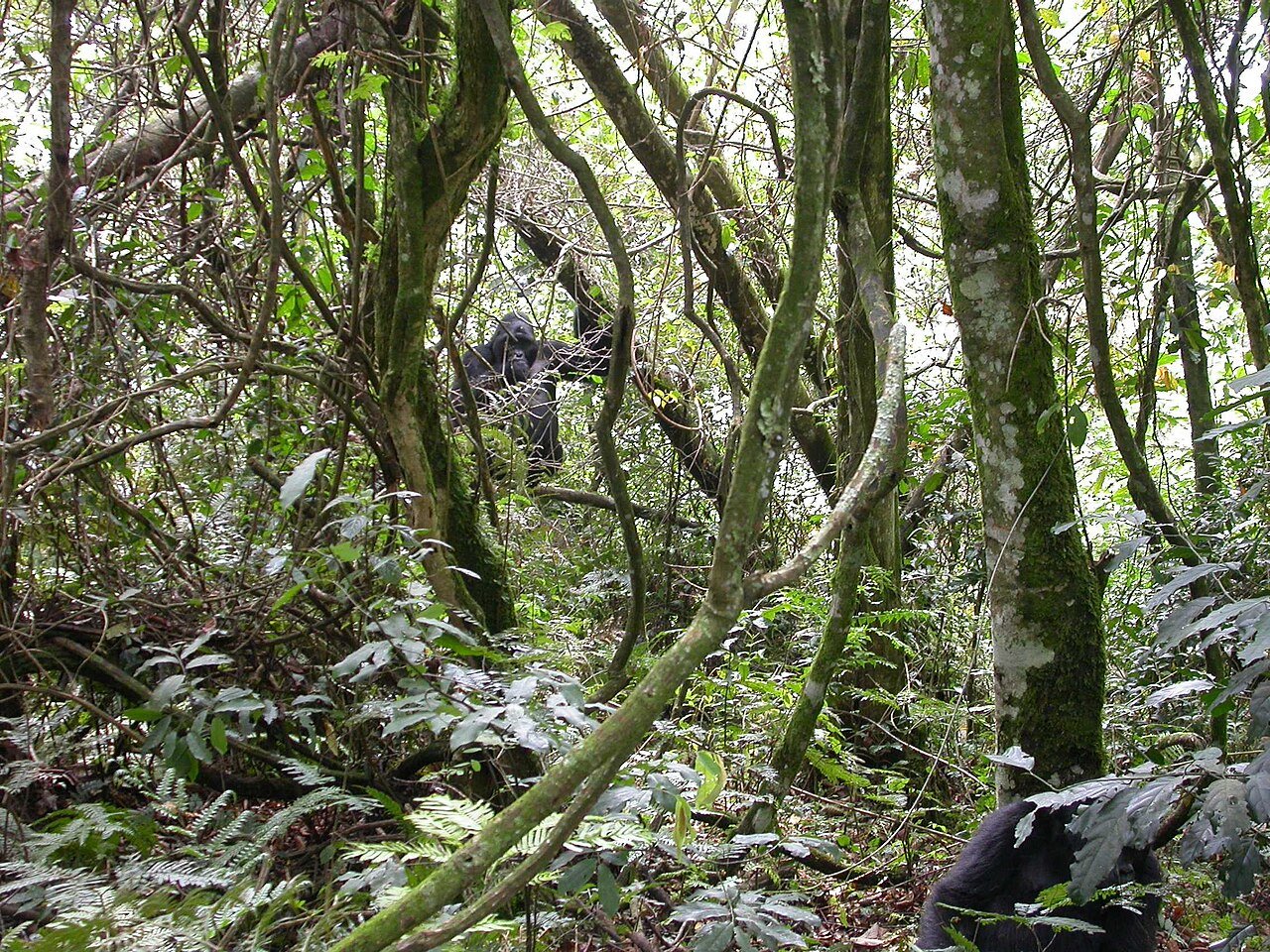
- Bwindi Impenetrable National Park — an ancient rainforest in south-western Uganda and one of the most important refugia for the endangered mountain gorilla (Gorilla beringei beringei), with roughly half the world’s population living within its borders.
- Rwenzori Mountains National Park — protecting the glaciated peaks of the “Mountains of the Moon” on the Uganda–Democratic Republic of Congo border, with permanently snow-capped summits rising above 5,000 metres and an extraordinary sequence of Afroalpine vegetation zones.
Both inscriptions were made under natural criteria, recognising outstanding universal value in terms of ecological processes, biodiversity, and natural beauty. Their simultaneous entry in 1994 established Uganda’s profile on the World Heritage map immediately as a country of remarkable natural wealth.
The most visited — and the alternatives
Bwindi draws by far the most international visitors of Uganda’s three inscribed sites. Gorilla tracking permits — limited in number to protect the animals — are among the most sought-after wildlife experiences on the continent, and the park’s misty, near-impenetrable forest canopy gives the experience a quality that open-savanna wildlife encounters rarely match. Rwenzori, whose glaciers are now retreating under climate pressure, attracts serious mountaineers and trekkers willing to cross multiple ecological belts in a single multi-day ascent.
Lesser-known but historically rich, the Tombs of Buganda Kings at Kasubi (inscribed 2001) stand on Kasubi Hill in Kampala: four royal tombs housed within a thatched architectural complex that remains an active spiritual site for the Buganda people. Among Uganda’s tentative sites, Bigo bya Mugenyi — a network of earthwork ditches along the Katonga River attributed to the 14th–16th century Bacwezi dynasty — offers a glimpse into pre-colonial state formation with few parallels in sub-Saharan archaeology. The Kibiro Salt Producing Village on the shore of Lake Albert preserves a centuries-old technique of extracting salt from naturally saline soil gardens, a practice historically conducted exclusively by women.
Natural and shared sites
Both of Uganda’s inscribed natural sites protect high-altitude ecosystems under increasing environmental pressure. Bwindi’s montane forest is one of Africa’s most biodiverse, sheltering over 120 mammal species and more than 350 bird species alongside its famous gorilla population. Rwenzori’s glacial landscape is among the few remaining sites in equatorial Africa where permanent ice persists — a reality that lends the park both outstanding scenic value and growing urgency as a record of Holocene environmental change.
On the transboundary front, the Mount Elgon Transboundary Ecosystem — straddling Uganda and Kenya and described as the oldest volcano in East Africa — appeared on Uganda’s tentative list in 2024. Serial and transboundary nominations are increasingly favoured by UNESCO for ecosystems that do not respect national borders, and Mount Elgon’s inclusion on the tentative list signals a possible future joint inscription with Kenya.
How to find them
All three inscribed sites are accessible from established tourist circuits: Bwindi from Buhoma or Rushaga in the south-west, Rwenzori from Kasese in the west, and Kasubi from central Kampala. Bwindi and Rwenzori both require advance booking for guided access; Kasubi, though it suffered a significant fire in 2010 and underwent restoration, is open to visitors and remains a functioning royal burial site requiring respectful protocols.
Uganda’s World Heritage sites sit alongside thousands of other places on CHO’s interactive map, with GPS and sourced editorial history for each. See also our guides to Italy’s and France’s UNESCO sites, and our piece on cultural travel beyond mass tourism.
Frequently Asked Questions
How many UNESCO World Heritage Sites does Uganda have?
Uganda has 3 UNESCO World Heritage Sites as of 2025: Bwindi Impenetrable National Park, Rwenzori Mountains National Park, and the Tombs of Buganda Kings at Kasubi. Two are classified as natural sites and one as a cultural site. Uganda also maintains a tentative list of 8 additional sites under consideration for future nomination.
What was Uganda’s first UNESCO World Heritage Site?
Uganda’s first UNESCO World Heritage Sites were Bwindi Impenetrable National Park and Rwenzori Mountains National Park, both inscribed simultaneously in 1994. Both sites were recognised under natural criteria for their exceptional biodiversity and outstanding ecological and scenic value.
What is the cultural World Heritage Site in Uganda?
The Tombs of Buganda Kings at Kasubi, inscribed in 2001, is Uganda’s sole cultural World Heritage Site. Located on Kasubi Hill in Kampala, the complex comprises four royal tombs housed in a large thatched structure and remains an active place of spiritual significance for the Buganda kingdom.
Are there any transboundary World Heritage Sites involving Uganda?
No transboundary site involving Uganda is currently inscribed, but the Mount Elgon Transboundary Ecosystem — shared with Kenya and described as the oldest volcano in East Africa — was added to Uganda’s tentative list in 2024. Transboundary nominations require coordination between both states before a formal dossier can be submitted to UNESCO.
Sources used in this article
- UNESCO — State Party Uganda — World Heritage list.
- UNESCO — Uganda: World Heritage Sites.
- CHO magazine — What is a World Heritage Site?
- CHO — Interactive map of heritage sites.
Sources
- S1 — Reid, Richard J. Political Power in Pre-Colonial Buganda: Economy, Society and Warfare in the Nineteenth Century. James Currey, 2002. ISBN 978-0-85255-788-4.
- S2 — Howard, Peter C. Nature Conservation in Uganda's Tropical Forest Reserves. IUCN, 1991. ISBN 978-2-88032-999-0.
Spotted an error? Write to editorial@culturalheritageonline.com and we correct it the same day.