The Caribbean is home to 26 UNESCO World Heritage Sites across more than a dozen countries and territories, spanning colonial fortifications, Afro-Caribbean cultural landscapes, tropical rainforests, and volcanic marine ecosystems. Across the Greater and Lesser Antilles, from the layered colonial city blocks of Old Havana to the twin lava peaks of Saint Lucia’s Piton mountains, each inscription marks a place where human history and natural process have left a record worth protecting. From Cultural Heritage Online.
The shape of the Caribbean’s World Heritage list
Of the 26 inscribed sites, 19 carry cultural designation, six are classified as natural, and one — Blue and John Crow Mountains in Jamaica, inscribed in 2015 — holds mixed status, recognised for both its biodiversity and its significance as a refuge for the Maroon communities who retreated there during the era of plantation slavery. The list covers a wide chronological spread: the earliest inscriptions date to 1982, when Old Havana and its Fortifications and Haiti’s National History Park (the Citadel, Sans-Souci and Ramiers complex) entered the register in the same year.
The most recent addition is the Archaeological Ensemble of 17th Century Port Royal in Jamaica, inscribed in 2025. Port Royal, once one of the wealthiest and most frequented trading ports in the Americas before its partial destruction by an earthquake and tsunami in 1692, was recognised for its outstanding universal value as a submerged archaeological site. Before that, France’s overseas territory of Martinique gained inscription in 2023 for the Volcanoes and Forests of Mount Pelée and the Pitons of Northern Martinique, a natural site centred on the stratovolcano responsible for the 1902 eruption that destroyed Saint-Pierre.
Countries with the most inscriptions
Cuba accounts for nine of the region’s 26 sites, making it the dominant country on the Caribbean World Heritage list by a considerable margin. Its inscriptions range from the urban morphology of Old Havana (1982) and the sugar-estate valley landscape around Trinidad (1988) to the karst topography of Viñales Valley (1999) and the biodiversity-rich Alejandro de Humboldt National Park (2001). No other Caribbean state comes close to that count.
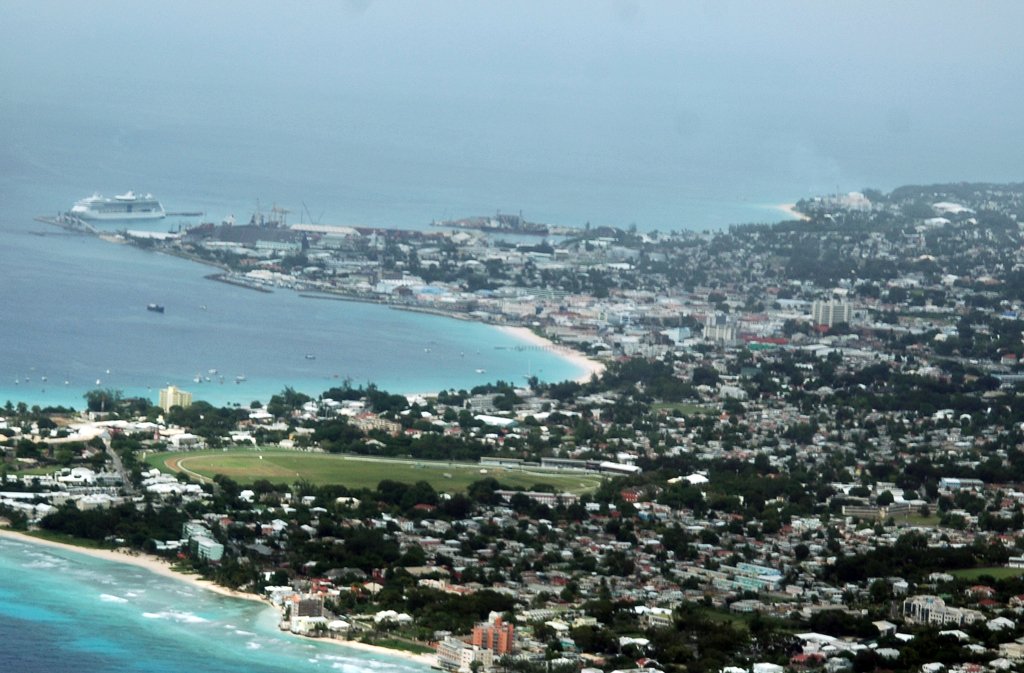
Jamaica holds two inscriptions: the mixed Blue and John Crow Mountains and the newly added Port Royal. The Dominican Republic, Puerto Rico (as a United States territory), Antigua and Barbuda, Barbados, Saint Kitts and Nevis, Saint Lucia, Dominica, Curaçao (Netherlands), and Martinique (France) each hold one inscription. Haiti’s single site, the National History Park, remains one of the most historically significant in the region, encompassing the royal palace of Sans-Souci and the Citadel Laferrière — built after Haiti became the first Black republic to gain independence in 1804.
Cross-border and serial sites
Cuba’s Archaeological Landscape of the First Coffee Plantations in the South-East of Cuba, inscribed in 2000, functions as a serial cultural landscape, documenting the environmental transformation and social organisation of the coffee economy in the Sierra Maestra foothills across multiple plantation remains. The site captures a period of intense agricultural colonisation by French settlers who arrived from Haiti following the Haitian Revolution.
The Caribbean’s World Heritage list also reflects the layered territorial geography of the region. Several inscribed sites sit within the boundaries of non-independent territories: Puerto Rico’s La Fortaleza and San Juan National Historic Site (inscribed 1983) is administered by the United States, while Martinique’s volcanic landscape and the Historic Area of Willemstad in Curaçao fall under French and Dutch sovereignty respectively. This means the count of 26 sites spans sovereign states, autonomous territories, and overseas departments — a structural feature that distinguishes the Caribbean list from most other UNESCO regional groupings.
Natural and mixed-criteria sites
The natural sites on the Caribbean list concentrate on two recurring landscape types: volcanic island ecosystems and marine environments. Morne Trois Pitons National Park in Dominica (1997) protects a dense tropical forest built around an active volcanic complex, including boiling lakes and fumarolic fields. The Pitons Management Area in Saint Lucia (2004) is defined by its two steep-sided volcanic plugs rising from the sea — a formation that has shaped Saint Lucian cultural identity as well as its ecology. Desembarco del Granma National Park in Cuba, also natural (1999), preserves some of the most intact marine terraces and coastal karst in the Western Hemisphere.
The Belize Barrier Reef Reserve System, inscribed in 1996 and removed from the List of World Heritage in Danger in 2018 after conservation improvements, is the largest barrier reef in the Northern Hemisphere and a central reference for Caribbean marine biodiversity. Blue and John Crow Mountains in Jamaica, the region’s only mixed site, ties the island’s cloud forest ecology directly to the cultural survival of the Windward Maroons — communities whose oral traditions, spiritual practices, and settlement patterns are inseparable from the mountain terrain they have inhabited for centuries.
Explore the Caribbean’s UNESCO heritage
CHO maintains editorial guides for the countries and territories in the Caribbean with UNESCO inscriptions. Each guide covers every inscribed site with sourced historical context, GPS coordinates, and practical access information.
- Cuba (9 sites)
- Dominican Republic (1 site)
- Haiti (1 site)
- Jamaica (2 sites)
- Barbados (1 site)
- Saint Lucia (1 site)
- Saint Kitts and Nevis (1 site)
- Belize (1 site)
Every site in this list is pinpointed on CHO’s interactive heritage map, with GPS coordinates and sourced editorial history. See our guide to UNESCO World Heritage criteria, and our piece on cultural travel beyond mass tourism.
Frequently Asked Questions
How many UNESCO World Heritage Sites does the Caribbean have?
The Caribbean has 26 UNESCO World Heritage Sites inscribed across more than a dozen countries and territories. Of these, 19 are cultural sites, six are natural, and one — Blue and John Crow Mountains in Jamaica — holds mixed status for its combined natural and cultural significance.
Which country in the Caribbean has the most UNESCO World Heritage Sites?
Cuba leads the Caribbean with nine inscribed UNESCO World Heritage Sites, more than three times the count of any other single country in the region. Its inscriptions range from colonial urban centres to national parks and agricultural cultural landscapes.
What was the first UNESCO World Heritage Site inscribed in the Caribbean?
Two sites share the distinction of being the Caribbean’s earliest inscriptions, both entered on the World Heritage List in 1982: Old Havana and its Fortifications in Cuba, and Haiti’s National History Park, which encompasses the Citadel Laferrière and the palace of Sans-Souci. Both remain among the most visited heritage sites in their respective countries.
Are any Caribbean World Heritage Sites at risk?
The Belize Barrier Reef Reserve System was placed on the List of World Heritage in Danger in 2009 due to development pressure and environmental threats, and was removed from the danger list in 2018 following improved legal protections. Several Caribbean sites face ongoing challenges from climate change, including sea-level rise, intensified hurricane activity, and coral bleaching affecting marine ecosystems.
Sources used in this article
- UNESCO — List of World Heritage Sites in the Caribbean.
- CHO magazine — What is a World Heritage Site?
- CHO — Interactive map of heritage sites.
Sources
- S1 — Knight, Franklin W. The Caribbean: The Genesis of a Fragmented Nationalism. Oxford University Press, 1990. ISBN 978-0-19-505441-5.
- S2 — Craton, Michael, and Gail Saunders. Islanders in the Stream: A History of the Bahamian People. University of Georgia Press, 1998. ISBN 978-0-8203-2122-6.
Spotted an error? Write to editorial@culturalheritageonline.com and we correct it the same day.