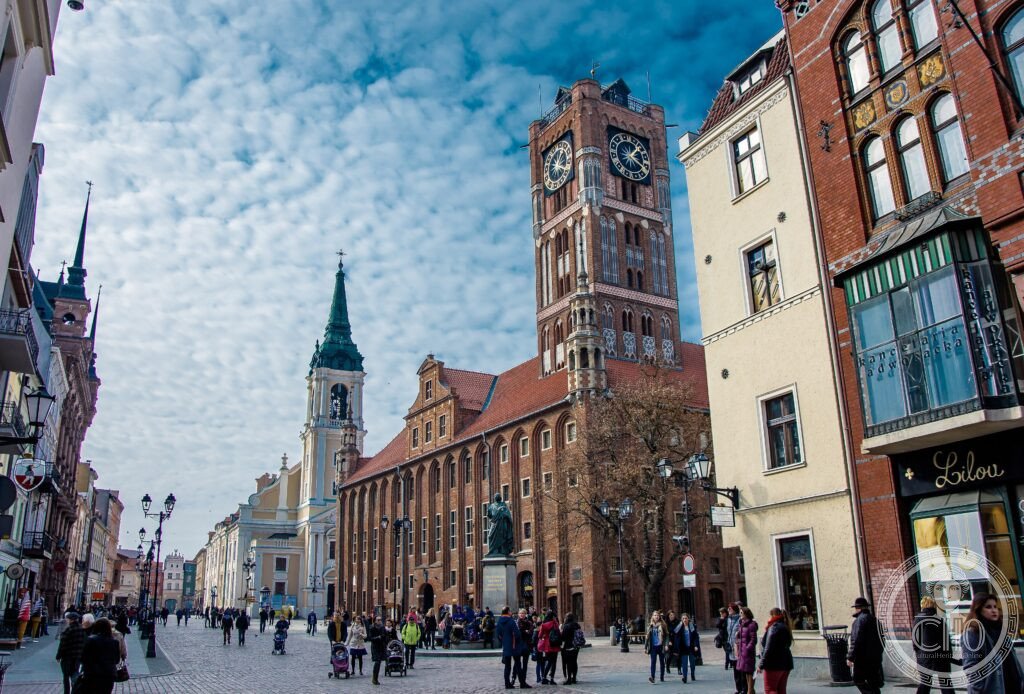
Mirko Vucetich’s Veneto: the Memorials, the Chess Game, and a Sculpture in the Giardini
Ten stops, about 250 km, two or three days: the Veneto of Mirko Vucetich (Bologna 1898 – Vicenza 1975), the
Ten stops, about 250 km, two or three days: the Veneto of Mirko Vucetich (Bologna 1898 – Vicenza 1975), the
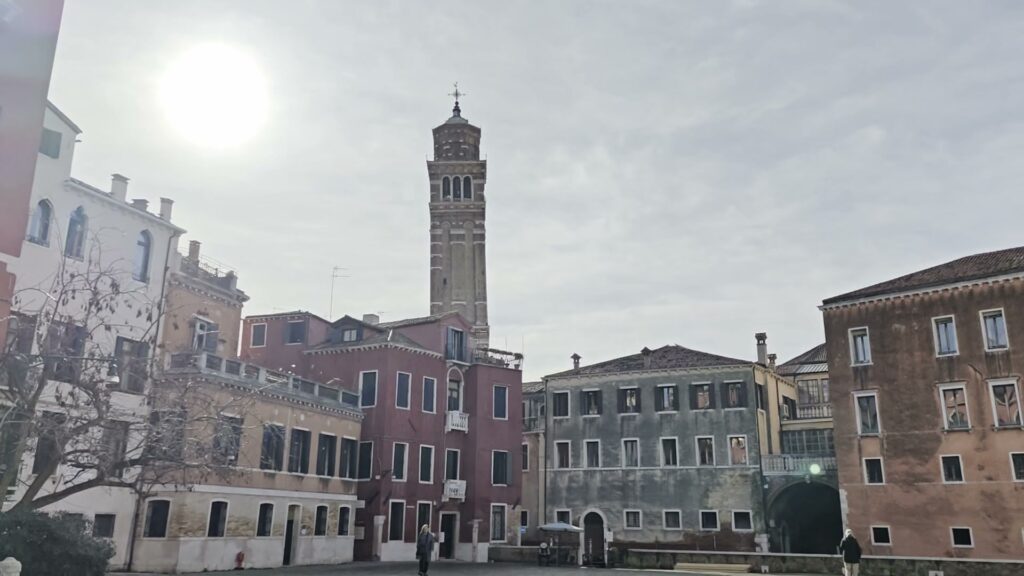
Nine stops from Campo Santo Stefano across the Accademia bridge into Dorsoduro: a church with a ship’s-keel roof and a bell tower out of true, the monument Venice nicknamed the cagalibri, the yard where gondolas are still built, a church with two front doors, the eighteenth-century palace of Ca’ Rezzonico, the bridge where Venice used to fight, the building that stands alone in Campo Santa Margherita, the university on the Grand Canal, and the church of San Pantalon.
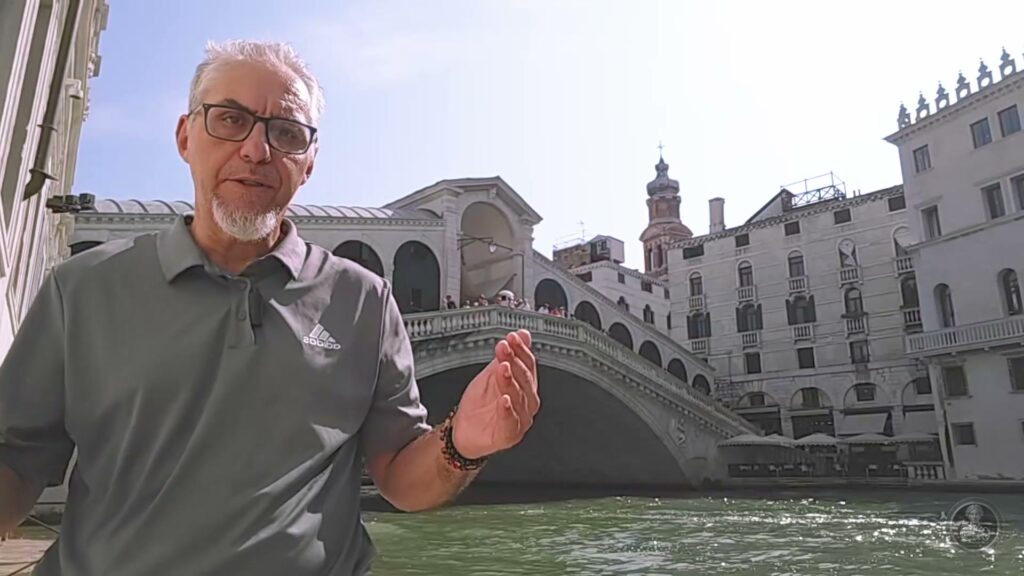
Eight stops from the oldest bridge on the Grand Canal through the market, the stone Venice read its sentences from, the fish hall with the minimum sizes carved in marble, the bridge on the edge of the licensed quarter, and the three great halls of San Giovanni Evangelista, the Frari and San Rocco.
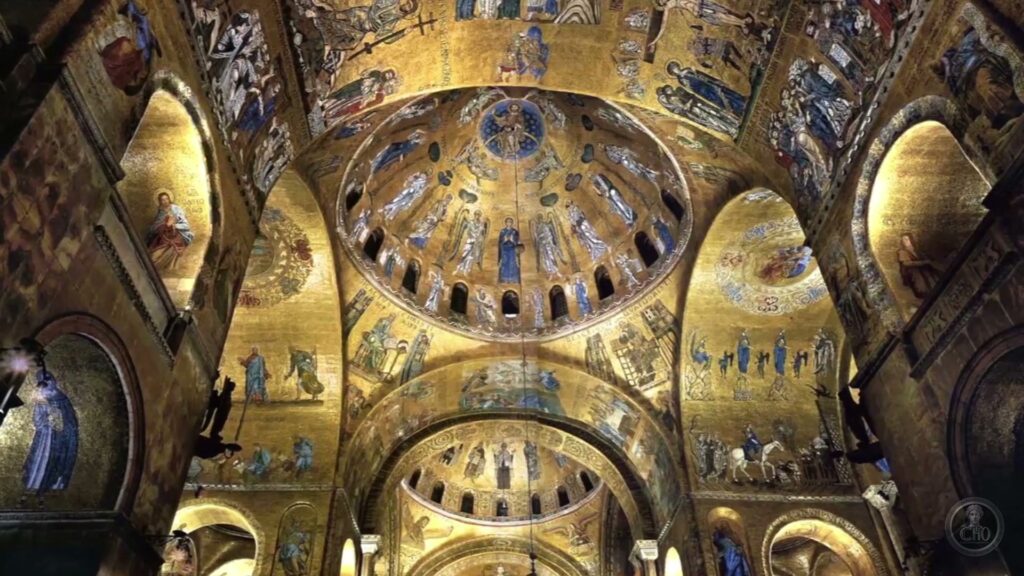
Ten stops from Campo Santi Giovanni e Paolo to Piazza San Marco and on towards Campo Manin: a hospital behind the marble front of the Scuola Grande di San Marco, the church of the Miracoli, a bookshop named after the high water, the Bridge of Sighs, the two columns at the water’s edge where the Republic carried out its sentences, the tower that fell in 1902, the basilica, the clock that has been read from the paving since 1499, the staircase of the Contarini del Bovolo, and a filled-in canal named after the murders on its bridge.
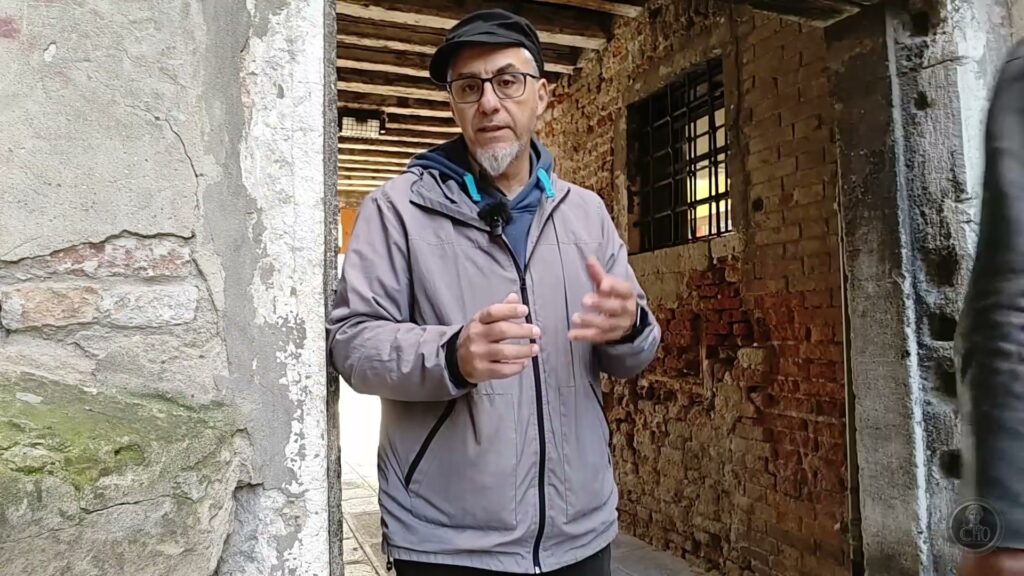
Ten places across Cannaregio, each opened by a short video filmed and narrated on site by Andrea Manzo: the two Ghetto squares, a cinema that became a supermarket, the palace of the Turkish merchants, Codussi on the Grand Canal, a round church with an eye over the door, four stone men in a wall, Sansovino’s hall that was a basketball court, the last bridge without a parapet, and the narrowest street in the city.
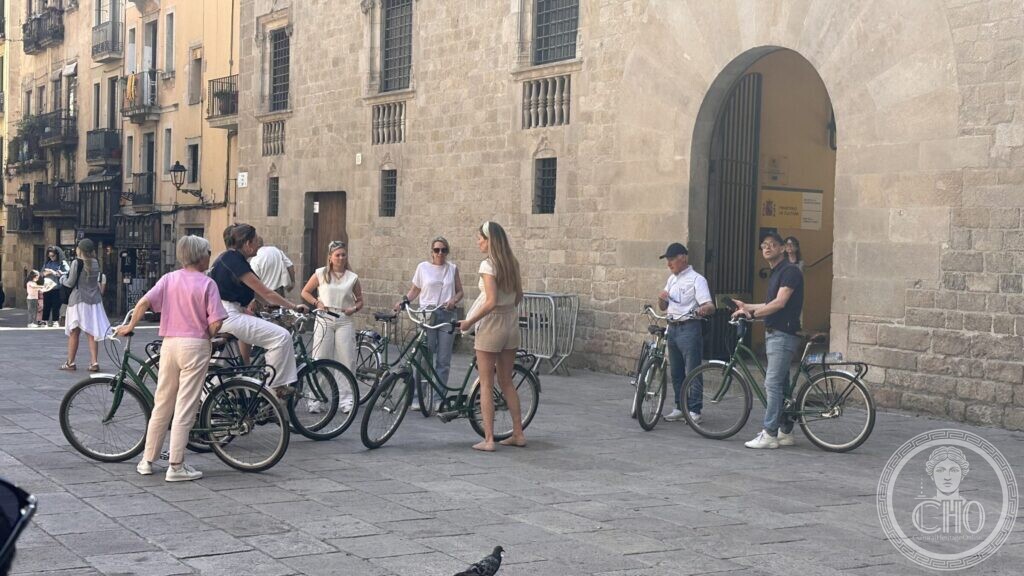
Nine stops from the Roman gate of Bàrcino to Santa Maria del Mar, each opening with a 360° panorama: the walk through a medieval quarter that was largely assembled in the twentieth century, out of stones carried here from streets that no longer exist.
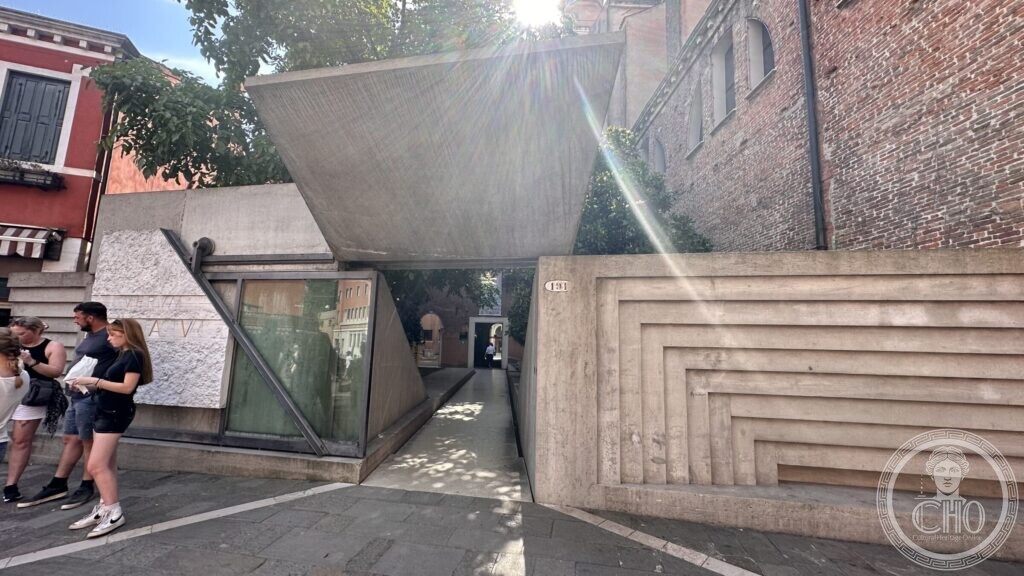
Four works Carlo Scarpa left inside the historic city, walked west to east in under three kilometres. It begins at the Tolentini with the gate he drew from 1966 for the school of architecture and never saw built: a tilted canopy, a gate balanced between stone and glass, a Gothic portal laid flat in water — completed in 1985, seven years after his death, and now taken out of use so that it can be looked at. Then the Aula Mario Baratto, the ceremonial hall of Ca’ Foscari on the piano nobile of its Gothic palace, and the Negozio Olivetti under the Procuratie: 118 square metres built in 1957–58, the smallest major architectural work in Italy and the most studied. It ends at the Querini Stampalia, where his water garden sits behind a palazzo open as a home museum since 1869.
Seven crossings that carry Venice’s weight: the 1933 road bridge across the lagoon, the Istrian-stone Scalzi rebuilt in 1934, Eugenio Miozzi’s prestressed Papadopoli and his overlooked pair on the Rio Novo, Antonio da Ponte’s Rialto of 1591 and the Bridge of Sighs — passing the Region’s brick offices by the station and the barracks where Venice’s firemen keep their boats. A walk about who builds, rebuilds and maintains the crossings a city on water cannot live without. Our digital walk for the European Heritage Days 2026 (26-27 September).
Five places between Rialto, San Marco, Castello and Cannaregio where Venice has eaten and drunk standing up, in under three kilometres. An osteria at the sign of the two swords is documented near San Matteo di Rialto from 1414; in 1488 its host led the innkeepers’ guild, and Casanova supped there on a carnival night in 1745. A few steps away, Naranzaria trades under the arcades Scarpagnino raised after the fire of 1514, on the stretch of market once called the Naranzeria, where the citrus of the Mediterranean was sold. Caffè Florian opened on 29 December 1720 under the sign Alla Venezia Trionfante and has traded in the same rooms ever since, its interiors remade by Lodovico Cadorin from 1858. All’Aciugheta has been run by Gianni Bonaccorsi since 1978. The walk ends at the house Titian rented in 1531 and died in forty-five years later, which still holds the last gold-beater’s workshop in Venice.