
Ninety-six. That is the number of Italian films distributed in 1942, according to the count in Treccani’s Enciclopedia del Cinema. Four years earlier the figure had been forty-five.
It is a number about a market, not about art, and it is the most useful thing to know about the year. In 1942 Italy had a purpose-built studio city five years old, a state film school with its own campus, an audience with nothing foreign to watch, and a war going badly. The ninety-six films came out of the space between those four facts, and so did the buildings this archive documents.
The year the Americans left
On 4 September 1938 a royal decree-law established a state monopoly on the purchase, import and distribution of foreign films in Italy, its possessions and colonies. It is remembered under the name of Dino Alfieri, then minister of popular culture. The four largest American studios — MGM, 20th Century-Fox, Warner and Paramount — answered by pulling their films out of the Italian market from 1 January 1939.
The Enciclopedia del Cinema gives the consequences as figures: the Italian share of its own market rose from 13.7 per cent in 1938 to 35.1 per cent in 1939; the number of Italian films distributed went from forty-five in 1938 to ninety-six in 1942; takings rose from 75 to 350 million lire. A measure taken for reasons of foreign currency had, within four years, roughly doubled a national film industry.
What that bought is worth stating plainly, because it cuts both ways. A protected market produces films; it does not by itself produce good ones. A handful of the ninety-six are still discussed; most are not. But the industrial fact is what allowed those four or five to exist: crews in continuous work, a school turning out technicians, and stages booked solid.
Where they were made
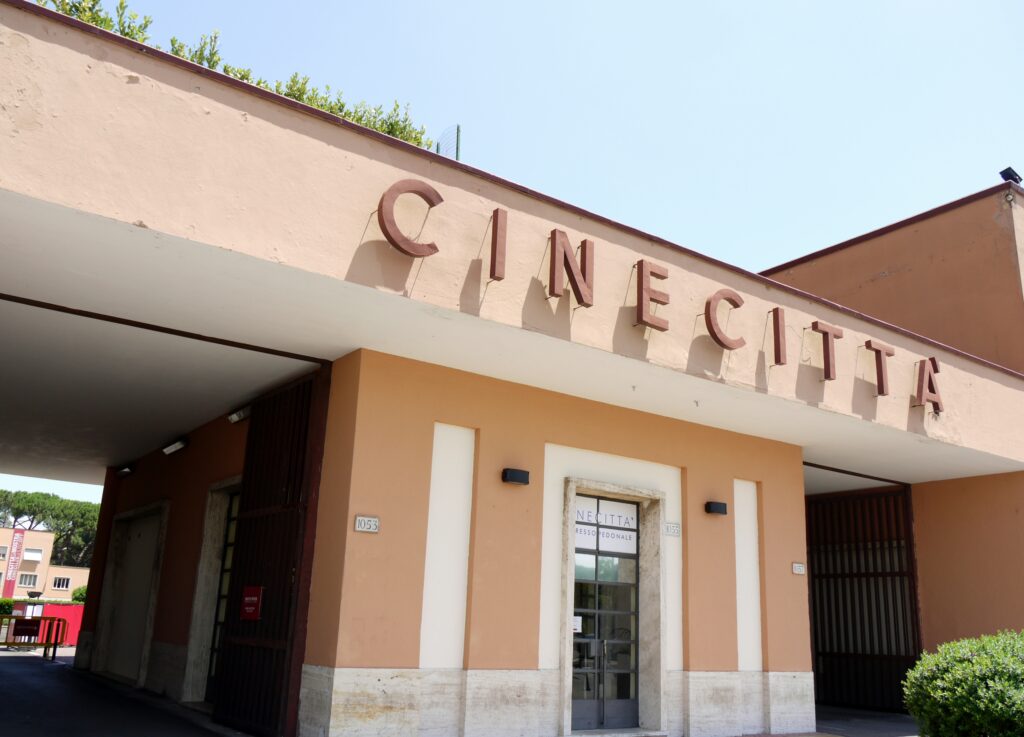
Cinecittà opened on 28 April 1937 on via Tuscolana in Rome: 400,000 square metres, designed by the architect Gino Peressutti with the engineer Carlo Roncoroni, built after a fire destroyed the older Cines studios. It remains the largest film studio in Europe. We have documented both the complex and its entrance building separately.
The other half of the system sits on the same road. The Centro Sperimentale di Cinematografia, the state film school, was established on 13 April 1935 and began in the basement of a middle school. The campus it still occupies was designed by Antonio Valente with Pietro Aschieri, begun in 1937, and paid for — on the initiative of Luigi Freddi, head of the new government directorate for cinema — out of the takings of the Venice casino. Alessandro Blasetti taught directing there.
In 1942 Blasetti also directed Quattro passi fra le nuvole, the film of that year the Enciclopedia del Cinema names as a forerunner of neorealism for its attention to ordinary people and ordinary settings.
What the ninety-six were
Three groups account for most of the list.
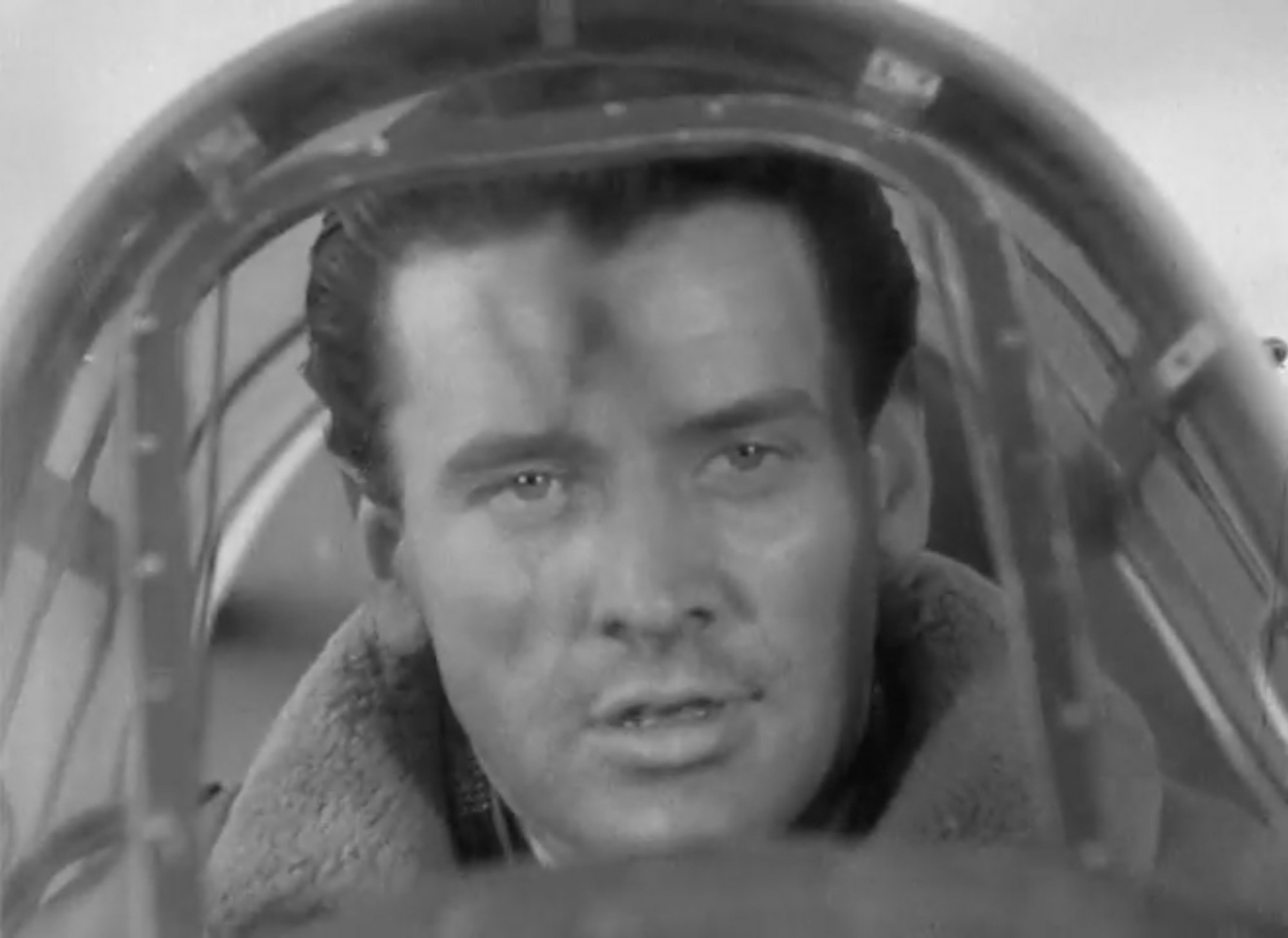
The service films. Bengasi, directed by Augusto Genina, tells the story of the fifty-seven-day siege of the Italian garrison at Benghazi. Un pilota ritorna, set in the Greek campaign, followed La nave bianca, which Rossellini had directed in 1941 for the film unit of the Ministry of the Navy at the invitation of Francesco De Robertis — a serving naval officer who in 1942 directed Alfa Tau! himself. Treccani’s entry on Rossellini reads these as propaganda war films in which “a documentary and anti-rhetorical intent is already showing through” — a judgement made about the form of the films, not about what they were made to do.
The literary adaptations. Malombra, Gelosia, La cena delle beffe, I due Foscari, Le due orfanelle, Via delle Cinque Lune, La bisbetica domata: a year heavy with novels and plays, and with the careful, decorative style that critics afterwards called calligrafismo. Costume was a safe place to put money and talent.
The comedies — Avanti c’è posto…, Non ti pago!, A che servono questi quattrini?, Dove andiamo, signora? — which is where most of the audience actually was.
Two entries in the year deserve to be pulled out of the alphabet.
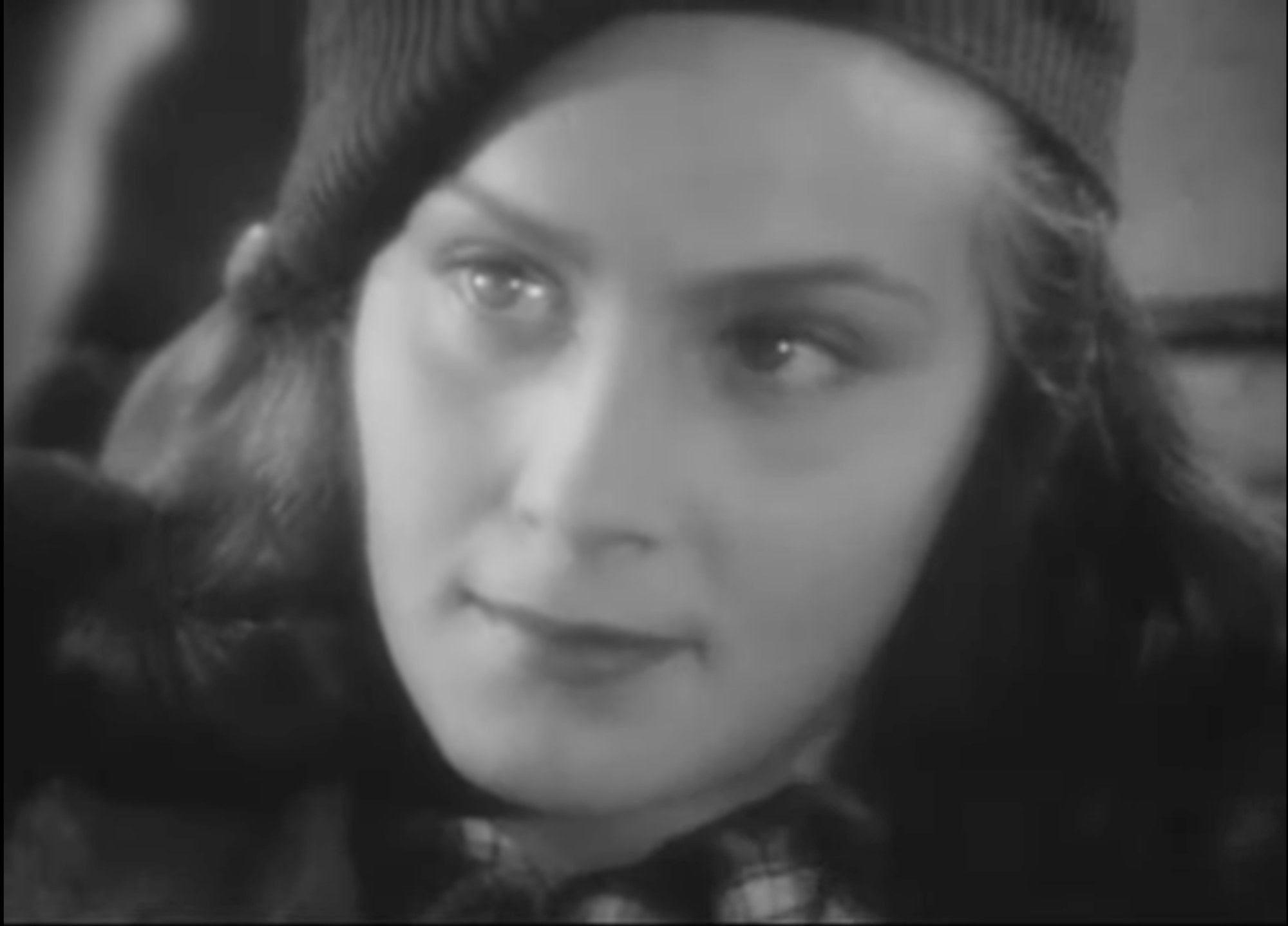
Noi vivi and Addio Kira look like two films and are one. Goffredo Alessandrini shot a single adaptation of We the Living, the novel by Ayn Rand, for Scalera/Era; after cuts it was released in two parts, of 94 and 96 minutes, with Alida Valli as Kira Argounova, Fosco Giachetti as Andrei Taganov and Rossano Brazzi as Leo Kovalenski. It was made as an anti-Soviet picture, and Treccani records that the course of the war cut its run short.
Odessa in fiamme was the first film made under a cinema co-production agreement between Italy and Romania. Carmine Gallone directed it, with the soprano Maria Cebotari; the story moves between Chișinău and Odessa, and Treccani’s biographical entry on Gallone describes it as anti-communist propaganda set in the Soviet Union. It is the only title in the year that belongs to two countries’ film histories at once.
A festival held away from its own building
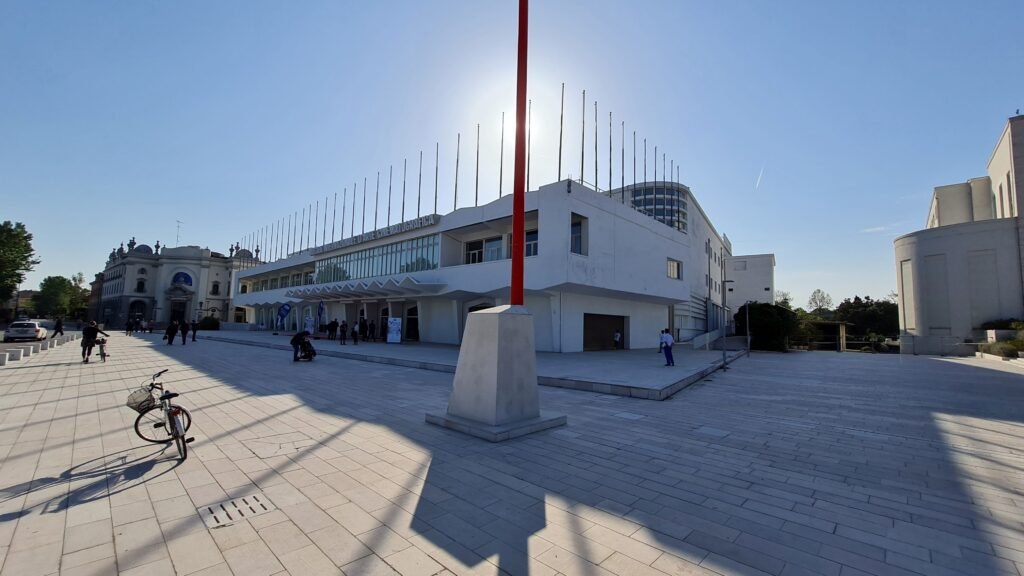
The Palazzo del Cinema had stood on the Lungomare Marconi since 10 August 1937, purpose-built to give the Venice film festival a permanent home and a hall of 1,032 seats. In 1942 the festival was held without it. The Biennale’s own history puts it in one line: “Le edizioni del 1940, 1941 e 1942, che in seguito si considerarono come non avvenute, si svolsero lontano dal Lido” — the 1940, 1941 and 1942 editions, later treated as not having taken place, were held away from the Lido.
They handed out prizes all the same. Bengasi took the Coppa Mussolini for best Italian film and Fosco Giachetti the Coppa Volpi for male performance — the same actor who that year played Andrei Taganov in Noi vivi. Then the festival stopped: nothing from 1943 to 1945.
The building is still there, still the main hall of the Mostra, and the three editions it did not host are still uncounted.
December
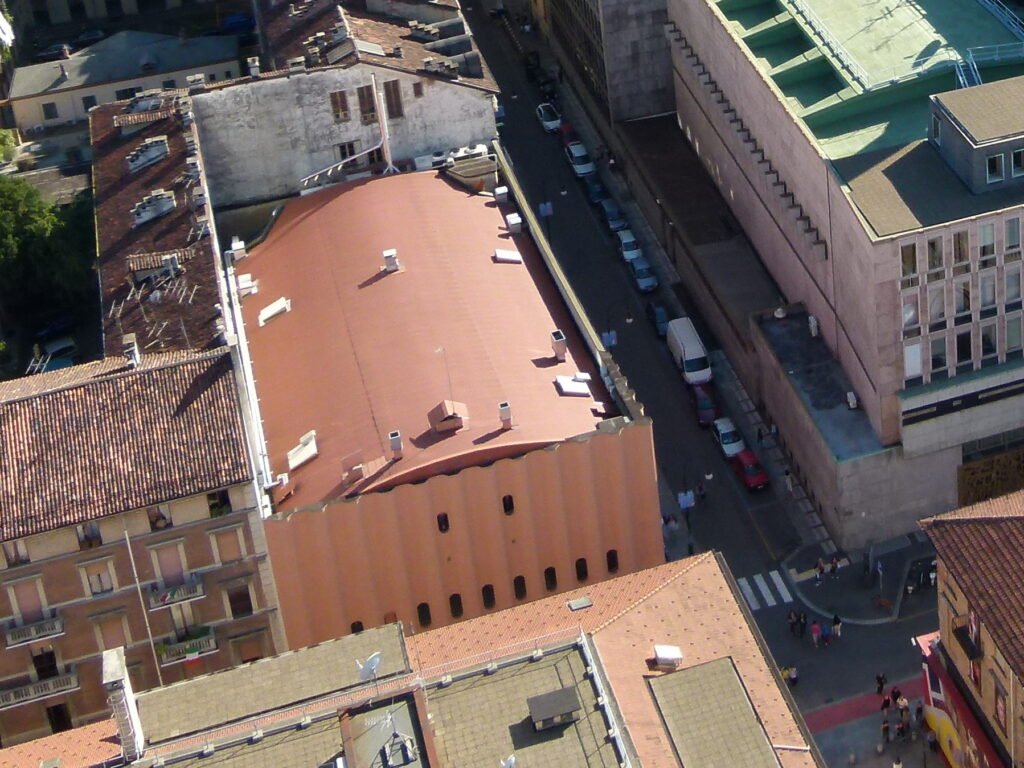
On 8 December 1942 Allied bombing severely damaged the Cinema Massimo in Turin, gutting much of the auditorium. It had opened in 1934 to a design by Ottorino Aloisio, a founding figure of the Italian Movement for Rational Architecture, as a single hall of a thousand seats behind a flat, unornamented front. Aloisio rebuilt it himself in 1946, in simpler forms; it is now the cinema of the Museo Nazionale del Cinema and the home of the Torino Film Festival.
The two halves of 1942 sit badly together, which is the reason to put them on one page. The industry put out twice as many films that year as four years earlier, and the halls they were shown in were being destroyed while it did so.
The posters, and why none is reproduced here
Italian film posters of these years were authored work, and the authors are known. The Enciclopedia del Cinema names the workshop where several of them trained — a lithographic establishment run by the director Enrico Guazzoni — and the men who passed through it: Federico Ballester and his son Anselmo, Alfredo Capitani, Luigi Martinati, Marcello Dudovich, Tito Corbella. They are described there as the great old poster artists who “had marked the cinematic imagination between the two wars”. A poster for a 1942 release was a commissioned drawing, printed by hand from stone or zinc, and signed.
No poster appears on this page. We looked for one we could publish and did not find it. These are graphic works by artists who died within living memory, and the copies circulating online generally carry no licence that survives inspection: the single Italian poster from 1942 we found on Wikimedia Commons is sourced to a Pinterest pin and tagged as though its author had been dead for seventy years, which for a 1942 studio commission is not a claim anyone can stand behind. Saying that is more useful than publishing the image and hoping.
The sheets themselves exist, in private collections. If you own one and will let us photograph it, we would like to show it — inside an article, once, credited to its illustrator. We do not put them on sale.
The films, and the day each one comes round again
Six of the ninety-six titles now have their own page, each on the day it reached Italian cinemas. Noi vivi and Addio Kira share one page, since they are one film released in two parts on the same day.
- Un pilota ritorna, Roberto Rossellini — released 8 April 1942
- Bengasi, Augusto Genina — released 5 September 1942
- Noi vivi – Addio Kira, Goffredo Alessandrini — released 14 September 1942
- Odessa in fiamme, Carmine Gallone — released 14 September 1942
- Alfa Tau!, Francesco De Robertis — gala premiere 26 September 1942
- Quattro passi fra le nuvole, Alessandro Blasetti — released 23 December 1942
The people of 1942, and the days we mark them
Eleven of the names on this page have two dates in our calendar — one for the birth, one for the death — and each comes round again every year on the day. The dates are taken from the Treccani Enciclopedia del Cinema and Dizionario Biografico degli Italiani, and checked against a second, independent record.
- Massimo Girotti, actor — born 18 May 1918, Mogliano (Macerata) · died 6 January 2003, Rome
- Alida Valli, actress — born 31 May 1921, Pola, today Pula · died 22 April 2006, Rome
- Fosco Giachetti, actor — born 28 March 1900, Sesto Fiorentino · died 22 December 1974, Rome
- Rossano Brazzi, actor — born 18 September 1916, Bologna · died 24 December 1994, Rome
- Augusto Genina, director of Bengasi — born 28 January 1892, Rome · died 28 September 1957, Rome
- Roberto Rossellini, director of Un pilota ritorna — born 8 May 1906, Rome · died 3 June 1977, Rome
- Alessandro Blasetti, director of Quattro passi fra le nuvole — born 3 July 1900, Rome · died 1 February 1987, Rome
- Goffredo Alessandrini, director of Noi vivi – Addio Kira — born 9 September 1904, Cairo · died 16 May 1978, Rome
- Francesco De Robertis, director of Alfa Tau! — born 16 October 1902, San Marco in Lamis · died 3 February 1959, Rome
- Carmine Gallone, director of Odessa in fiamme — born 10 September 1885, Taggia · died 11 March 1973, Frascati
- Maria Cebotari, soprano — born 10 February 1910, Chișinău · died 9 June 1949, Vienna (days from a weaker source — see the note below)
Ten of the eleven rest on the same footing. The eleventh does not, and we would rather say so than hide it: for Maria Cebotari the reference works we rely on — Treccani, the Deutsche Biographie — give only the years, 1910 and 1949, with Chișinău and Vienna. The days on her two pages, 10 February and 9 June, rest on Wikipedia alone. What is independently documented is the funeral: the photograph of the procession on the Vienna Ringstrasse, held in the Austrian National Library’s collection of US Information Services images, is dated 13 June 1949. Her pages carry the same warning. If you can point us to a register that gives the days, we will confirm or correct them.
Details
- Italian films distributed: 45 in 1938, 96 in 1942 (Enciclopedia del Cinema)
- Domestic share of the Italian market: 13.7% in 1938, 35.1% in 1939
- Box office: from 75 to 350 million lire over the same period
- The decree: royal decree-law of 4 September 1938, no. 1389, state monopoly on the purchase, import and distribution of foreign films
- American withdrawal: MGM, 20th Century-Fox, Warner and Paramount, from 1 January 1939
- Cinecittà: opened 28 April 1937, via Tuscolana, Rome; 400,000 m²
- Centro Sperimentale di Cinematografia: established 13 April 1935; campus by Antonio Valente and Pietro Aschieri, begun 1937
- Venice 1942: held away from the Lido; Coppa Mussolini for best Italian film to Bengasi, Coppa Volpi to Fosco Giachetti; festival interrupted 1943–45
- Cinema Massimo, Turin: opened 1934, bombed 8 December 1942, rebuilt 1946
Where you can still stand
- Cinecittà, Rome — the studios, with a 360° tour
- Palazzo del Cinema, Lido di Venezia — the hall the 1942 festival did not use
- Cinema Massimo, Turin — bombed in December 1942, rebuilt, still a cinema
- Centro Sperimentale di Cinematografia, Rome — the school on via Tuscolana
- Istituto Luce — the archive that filmed the same years
- Fascist-era architecture in Italy — one label, many styles
Do you know more?
On this page we have published what can be seen and what we were able to verify. About the posters of these films, and the illustrators who signed them, we could not find a single sheet we are able to reproduce. If you own one of them, or know a collection that does — or if you can name the illustrator of a poster from these years — write to Sofia, who looks after these pages.
Write to Sofia
or send a message on WhatsApp
Please start your message with the title of this page, so it reaches the right file. Every contribution is checked against independent sources before it goes on the page, and we always say where a piece of information came from.
Frequently asked questions
How many Italian films were released in 1942?
Ninety-six were distributed, according to Treccani’s Enciclopedia del Cinema, against forty-five in 1938. The rise follows the 1938 state monopoly on foreign film imports and the withdrawal of the major American studios from the Italian market in January 1939.
Why did the American studios leave Italy in 1939?
A royal decree-law of 4 September 1938 gave the state a monopoly on the purchase, import and distribution of foreign films. MGM, 20th Century-Fox, Warner and Paramount responded by withdrawing their films from the Italian market from 1 January 1939.
Was there a Venice Film Festival in 1942?
Yes, but held away from the Palazzo del Cinema at the Lido, and the Biennale’s own history records the 1940, 1941 and 1942 editions as later considered not to have taken place. Bengasi won the Coppa Mussolini for best Italian film and Fosco Giachetti the Coppa Volpi. The festival was then interrupted until 1946.
Are Noi vivi and Addio Kira two different films?
No. Goffredo Alessandrini shot one adaptation of Ayn Rand’s novel We the Living for Scalera/Era, and after cuts it was released in two parts, of 94 and 96 minutes, under those two titles.
Can I watch the 1942 Italian films online?
Some circulate on video platforms, but almost always uploaded by private accounts without rights. We link only to institutional archives — for this period, principally the Archivio Storico Istituto Luce — and we found no full 1942 feature published by one.
Sources
- Treccani, Enciclopedia del Cinema, entry Distribuzione — the 1938 monopoly, the withdrawal of MGM, 20th Century-Fox, Warner and Paramount from 1 January 1939, and the figures: market share 13.7% (1938) to 35.1% (1939), 45 films distributed in 1938 against 96 in 1942, takings from 75 to 350 million lire.
- Archivio storico della Camera dei deputati — the parliamentary record of the conversion into law of royal decree-law no. 1389 of 4 September 1938, on the monopoly for the purchase, import and distribution of foreign films.
- Treccani, Dizionario Biografico degli Italiani, entry on Augusto Genina — Bengasi (1942), the Coppa Mussolini for best Italian film and the Coppa Volpi to Fosco Giachetti, and the siege the film depicts.
- Treccani, Enciclopedia del Cinema, entries on Roberto Rossellini and on Francesco De Robertis — the film unit of the Ministry of the Navy, La nave bianca (1941), Un pilota ritorna (1942) and Alfa Tau! (1942).
- Treccani, Enciclopedia del Cinema, entry Noi vivi – Addio Kira — one film released in two parts, direction, production, running times and cast.
- Treccani, Dizionario Biografico degli Italiani, entry on Carmine Gallone — Odessa in fiamme as the first product of the Italian–Romanian co-production agreement.
- La Biennale di Venezia, history of the Film Festival — the 1940, 1941 and 1942 editions held away from the Lido and later considered not to have taken place; Treccani, Enciclopedia del Cinema, for the interruption from 1943 to 1945 and for the Palazzo del Cinema built at the Lido in 1937.
- Fondazione Centro Sperimentale di Cinematografia, institutional history — foundation on 13 April 1935, the temporary premises, and the via Tuscolana campus by Antonio Valente and Pietro Aschieri begun in 1937.
- Treccani, Enciclopedia del Cinema, entry Manifesto — the lithographic workshop run by Enrico Guazzoni and the poster artists Federico and Anselmo Ballester, Alfredo Capitani, Luigi Martinati, Marcello Dudovich and Tito Corbella.
- The Cultural Heritage Online place pages for Cinecittà, the Palazzo del Cinema and Cinema Massimo, and their own sources.
- Treccani, Enciclopedia del Cinema and Dizionario Biografico degli Italiani, entries on Massimo Girotti, Alida Valli, Fosco Giachetti, Rossano Brazzi, Augusto Genina, Roberto Rossellini, Alessandro Blasetti, Goffredo Alessandrini, Francesco De Robertis, Carmine Gallone and Maria Cebotari — the birth and death dates behind the anniversary pages linked above, each checked against a second, independent record.
- The list of 1942 titles on which this article is based was compiled by Stefano Vigolo and sent to the editorial desk on 12 September 2026.