

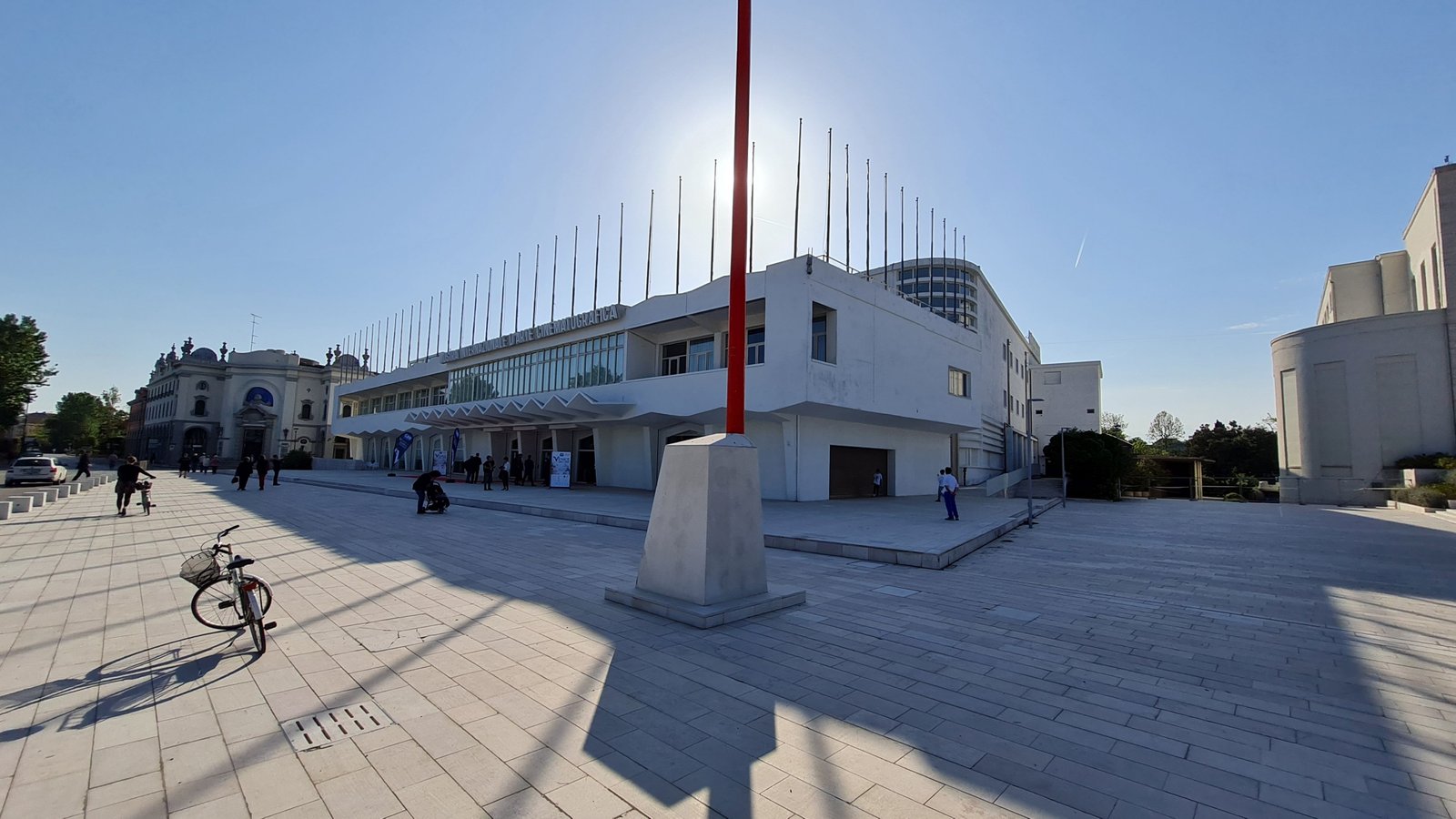
The Palazzo del Cinema rises on the Lungomare Marconi as the permanent home of the Mostra Internazionale d’Arte Cinematografica, the oldest film festival in the world. Designed by Luigi Quagliata and inaugurated on 10 August 1937 for the fifth edition of the festival, the building consolidated on the Lido a programme that had until then improvised its venues. Its long, horizontal volume and stripped pilasters speak the language of late Italian Rationalism, while the interior is organised around the Sala Grande, a 1,032-seat hall that still functions as the festival’s main screening room.
- Address
- Lungomare Guglielmo Marconi, 30126 Lido di Venezia, Veneto, Italy
- Period
- Designed 1936, inaugurated 10 August 1937; expanded by the same architect in 1952
- Architect
- Luigi Quagliata, with Eugenio Miozzi (then chief engineer of the Comune di Venezia) responsible for the surrounding urban layout
- Client
- Comune di Venezia, for the Biennale di Venezia
- Style
- Italian Rationalism (Razionalismo italiano)
- Function
- Festival cinema and congress centre; permanent venue of the Venice International Film Festival
- Halls
- Sala Grande (1,032 seats), Sala Pasinetti (119 seats), Sala Zorzi (48 seats)
- Site
- Built on the ground of the former Austrian Fort of the Quattro Fontane
- Status
- In active use; integrated into the Venice Biennale festival complex
- Coordinates
- 45.4058° N, 12.3671° E
Visit on the map
Lungomare Guglielmo Marconi, Lido di Venezia · 45.4058° N, 12.3671° E
Download for your navigator
A single waypoint, ready for GPS apps, navigators, and contacts.
Story
The Palazzo del Cinema was commissioned in the mid-1930s to give the young Venice Film Festival a permanent stage. The first edition, held in August 1932 on the terrace of the Hotel Excelsior, had been an experiment within the Biennale; by the fourth edition the Comune di Venezia and the Biennale leadership had agreed that the event needed its own building, on the Lido and within walking distance of the festival hotels. Luigi Quagliata, working with the urban framework set out by Eugenio Miozzi, drew up the project in 1936. Construction was completed in time for the fifth edition: the new hall opened its doors on 10 August 1937, on a site previously occupied by the Austrian Fort of the Quattro Fontane. From that opening night the Lungomare Marconi became the recognised address of the Mostra.
The building reads as a long, low volume aligned with the seafront promenade. A central entrance block, marked by a sequence of tall vertical openings and a flat, unadorned cornice, anchors two horizontal wings whose rhythm is set by closely spaced pilasters. There is no historicist detail and no ornamental moulding: surfaces are flat, openings are framed by plain reveals, and the silhouette is held by the line of the roof rather than by any crowning element.
These choices place the Palazzo del Cinema within the late phase of Italian Rationalism, when the movement had absorbed a measured monumentality without abandoning the principles of legible volumes, repeated structural bays and minimal applied decoration. The hierarchy of the entrance, the planar treatment of the walls and the long horizontal proportions all read as rationalist; the calm symmetry of the front, however, also looks back to a stripped classical syntax shared by many late-1930s civic buildings in Italy.
The Palazzo del Cinema has been in continuous use since its opening, interrupted only by the years of the Second World War. Quagliata himself returned to the building in 1952 to enlarge it, and a sequence of later interventions adapted the interiors to evolving projection standards and accessibility requirements. The Sala Grande, with its 1,032 seats, remains the principal venue of the festival, flanked by the smaller Sala Pasinetti and Sala Zorzi. The Mostra Internazionale d’Arte Cinematografica, today the oldest film festival in the world, still uses the building each year between late August and early September; outside the festival season the halls host conferences and congress activities. The palace stands within the wider Cittadella del Cinema of the Lido, alongside the later Palazzo del Casinò and the temporary structures added for the festival.
Resources & References
Editorial picks across Wikipedia, photo archives, and the Biennale.
More views
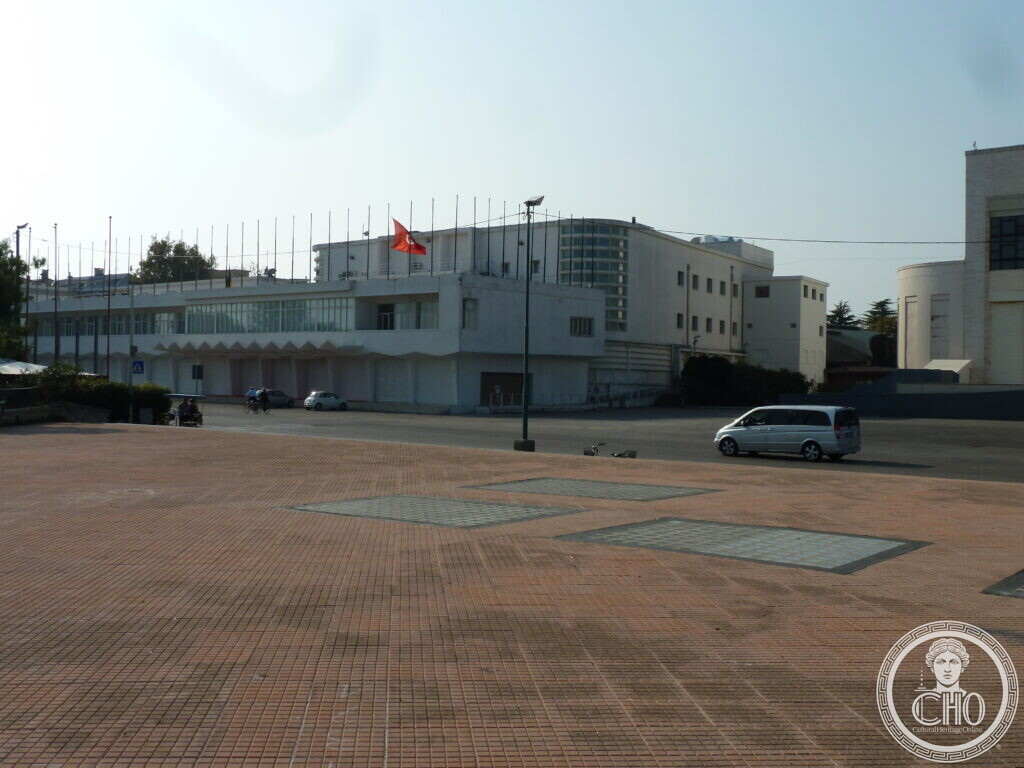
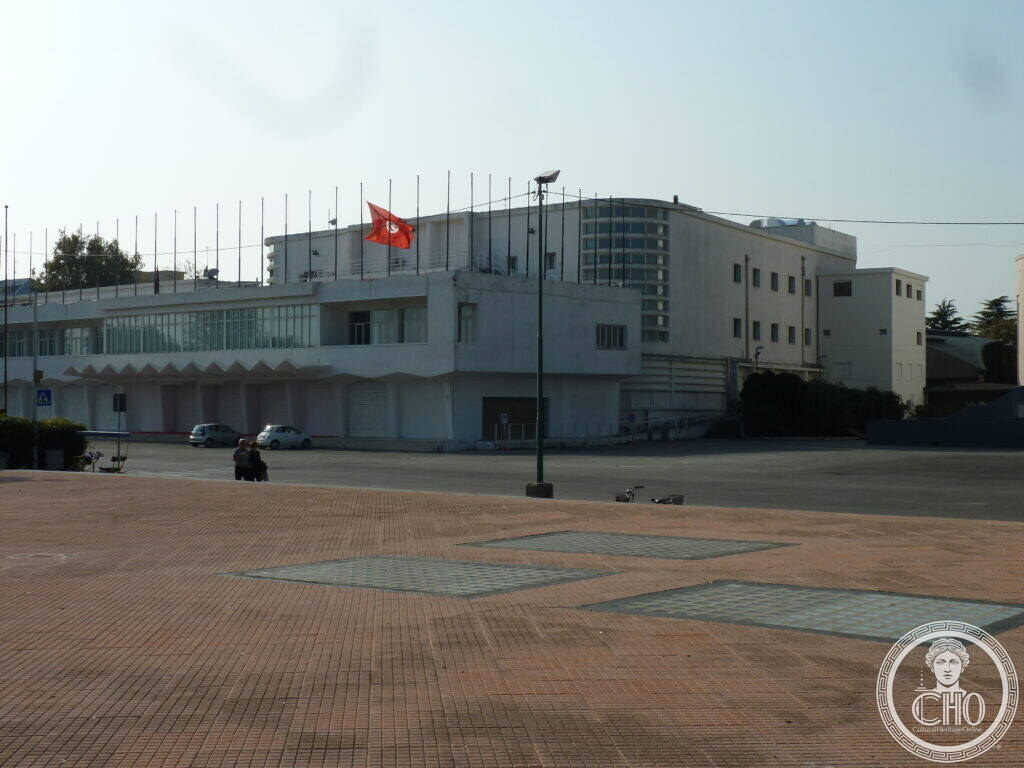
Photographs by Stefano Vigolo, 2014.
Find it on the map
See this place and what’s around it →Record researched and written by Stefano Vigolo for Cultural Heritage Online, 2026.


📷 Become a Cultural Heritage Online photographer
Share your photos of places: they stay published under your name as the author. The more they're seen, the more you get noticed — and soon a contest will reward the most appreciated photos.
Log in or sign up free to add a photoIs this page about you?
This page is read by travellers and heritage enthusiasts who find it on Google. Tell us how you are connected to this place and we will take it from there.